Canada September Employment - Public sector fully explains the sharp decline
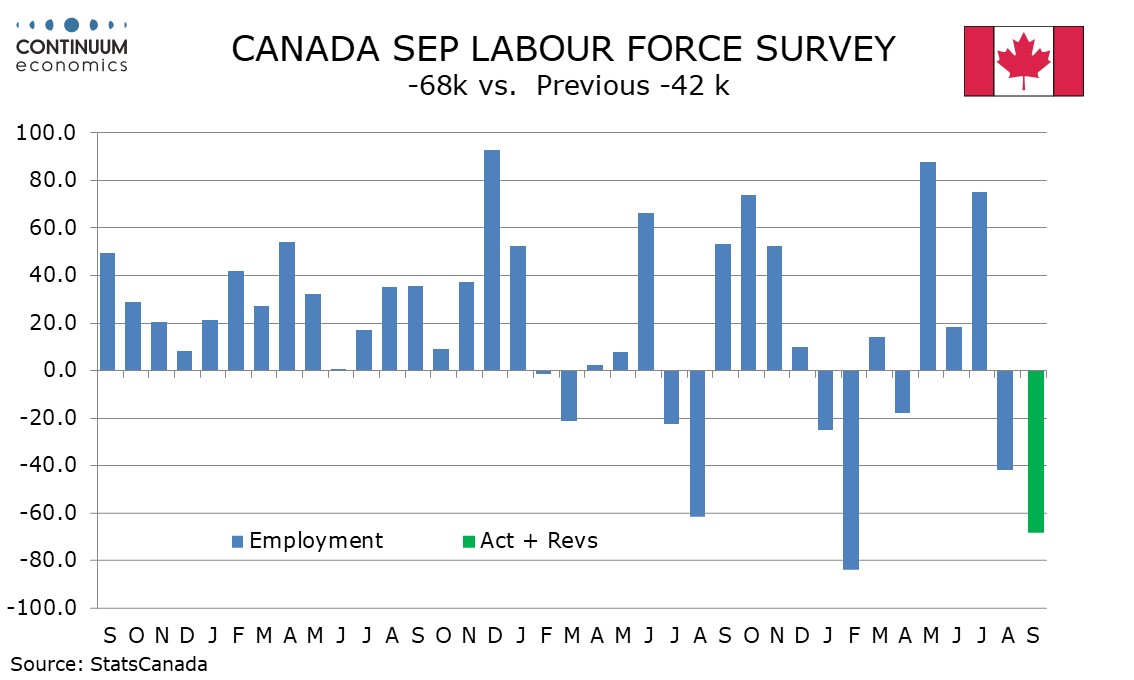
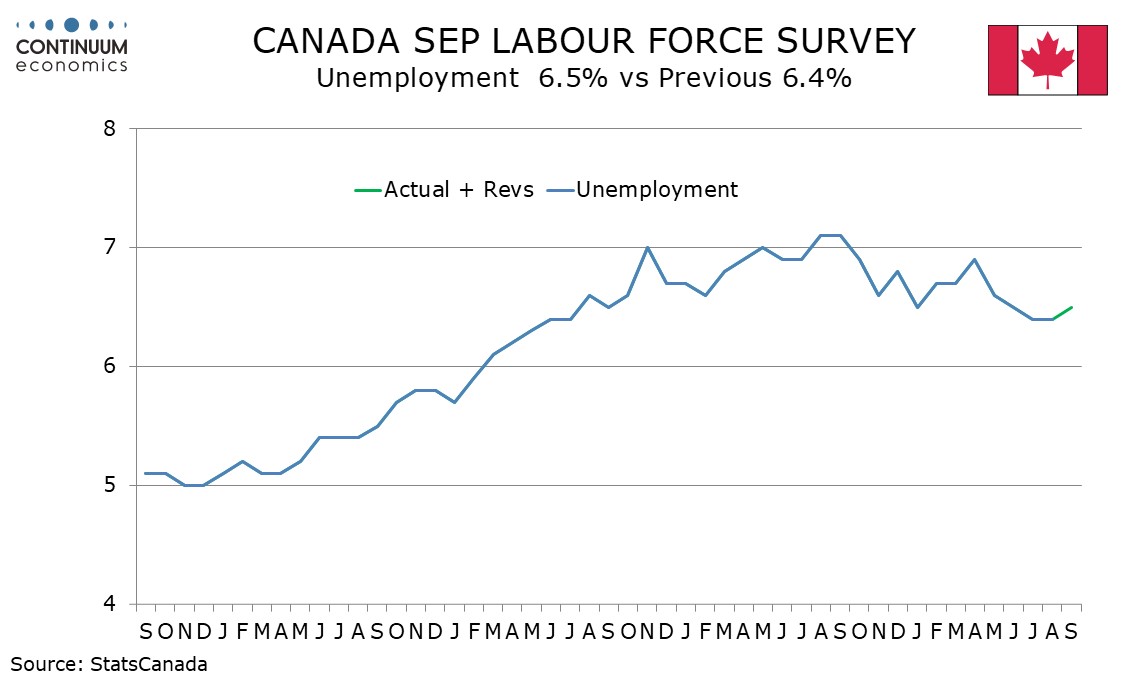
Canada’s September employment report shows a strikingly weak headline with a 68.3k decline in employment though the decline is fully explained by a 70k decline in the public sector, while most of the decline (49.4k) came in Quebec. Still, unemployment did increase, to 6.5% from 6.4% as expected. The data makes an October Bank of Canada tightening look unlikely unless there is a sharp upside surprise in September’s CPI due on October 19.
Private sector employment actually increased by a respectable 24.1k though this was largely offset by a 22.5k fall in self-employment. The job loss was fairly evenly split between full time, down by 35.4k, and part time, down by 32.9k. Unemployment rose marginally overall, but by 0.4% to 6.0% in Quebec.
Data by industry showed a 16.0k decline in goods, led by a 12.7k decline in manufacturing. This may be a sign of fresh US tariffs having an impact, but after two straight gains the dip may be simply corrective. Construction was almost unchanged, down by 0.7k. Services fell by 52.3k, the largest declines coming in education (by 35.3k) and health care and social assistance, (by 23.2k) both of which have a heavy public sector component. Public administration fell by a modest 2.8k. Wholesale and retail had a soft month, with a fall of 9.6k.
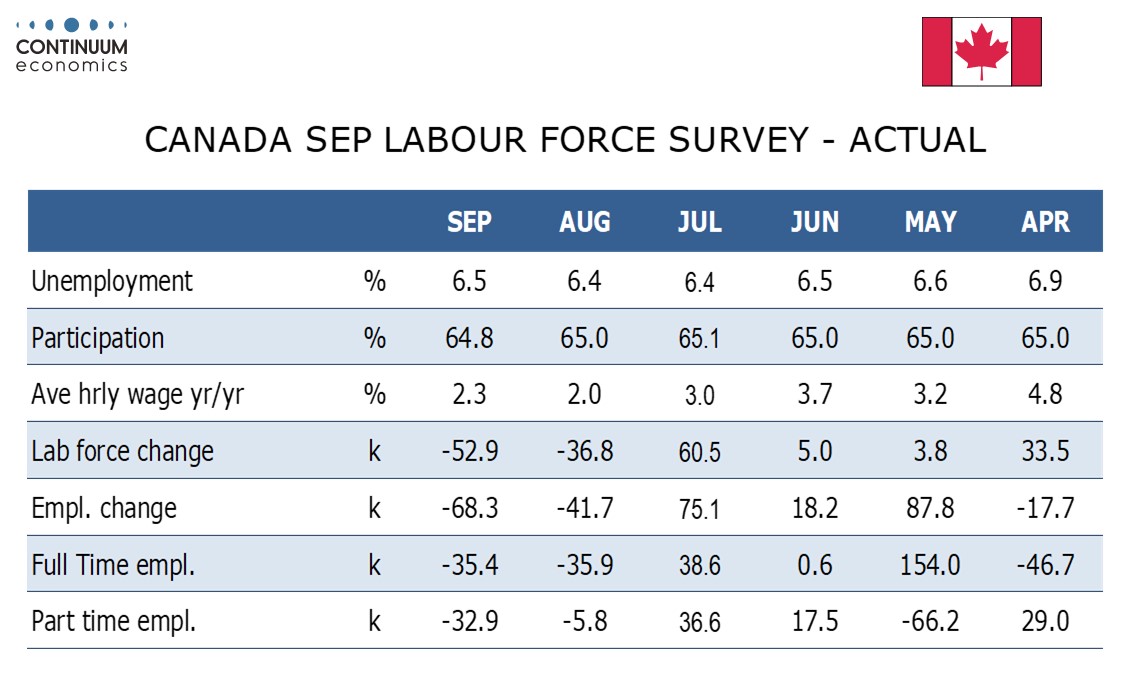
The unemployment rate increase was modest due to the labor force falling by 52.9k, a second straight decline that more than fully erases a strong increase seen in July. Trend in the labor force is fairly flat. Trend in employment is still marginally positive with the two straight declines not fully erasing three straight preceding gains, though September’s private sector gain of 24.1k only marginally more than fully erases a 22.8k August decline. Trend may be losing momentum and that in the economy may be doing so too after a healthy Q2 GDP increase, with fresh US tariffs likely to weigh more in Q4.
Wage growth looks subdued, with yr/yr growth for permanent employees still modest at 2.3%, if up from 2.0% in August. Trend here has slowed significantly in Q3, even as gasoline drives headline inflation higher.