Canada July CPI - Like the economy, picking up from recent core weakness
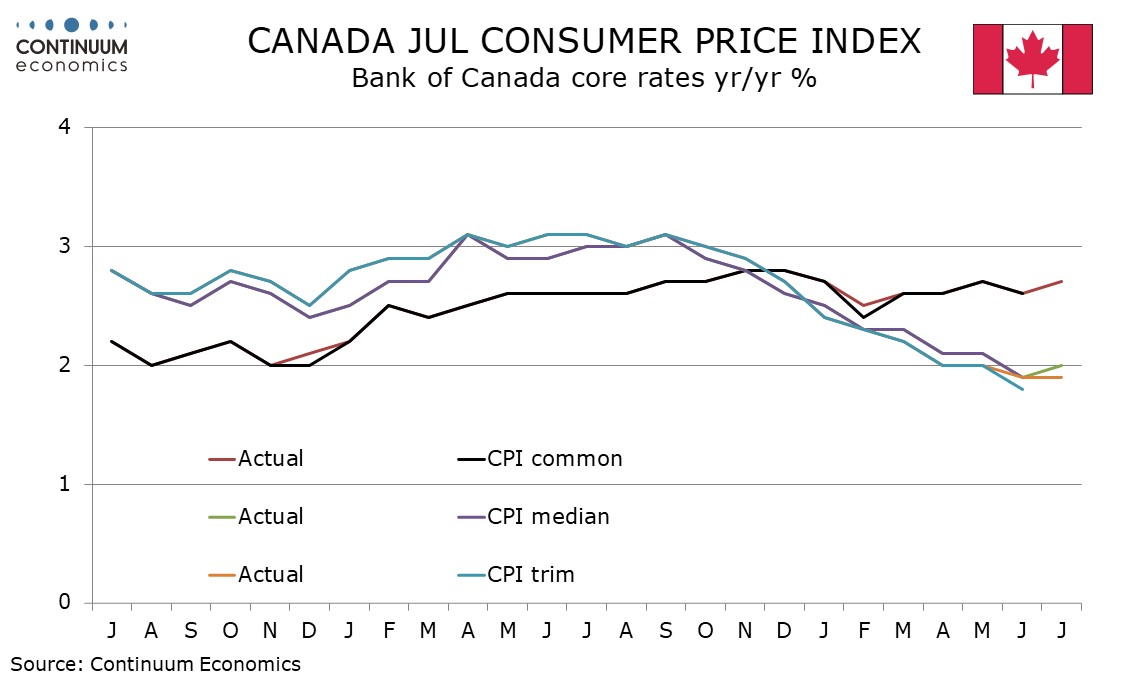
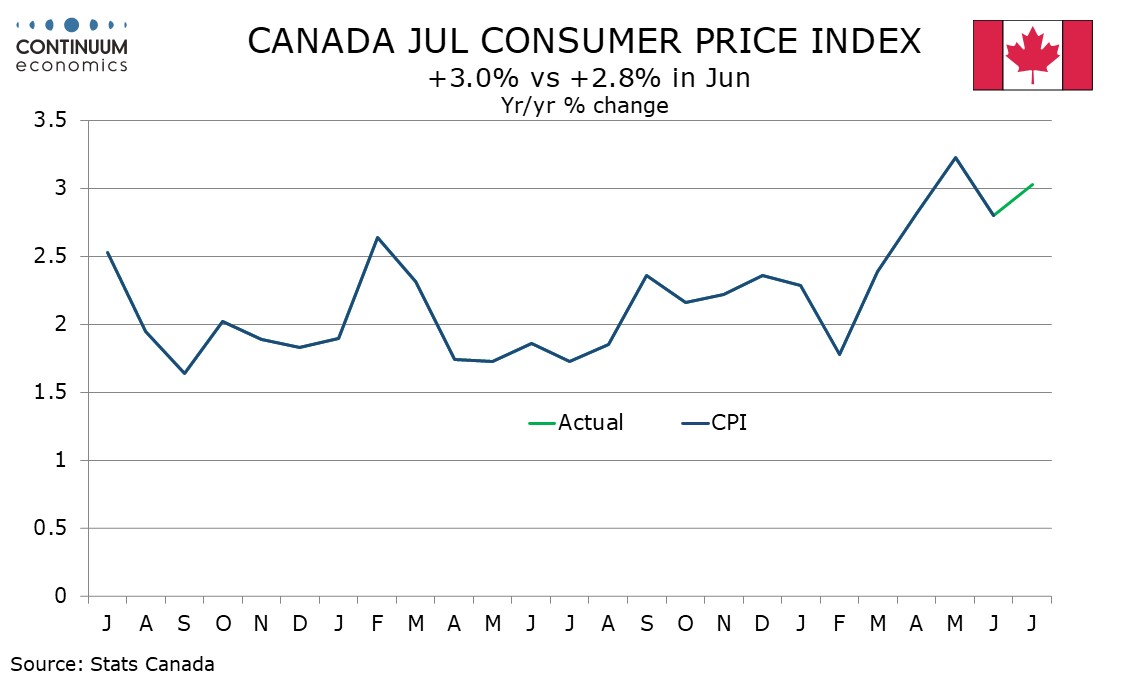
July’s Canadian CPI with a rise to 3.0% yr/yr from 2.8% is slightly stronger than expected, with the Bank of Canada’s core rates on balance slightly firmer, if still close to target for CPI-Median and CPI-Trim. The data suggests underlying inflation is about where the BoC wants, and may reduce fears that it was heading below target.
On the month CPI rose by 0.3% seasonally adjusted both overall and ex food and energy. This means three straight seasonally adjusted ex food and energy gains of 0.3%, following four straight gains of 0.1% or less. The likely revival of GDP growth in Q2 after negative quarters in Q4 2025 and Q1 2026 appears to have eased deflationary pressure. The BoC is probably not yet worried about an acceleration in inflation but continued seasonally adjusted ex food and energy gains of 0.3% would be too high.
The seasonally adjusted detail shows transportation at 0.8% being the strongest component, lifted by strength in travel tours and air fares as well as gasoline. Traveler accommodation was a negative, helping to restrain shelter to a 0.1% seasonally adjusted gain. Before seasonal adjusted CPI was stronger than the adjusted gains, up 0.5% overall and 0.4% ex food and energy.
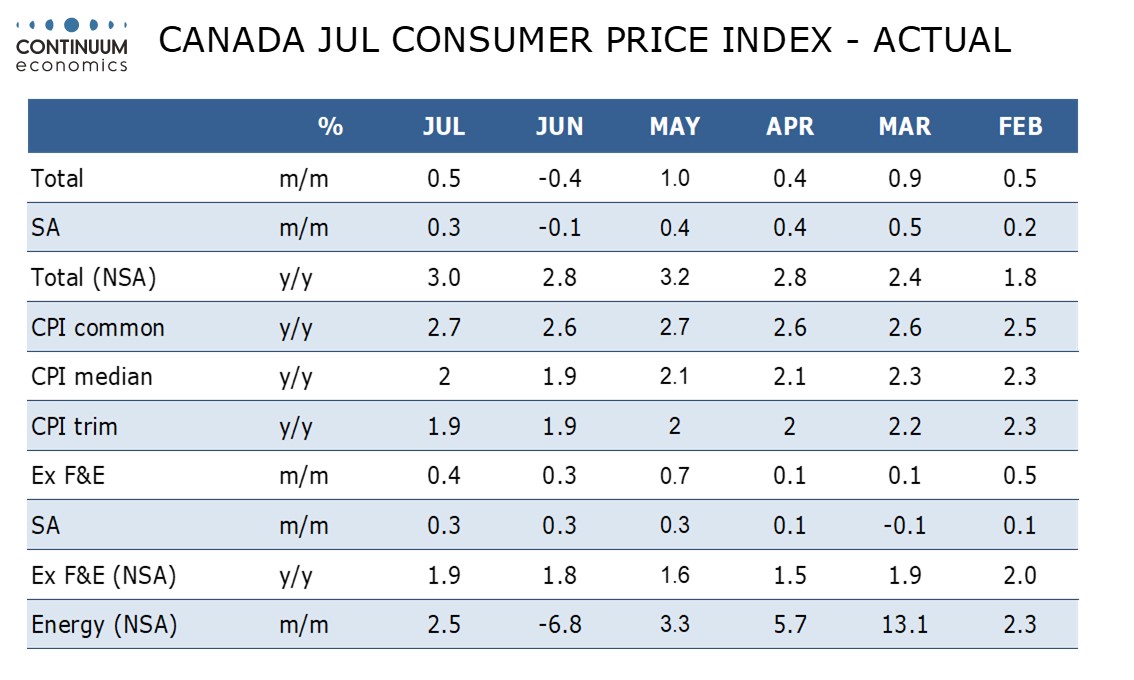
The yr/yr pace ex food and energy rose to 1.9% from 1.8%, but is not one of the BoC’s three core rates. Here CPI-Median rose to 2.0% from 1.9% while CPI-Trim remained at 1.9%, but with June revised up from 1.8%. CPI-Common is less important to the BoC but its increase to 2.7% from 2.6% backs a message of mild disappointment. The overall yr/yr pace of 3.0% is up from 2.8% in June but down from 3.2% in May. Renewed gains in energy prices would be of concern to the BoC if sustained but the BoC does not appear in a hurry to rase rates at present. There is considerable uncertainty over whether a likely Q2 GDP pick up will be sustained, particularly given US tariff threats.