Bank of Canada Preview for October 28: Steady, December tightening not a done deal
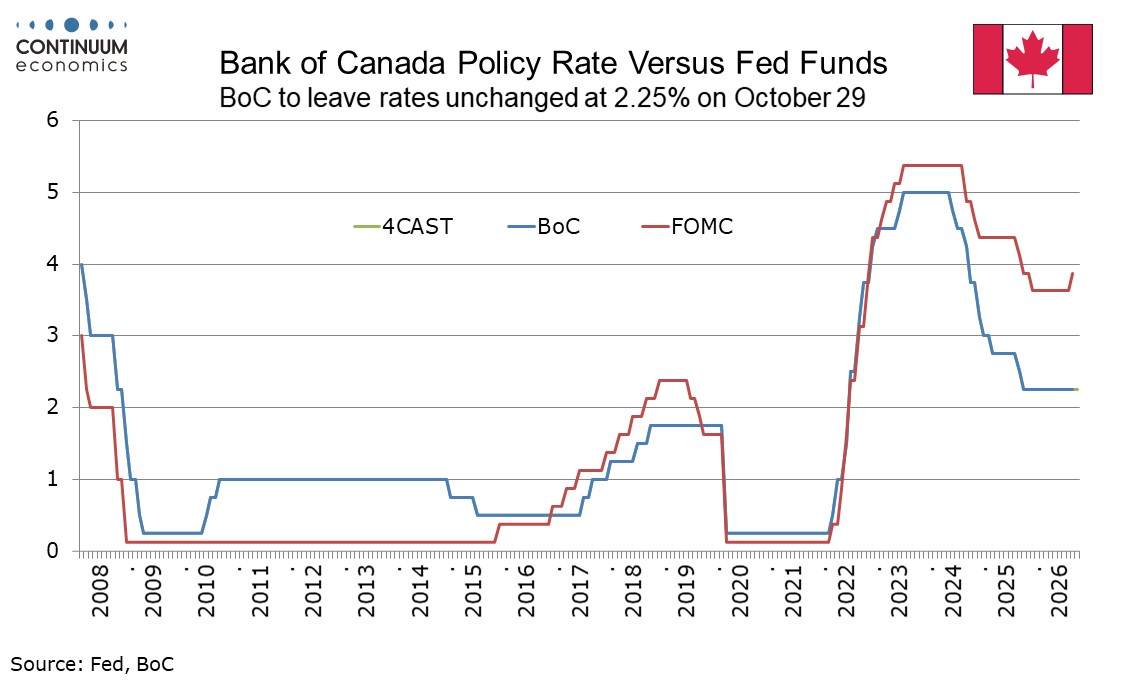
The Bank of Canada meets on October 28 and recent soft employment and core inflation data suggest rates will be left unchanged at 2.25%. The BoC is still likely to express more concern about upside than downside risks, but may sound a little more balanced than was the case at the last meeting on September 2. A December tightening remains our forecast, but it is not a done deal.
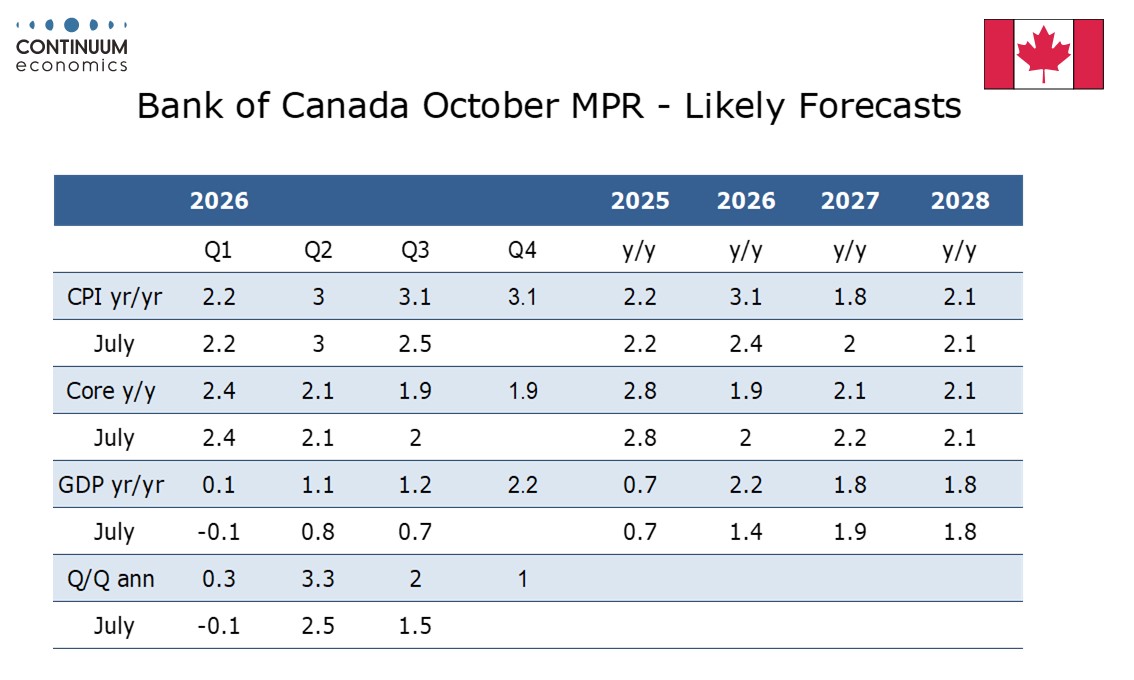
This meeting will be accompanied by a monetary policy report and will see economic forecasts updated. Since the last report in July Q2 GDP cane in stronger than expected at 3.3% with domestic demand even stronger at 3.9%. Q3 CPI, averaging 3.05% yr/yr, is significantly stronger than the 2.5% projected in July. However, the Q2 GDP outcome, and persistent strength in oil, were known when the BoC met on September 2. Core CPI, as measured by the average of CPI-Median and CPI-Trim, has edged slightly below the 2.0% target, while Canadian employment has seen two straight months of significant declines.
Updated forecasts are likely to see headline CPI remaining high in Q4 though a slowing is likely to be projected, albeit with little certainty, in 2027. Core CPI is however likely to be seen remaining subdued, though the BoC is likely to project 2027 and 2028 slightly above target, given risk of feed through from energy, even if there has been little sign of this so far. Q3 GDP seems to be heading for around 2.0% annualized. BoC Governor Macklem has stated that fresh US tariffs could halve the Q4 pace to around 1.0%, though this hit is expected to be concentrated in a small number of sectors and the BoC is unlikely to see the trajectory for 2027 and 2028 significantly undermined.
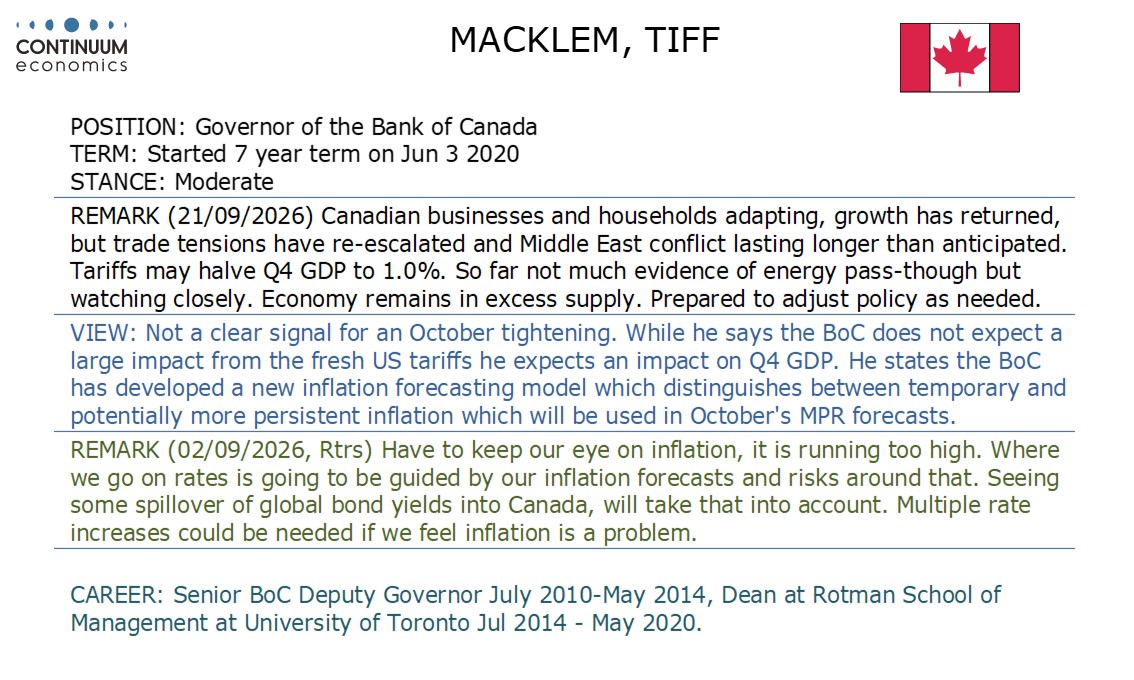
Downside risks to growth are likely to be noted but downplayed, and the BoC will be wary of the risks from elevated oil prices, and willing to implement multiple hikes should feed through to underlying inflation be seen. However, there is no urgency to tighten. On September 2 Governor Macklem stated that the BoC would be guided by its inflation forecasts, but upgrades to overall inflation and downgrades to core inflation will not provide a clear signal. It remains more likely that not that the BoC will tighten in December, but the decision will be data-dependent. Should the labor market weaken further and core inflation continue to show a lack of feed through from oil, the BoC could pause again. We do not expect the BoC to give any strong signal for the December decision at this meeting.