China Widening C/A Surplus
• China could reduce its excess current account surplus by a package of real Yuan appreciation; industrial policy reform to clean up excess production and structural boosts to safety nets that can sustainably boost consumption share in GDP. China authorities are reluctant to adopt these for a number of reasons and we see this meaning a large current account surplus and slow to modest Yuan appreciation – 6.65 USDCNY end 2026 and 6.50 end 2027.
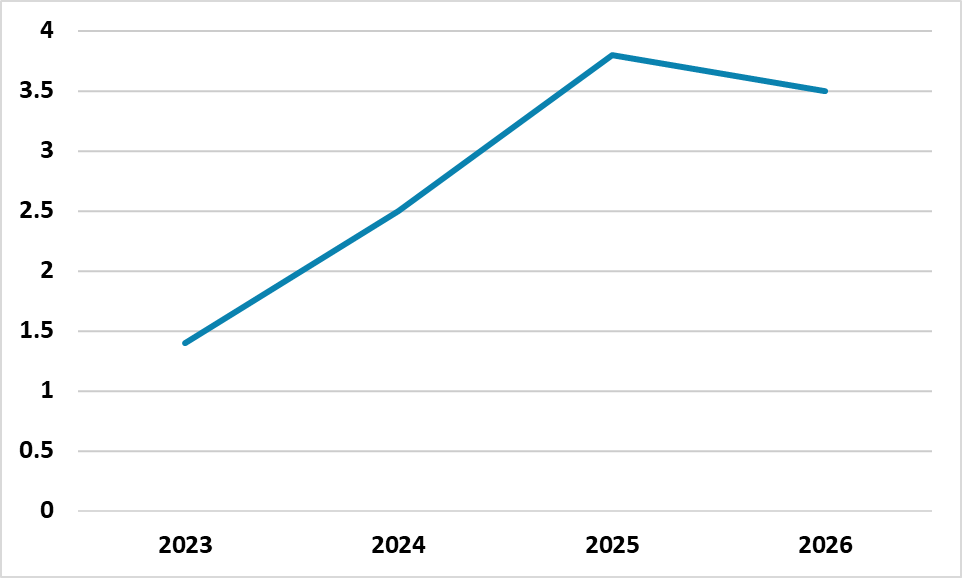
Figure 1: China C/A Surplus Grows (% of GDP)
Source: IMF External Sector Review July 2026
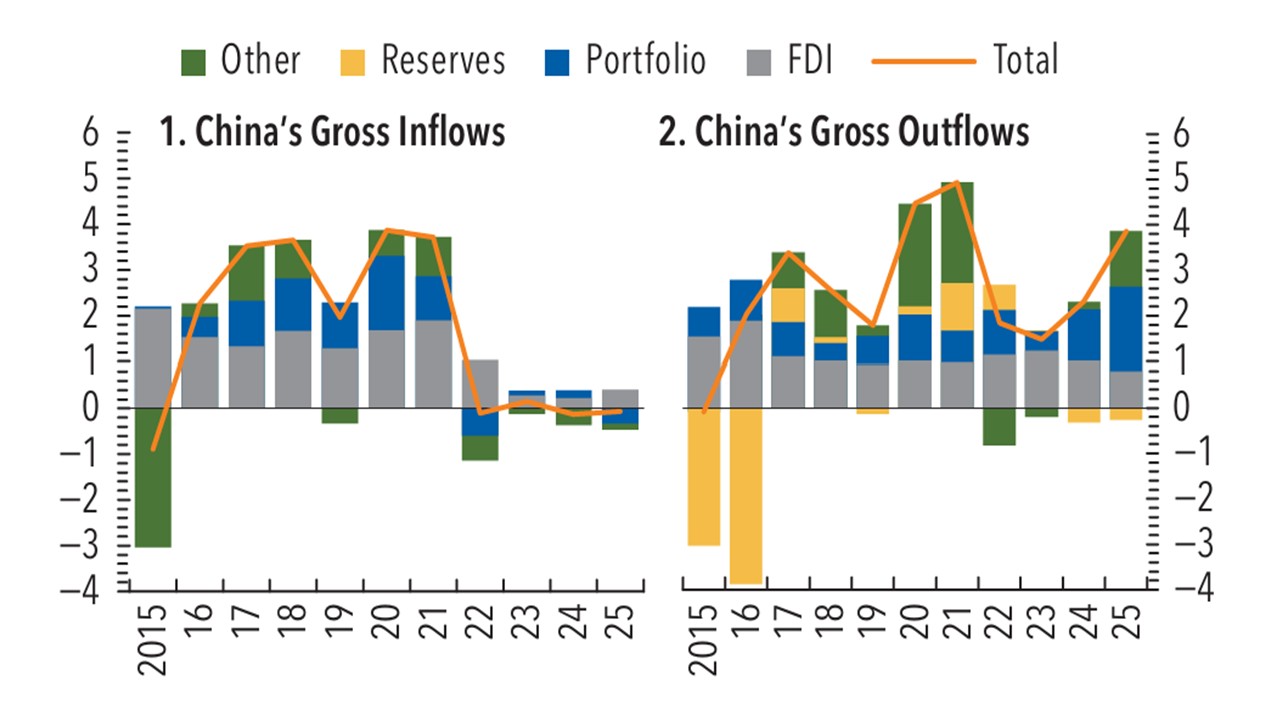
China current account is growing consistently (Figure 1) due the continued expansion of the trade surplus. The trade surplus is a function of China competitiveness, plus excess capacity, driving exports at a time when sluggish domestic demand is curtailing imports. Though this current account (C/A) surplus is accompanied by capital outflows (Figure 2), China still has a trade imbalance problem. How can this be fixed?
Figure 2: China Capital Inflows and Outflows (% of GDP)
 Source: IMF External Sector Review July 2026
The July 2026 IMF External sector report highlights an adjustment scenario for China of real Yuan appreciation; industrial policy reform to clean up excess production and structural boosts to safety nets that can sustainably boost consumption’s share in GDP. This package could reduce the large China C/A surplus, but China authorities are reluctant on a number of fronts. Firstly, though China acknowledges some of the case for nominal Yuan appreciation, China does not want too rapid a pace in case it hurts competitiveness. This led to appreciation followed by exchange rate consolidation, which avoids sharp moves that could hurt exporters. Additionally, China policy seems to be allowing nominal appreciation without too much real appreciation to protect export competitiveness. This is sensible on the U.S. front, given Trump desire to rebuild tariffs to 20% above pre 2020 levels for China, as part of the ongoing trade truce! We see further Yuan appreciation to 6.65 by end 2026, though the authorities will be reluctant to see much more and then 6.50 by end 2027. However, such modest appreciation is insufficient to reduce the trade and current account surpluses.
A second alternative is major structural reforms for households to permanently reduce precautionary savings and consumption. A major fiscal boost to safety nets (pension, unemployment, health) could be one reform, while major Hukou reform to allow 200mln urban migrants equal benefits is a 2nd route. Neither of these is a priority for China or the CCP, with internal security being as important as household freedoms. Some further incremental measures can be seen, but they will not significantly boost consumption. A 3rd option is an aggressive clean-up of the excess residential housing stock, but that is not a priority for China authorities. The final alternative is to close down excess domestic production (to stop it being diverted overseas) by withdrawing subsidies. This is occurring in a modest way, but China’s authorities are concerned that this could have adverse economic effects. Additionally, the authorities maintain a production rather than domestic demand bias in looking at the economy, which is also a restrain to change.