U.S. Initial Claims stabilizing, August Philly Fed extremely strong
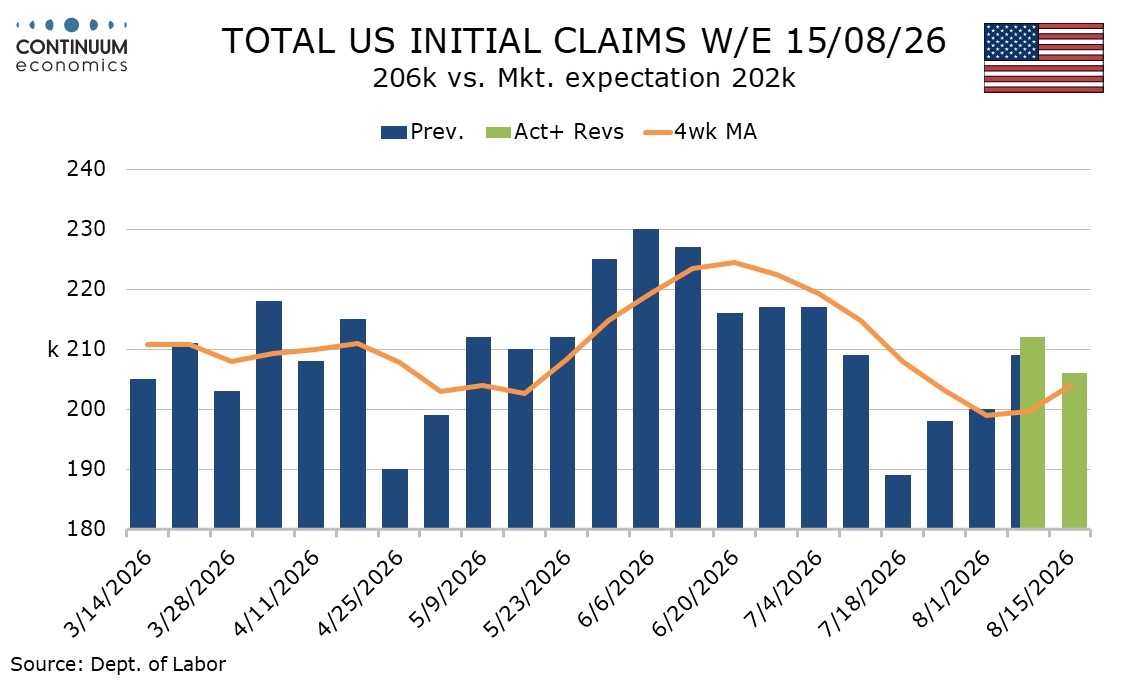
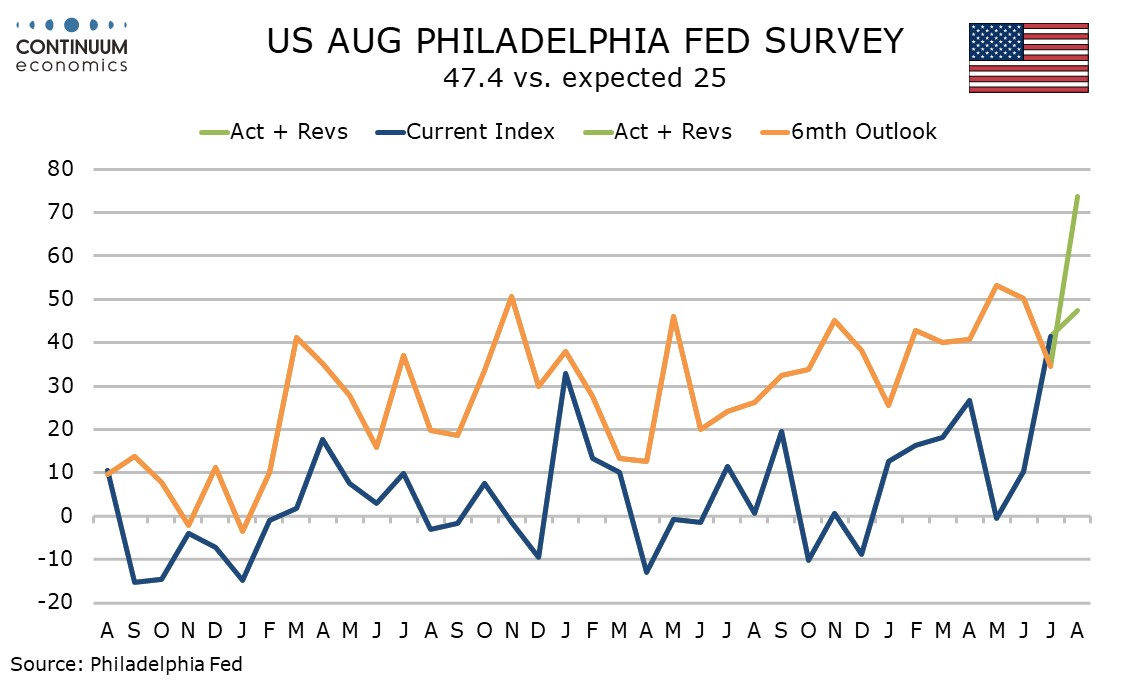
Initial claims at 206k in the survey week for August’s non-farm payroll are down from 212k in the preceding week but appear to be stabilizing after slipping in July. August’s Philly Fed manufacturing index of 47.4 is very strong indeed, suggesting July’s reading of 41.4 was not overstated as most had suspected.
Initial claims saw the 4-week average pick up in June and slip back in July but July’s slippage did not mean a strong non-farm payroll in that month. A stabilizing trend suggests that there is no reason to expect August’s payroll to be dramatically different from recent trend.
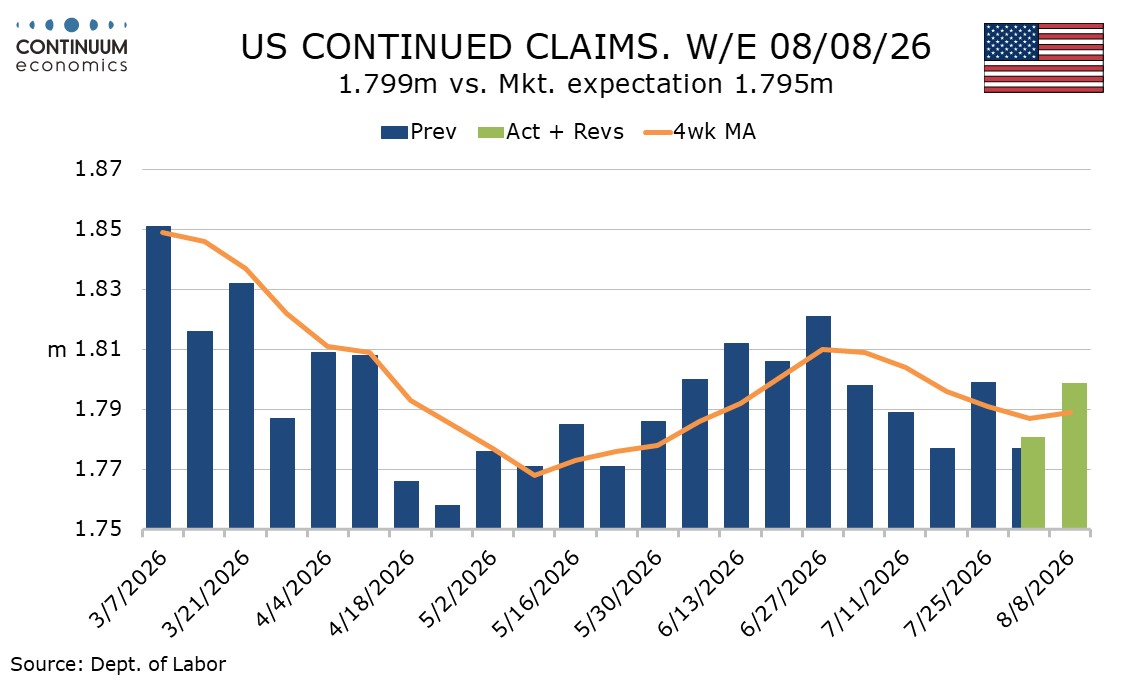
Continued claims cover the week before initial claims and the latest continued claims figure, up 18k to 1.799m, reversing a preceding decline, also shows signs of a stabilizing trend. Continued claims also moved up in June and slipped in July, but here the slippage was less pronounced than that seen in July initial claims, and that provided a better signal for the July payroll than did initial claims.
August’s Philly Fed manufacturing index of 47.4 is the highest since April 2021, as was July’s index of 41.4, an index that was seen as erratically strong even with most manufacturing surveys looking positive. The exceptional strength of August’s data follows an Empire State manufacturing index which while less impressive at 20.1, was still the strongest since December 2021. Tomorrow’s S and P manufacturing survey for August’s will make interesting reading.
New orders at 30.1 from 37.3 are less impressive but still healthy. Labor market signals are however significantly stronger, employment at 27.9 from 10.0 and the workweek at 26.5 from 14.0 both the highest since April 2022. Initial claims are probably a better guide to the labor market overall.
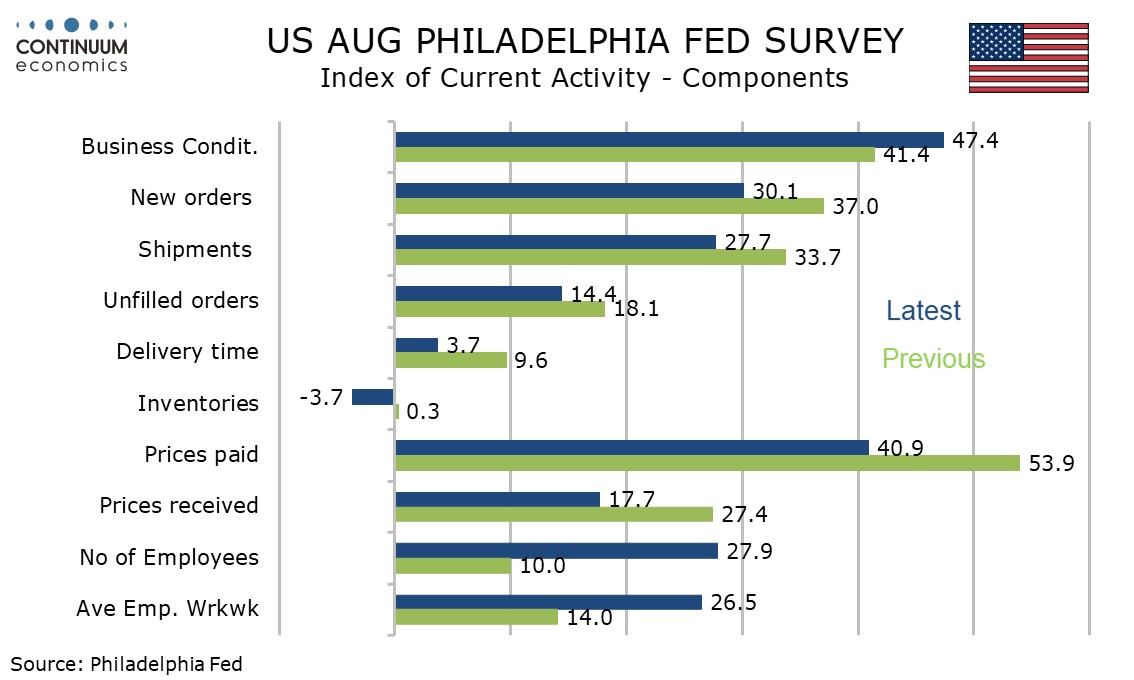
Even more striking was a sharp bounce in six month expectations, to 73.6 from 34.4, reaching its highest since August 1983. While current month strength can be explained by surging AI-led investment why there should have been such as sharp surge in six month expectations this month is hard to explain.
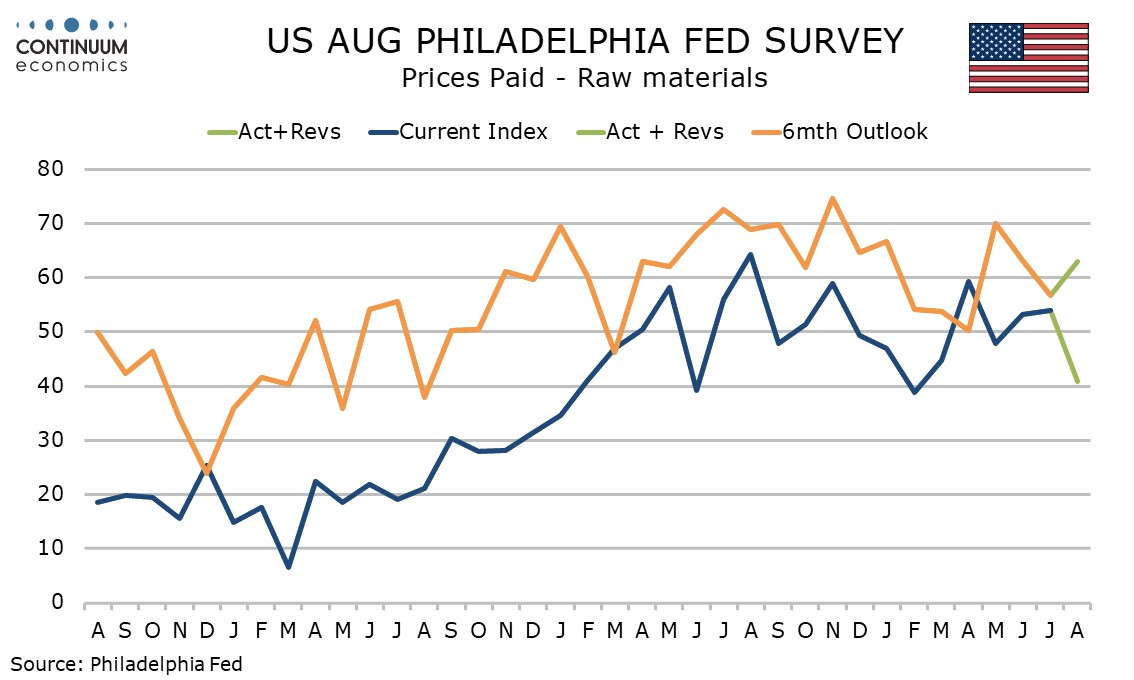
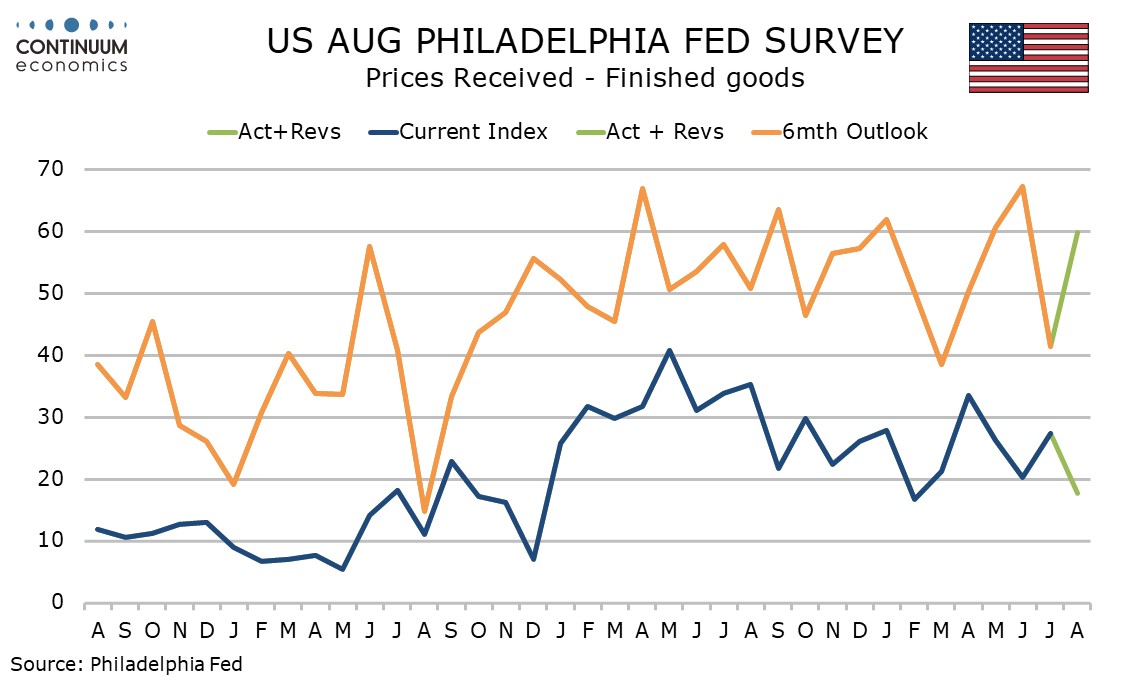
Current month data shows a fading of price pressures, paid at 40.9 from 43.9 and received at 17.7 from 27.4, both six month lows. Six month price expectations are firmer however, paid at 62.9 from 56.7 and received at 59.8 from 41.4, but both are below their respective June outcomes of 63.2 and 67.2. The report is very strong overall without significantly raising inflationary concerns.