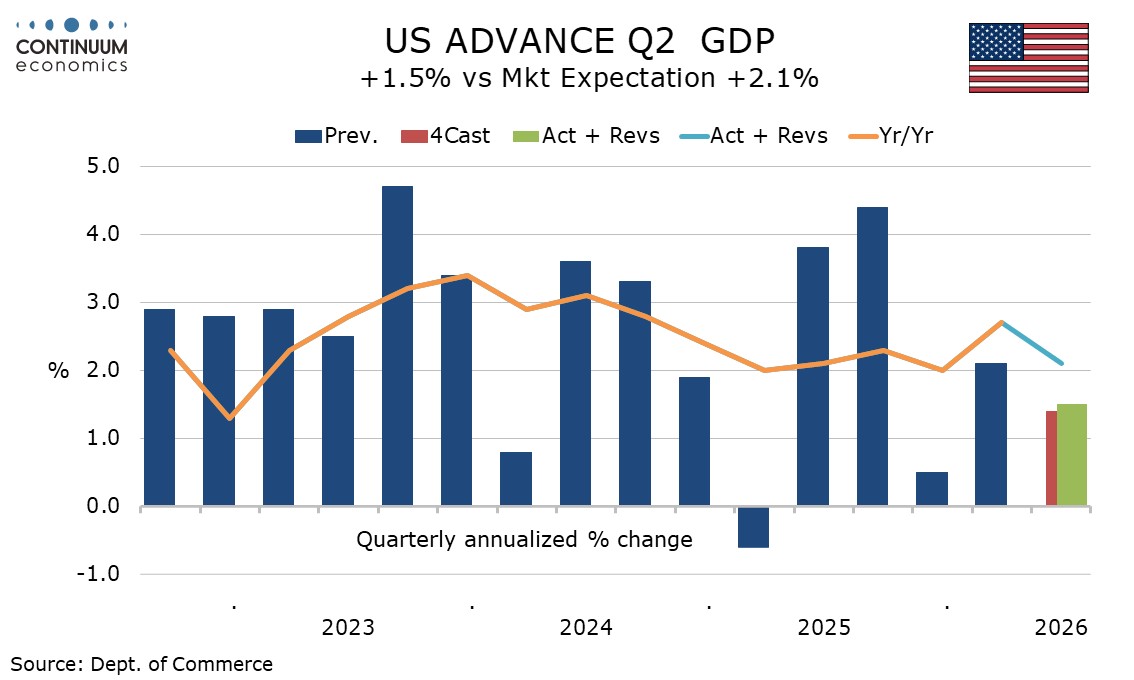
U.S. Q2 GDP strong outside net exports, inventories and government
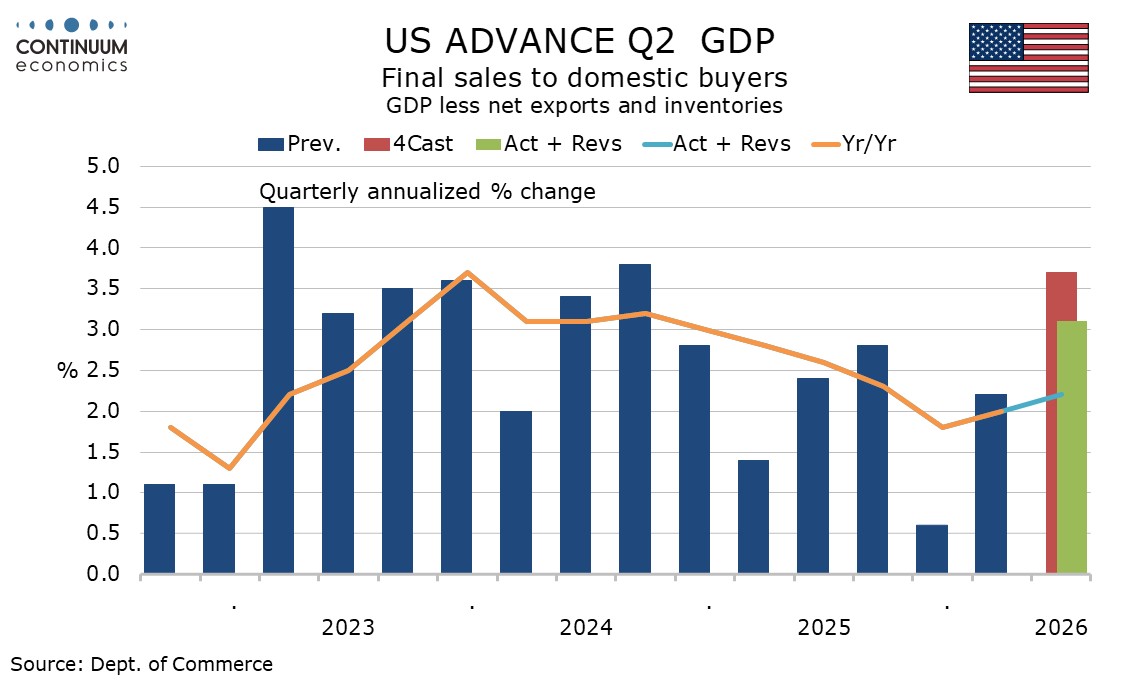
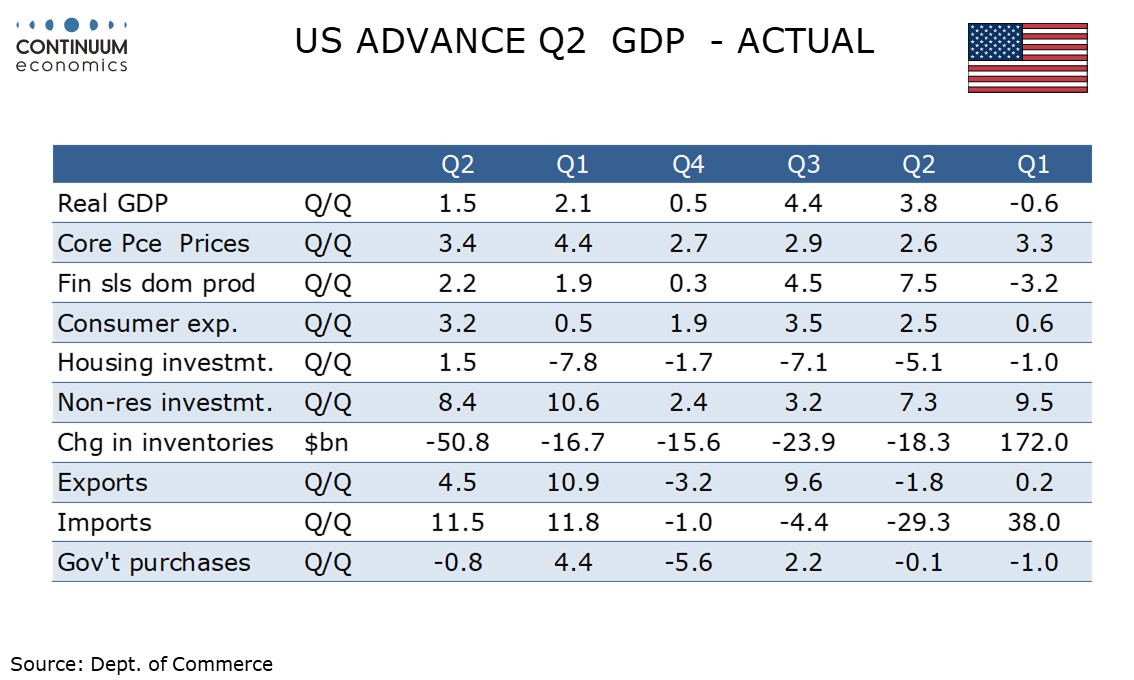
The advance estimate of Q2 GDP at 1.5% annualized is weaker than the market expected but in line with our 1.4% call. The detail is also broadly in line with our expectations, healthy excluding negatives from inventories and net exports, with final sales to domestic buyers (GDP ex inventories and net exports) up by 3.1%, the strongest since Q3 2024.
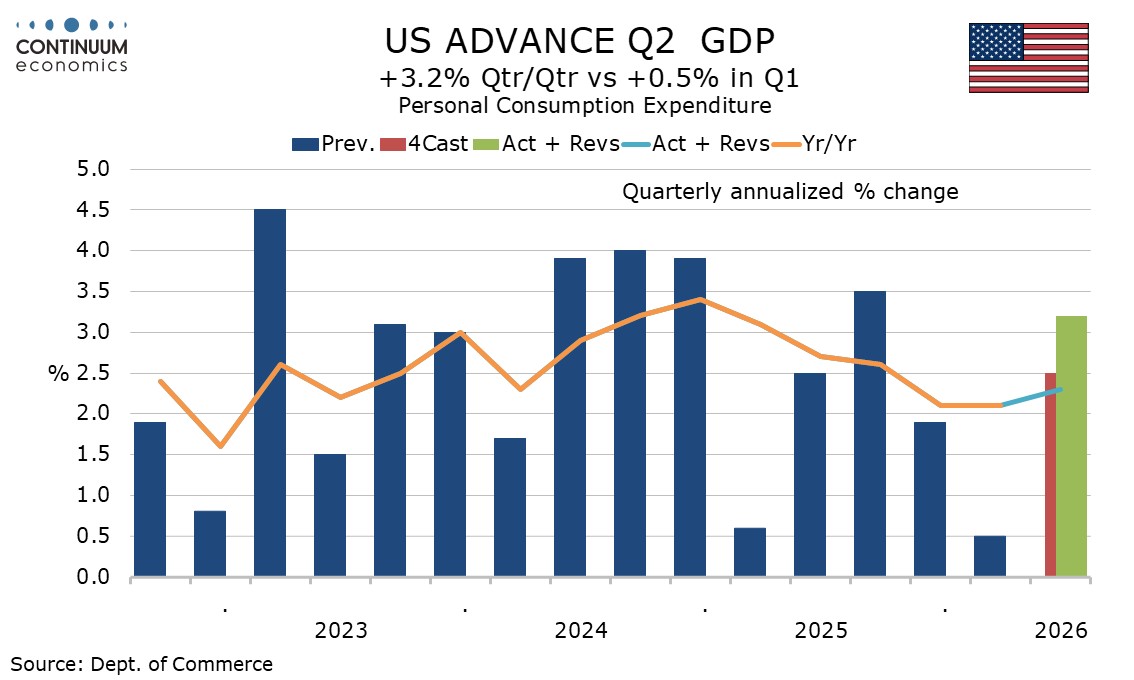
Consumer spending with a 3.2% increase exceeded our expectations. Monthly data shows a 0.3% rise in June as expected but April and may were revised higher. Still, in real terms June saw a 0.4% increase in consumer spending, matching the upwardly revised May.
The strength of consumer spending contrasts continued weakness in real disposable income, down by 1.5% in Q2, with yr/yr data showing consumer spending up by 2.3% in real terms and real disposable income down by 0.1%. On the month personal income rose by 0.2%, with real disposable income at 0.3%.
Monthly data shows the savings rate at 2.7%, the lowest since June 2022, suggesting Q2’s consumer resilience will be difficult to sustain unless annual revisions due in September see the discrepancy between income and spending narrowed.
Prices were subdued in June, overall PCE at -0.1% and core PCE at +0.1%, but after strong April and May data the annualized gains in Q2 were 5.1% for overall PCE and 3.4% for the core. Monthly data shows yr/yr core PCE at 3.3% in June from 3.4% in May and overall PCE at 3.7% in June from 4.1% in May. One subdued month does not make a trend particularly with Middle East risks persisting.
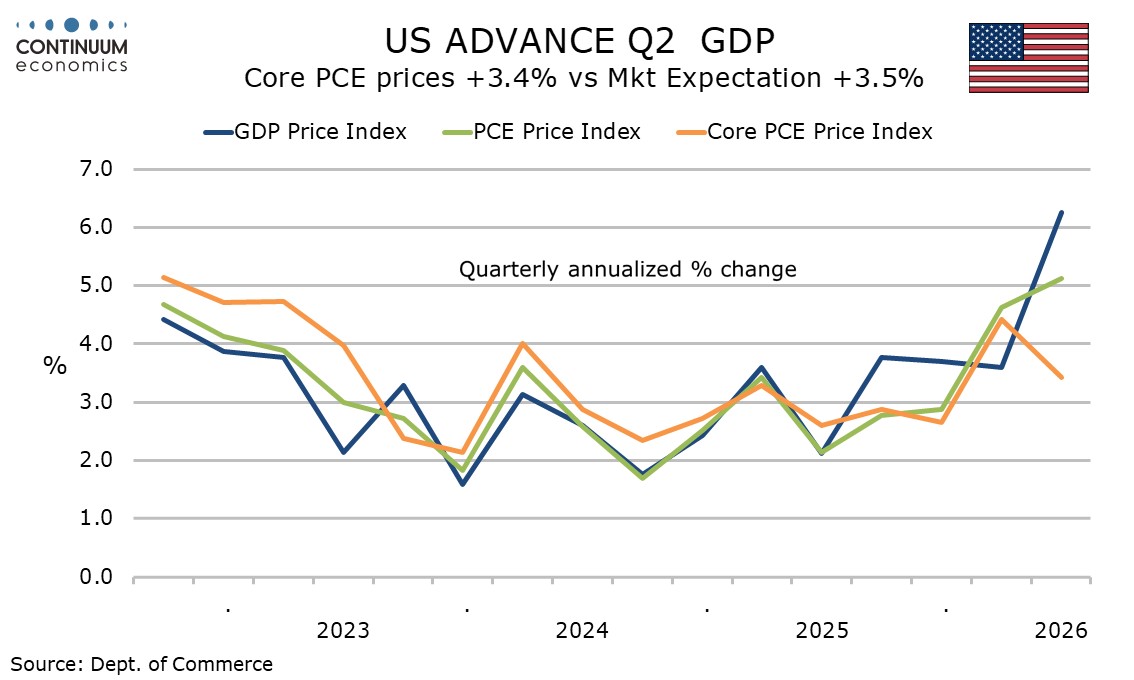
The PCE price data were in line with expectations but the overall Q2 GDP deflator at 6.2% was well above. Government prices surged by 10.1% while net export prices were also a positive.
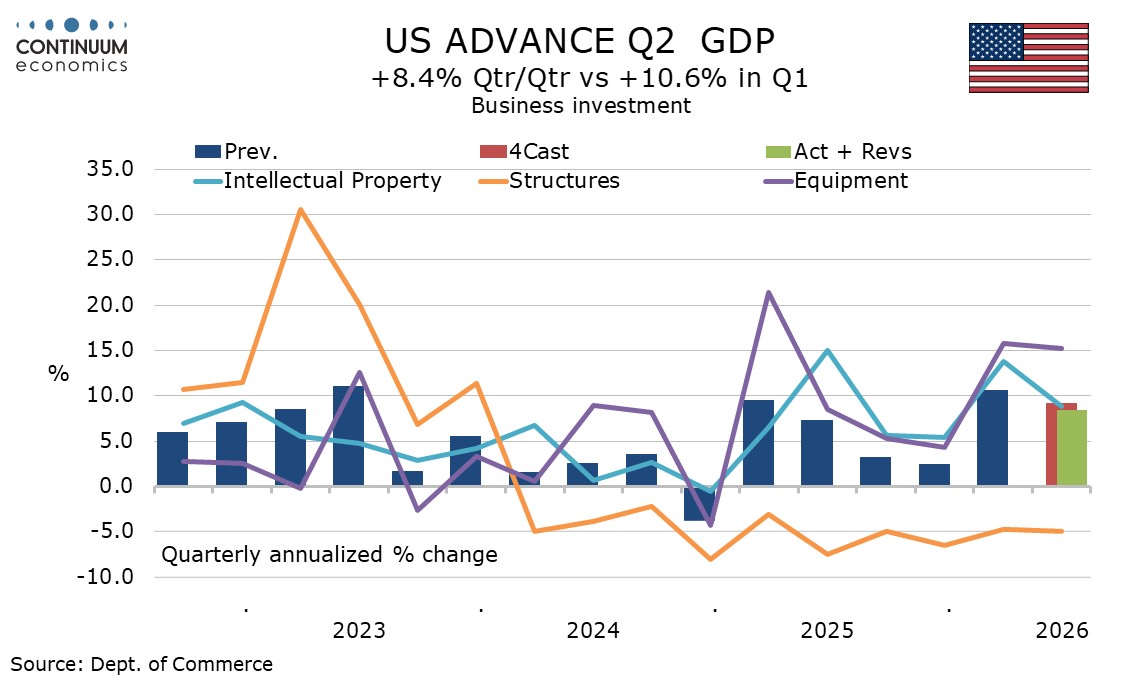
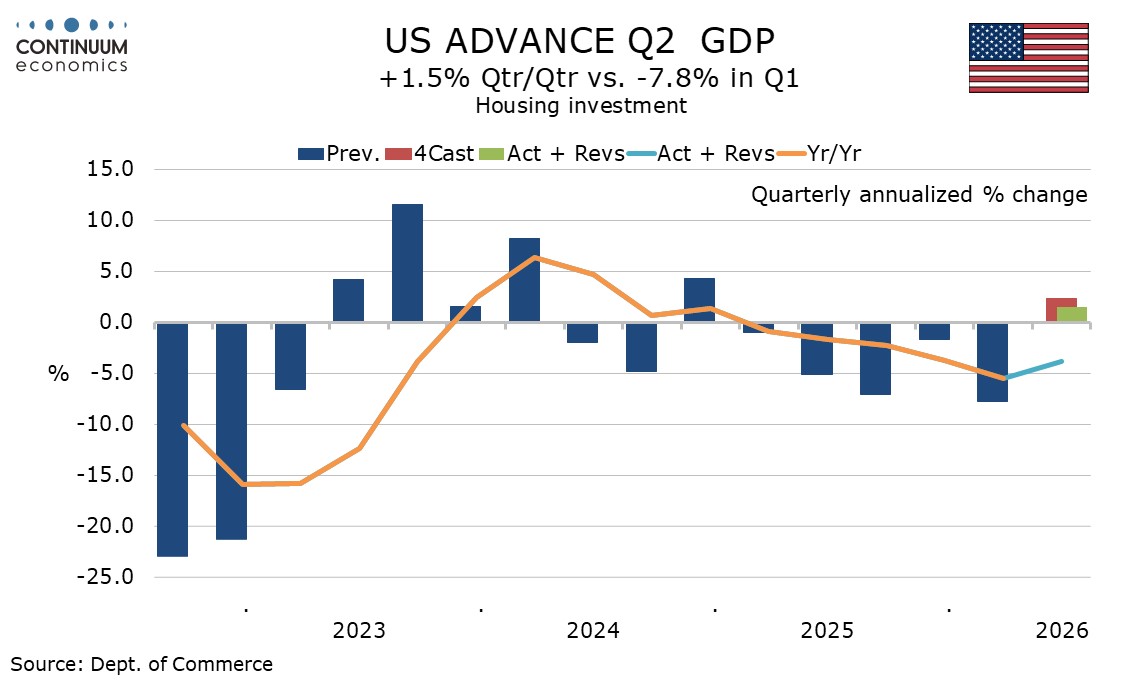
Business investment saw a strong if not surprising gain of 8.4% with strength in equipment at 15.2% and intellectual property at 8.8% partly offset by continued weakness in strictures at -5.0%. Housing investment saw a modest rise of 1.5%, its first positive since Q4 2024. This may be difficult to sustain as hopes for Fed easing fade but business investment is likely to remain firm.
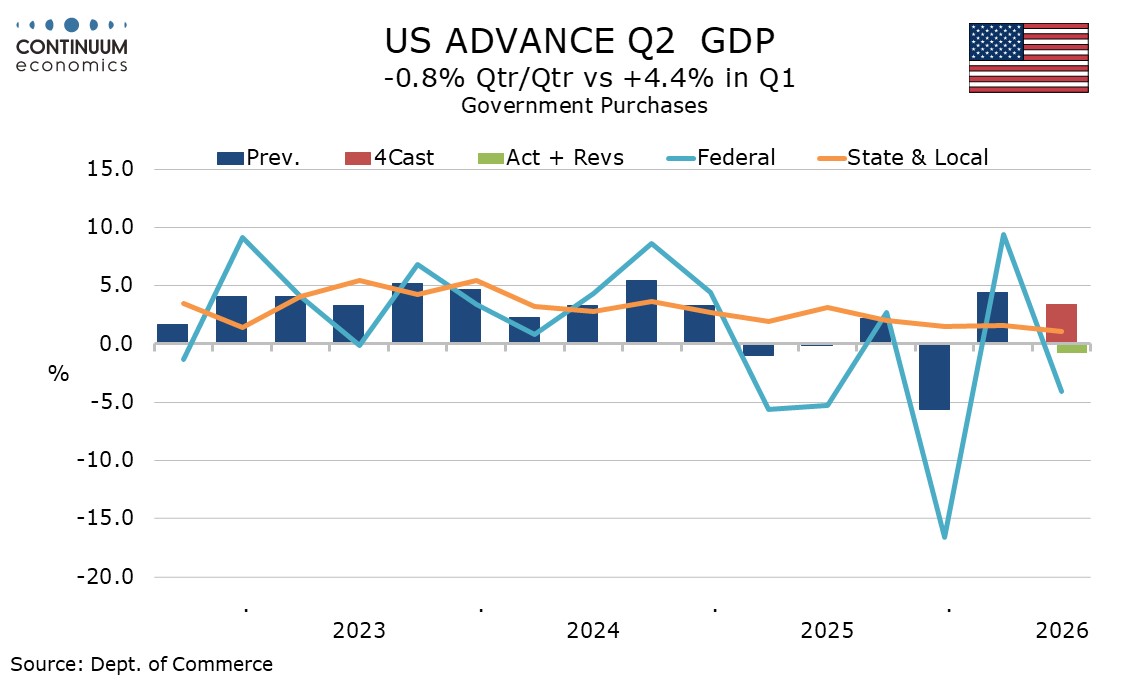
Government at -0.8% was a downside surprise largely on a 12.9% decline in Federal nondefense spending. However the rise in defense of 2.4% was less than we expected while a 1.1% increase from state and local government was the slowest since Q2 2022.
Final sales (GDP less inventories) rose by 2.2%, meaning a negative contribution of 0.7% from inventories, a slightly steeper negative than we had expected, probably related to supply disruptions generated by the situation in the Middle East.
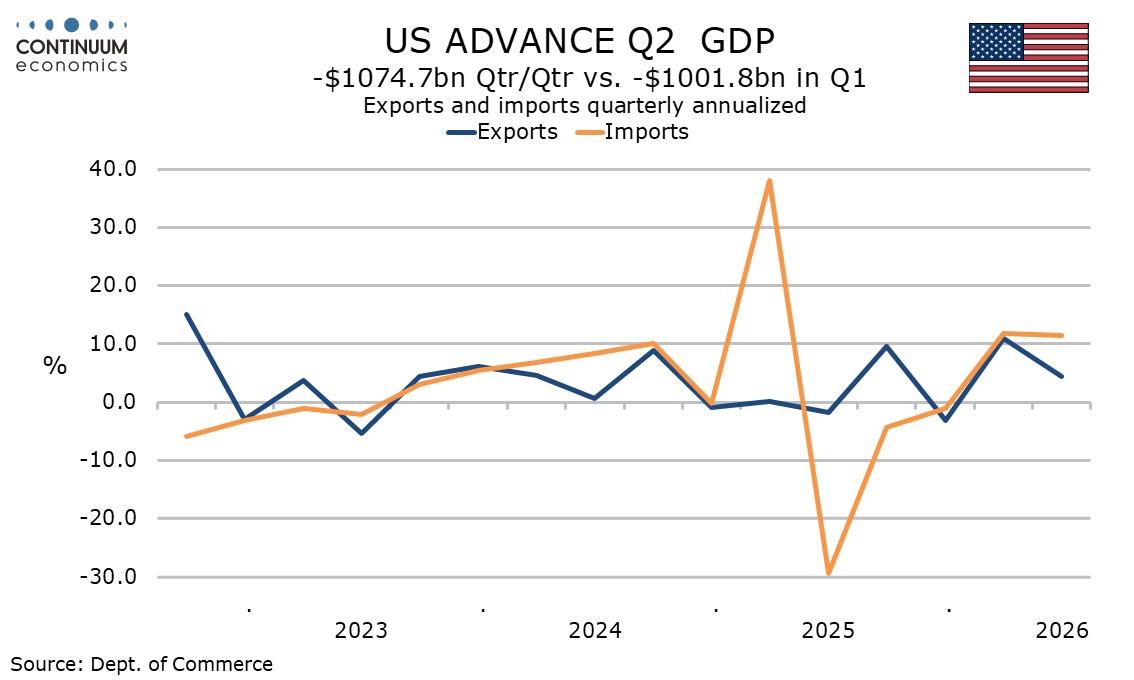
Net exports took 1.0% off GDP, with exports up by 4.5% after a rise of 10.9% in Q1 while imports at 11.5% saw a similar rise to Q1’s 11.8%. Imports may be getting support from the Supreme Court ruling against Trump’s reciprocal tariffs.
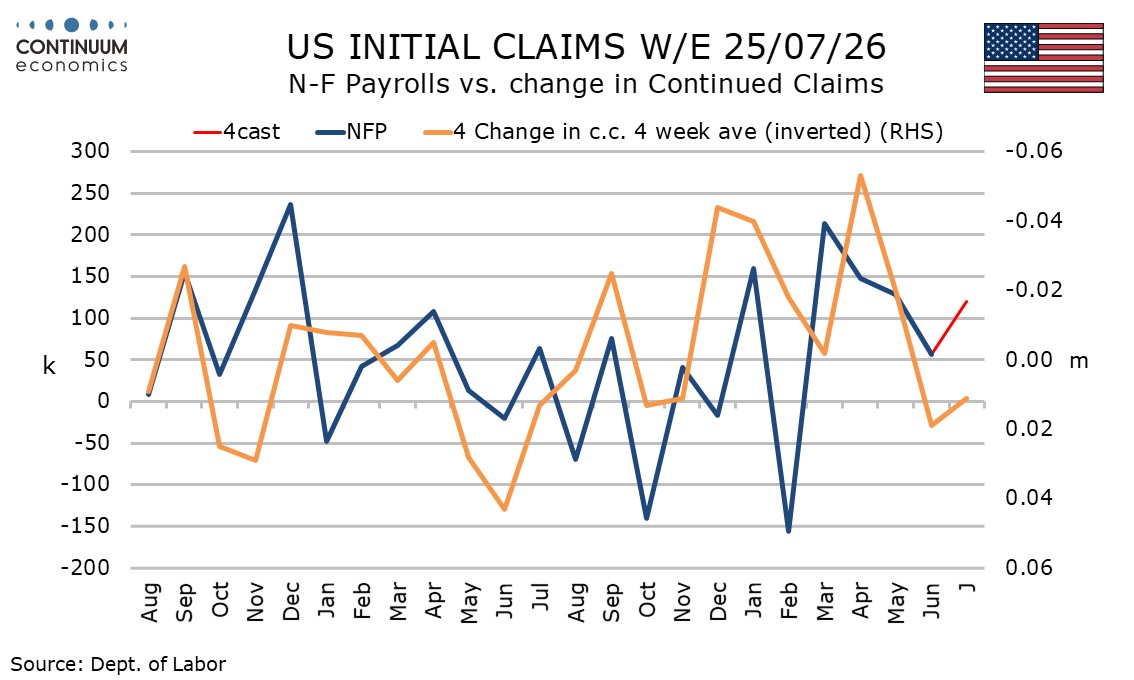
Weekly initial claims at 199k from 188k corrected from a very low figure. July has tricky seasonal adjustments related to early July auto shutdowns. Usually we see a bounce in early July and a return to normal in late July. This year were was no early July bounce and then a dip to a very low level.
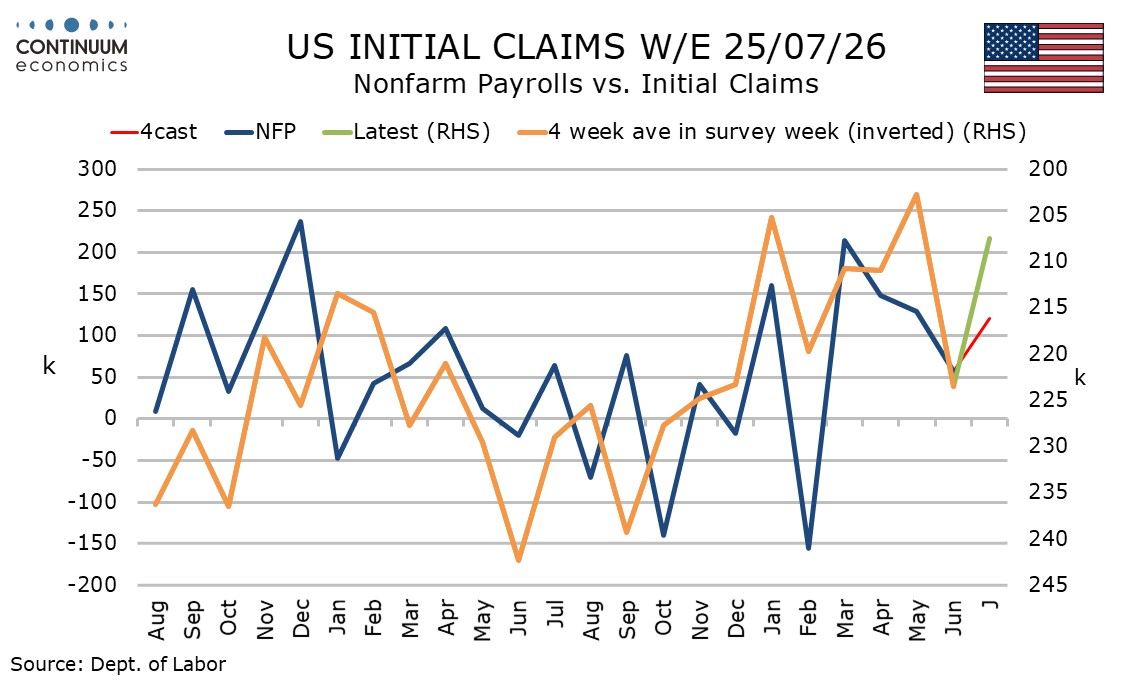
The initial claims 4-week average suggests a stronger July nonfarm payroll with last week’s very low figure coming in the payroll survey week. This week’s continued claims data covers the payroll survey week. A 7k fall to 1.762m is modest but a third straight fall. The signals from continued claims are less positive for payrolls than those from initial claims. Our payroll forecast is for a rise of 120k.