Canada August Employment - Fall corrective, but tariff risks ahead
Canada’s August employment report with a 41.7k decline is much weaker than expected though the fall can be seen as corrective from three straight healthy gains. The unemployment rate was stable at 6.4% though the average hourly wage of permanent employees at 2.0% was a significant slowing from 3.0% in July, and puts the pace a long way below June’s 3.7%.
The three month average fell to 17.2k in August from 60.4 in July as the weak August replaced a strong May. The three month average is now similar to the six month average of 22k, which is the strongest since November 2025 saw the six month average reach 26.9k.
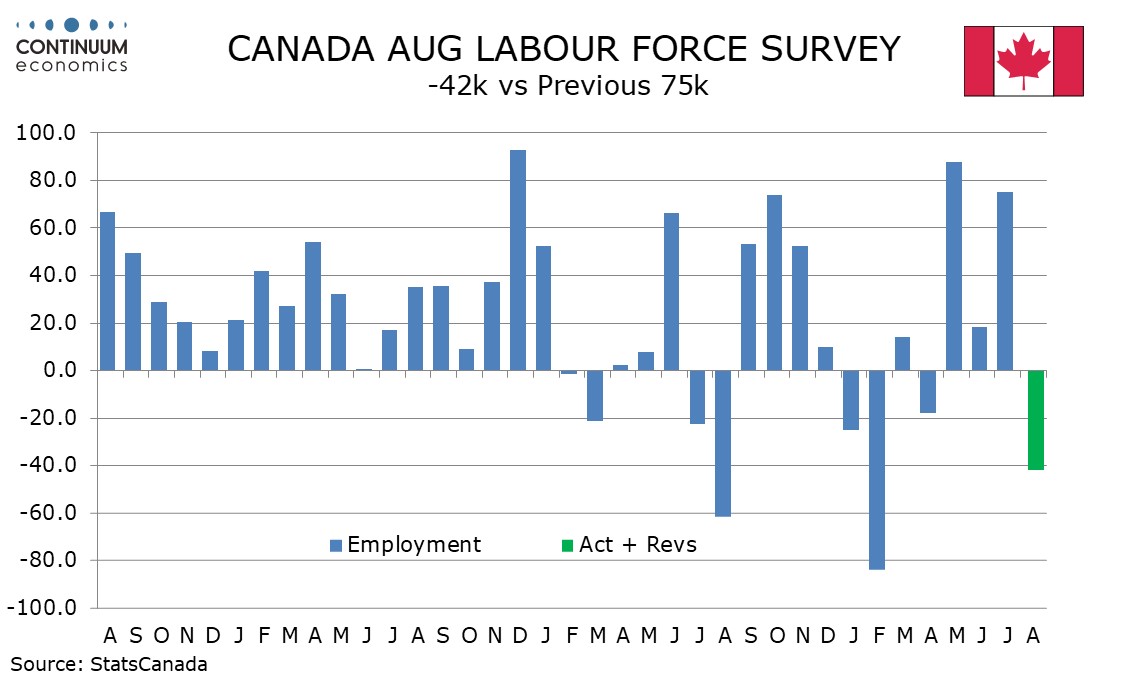
A string of strong months in late 2025 was followed by a strong of weak months in early 2026, before May, June and July saw trend pick up sharply. It remains to be seen if we are now due for a strong of weak months. Q2 picked up well but the outlook is uncertain with fresh US tariffs a clear worry.
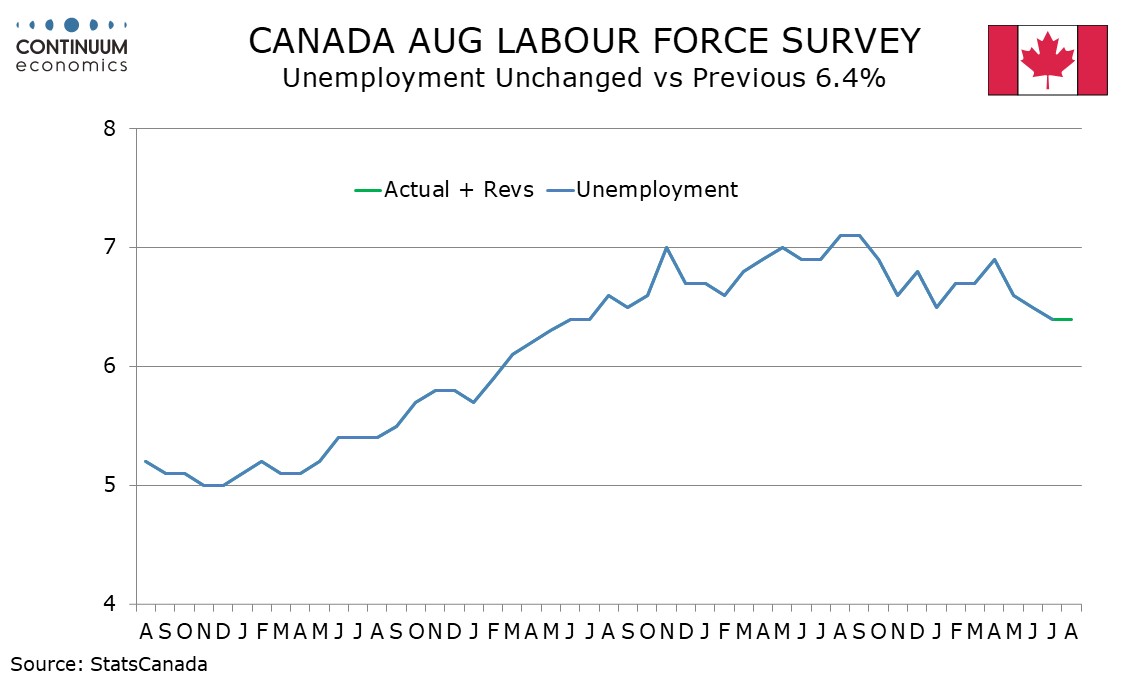
At this point it is too early to be alarmed by one weak employment month, with the unemployment rate stable at 6.4% as a 36.8lk decline in the labor force came close to matching the employment decline. However, slowing wage growth eases underlying inflationary risks, and is a threat to consumer spending too given elevated energy prices.
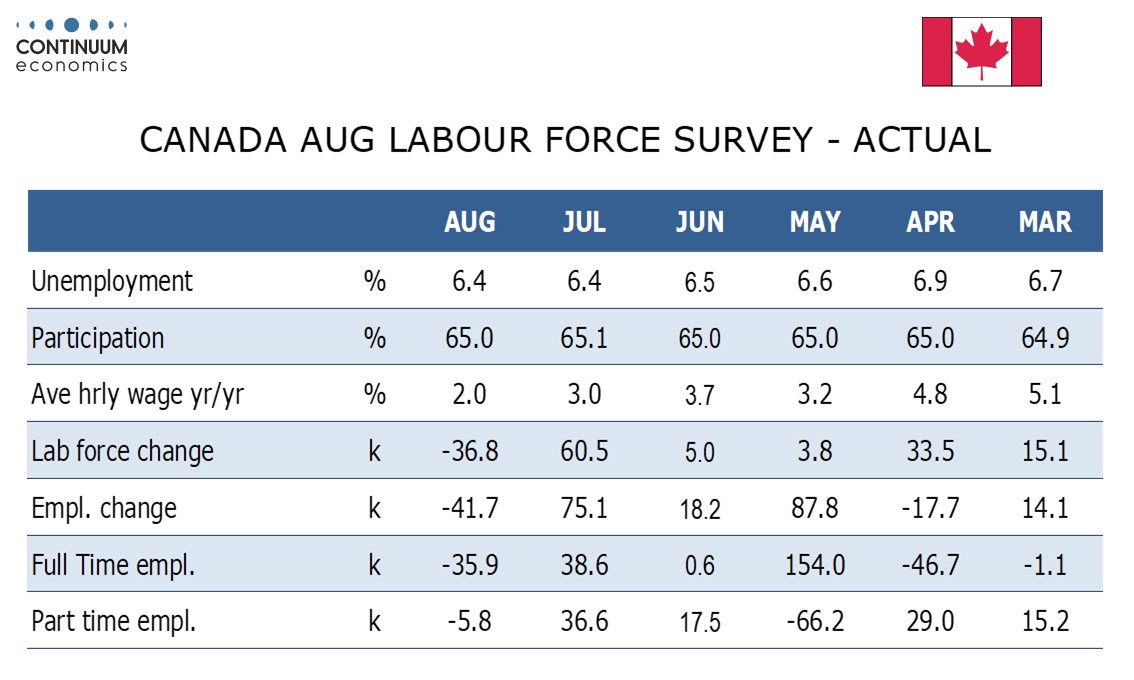
Employment detail shows the losses led by a 35.9k fall in full time work, which is negative, though almost half of the overall job loss came from a 20k decline in the public sector. Manufacturing was string at 22.1k and this will be tough to sustain given the tariffs. Construction was stable with a 1.5k rise laving private sector services looking weak, if at this point looking corrective from two straight strong gains. In contrast to the US payroll, the sectors one would have expected to get a boost from the World Cup did perform well in Canada, possibly because labor supply is less of an issue north of the border. That adds to the case for seeing August’s employment decline as corrective.