Bank of Canada Preview for September 2: Risks on both sides argue for steady policy
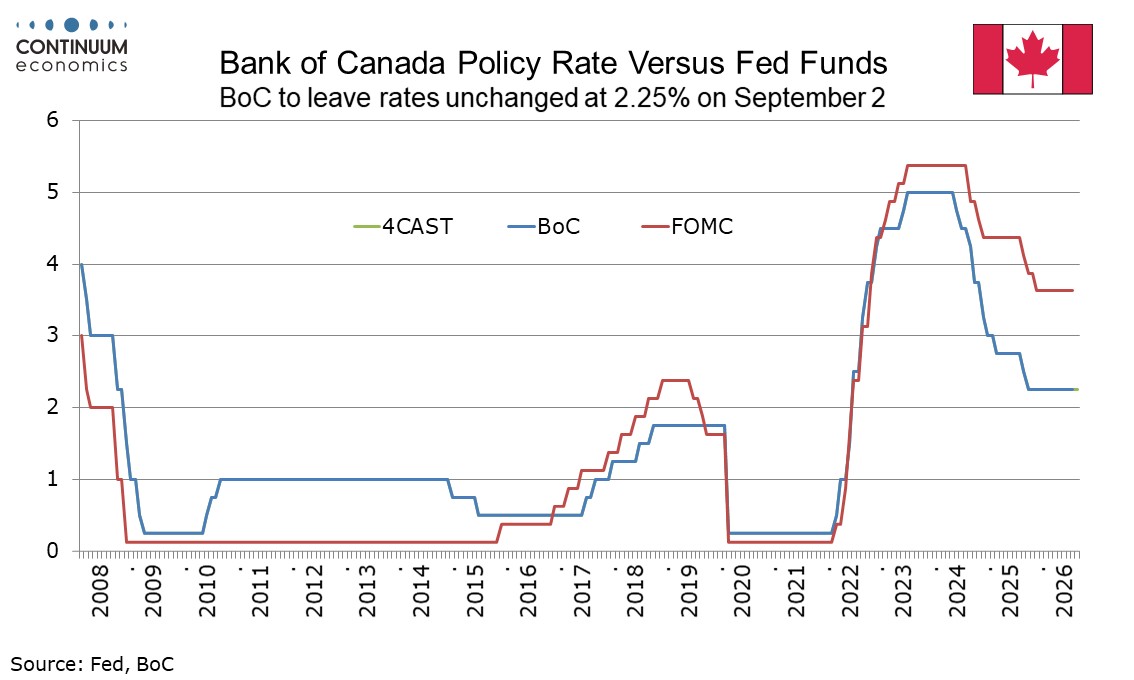
The Bank of Canada meets on September 2 and looks set to leave rates unchanged at 2.25%. While the meeting will come at a time of heightened trade tensions with the United States, we do not expect any hints that near term easing will be considered. Middle East risk and Canadian trade retaliation pose inflationary risks. We expect the next move will be a tightening, but not until Q2 2027.
The Bank of Canada has now left rates unchanged since its last easing in October 2025. Earlier in this year, the Bank of Canada pointed to the potential for tightening if elevated oil prices fed into core inflation, and easing if increased US tariffs undermined the economy. The July 15 meeting however, did not give any explicit hints of rate moves in either direction, though Governor Tiff Macklem did note that the greatest risks remained from the Middle East conflict and the trade relationship with the US. At that time Middle East risk appeared to be easing but that is no longer the case. Since that meeting July CPI also came in slightly stronger than expected. The BoC’s core Median and Trim CPI rates remain close to the 2.0% target, but ex food and energy CPI has seen three straight seasonally adjusted gains of 0.3%, hinting that core inflation is fining a base near 2.0% as the economy regains momentum.
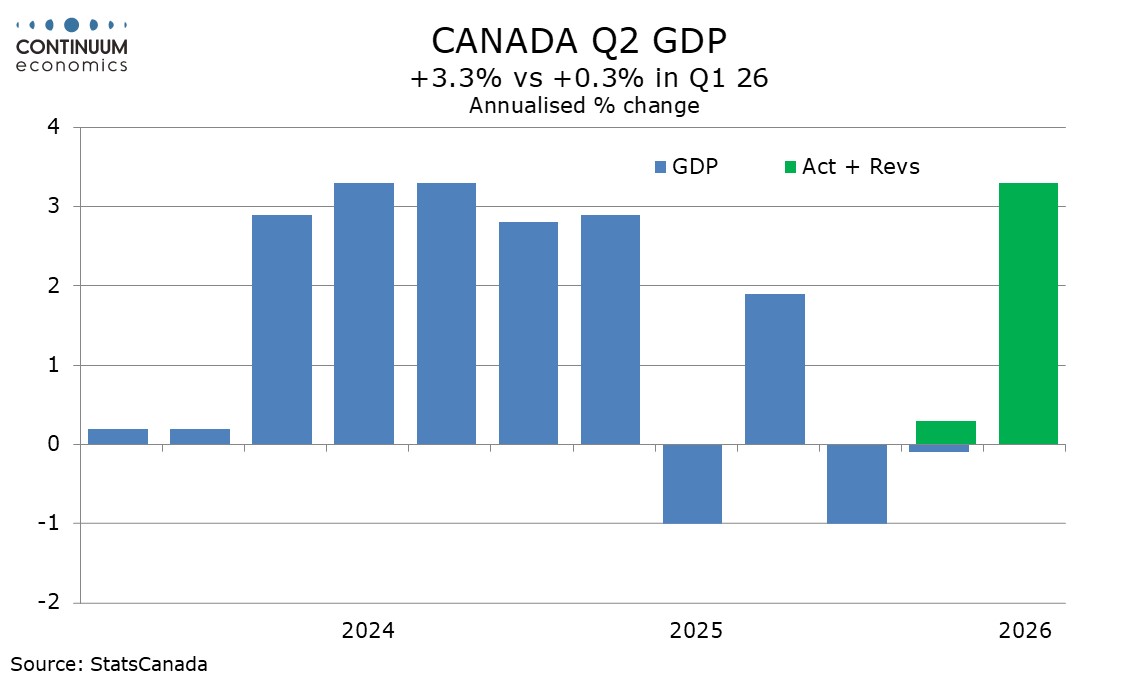
The 3.3% annualized rise in Q2 GDP is stronger than the 2.5% expected by the BoC in July, when the BoC stated it had greater confidence that the economy was returning to growth. Employment growth has also been healthy in the three months to July. Minutes from the July meeting however showed uncertainty over sustainability of the rebound. Q2’s GDP saw encouraging strength in both domestic demand and net exports, offset by a decline in inventories that now have scope for rebuilding. The increase in US tariffs mean uncertainty remains high, though the Q2 GDP detail suggests the economy has sufficient momentum not to see Canadian growth stalling, even if some slowing from Q2 is likely. The BoC is likely to recognize the risks from the trade conflict, but is unlikely to hint at easing. That Canada is set to implement retaliatory tariffs on the US adds to near term inflationary risk. Given ongoing Middle East uncertainty, the BoC will recognize risks on both sides.
This meeting will not see a quarterly Monetary Policy Report published, so the BoC will not be updating its economic forecast. The next MPR is due with the October 28 meeting. At the upcoming meeting they are likely to see uncertainty as having increased from an already high level and will express a willingness to adjust policy if needed, while giving little forward guidance. However no strong hints of a near term move are likely. We expect policy to remain on hold before tightenings in Q2 and Q3 of 2027 take the rate to 2.75%, the midpoint of the 2.25%-3.25% range the BoC sees as neutral. This assumes that strength in oil prices will not have a significant feed through into underlying inflation.