Escalation Risk in U.S.-Canada Trade Dispute
The immediate economic impact of the collapse of the US-Canada trade talks is likely to be modest, but not insignificant in the case of Canada. Where things move from here is uncertain, with Canadian retaliation due to be implemented on September 8, and risk of further mutual escalations after that. The risk that Trump will back down is also significant, either before or after any such escalation.
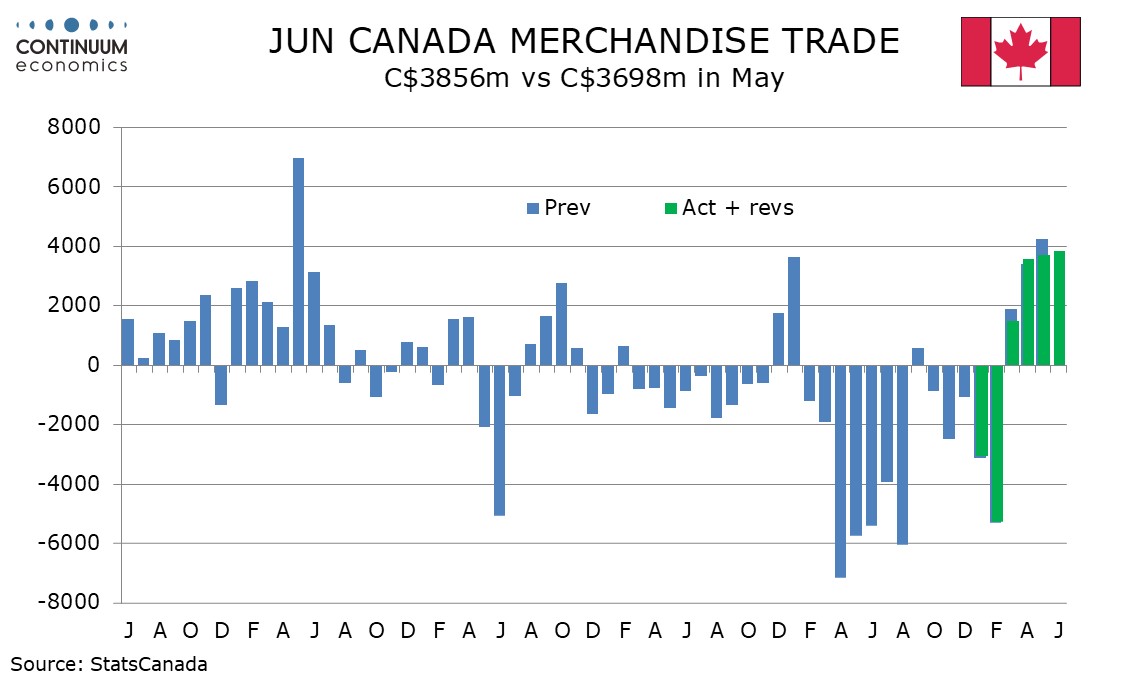
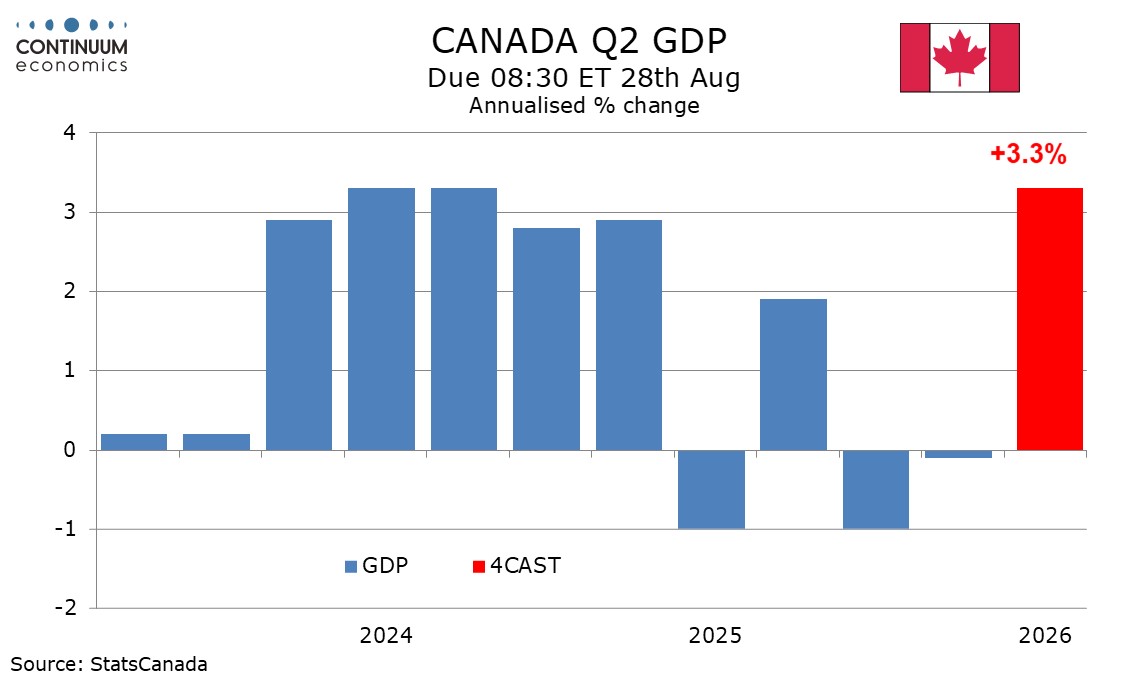
Exactly what caused the collapse in talks is unclear, with both sides blaming the other, but it appears that US demands extended onto areas Canada was not willing to discuss, including Canada’s trading relations with other nations and a US desire for goods sold in Quebec need not be labelled in French, prompting Canada to walk away from the talks. Canada’s government had already been under domestic pressure not to concede too much, on issues such as pushing provincial governments to put US alcohol back on liquor store shelves. 50% tariffs on Canadian exports sounds large, but the freshly implemented tariffs impact only around 5% of Canadian exports to the US, making up marginally above 1.0% of Canadian GDP, suggesting the hit to Canadian GDP is unlikely to exceed 0.5%. That is enough to push H2 2026 Canadian GDP slightly below potential after what is likely to be a strong Q2, but not enough to push Canada into recession. Still, the impact on the targeted industries will be severe, and that will impact Canadian public opinion well beyond those directly impacted.
Canadian retaliation on US imports is likely to have a modest impact on prices, perhaps around 0.3%, which could prevent core Canadian inflation falling below target while headline inflation remains supported by oil. US tariffs, if sustained, would leave the Bank of Canada is unlikely to tighten this year, but Canadian retaliation would keep easing unlikely too. There is an economic case against Canadian retaliation but that is not where Canadian public opinion is. If Canada responds ”dollar for dollar” on the US, the impact on the US economy, which is over ten times the size of Canada’s, will be marginal, as will the impact on US inflation of the now implemented US tariffs on Canada. However, with the US already having an inflation problem the persistence of inflation will be easy to at least partially blame on the tariffs politically. The US may have the stronger economic hand in this dispute, but Trump does not have the support of the public that Canadian PM Carney does in Canada.
After Canada retaliates, which appears likely unless the unpredictable Trump backs down quickly, the US may escalate further, which would probably prompt another Canadian retaliatory match. Should a rapid escalation, as was seen in 2025 when US-China trade was drastically curbed by tariff rates moving broadly above 100%, the US would have a lot to lose, given that Canada is a major source of imported energy to the US, prices of which are already inflated by the situation in the Middle East. The more Trump escalates this dispute, risks of an eventual climb down will rise too. Trump’s latest escalation, a 50% tariff on Canadian auto imports which does not start until January 1 2027, suggests he may be going for tough talk but limited immediate impact. US and Canada are unlikely to maintain high tariffs on each other indefinitely, but the damage to US-Canadian relations is likely to be lasting.