FX Weekly Strategy: Asia, Aug 3-7
USD/JPY remains the pivotal focus after intervention and sources reports threatening more
US payrolls the main data focus with a quite week elsewhere
The dust settles on a big week with the question heading into this one being how much temporary damage has been done to the recently heavily favoured dollar as a result and as importantly has any deeper traction been achieved on USD/JPY.
The market was left unconvinced by the FOMC, with odds of a hike in Sep down to 30% (almost caught up by the BoJ) and not fully priced in by year end (post-election if that is proving a consideration).
Warsh commentary even questioned the relevance and sensitivity to single-month-data. Whether that dulls the market reaction to payrolls or shifts it more down the curve is to be seen. Anything short of ‘unignorably’ might fail to reignite the dollar’s ebullience near-term. Post month end fix, the dollar remains somewhat knocked back and Europe/USD price action more constructive nearby than it had been.
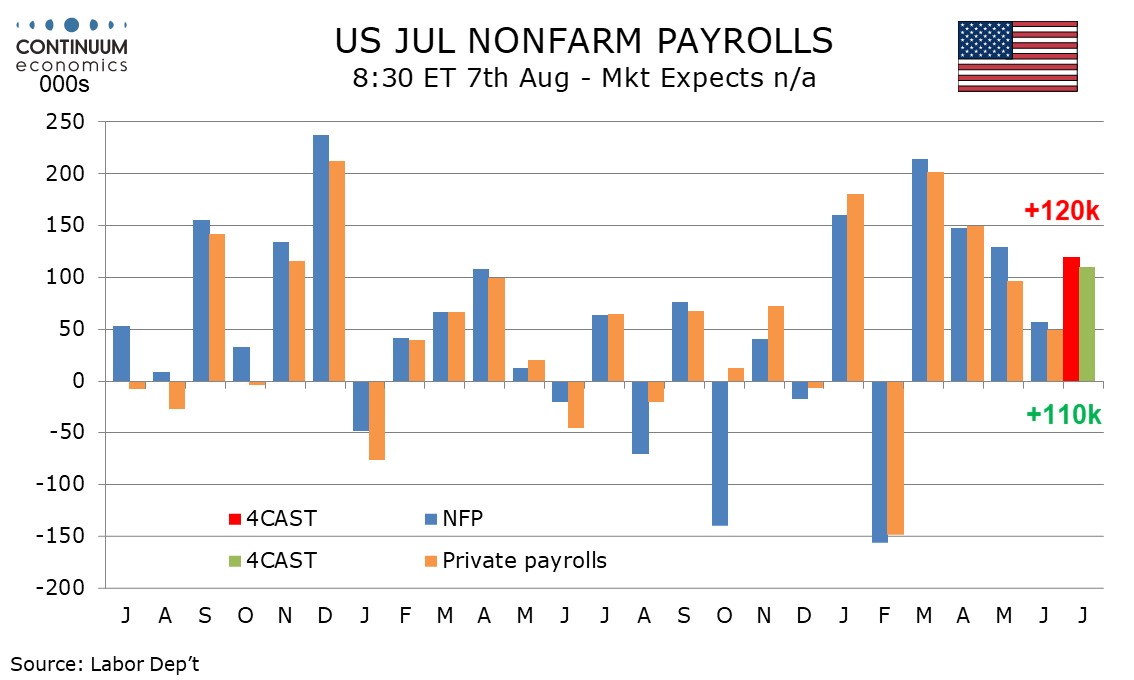
We look for solid data overall, marginally above market on the headline though as with market looking for the unemployment rate to tick back top 4.3% from 4.2% which would tend to leave the overall balanced Fed assessment unchanged.
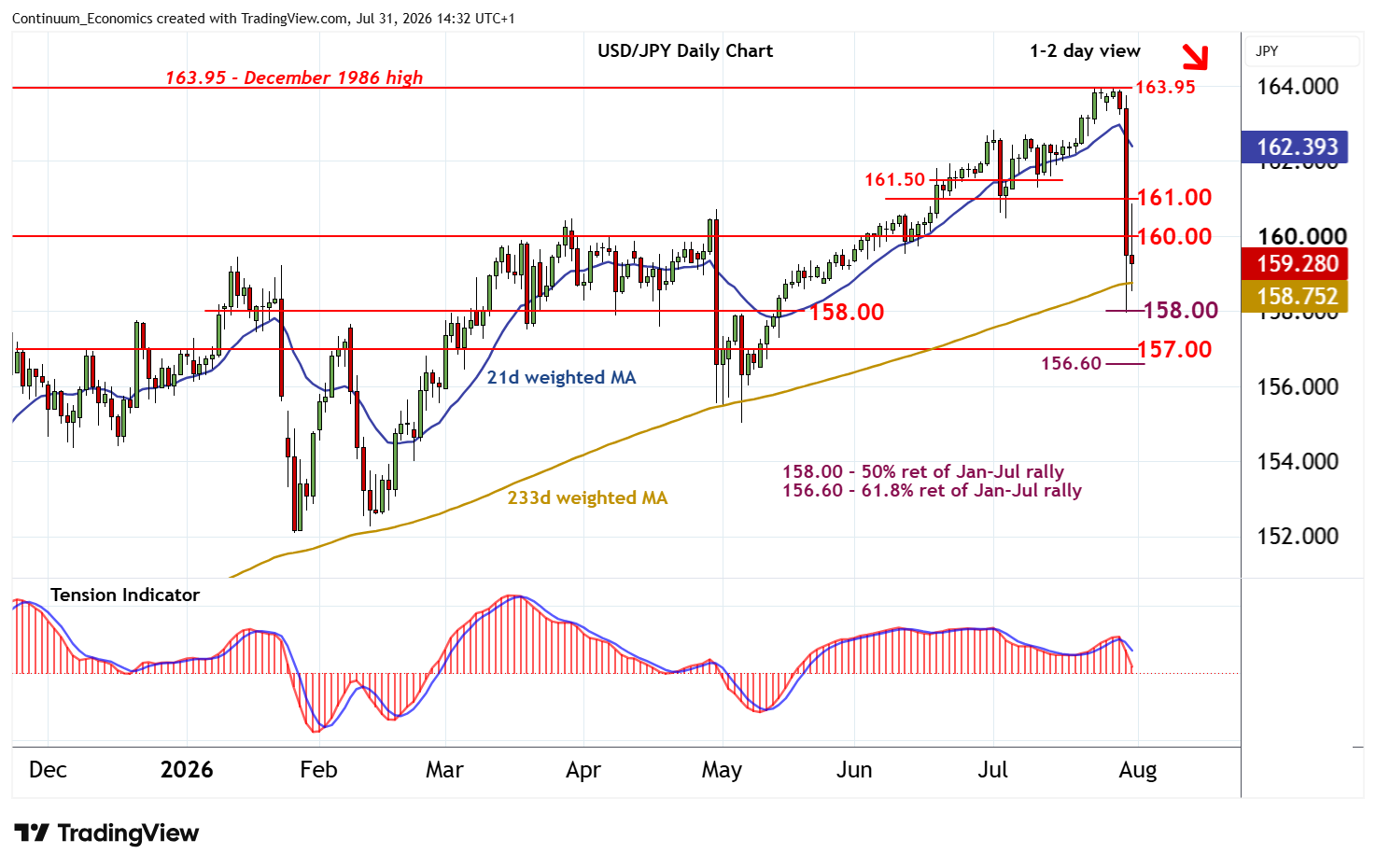
USD/JPY is more at the centre of major FX direction near-term after Thursday’s big intervention move and then after-ripples Friday have injected volatility. The unresolved issue is whether bigger shifts are afoot or whether the US stance is so far one of informed tacit blessing.
Friday saw notable Reuters sources, quoting those familiar with the matter, suggesting that "the U.S. Treasury has informed a number of banks that it may intervene in the yen market on Friday and that they should stand ready for future action".
That is perhaps a little ambiguous on whether that would represent coordinated action, action on behalf of Japan, or just communicated knowledge of the risk of more US hours action. But in any case, it keeps the market vigilant that further intervention is high risk and that the US is in the loop and at least tacitly or even explicitly supportive. Bessent’s post intervention comments already looked to give some blessing to the action noting that the yen was undervalued and excess volatility undesirable.
This maintains potential for more nervy, wide volatile action within last week’s long tail and for jumpy markets to be more trigger responsive to checking rumours and any intraday sells. Thursday’s lows and the 200dma remain the more critical level and it would take holding breaks through here to be potentially creating some bigger changes in market structure.
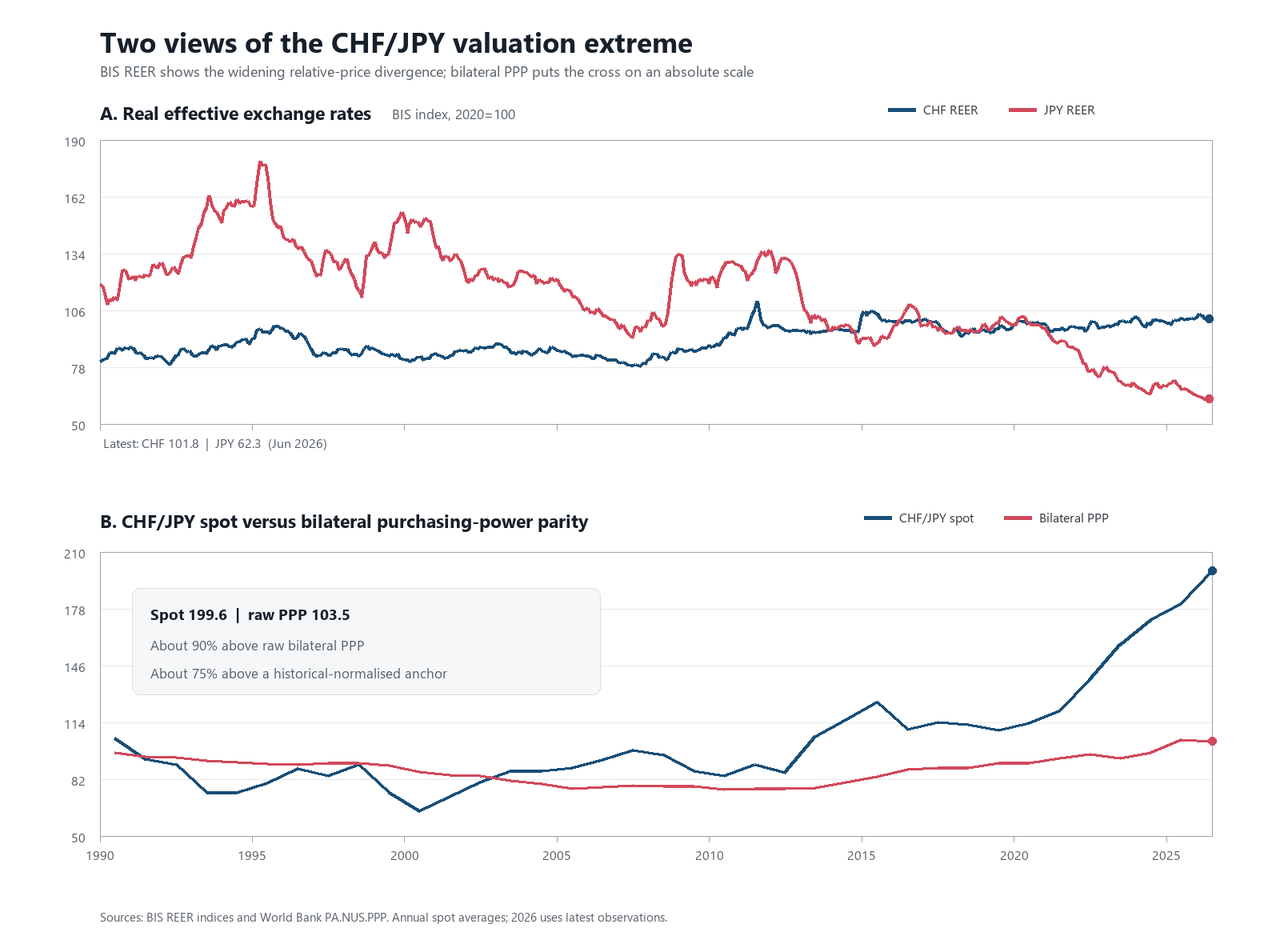
Beyond pure yen outright positioning, weighing up CHF vs JPY is also one noted thematic issue we have been watching (see ‘CHF/JPY and the carry question’) - whether you are running risk or hedging risk. For the determined former, ‘CHF as the new JPY for carry’ is one to mull and for the more wary latter short CHF/JPY as a portfolio risk hedge with some optionality qualities is the potential appeal. Discussed in more detail (here).
Outside of the US and Japan focus, it’s a somewhat quieter period elsewhere, and with little on the calendar from Eurozone or UK and no major background themes or new impetus. The BoE meeting largely left current expectations in place for the Bank to be sitting on its hands during the summer and then some two-way sentiment about direction late in the year, partly depending on Iran and how that plays out in the data. It’s still the honeymoon period for new PM Burnham meanwhile with little substantive emerging about bigger fiscal plans for the medium-term yet.
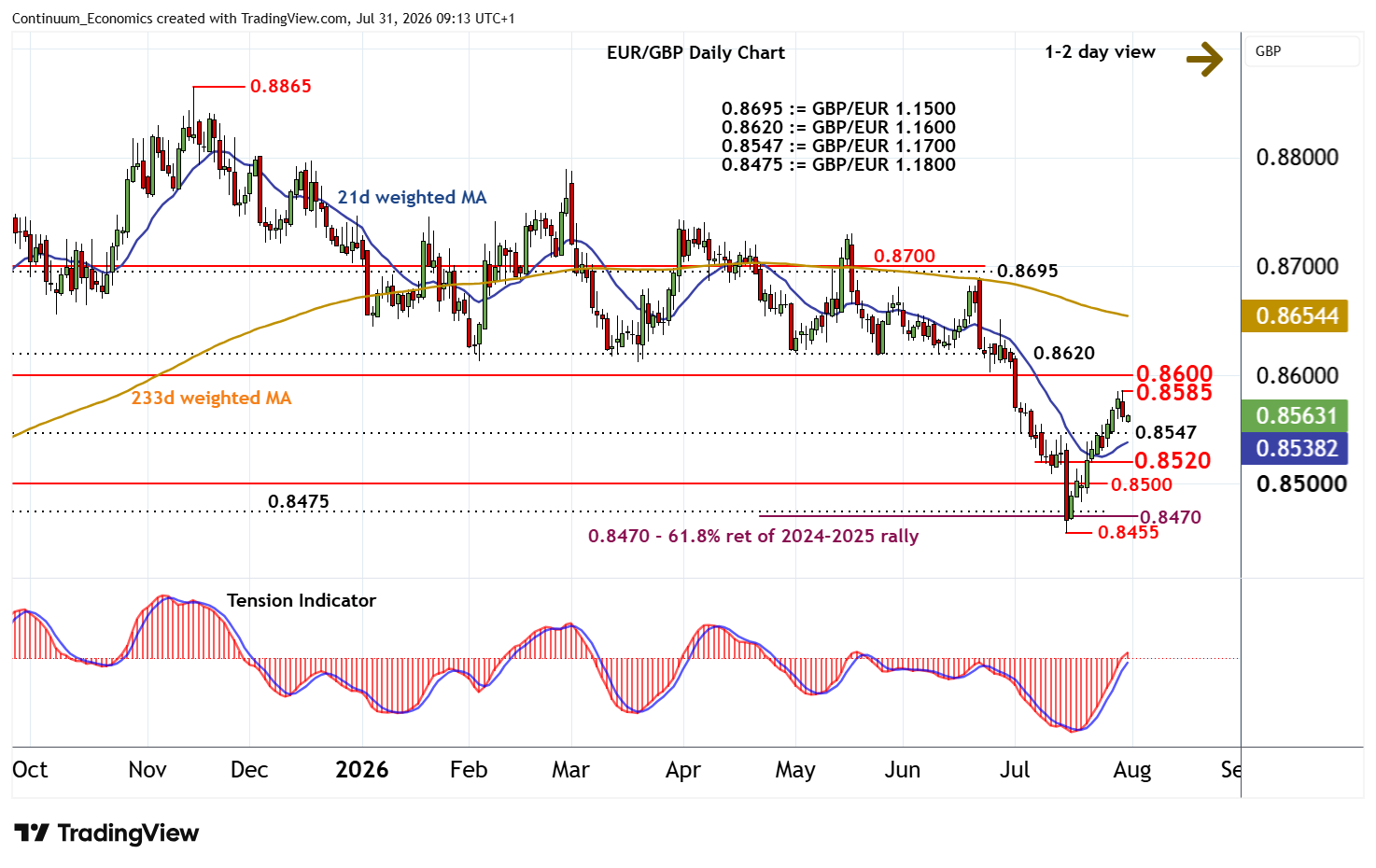
EUR/GBP has found prior 0.86~ floor proving bounce resistance on the post sterling squeeze cross rebound and that stays as a key reference near-term.
Data and events for the week ahead
USA
The US data highlight will be July’s employment report on Friday. We expect a 120k increase in the non-farm payroll, 110k in the private sector, picking up from a June number that was restrained by a surprising fall in leisure and hospitality. However, we expect unemployment to rise to 4.3% from 4.2%, reversing a June drop, and a second straight 0.3% increase in average hourly earnings. We expect the payroll to outperform a 65k increase in July’s ADP estimate on private sector employment growth due on Wednesday, after June data when ADP outperformed. June’s JOLTS report on job openings is due on Tuesday. Thursday sees weekly initial claims, which are likely to continue correcting from a recent low, and the Q2 productivity and costs report.
July ISM reports are due. We expect slippage in manufacturing on Monday to 53.0 from 53.3 but an increase in services on Wednesday to 54.5 from 54.0. Monday also sees June construction spending. On Tuesday we expect June’s trade deficit to fall to $73.5bn from $77.6bn in May. June factory orders are also due. Thursday sees June wholesale sales and Friday sees June consumer credit. Any Fed talk will be closely watched. Musalem will speak on Thursday while Barkin is due on Friday.
CANADA
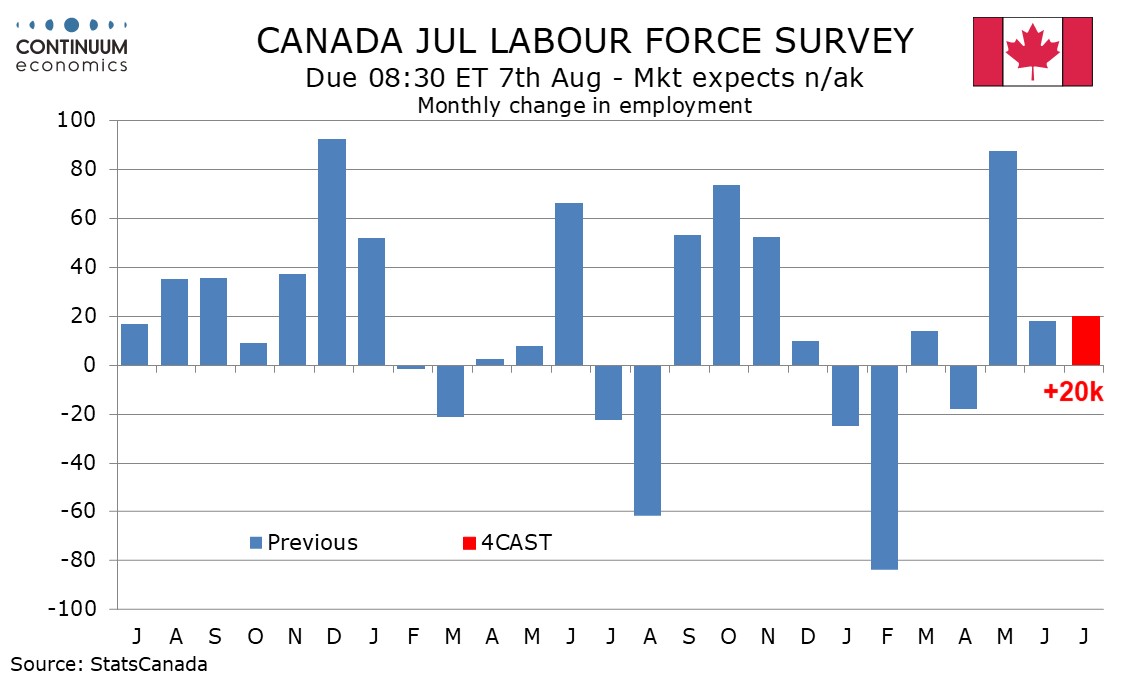
Canada’s data highlight will be July employment on Friday, where we expect a rise of 20k with unemployment remaining at 6.5%. June’s trade balance is due on Tuesday. July manufacturing PMIs are due from S and P on Tuesday and Ivey on Friday.
EUROZONE
For the EZ, a week of 2nd tier releases. August 5 sees June PPI, which is expected to decline Yr/Yr, but July energy prices bounces promises a rebound with the July figures. June EZ retail sales on August 6 is expected to see a slowdown, while the July final PMI data is expected to be unchanged from the provisional reasonable figures.
UK
For the UK, a low intensity week, with July final PMI figures for Manufacturing August 3 and Services on August 5. No surprises are expected. Focus will remain on the new PM Burnham spending commitments for clarity on what will happen in the autumn budget.
JP
Labor Cash Earnings on Wednesday and overall household spending on Friday will be the important releases for Japan. Wage growth for June is unlikely being affected by the second round U.S.-Iran conflict yet and should points toward above 2% growth. Household consumption is also expected to improve, given the strengthening real wage.
AU
Private inflation survey on Monday and trade balance on Thursday are unlikely to sway the Aussie or RBA decision.
NZ
The Q2 labor report will be released on Tuesday. If we are seeing a stronger than expected result for wage, there is a chance market anticipation for RBNZ/s hawkish tilt will be accelerated and see a push for Kiwi.
Last week highlights (here)