FOMC - Pause, but no clear dovish signals
The FOMC left rates unchanged at 3.75-4.0% as expected but still appears to be on track for a December tightening. The Fed stated accumulation of more information will help the Fed determine the appropriate stance to return inflation to the 2% target. We suspect a slowing economy and stabilizing inflation in 2027 may allow rates to peak after a December move but that is not what data is signaling at present.
That there were two hawkish dissents was not a surprise but the identity of one of them was. Governor Lisa Cook, more known for her legal problems with President Trump than any hawkish views, was one of the two. The other was Cleveland Fed’s President Beth Hammack, and no surprise. Minneapolis Fed’s Neel Kashkari and Dallas Fed’s Lorie Logan, both dissenters with Hammack in July, went along with this decision, but are likely to be expecting a move in December. A dissent in the Board of Governors rather than solely among the district presidents carries a little extra weight.
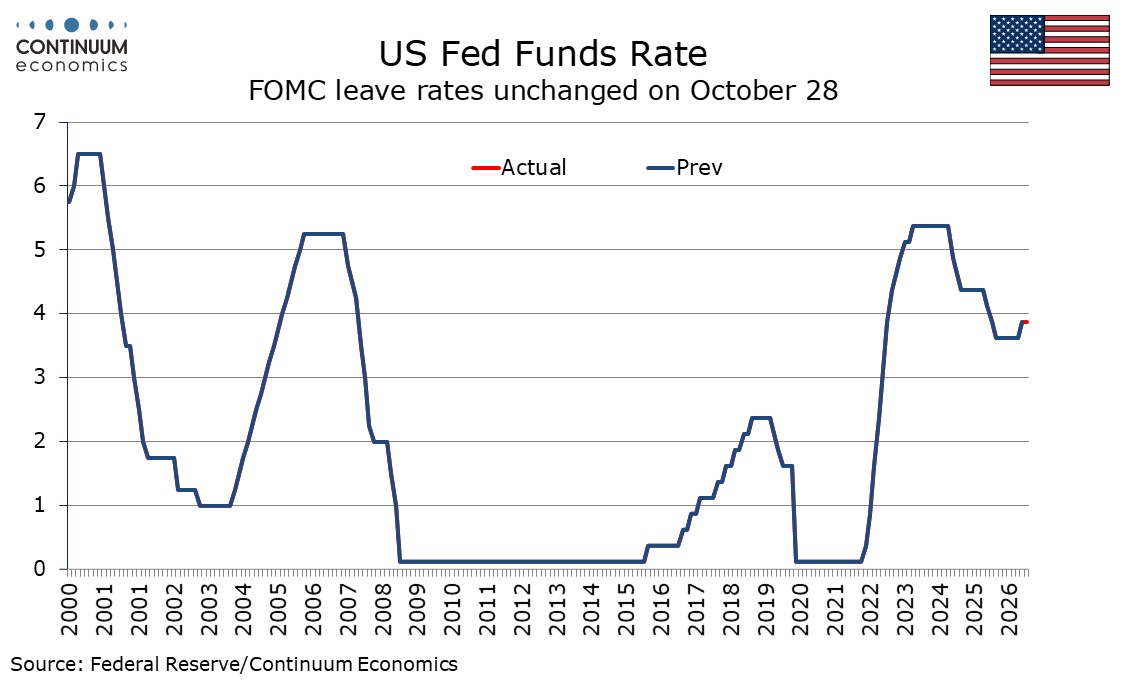
With inflation still described as elevated the odds still favor a December tightening, as was implied in September’s dots, which were not updated at this meeting. 2027’s dots imply no change with a hawkish skew. Our view that rates will soften in H2 2027 is dependent on the economy slowing and inflation easing. In early 2027 the debate is likely to be whether or not to tighten further.
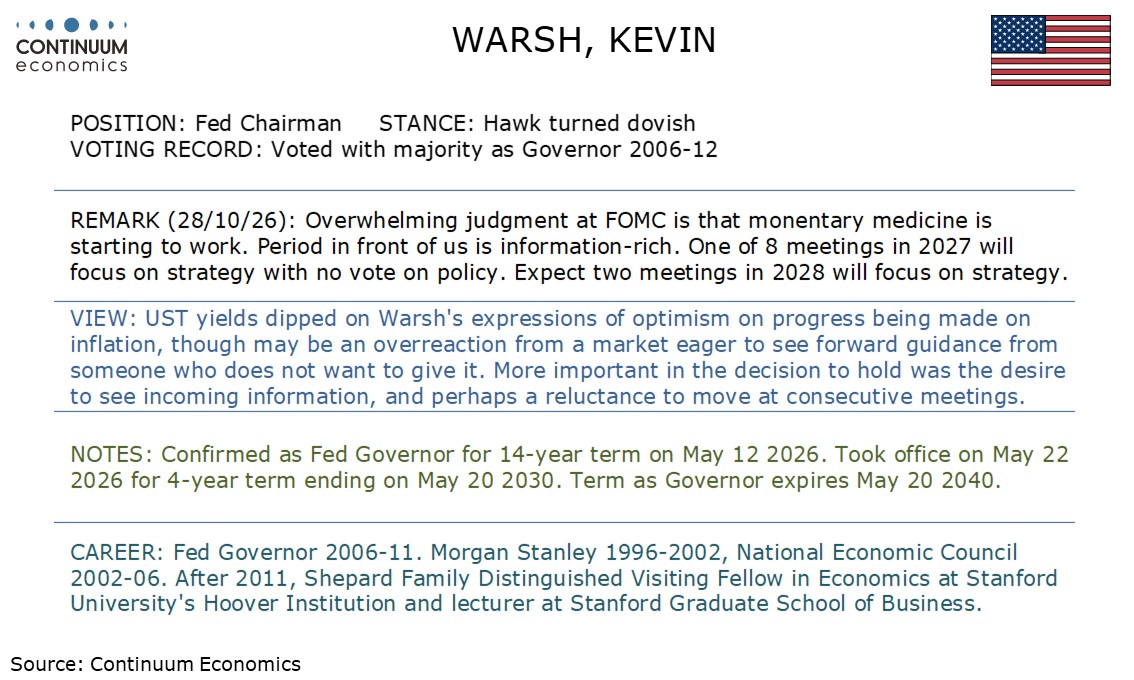
Chairman Warsh’s press conference opened with noting the strength of the economy, meaning that focus was on elevated inflation, but UST yields dipped in the press conference as he expressed optimism that progress was being made on inflation. We would not read too much into those remarks. Warsh’s insistence against forward guidance is making his press conferences awkward, leaving risk that any pause in a tightening cycle has to be justified, and is at risk of being seen as signaling that nothing more needs to be done. A degree of forward guidance would make Warsh’s task easier. He is in fact getting it from colleagues, notably New York Fed’s John Williams and Governor Christopher Waller, though obviously not at the post-meeting press conferences. The most notable fresh information in the press conference was the decision to reduce the number of policy setting meetings, leaving one of the 8 scheduled meetings in 2027, and two of the 8 in 2028, to longer term strategic considerations.