Preview: Due October 29 - U.S. Q3 GDP - Stronger growth, slower inflation
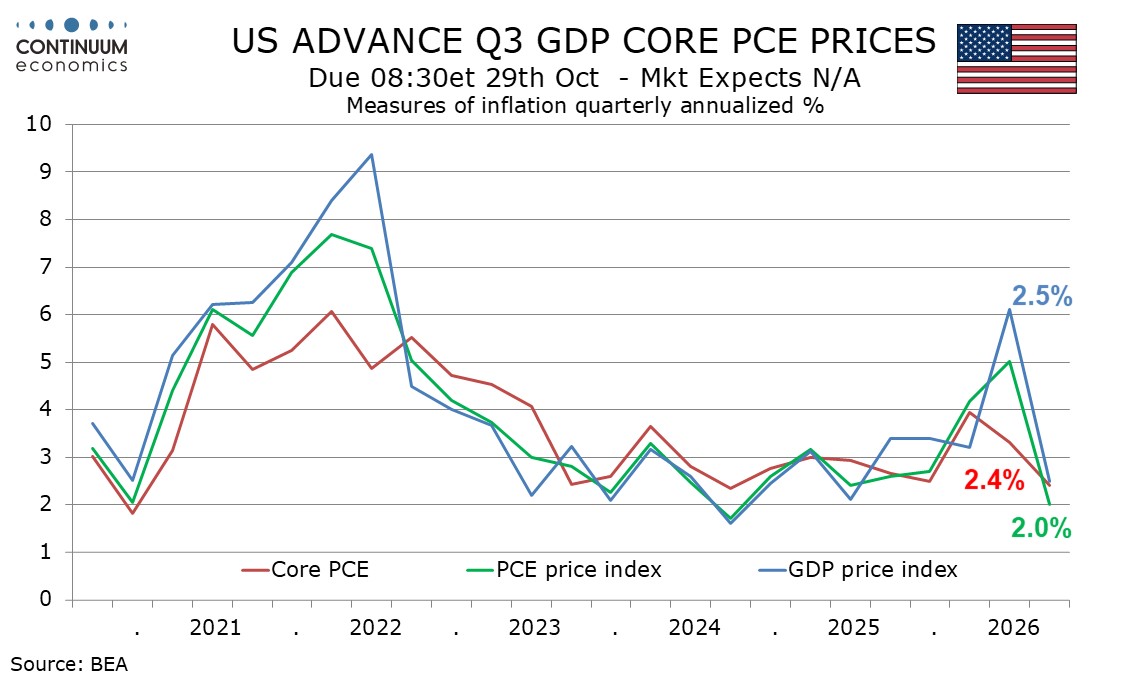
We expect a Q3 GDP increase of 2.8% annualized, a modest acceleration from the two preceding quarters to a 4-quarter high. We expect a 2.4% increase in core PCE prices, still above target but the slowest since a matching Q3 2024.
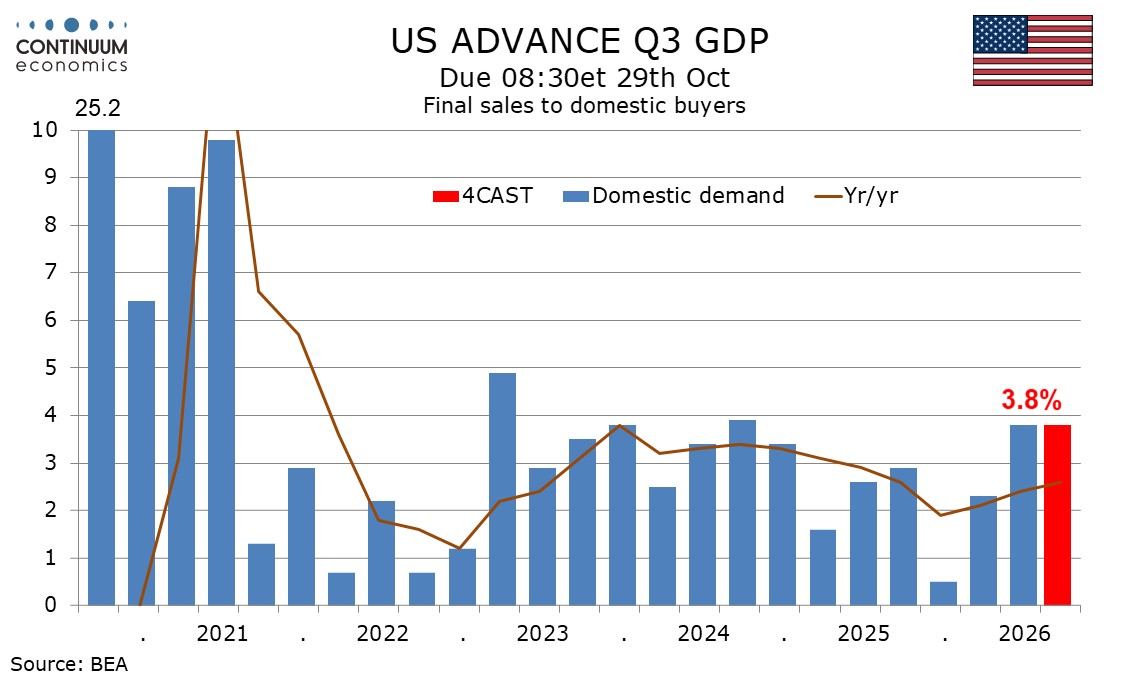
Domestic demand is likely to remain strong, with a rise of 3.8% in final sales to domestic buyers (GDP less inventories and net exports), matching Q2’s gain which was the strongest since Q3 2024.
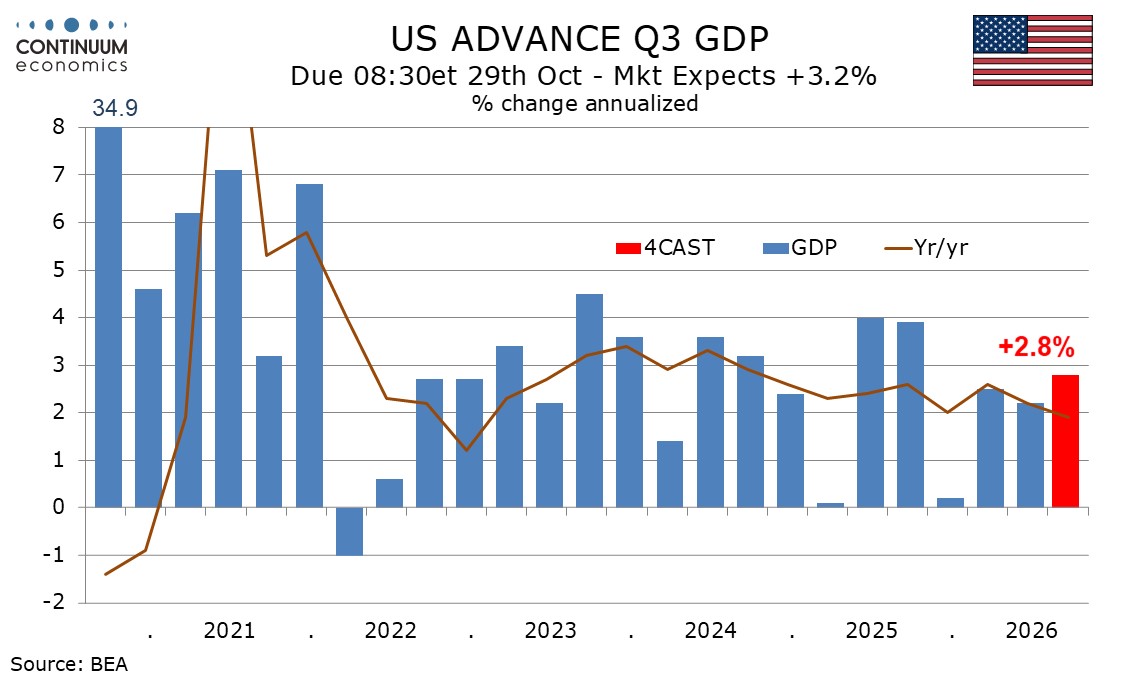
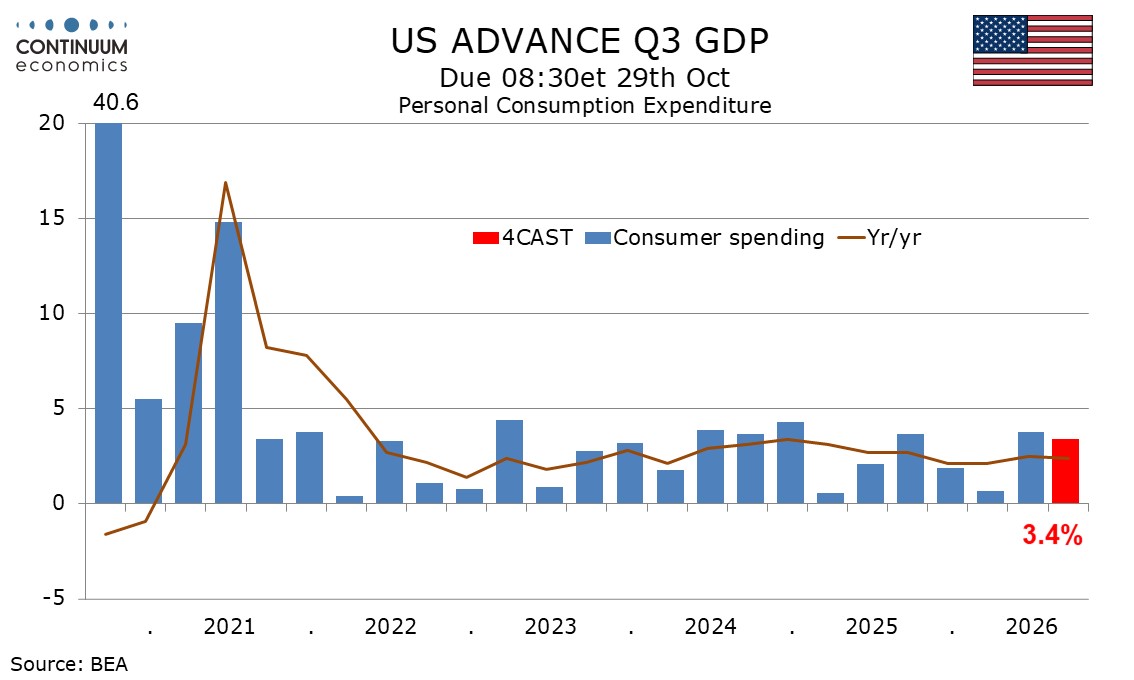
Consumer spending remains resilient and we expect a rise of 3.4%, a modest slowing from Q2’s 3.8% with durables moving closer to non-durables after a strong Q2 rise of 7.4%. In Q3 we expect durables to rise by 3.7%, while nondurables at 3.1% and services at 3.4% match their Q2 outcomes.
Consumer spending continues to outperform real disposable income, though in Q3 we expect real disposable income to pick up to a 2.3% increase after a 0.2% decline in Q2 as inflationary pressures ease somewhat.
Our 2.4% annualized forecast for core PCE prices assumes a 0.3% rise in September for which monthly data will be released alongside the GDP release. Despite stronger gasoline prices in September, we expect the overall PCE price index to rise by only 2.0% in Q3. We expect a 2.5% increase in the GDP price index.
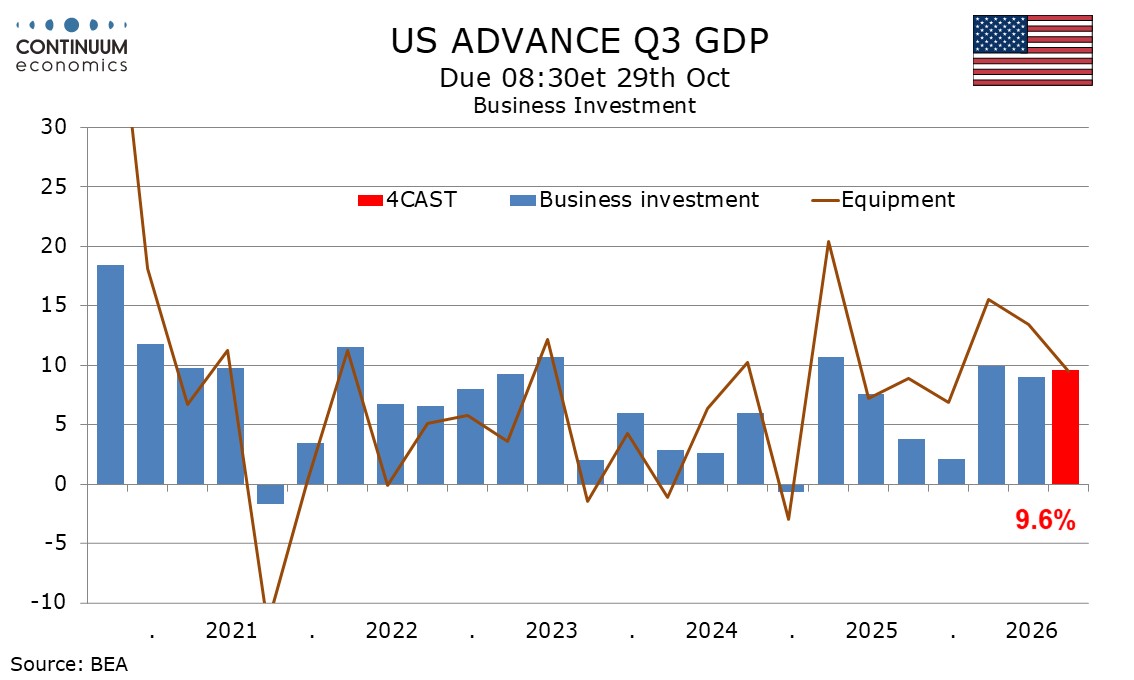
Business investment, fueled by AI, is likely to remain strong, with a rise of 9.6%, similar to the gains of the two preceding quarters. Similar gains are likely in all three components, intellectual property, equipment and even structures, which have underperformed overall business investment in most recent quarters.
We expect a marginal 1.7% decline in residential investment to follow a 2.8% increase in Q2 which was the first increase since Q4 2024. Early signals for Q4 are for increased weakness in housing. We expect little change in government, up 0.3% after a marginal 0.1% decline in Q2.
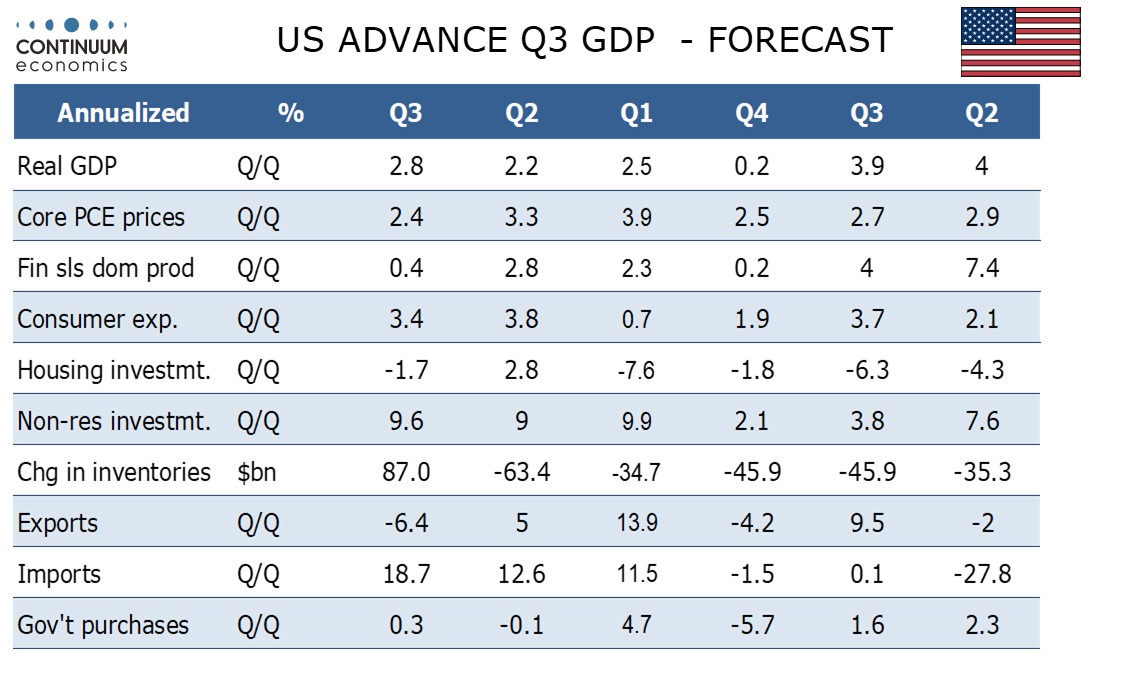
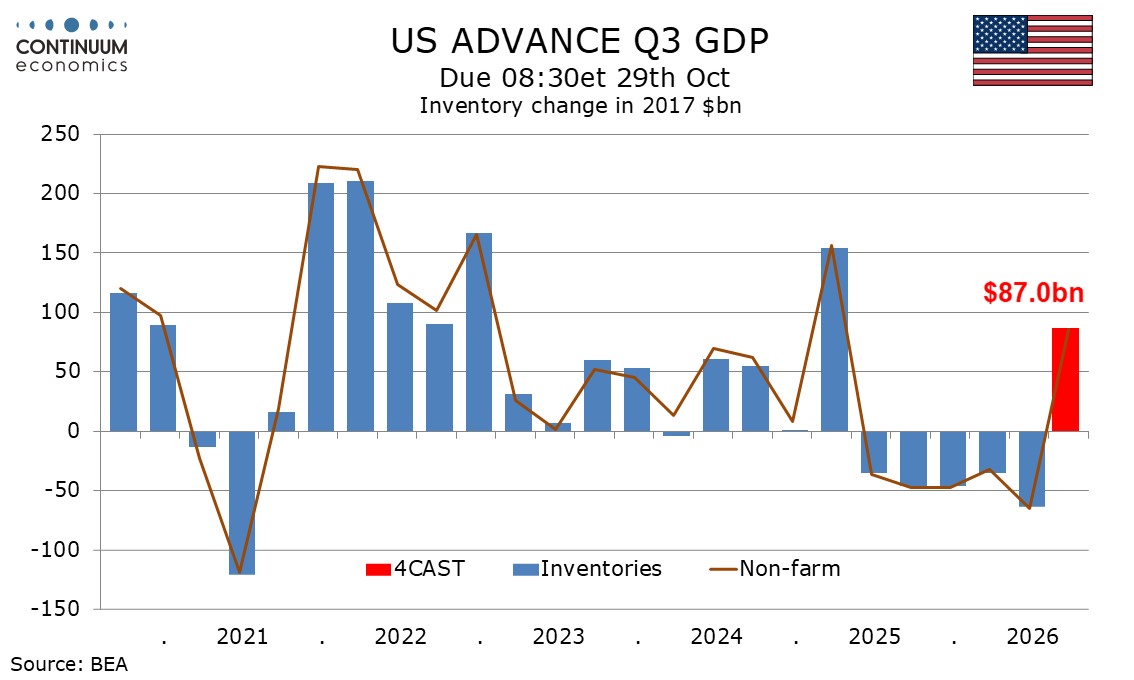
Inventories are likely to see their first increase since a pre-tariff surge in Q1 2025, adding a significant 2.4% to GDP. This will leave final sales (GDP less inventories) up by only 0.4%.
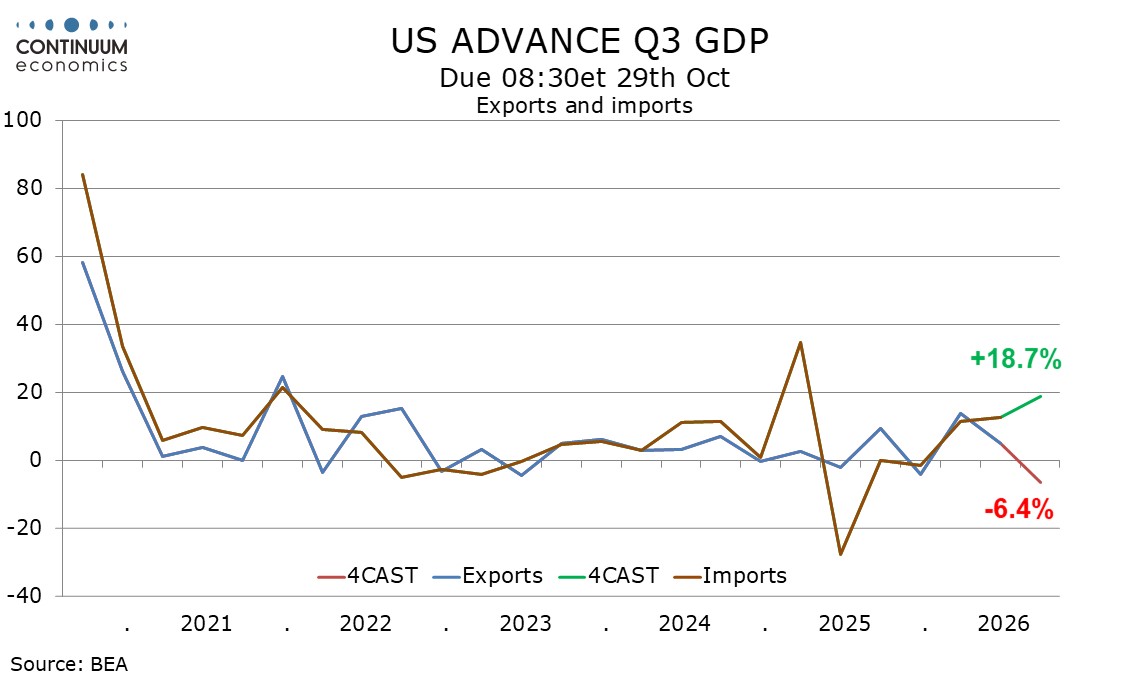
The positive from inventories is likely to be more than fully offset by a negative from net exports, taking 3.4% from GDP. We expect a surge of 18.7% in imports, as the AI investment surge sucks in imports, and adding to inventories. Net exports are likely to more than outweigh the positive from inventories due to a weak quarter from exports, where we expect a decline of 6.4%.