FX Weekly Strategy: Asia, Sep 7-11
US CPI a key focal point. We see upside risks at 0.3% core
ECB hike fully priced in; attention turns to forecasts and commentary on policy stance
Sharp USD/JPY lurch down may have left behind better supply into bounces, further downside risks ahead
BoE seen back of the tightening pack, sterling could still seen slippage
Heading into this week, Fed Sep hike odds slipped back from odds-on to 40-50% after Fed’s Waller gave a somewhat more dovish, or at least data conditional, spin on the state of play into the next meeting.
Payrolls were good, with a solid upside surprise and upward revisions but didn’t necessarily move the needle, especially with earnings still moderate. That report overall was not going to challenge the Fed view that the labor market remains solid, stable and broadly balanced and that growth remains firm. What this leaves is CPI as the key part of the equation that some on the Fed seem to view as the near-term decider, along with PPI and then subsequent PCE data to round out the inflation update.
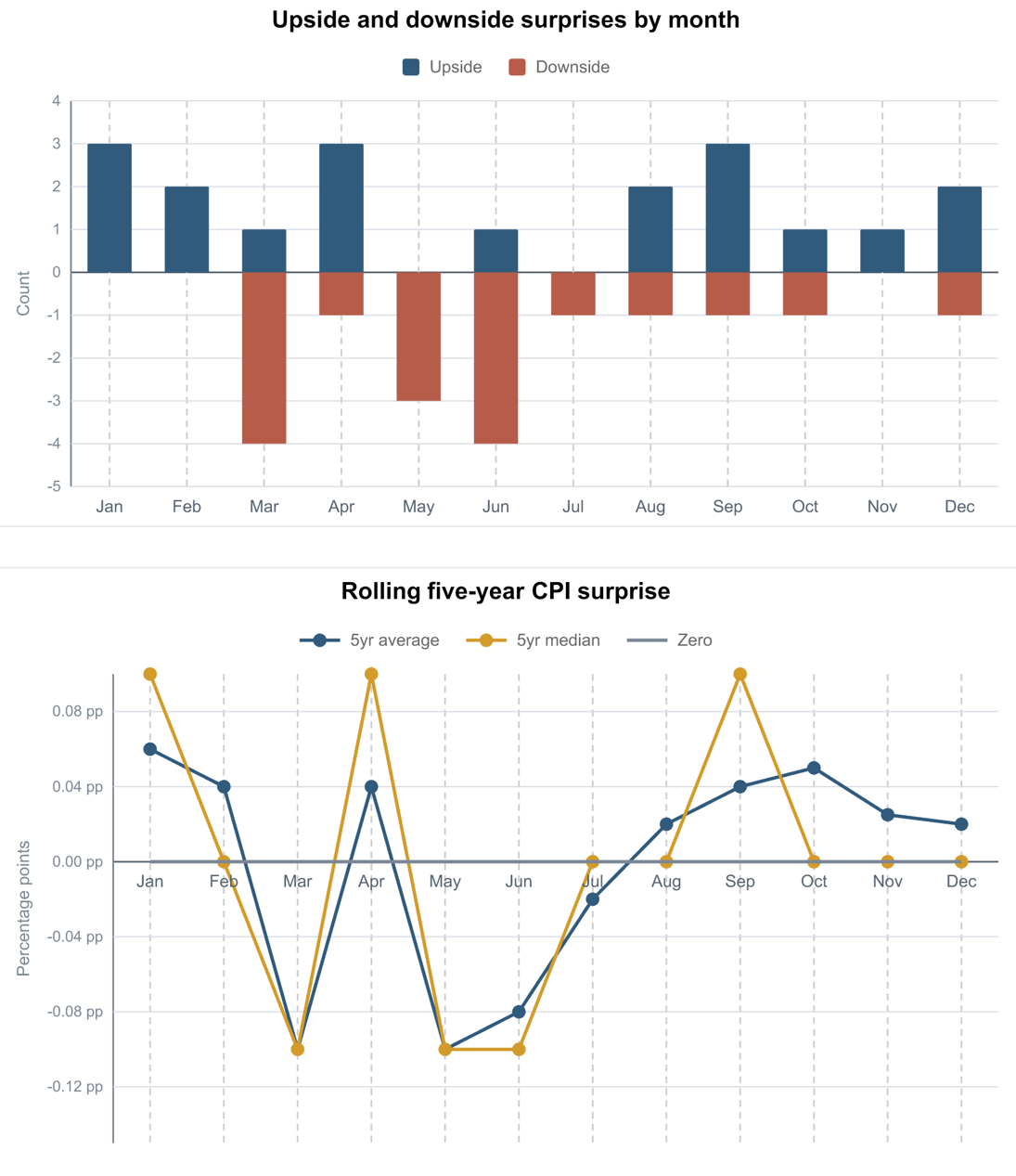
We are looking for an upside surprise at 0.3% on core CPI, albeit only marginally rounding up. It’s worth noting that we are emerging from the early summer period in which the recent seasonal bias was for downside surprises. Thus, some of the recent pleasant surprises there might have had a favourable to flattering skew. August is shifting to neutral or above, and Sep slightly more upside skewed of late. The market consensus has coalesced more conservatively as a result of recent prints too, so the chance for upside surprise becomes higher.
Kneejerks on any upside surprise could be to reverse some of the post Waller action - tempering the bond relief, not helpful to risk initially, and a reactive dollar bounce as Sep Fed move probabilities are nudged back up.
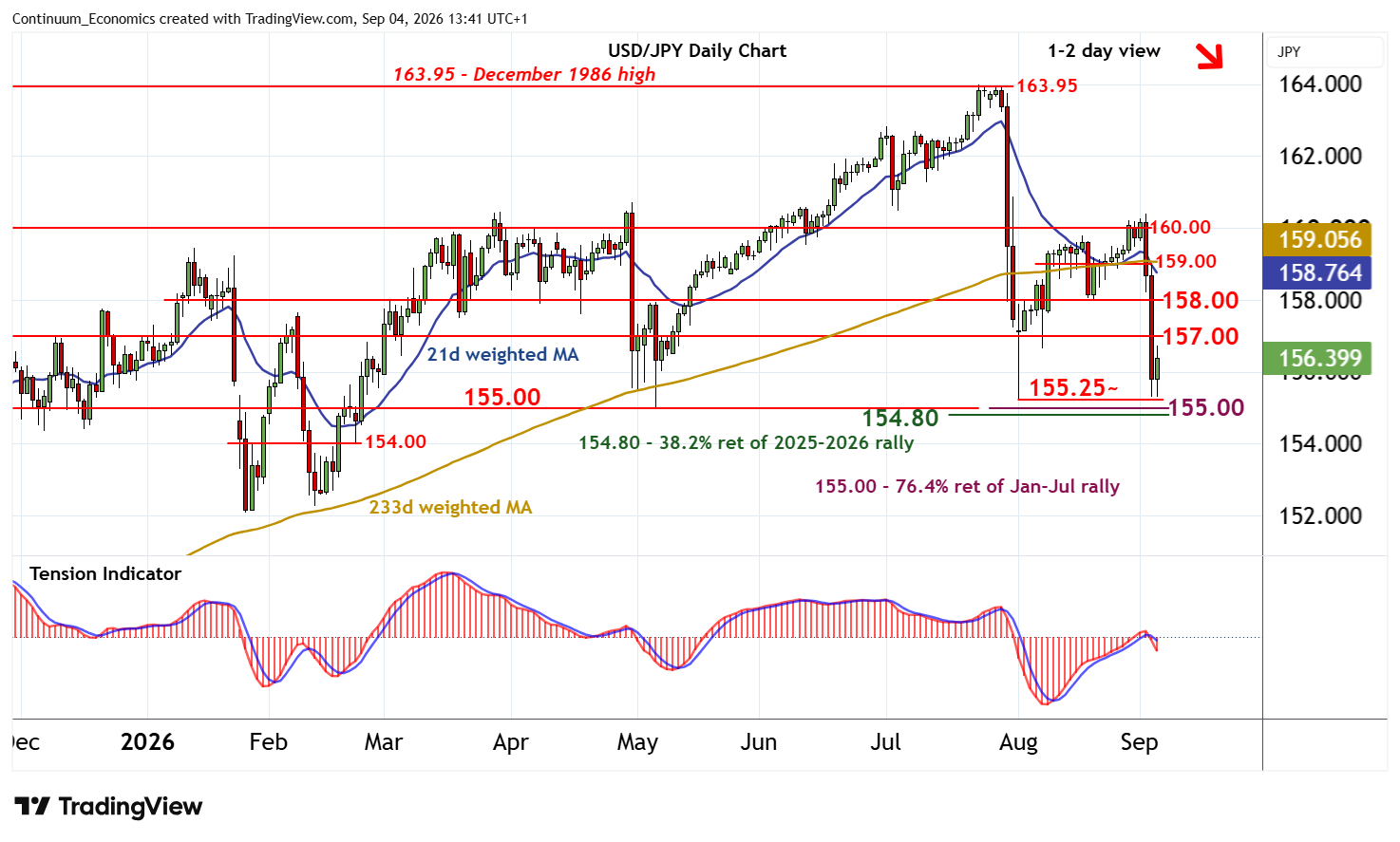
The interesting question will be how much the dollar bounce, if this proves the case, sticks. On USD/JPY in particular, trapped longs and other short-term technical bounce buyers provide natural supply into any further upside tests. 157.00 to max 158 offers stiffening resistance on any reactive gains.
Friday’s Trump outburst (making more trade threats if the Fed hikes rates) adds another nuance to the whole story though how that political pressure layers in, if at all, is open to debate. You suspect that many on the Fed may even see it as a reason to defend the Fed’s independence, even if Warsh may be more reluctant to engage with it.
For EUR/USD, the ECB provides some counterpoint. At the moment, the ECB is most likely to attempt to go back to keeping its options open at this point after delivering the hike. We do get the new staff forecasts however and they were flagged as important in the June Minutes. Also there was much debate about the level of neutral, the need for ‘insurance action’ and the need for restrictive rather than just top of neutral policy. They could all be strands either presented or questioned at the presser. Further consolidation in the 1-point range around 1.16 could end up being the short-term push and pull indecisive outcome.
For EUR/CHF the issue is whether the long-term uptrend can regain traction after getting so overbought and retreating from resistance. 0.94- 0.9435 is stiff resistance and bouts of very sharp JPY short covering can still leak over in reduced absolute form, even as there is JPY-CHF carry funding rotation.
EUR/SEK has been held by strong resistance at 11.20 meanwhile back into mid 11-11.20 range.
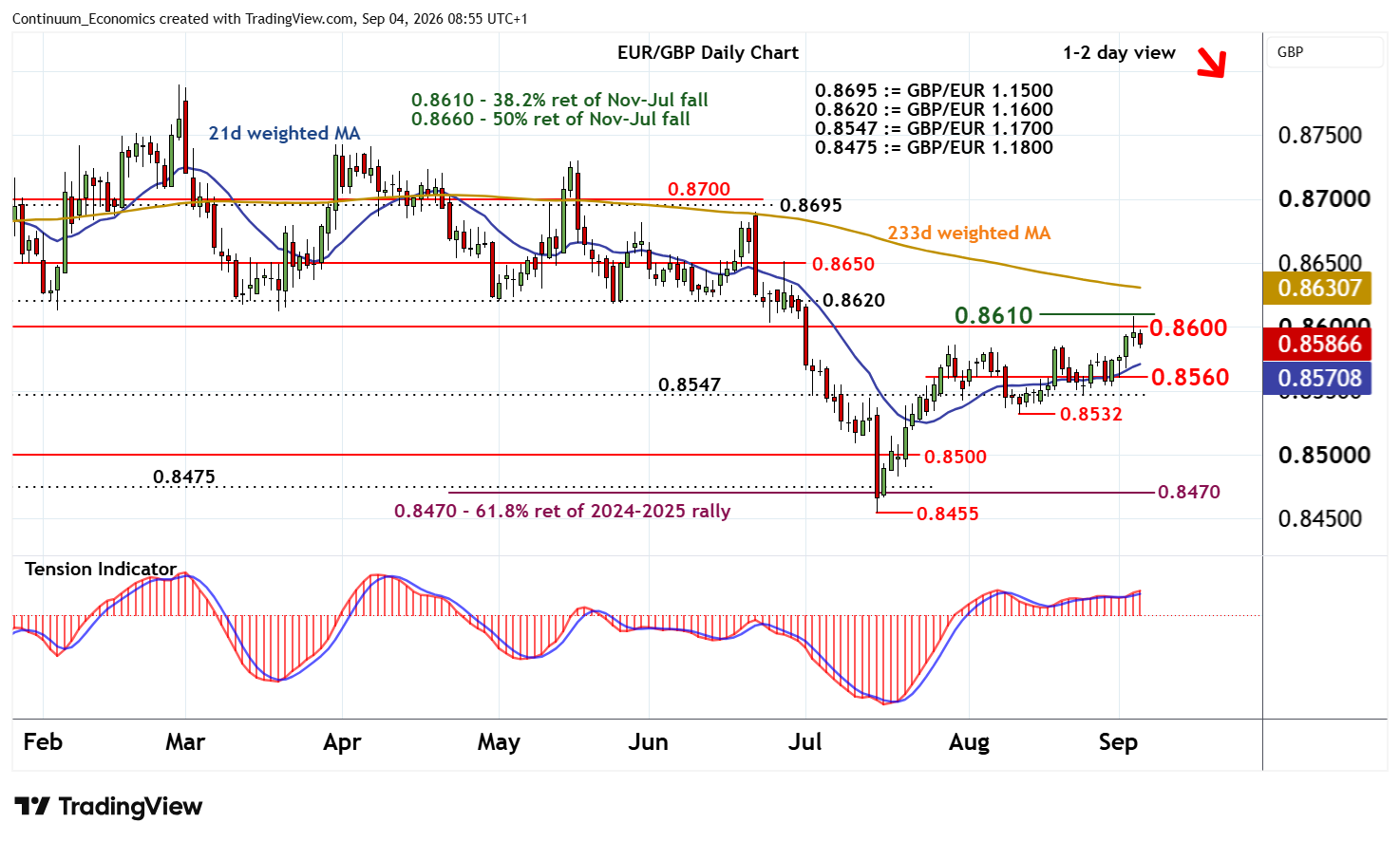
We continue to be somewhat wary of GBP near-term, just because of how conspicuously the BoE is behind the pack when it comes to near-term tightening plans or risks, still very much in pause wait and see mode. BoE testimony to the TSC may reinforce that this week.
As such, those wanting a EUR long out of the ECB might instead consider a possible stop-in to EUR/GBP on a break and hold above 0.86~. If it’s cleared then the next upside is 0.8620 (GBP/EUR 1.1600) but with a possible range shift (back into the band to 0.87/8750) if that level were also taken out.
It goes without saying that US-Iran remains a central factor. It has become hard to be anything but reactive there however and even reactive is of limited current benefit with the constant churn. NOK remains most leveraged off developments here via the energy complex.
Data and events for the week ahead
USA
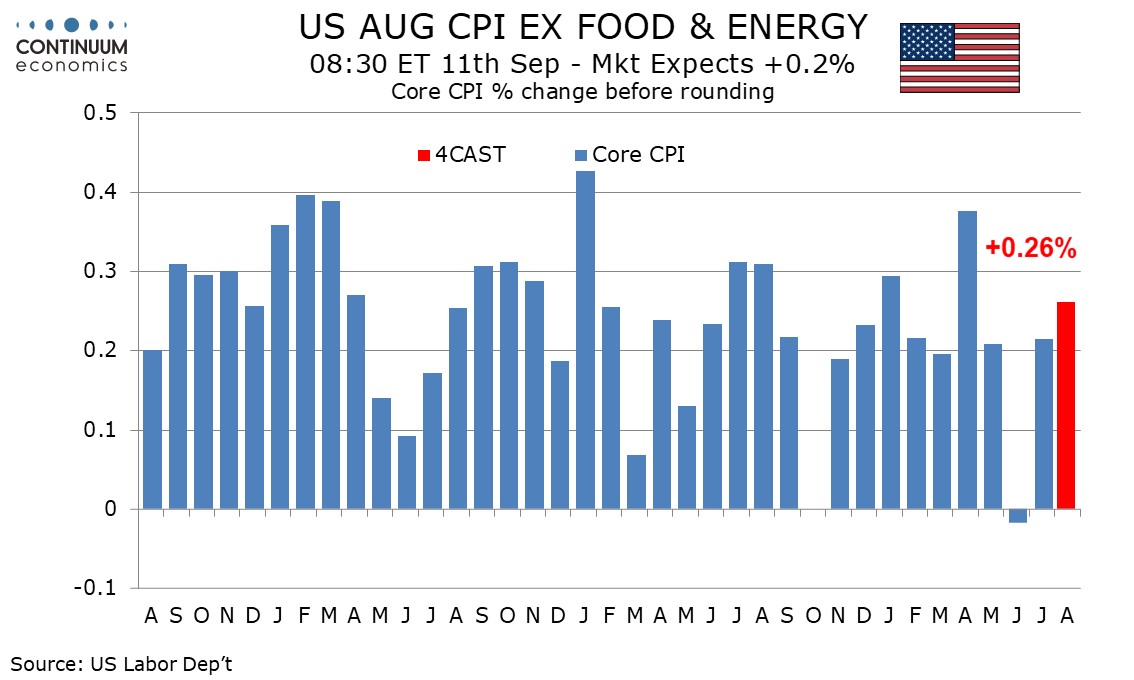
US data focus will be on inflation, which may prove crucial for the September 16 FOMC decision. August PPI is due on Thursday and August CPI is due on Friday. We expect both to show monthly gains of 0.4%, and 0.3% ex food and energy, though for the core CPI we expect the rise before rounding to be only 0.26%, with a rebound in lodging away from home pushing the rise to 0.3% after rounding.
Thursday also sees weekly initial claims, August existing home sales, where we expect a 2.0% decline to 3.98m, and July wholesale sales. Friday sees the preliminary September Michigan CSI. Monday sees the Labor Day holiday. Tuesday sees August’s NFIB small business optimism survey and July consumer credit. Wednesday’s calendar is quiet. Fed officials will be quiet ahead of the September 16 decision.
CANADA
Canada’s data calendar is quiet but retaliatory tariffs on the US are due to be imposed on Tuesday. If they are imposed further escalation from the US will be a risk. A deal should not be ruled out.
Eurozone
Next week’s key event is the ECB’s monetary policy decision and the post meeting conference in which the Bank is widely expected to increase the deposit rate by 25bp to 2.5%. The September 10 meeting follows this week’s jump in headline CPI print to 3.3% in August though the ECB may take some comfort in the slight moderation in core CPI to 2.4%. The latter easing as price pressures in the Services sector cooled somewhat. Stronger-than-expected economic resilience is likely to give hawks justification to tighten policy further. We expect the ECB to hike once and then to remain on hold for the rest of this year. With public finance woes and surging bond yields we don’t think the ECB will want to add more fuel to the fire.
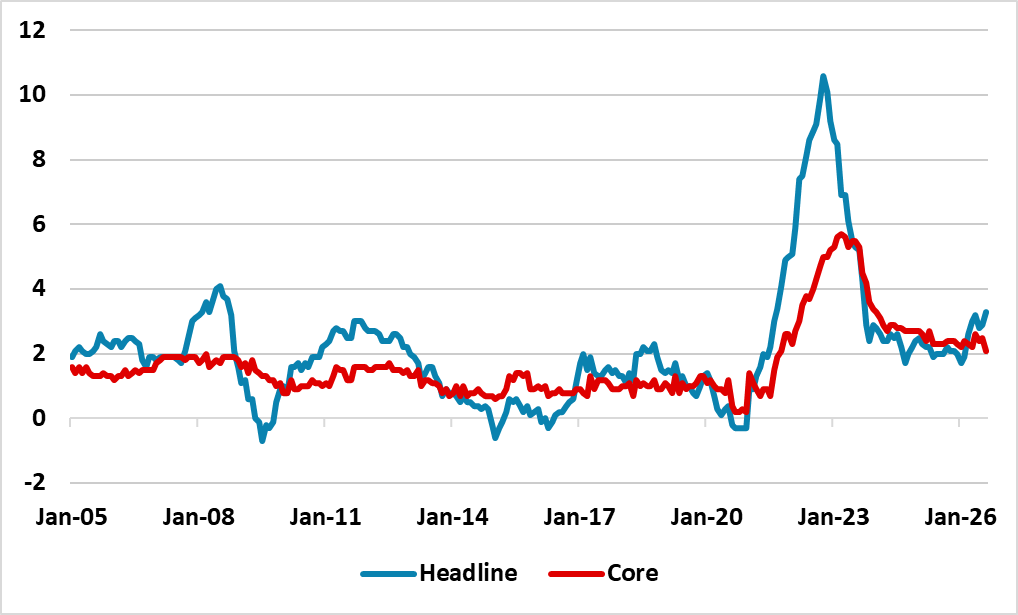
Other data includes German industrial production Monday (mkt 0.3%), along with final revised Q2 EZ GDP, and final German CPI Thursday.
Sweden has flash Aug CPI on Monday and this is of background interest given that Swden has been amongst the ‘low CPI outliers’ which is topical as the market has been mulling and enacting carry switches as part of the BoJ/yen reset.
UK
A light data week with July monthly GDP released on September 11. The economy grew 0.3% m/m in June and by 0.4% in the 3 months to June relative to the three prior months. BoE’s Bailey along with Ramsden, Greene, and Taylor appear at the TSC testimony and comments there will be scrutinised to see if the lean remains in favour of ‘wait and see’ pause from the Bank.
JP
We have GDP on Monday. It is unlikely there will be a significant revision from preliminary, though a small downward revision may persist. There are also PPI on Thursday. Else, there are scattered tier two data, while BoJ’s Masu is scheduled to speak Thursday.
AU
ANZ Job Ads on Monday, Business Confidence on Tuesday will not be as important as inflation expectation on Thursday. We expect the read remain high but probably slightly below the August read. RBA’s Hunter and Hauser are the scheduled speakers.
NZ
Only Business PMI On Thursday for NZ. RBNZ’s Silk and then Breman speak Wednesday-Thursday and will be watched after the last meeting was received as a less-hawkish hike.