FX Daily Strategy: Asia, Oct 20
France remains in focus, even if positioning and expiries help to cushion
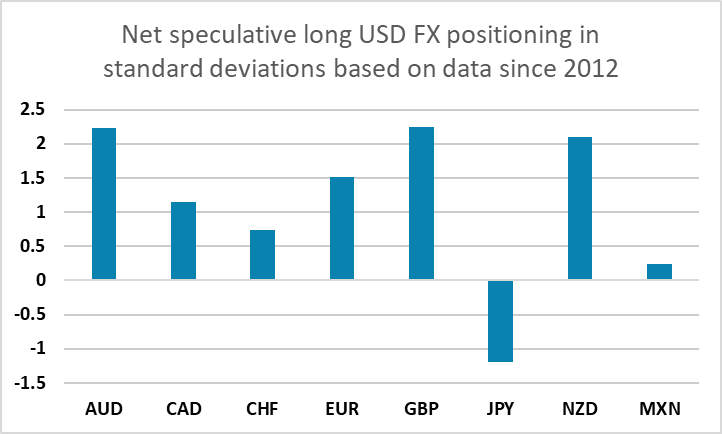
USD long positioning was back to the extremes pre-CPI-reaction; euro crosses still struggle
A political winter of discontent asks FX questions of who comes out on top - CHF? JPY?
While relent from positioning extreme, particularly on the USD and US bond side, continue to offer some prop on EUR/USD (as do expiries early week in the 1.1265-1.13/15 zone) - and indeed keep alive general dollar squeeze risks - the euro more generally remained weighed to start the week against the backdrop of disorder at the weekend.
France remains the centre of that after the mass protests and in places violent disorder, though there were pockets of wider spillover in Italy and Portugal too, suggesting some need to guard against ‘reverse contagion’ from semi-core to periphery too.
Against this backdrop, real fiscal consolidation remains all but impossible (Macron was forced into billion-euro concessions in fact after the last Yellow Vest protests) and that continues to exert medium-term pressure, even if intra-euro spread widening so far remains within the bounds of the last couple of weeks to date.
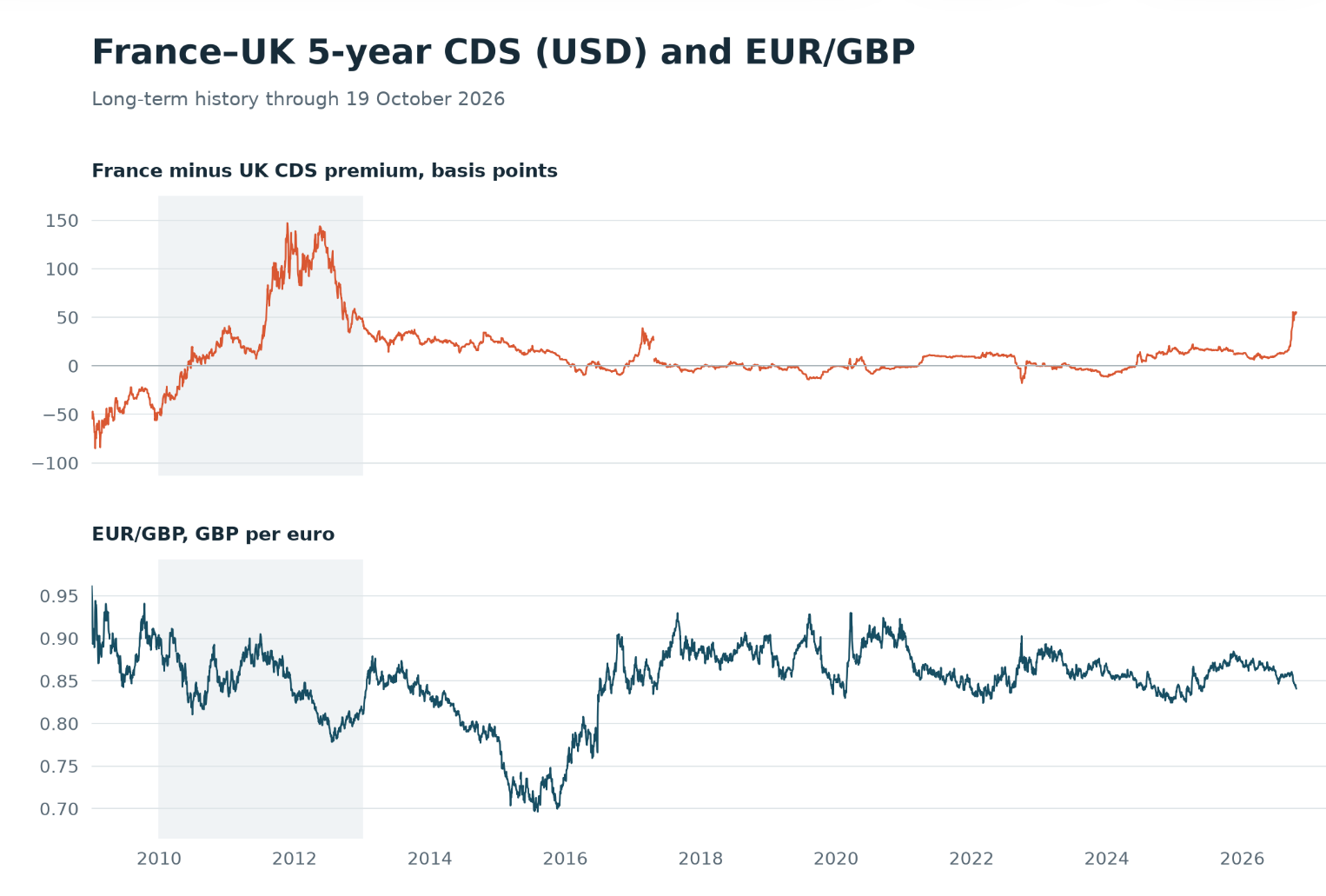
Moody’s next France rating evaluation is on Friday 23rd and although current spreads already imply a downgrade is more than priced in, psychologically a negative assessment could also add to the sentiment pressure on the FX side.
Wider spillover also comes through the monetary transition channel with ECB’s Lagarde at the IMF at the weekend already suggesting the bond pressure has a downward impact on forecasts versus Sep. So while the ECB will not directly intervene there can be secondary impact through the ECB rates outlook. 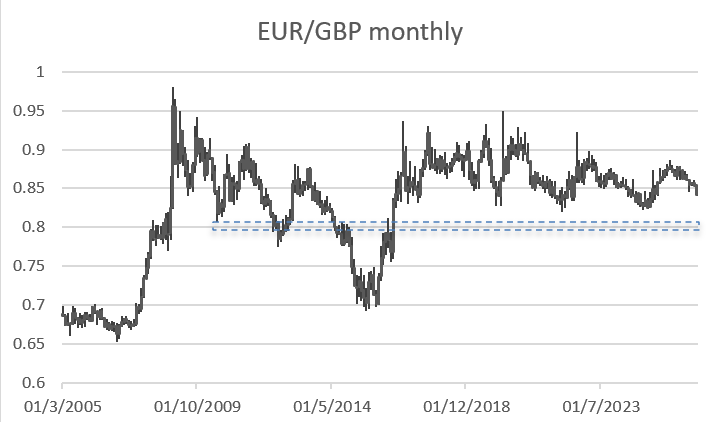
Positioning is a challenge for outright shorts at present. But shorts vs the dollar are as large, or larger, for a number of counters, cable especially, so that does not prevent potential for bigger picture euro (choppy) underperform on the crosses even in the squeeze scenario. EUR/GBP is finding support into 0.84~ and is somewhat oversold on the near-term charts. The longer-term pull could still be into the multi-year base (below recent 0.83~ is the zone either side of 0.8).
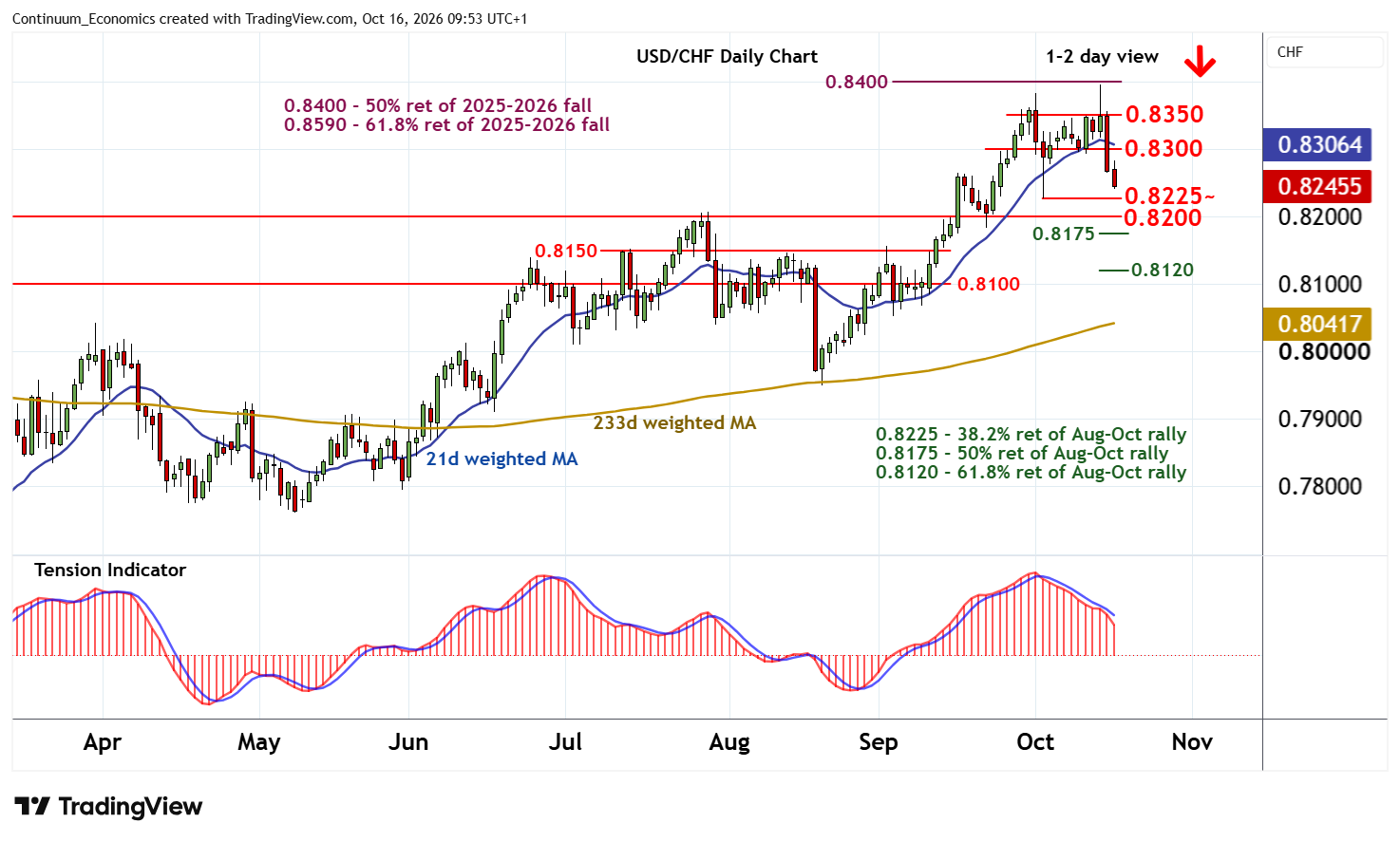
If discontent and political eruptions become a lasting factor in coming weeks and into a winter of discontent, then relatively protected Switzerland starts to come further back into its own, superseding its stand-out carry appeal enjoyed in the breezier summer months. EUR/CHF remains in significant retracement mode. US politics, centred around the midterms, remains a wildcard and in some circumstances CHF political/fiscal/social considerations could become more prominent still in the FX market’s weighting matrix.
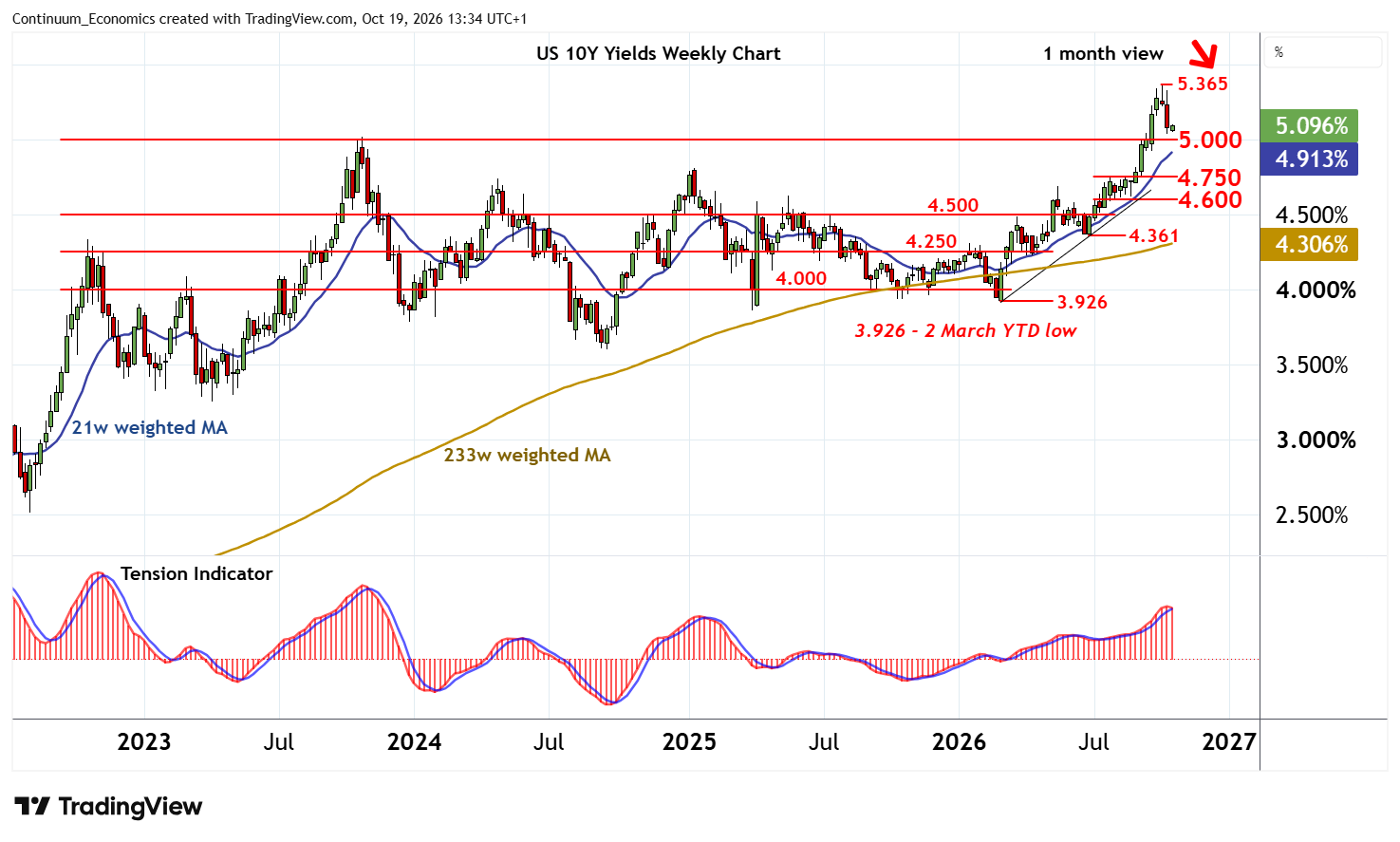
Yen also fits into that camp and continues to show signs of strong, persistent background dip buying interest into weakness, with progressive capping into the 158-9 to 160 area. USD/JPY may therefore remain top heavy with room to extend lower if the US bond yield correction extends in coming week.
Turning to Tuesday, the UK sees the release of August labour market data. Average earnings excluding bonus payments has slowed to 3.5% y/y in July from 4.7% last August as the labour market continues to shows signs of softening. HMRC payrolls data for September should show a further month on month decline.
Germany has the ZEW survey, with consensus centred on some slippage in current conditions while expectations inch slightly less negative.
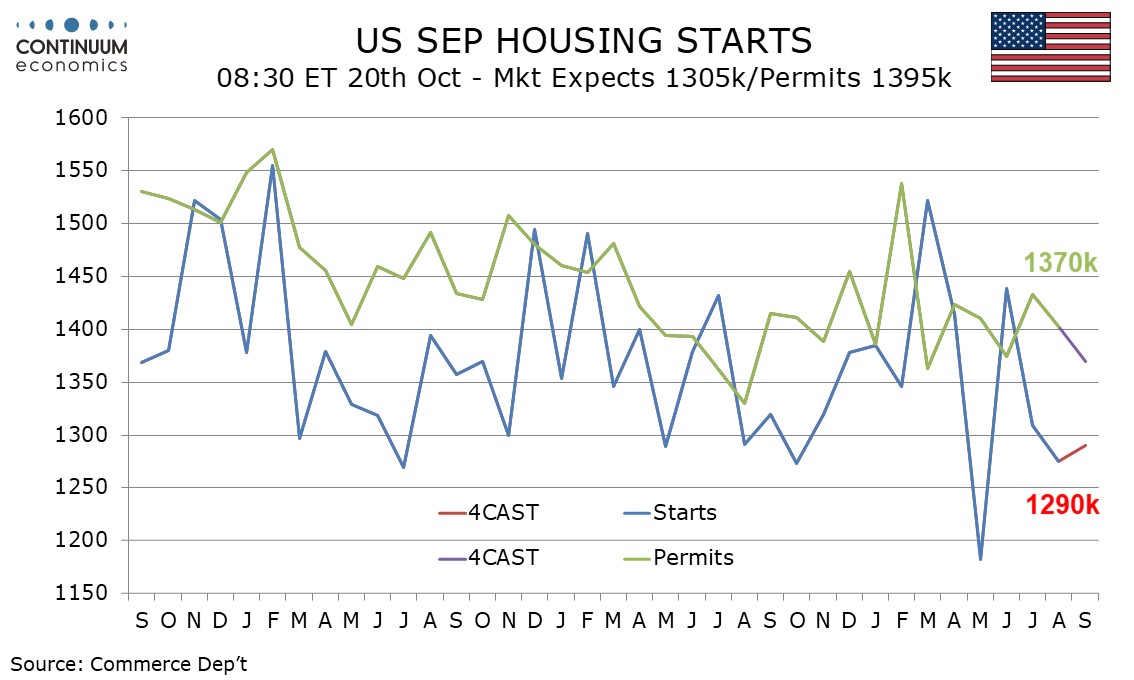
In the US, we expect September housing starts to rise by 1.2% to 1290k but permits to fall by 2.6% to 1370k.
US NAHB data, dropping to 2012 lows, highlights how recent yield surges and impact on morgage rates have impacted demand in the sector. Signs of that negative feedback and AI-crowding out has been helping to draw buyers into the oversold US bond market and stem the overbought dollar charge.