FOMC Minutes Preview: Likely to be hawkish, but October decision still data-dependent
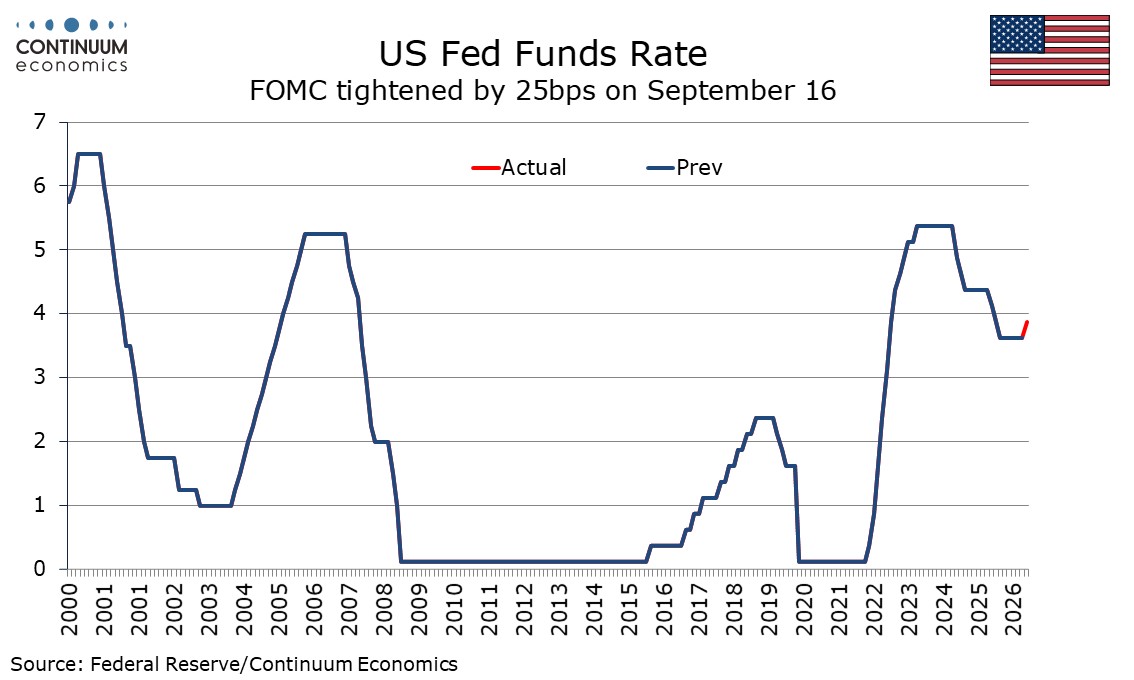
The public comments of Fed speakers since the September 16 meeting delivered a unanimous vote to tighten suggest that the minutes of that meeting, due on October 7, will have a hawkish tone. Recent hawkish Fed talk reduces the risk that the proximity of the midterm elections will prevent a tightening on October 29. The minutes will however give a useful signal as to what extent forthcoming data will guide the decision. We are not ready to call an October tightening yet.
Minutes from the July 29 meeting, which left rates unchanged, showed participants feeling that intermeeting data would have a significant impact on September’s decision. Between the July and September meetings two non-farm payrolls and two CPIs were released. July data was on balance subdued and some Fed speakers after those releases hinted that a September tightening was far from assured even after Chairman Warsh’s hawkish speech in Jackson Hole on August 28. However, after August’s non-farm payroll and core CPI came in stronger than expected, a tightening was delivered.
The minutes are likely to go beyond those two releases in justifying the case for tightening. A generally firm tone to data has lifted forecasts for Q3 GDP, with the Atlanta Fed’s GDP Now estimate having been running around 5.0% annualized since mid-September. Strength in oil will also be noted. How much oil is stressed will be relevant for how the Fed will respond to September’s CPI, as that looks sure to see a sharp bounce in energy. However we suspect the core rate will be more subdued, after August data was lifted by a sharp rise in telephone changes that may reflect a recent methodology change.
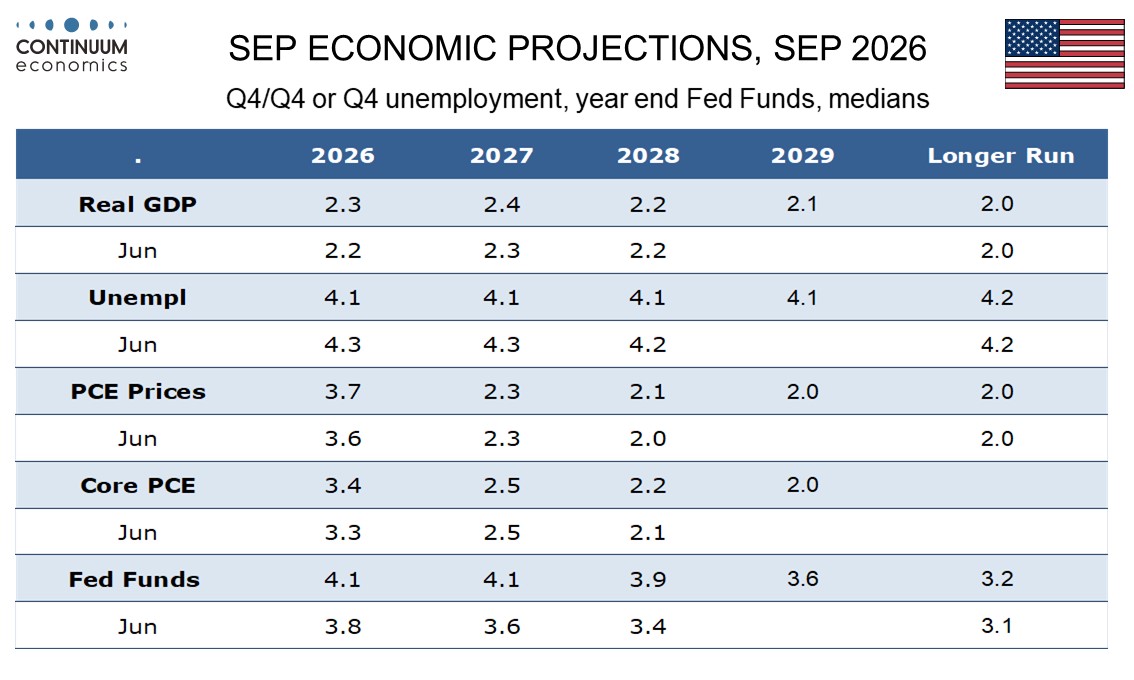
CPI is likely to be more important for October’s decision than payrolls, unless there is a dramatic shock in the latter. August’s strong payroll will have been relevant for September’s decision as it will have eased any worries generated by a weak payroll for July, originally reported as negative before a subsequent revision. The Fed will also be watching historical revisions to GDP, personal income and spending due on September 30. Fed’s Waller has suggested that yr/yr core PCE prices could be revised down on non-market prices, which could narrow the unusual current outperformance of core PCE prices (3.3% yr/yr in July) compared to core CPI (2.4% yr/yr in August). We will also be watching to see if current outperformance of consumer spending (2.3% yr/yr in Q2) relative to real disposable income (-0.1% yr/yr in Q2) survives the revisions.
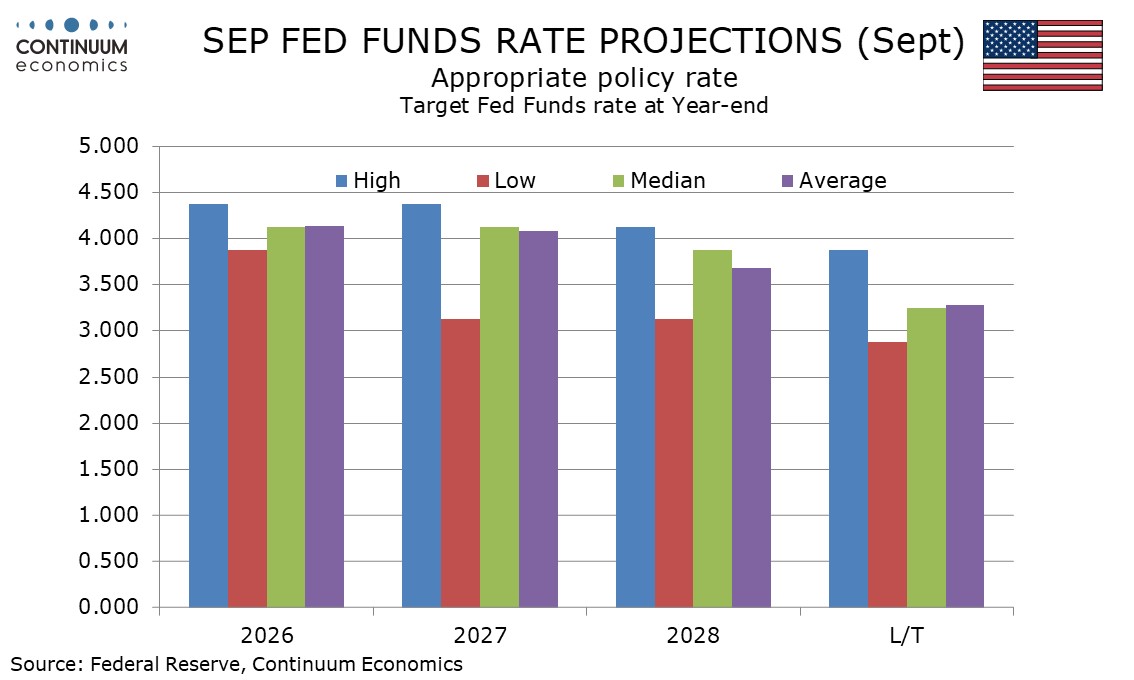
While we expect the September minutes to have a hawkish tone, we expect the October decision will be left as data-dependent and we will not revise our call for the next move to be in December until we see the forthcoming round of data, notably the GDP revisions on September 30, September’s non-farm payroll on October 2, and most importantly October CPI on August 14. However, our view that the proximity of the midterm elections would discourage an October move has been undermined, with hawkish recent Fed talk having prepared the ground for an October move if necessary. The minutes will also be relevant, in particular the emphasis given on core and overall inflation. If there is a strong emphasis on the latter and risk of feed-though into inflation expectations it would raise the risk of an October move.