FOMC Minutes: Inter-meeting data seen as important
FOMC minutes from July 29 confirm that most participants supported leaving rates steady but several favored a 25bps tightening, implying more than the three hawkish dissenters, presumably non-voting district presidents. Many assessed that tightening would be necessary if inflation did not decline, which probably reflects the views of the swing voters. Data released since July 29, notably the June and July CPIs, is likely to mean that hopes inflation will fall have not been undermined.
While the minutes do not suggest that a September tightening is likely, they are quite hawkish on inflation. Several noted that price increases over the past year were broad based, while some saw prices as elevated even excluding those most directly impacted by tariffs and energy. More optimistically, the pass through of tariffs was now seen as largely complete. Most anticipated that inflation would step down over the rest of the year but many noted the possibility it might be more persistently elevated. This fits with a view that inflation needs to fall to prevent tightening. Inflation risks were skewed to the upside. Most did not seem to be placing too much hope on productivity gains controlling inflation. Some saw this eventually increasing aggregate supply, but there were a range of views on how long this might take to materialize. Of more immediate concern was the prospect of a protracted Middle East conflict prolonging supply challenges, and the risk that continued elevated inflation could impact expectations and wages.
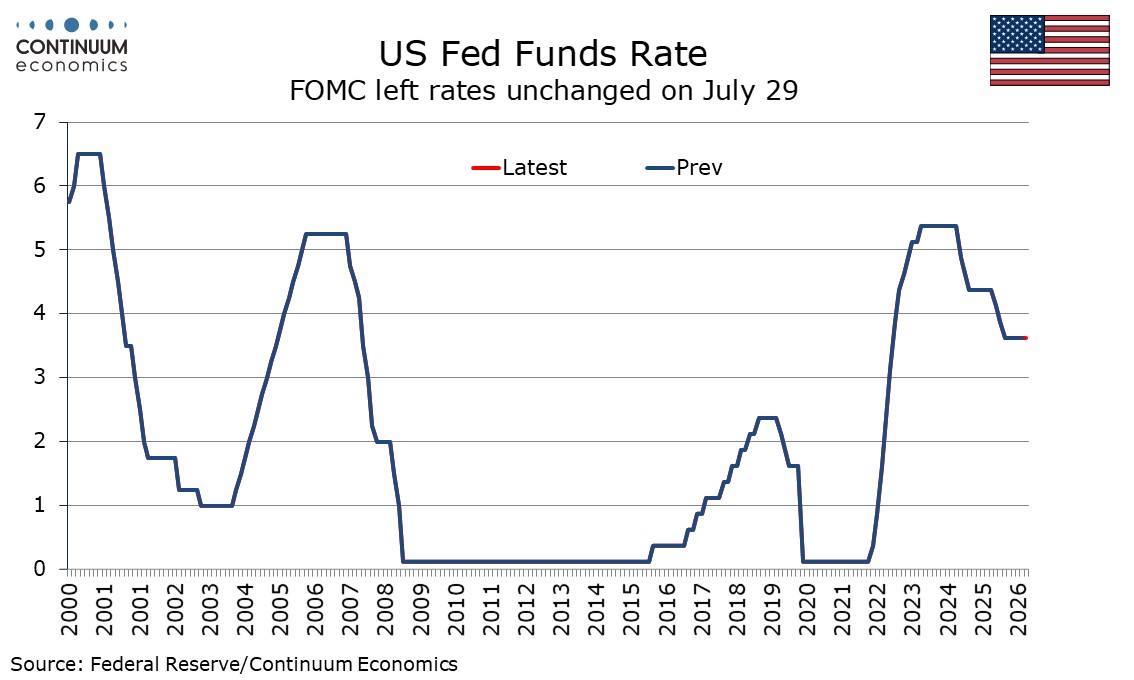
Participants generally expected labor conditions to remain stable and solid GDP growth to continue in the near term. This is not necessarily dated, but participants noting that payroll gains had strengthened this year and that consumer spending had strengthened recently have been somewhat undermined by June and July non-farm payrolls, and, to a lesser extent, July retail sales. Looking ahead, participants thought that information in the intermeeting period would provide more clarity, and that suggests the relatively soft recent data matters. Participants felt that little had changed in their assessment between the June and July meetings. Chairman Warsh suggested six meetings per year rather than the current eight would allow more information to accumulate between meetings, but he also indicated that the schedule of meetings over the balance of 2026 would not be altered.