FX Daily Strategy: Asia, Aug 20
USD breaks weaker after Treasury buyback move, might have done some damage on the s/t charts
Whether 'bond put' or 'dollar debasement' narrative, neither helping dollar near-term
The last few days of bond-equity noise and two-way feedbacks have rammed home a few key messages.
First, that “sensitivities”, be they market or political, are very high with the US long end sitting up here at (or now back down from) post 2007 highs. The volatility comma wakes up, the equity summer holiday risk meltup faces some sobering back-to-work realities, and the US Treasury it seems is over it like a rash.
Stepped up “liquidity support” measures, aka selloff interventions, are nothing new. If you were hyper generous you would just see it as just helping dealers handle off-the-run stock management in current bond-plenty time. But the latest move does add to a specific narrative, not least since its very clearly intended backstopping signalling.
First, the action is coming from the Treasury through its liquidity buyback ops not through the more usual Fed action when real blow-ups have more genuinely been market function rather than market weakness moves. Second, this action comes on top of the other recent exceptional action, including joining the BoJ in intervention and urging use and increase size of the FIMA repo facility to try and head off potential UST selling pressure. When also packaged up in a broader Treasury strategic approach that also includes, for instance, pushing issuance ever shorter, then the upshot is “not a great look”. The tldr is perhaps ‘Treasury put is the new Fed put’, especially on bonds, and somehow that is even less attractive for the currency. Certainly, the dollar broke lower Wednesday in reaction and gold was back up, though you could just reduce that to a simple yield story if you think the above is too elaborate.
Big-picture, will the market hang on to this reminder of the diminishing lustre of the dollar reserve currency. Or do what it so often does which is to put this in the “medium-term box” and go back to day-to-day basics? Maybe the latter, in due course, but for now the move does seem to have done a bit of damage on the charts, not least when set against the generally long dollar positioning that still remained in the market.
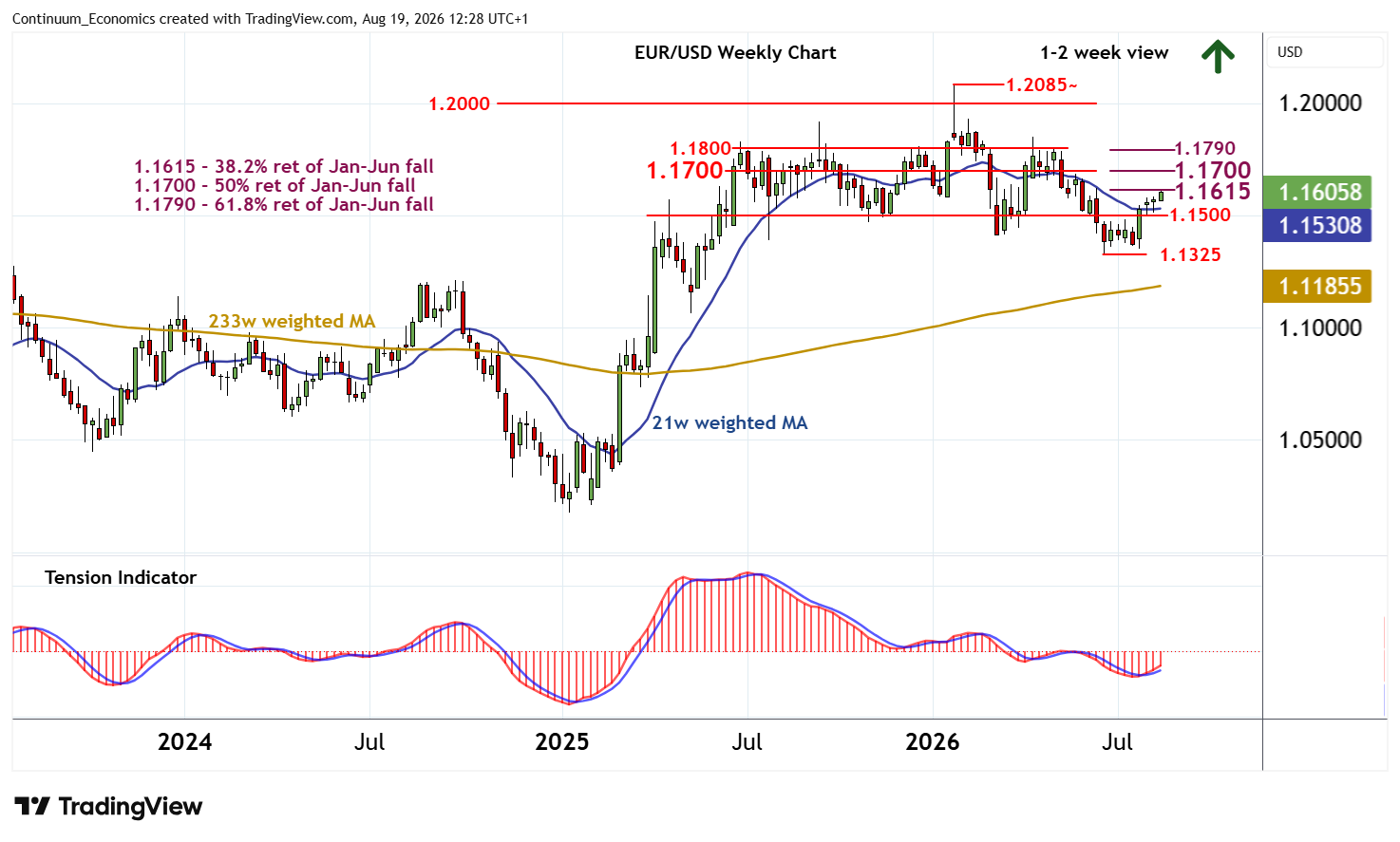
EUR/USD closing above the previously thorny 1.1620/30 resistance does open up chart upside to stronger resistance at 1.1700, (congestion and the 50% retracement).
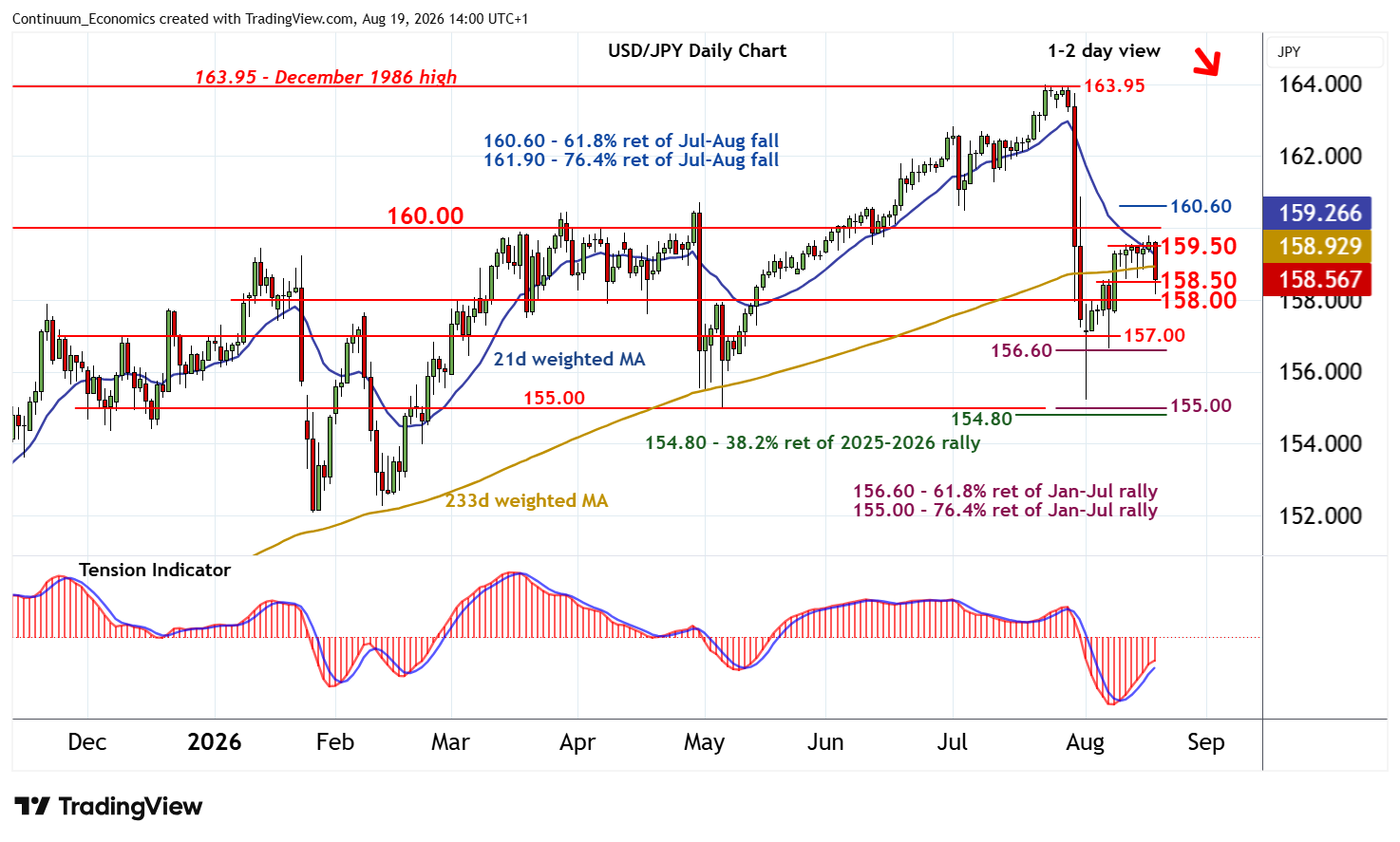
For USD/JPY, 158 remains the key support resistance level that separates chop from a fuller pullback into the 156.60 - 157.00 range.
We’ve liked CAD because of the extreme short positioning, and the upside potential on a trade deal. While the latter is not in the bag yet, and we know never to count chickens in Trump negotiations, on the face of it the 3-day extension does suggest decent odds that the deal gets over the line. USD/CAD has already made it down to the 1.38 noted level already and further breakdown would have 1.3715 as the next lower retracement level.
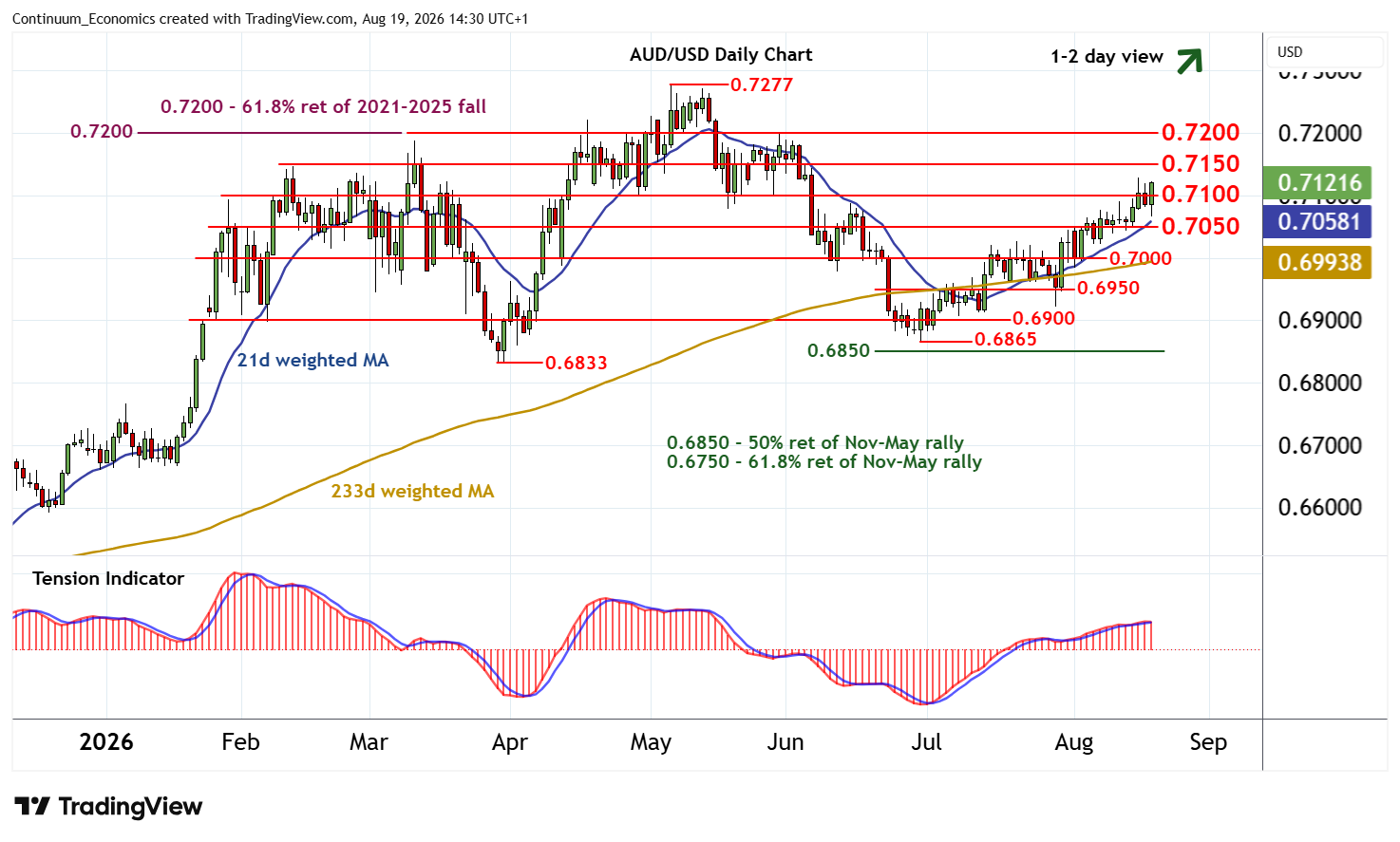
AUD/USD meanwhile also posted an outside day reversal bar on the daily chart with the USD, yield, and metal about face and that too also looks like a positive short-term chart signal with 0.72 the next level up.
Moving to the calendar, the market will also be digesting and reacting to the FOMC Minutes released late on Wednesday. Given the deadpan pressers that are now typical, these Minutes may be the best source of information available when it comes to understanding current Fed thinking and the debate across different camps.
In Europe, main interest comes from the Riksbank meeting, though it is expected to leave policy unchanged, with a hike priced in for the Sep meeting.
In the US, Thursday’s initial claims data will cover the survey week for August’s non-farm payroll. July’s Philly Fed manufacturing survey is also due.