Preview: Due August 28 - Canada Q2/June GDP - Quarterly rebound seen largely on net exports
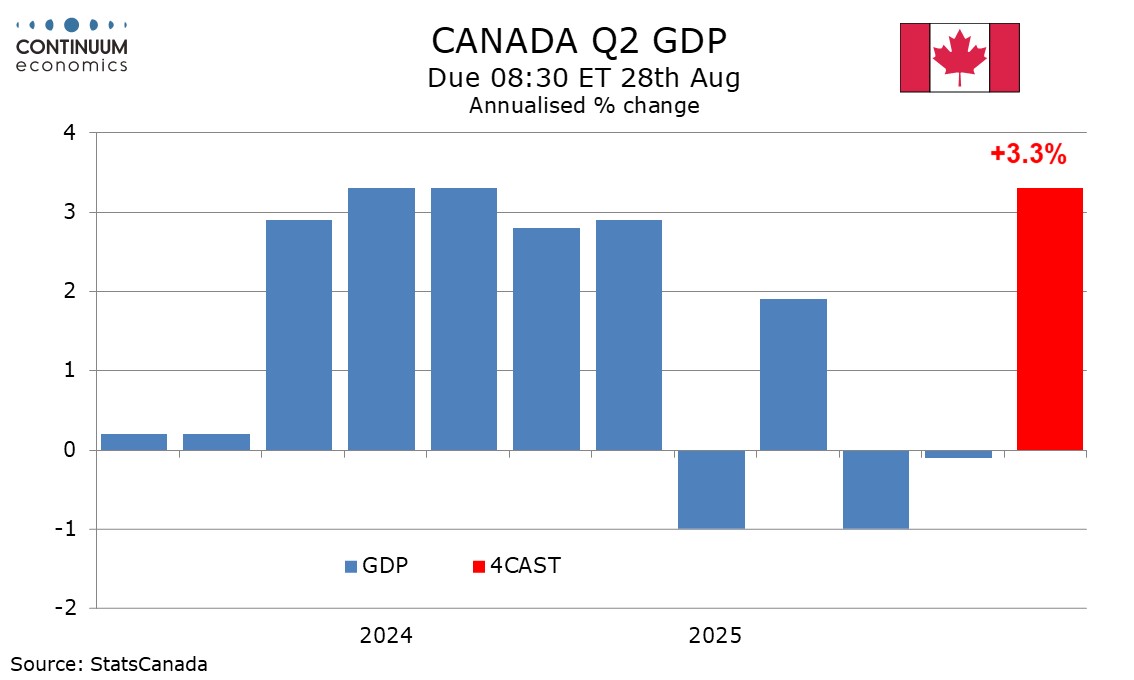
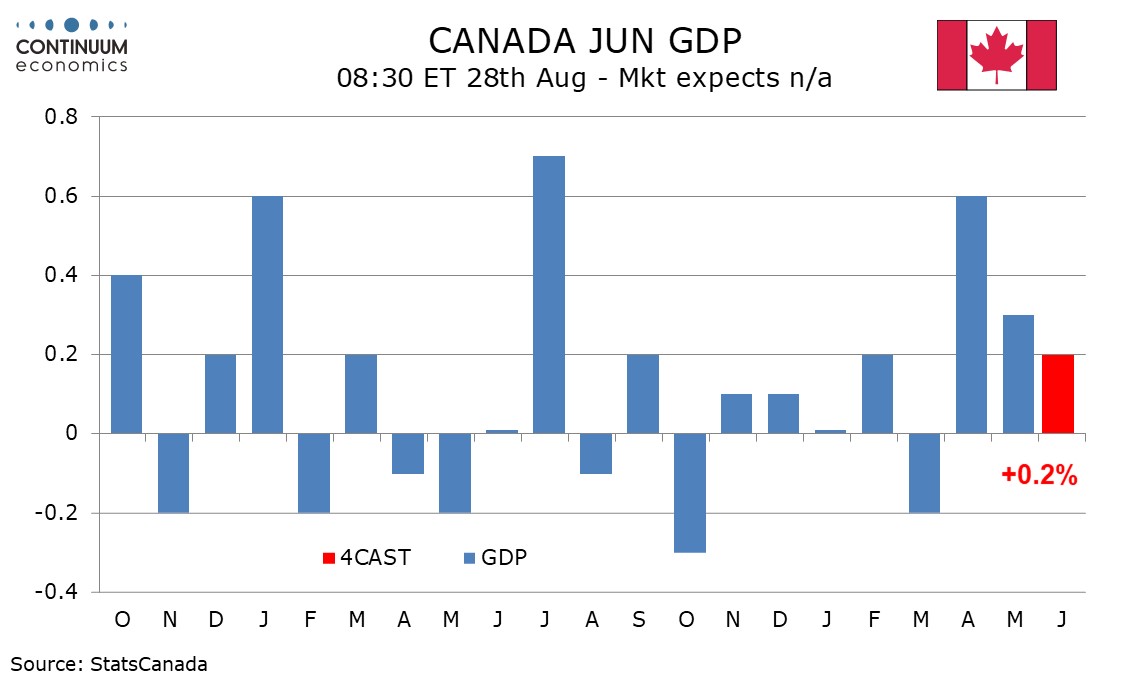
We expect Q3 Canadian GDP to increase by 3.3% annualized, in line with what monthly data is implying, assuming the preliminary estimate for a 0.2% increase in June is accurate and gains of 0.3% in May and 0.6% in April are unrevised. This will mark a return to growth after two straight negative quarters.
The GDP gain is however likely to be fully explained by a rebound in net exports after a negative Q1, which would leave doubts over how sustainable the bounce in GDP will be, doubts that were visible in the Bank of Canada minutes from the July 15 meeting.
Monthly trade data shows exports up by 5.4% (not annualized) in real terms in Q2 with imports up by 1.4%. While there will be some offset from a deterioration in the services balance, we still expect exports to rise by 18.3% annualized, outpacing a 6.3% increase in imports and adding 3.3% to GDP. This would not quite fully erase a similar negative in Q1.
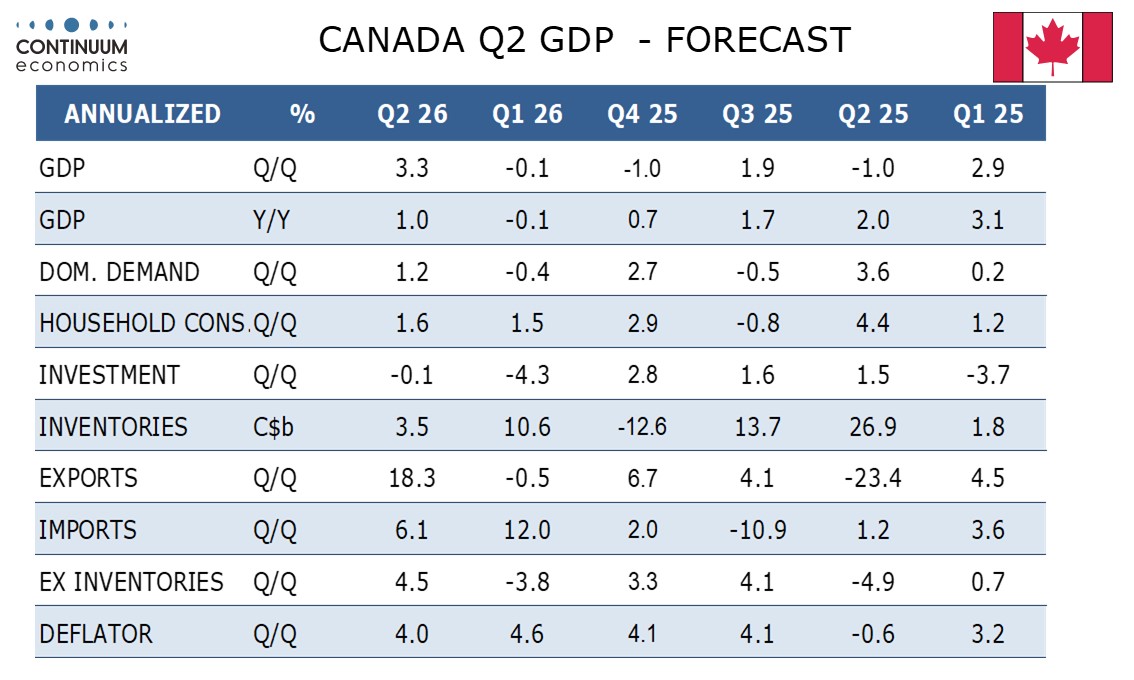
We expect domestic demand to rise by a moderate 1.2% annualized. We expect consumer spending to rise by 1.6% with overall consumption at 1.4%, as government picks up from a decline in Q1 without quite matching private consumption. We expect investment to be almost unchanged at -0.1% annualized with business investment returning to marginal growth after five straight quarterly declines but government seeing a second straight decline in a continued correction from three straight strong gains.
We expect a negative contribution from inventories to offset the positive from domestic demand, in part on supply disruptions due to the situation in the Middle East. We expect the GDP deflator to rise by 1.0% (4.0% annualized) with consumer prices lifted by energy and export prices seeing a slightly larger rise than import prices, giving the deflator a further marginal lift.
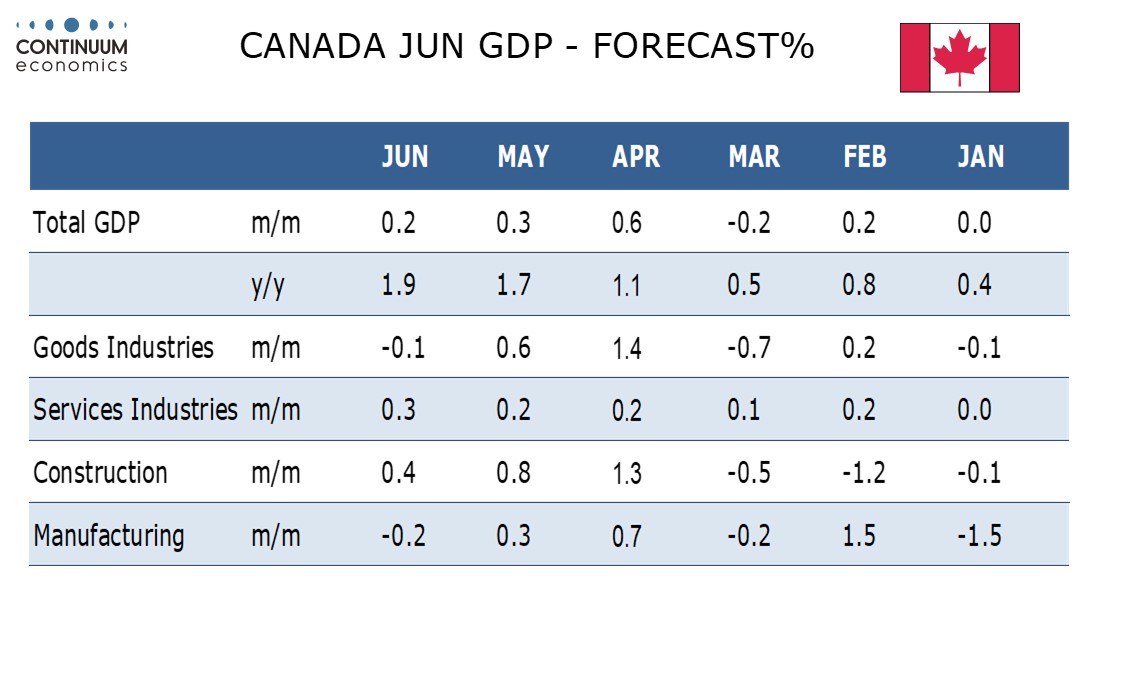
We expect the monthly data to show a 0.2% increase in June coming from a 0.3% rise in services, the strongest since July 2025, but a 0.1% decline in goods. May’s report looked to Increases in wholesale, retail and finance and insurance, but declines in utilities and agriculture, forestry, fishing and hunting.