Fresh U.S. Tariff Risks to Canada's Economy are Moderate
The US and Canada are approaching an August 19 deadline for the US to impose 50% tariffs on some Canadian exports. Tense negotiations are to be expected as the deadline approaches but a deal is far from certain. Many in the market may be expecting Trump to back down a few days after announcing the treats will be carried out. Should the threatened tariffs be persistent, the tariffs are unlikely to push Canada into recession or prompt a Bank of Canada easing, but they could delay tightening.
The tariffs are expected to cover only 5% of Canada’s exports to the US, but those exports would be hit significantly by a 50% tariff. Exports make up around 30% of Canadian GDP and those to the US make up around 70% of them, meaning that the impacted exports would make up marginally above 1.0% of Canadian GDP. The hit to GDP would be likely to be only a few percentage points, but would be noticeable on an annualized basis in the second half of this year.
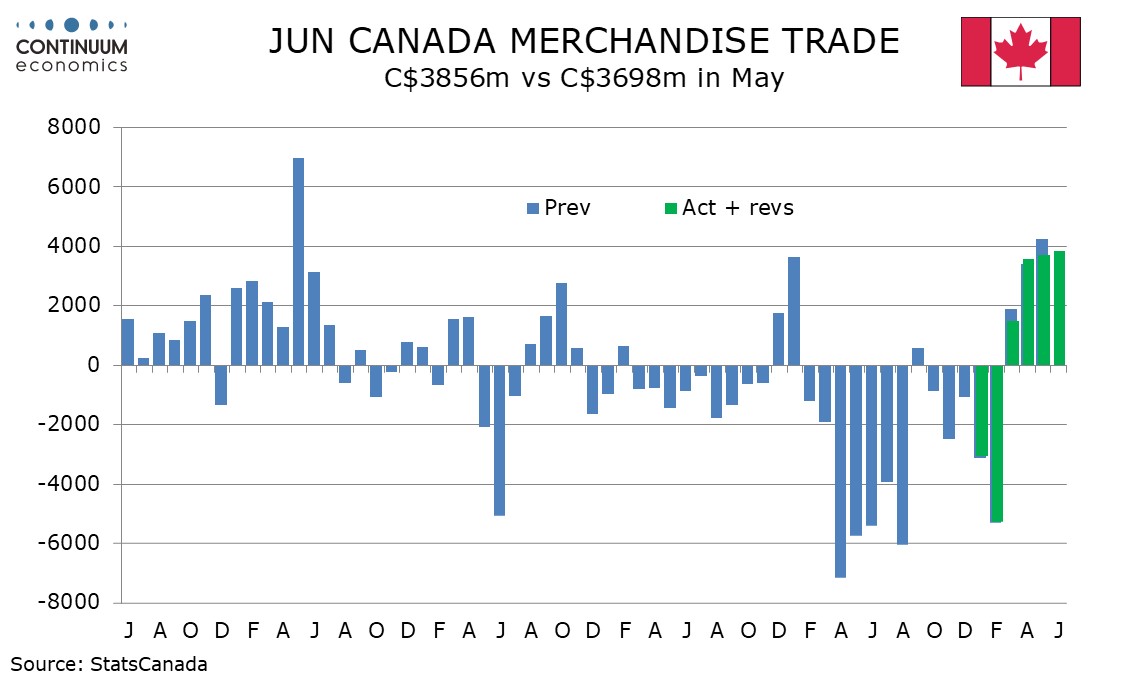
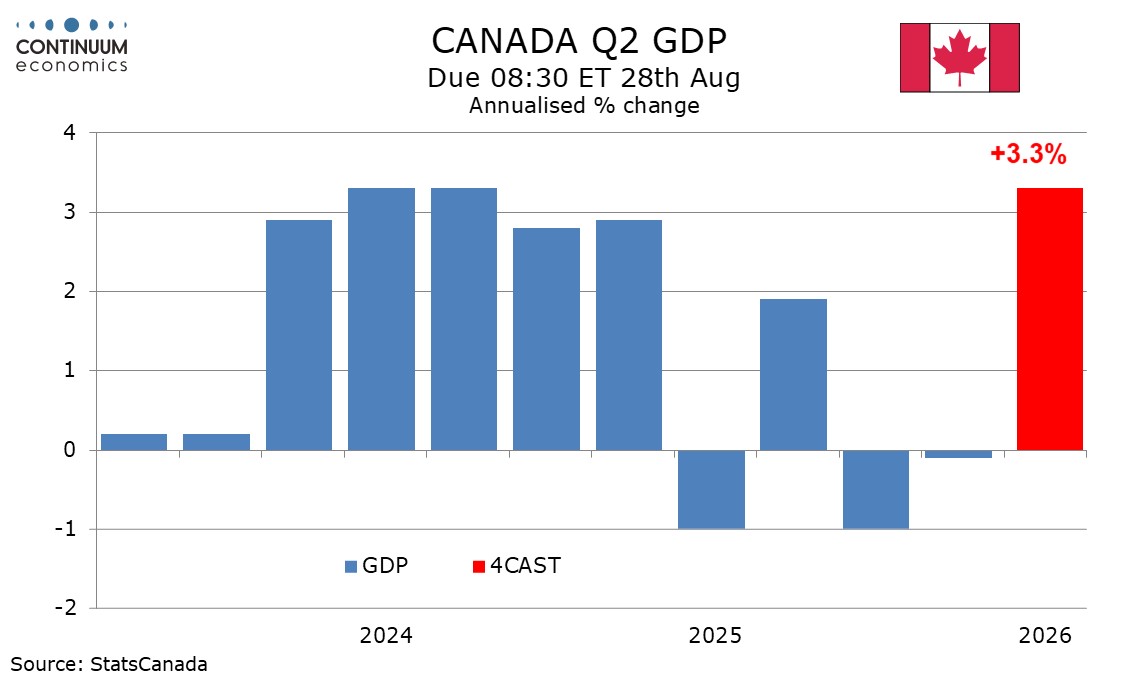
Canadian GDP appears to be returning to respectable growth in Q2 after four straight subdued quarters that followed the imposition of tariffs by the US. This is in line with BoC forecasts made at the time, which saw a sustained hit to GDP before Canada returned to trend growth in terms of pace but with the hit from the period of disruption being sustained. Recent Canadian data has raised hopes that Canada’s growth rebound is sustainable but Q2 GDP is likely to be largely explained by net exports. There is doubt over how sustainable it is, with mixed views visible in the minutes from the July 15 Bank of Canada meeting. There is a risk that while the overall GDP hit will be moderate, it could undermine what are currently promising signs of reviving momentum.
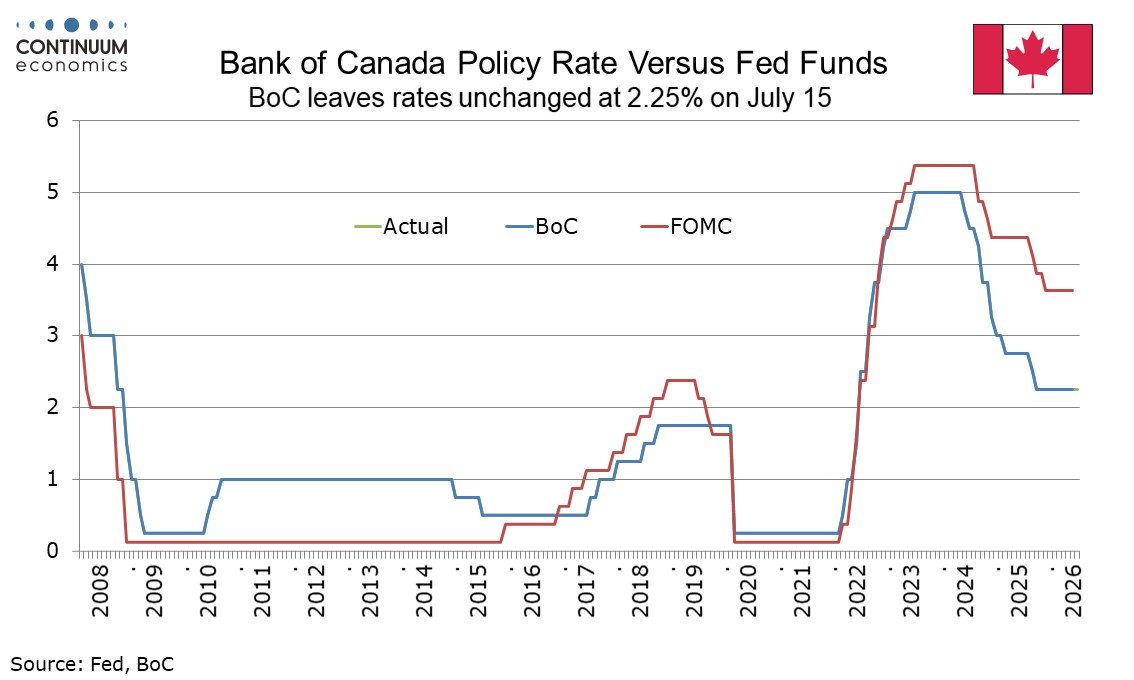
Still, the July 15 meeting saw the BoC avoiding the explicit mention that fresh tariffs could prompt easing that earlier meetings this year had seen (alongside warnings that if the oil shock fed into underlying inflation tightening could be necessary). This suggests the BoC is getting more optimistic about the outlook and would not rush into easing should Trump implement the tariffs on a sustained basis. It would be likely to reduce risk of tightening this year, though that would still not be ruled out given ongoing inflationary risks, most notably in the Middle East. Should Canada retaliate aggressively to any tariffs that could raise inflationary risk, and we would thus expect Canadian PM Carney to keep retaliation carefully targeted, though there would be plenty of public pressure for an aggressive response.
This public pressure is being reflected in resistance at the provincial level to making concessions to the US. Quebec in particular is opposed to making concessions on dairy trade, where Canadian restrictions were an issue for the US well before Trump appeared on the scene. The decision of several Canadian provinces to keep Canadian alcohol off the shelves is another issue, though to what extent Canadian consumers would choose to buy US drinks even if there were back on the shelves is uncertain.