FX Weekly Strategy: Asia, Aug 10-14
Outside of Iran, focus turns to key US CPI. Trend has been for very few core upside surprises
UK sees GDP, heatwave risks downside surprise, GBP kneejerk
Japan eyes BoJ comments from last meeting, to read the appetite for a Sep hike
Gold and silver still attempting to breakout higher from base
Another week passes without the mooted Strait deal, version two, making it across the line and with Iran chatter into the close that was at best trolling the US and, at worse, actually minded to deny Trump his pre-election taco to pile on the political price. Oil prices remain at the ‘benefit of the doubt’ end of range but it’s anything but settled news, and volatility wise.
That perennial running issue aside, the critical topic ahead will be the US inflation data, starting with CPI as well as PPI this week. Payrolls proved a mix big, albeit with easing earnings data leaning it slightly dovish. With the labor market nonetheless tight in terms of balance, it is the inflation prints that are going to be more decisive. The FT article last week, citing those familiar with Warsh’s thinking, suggested he would consider a Sep hike if inflation is running hot. That is a bit of (un-Warsh-like) backchannelling that perhaps betray some unease at how the market reacted so badly to the last FOMC presser and hints at a desire not to let the long end of the bond market run away, even with the appetite for market led signalling and monetary conditions price setting.
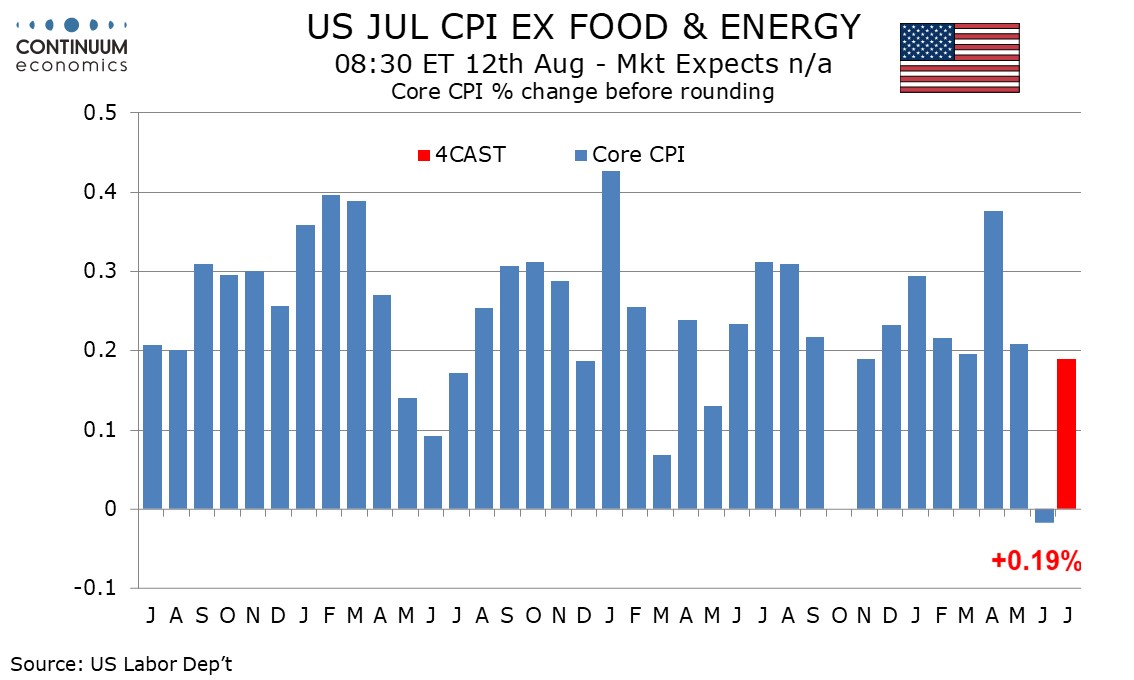
We are actually looking for a pretty fairly and consensus outcome however at 0.1% overall and 0.2% core, albeit with the latter still arguably consistent with trend inflation that is still running consistently a good ½ % + above where it should be - arguably at the centre of the Fed board’s current interpretative differences.
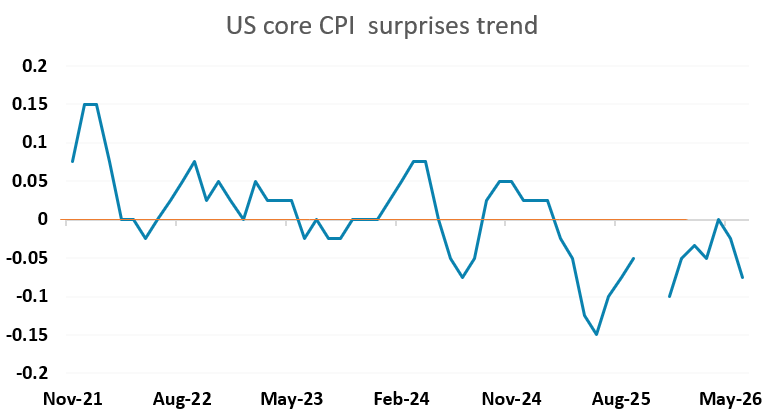
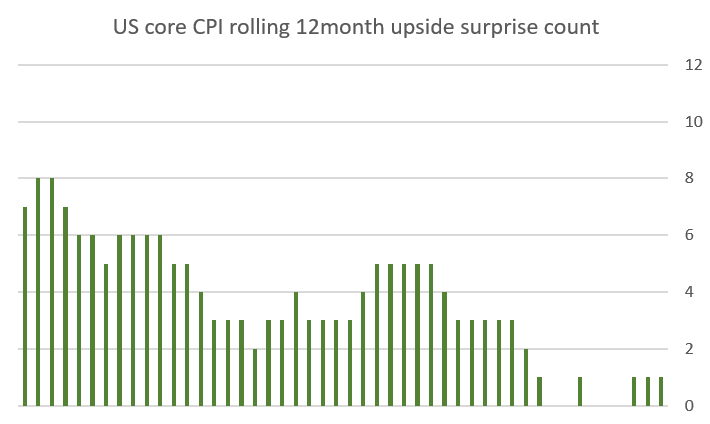
Perhaps one interesting thing to note into the release is that the trend for core inflation market surprises is running slightly negative still having proved persistently so. Indeed, upside surprises have become vanishingly uncommon of late with only 1 in the last 12 months (albeit remember the 2 months hiatus for missing data during the shutdown).
Looking at the rolling 5yr windows, July is a bit more neutral in surprise seasonality terms than last month (June has come in to the downside in 4 of the last 5), so there isn’t that kind of obvious recent skew. At some point, you would expect the market too to have started to correct or over compensate their forecasts, shifting the bias, but it hasn't happened yet at least. Ahead of time though, you can at least note that the market has, until now, tended to over rather than underestimate, outside of the months of Jan, Apr, and Sep.
As with payrolls, the market will be very data sensitive here. Even an ‘as expected’ result might be enough to see Sep hike odds drift off. On an upside surprise however, the payrolls impact might reverse, with interest.
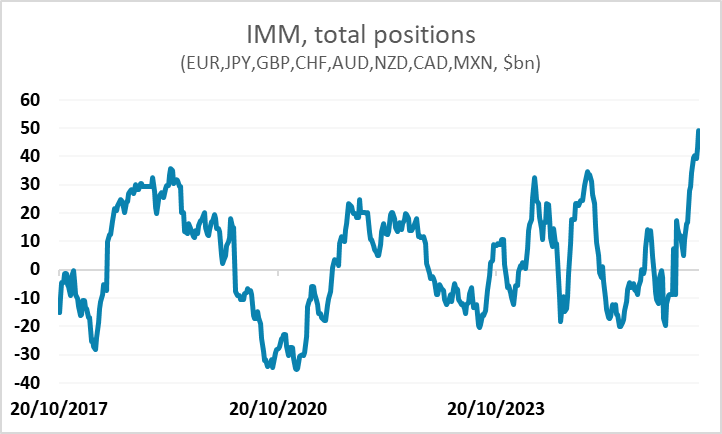
Data therefore could be the key binary event for major FX this week, outside of Iran. The market does still likely to remain, positioning, strongly long dollars, even if over the last week or so, the correction did become a bit oversold and thus push the market into consolidation within recent congestion across many pairs.
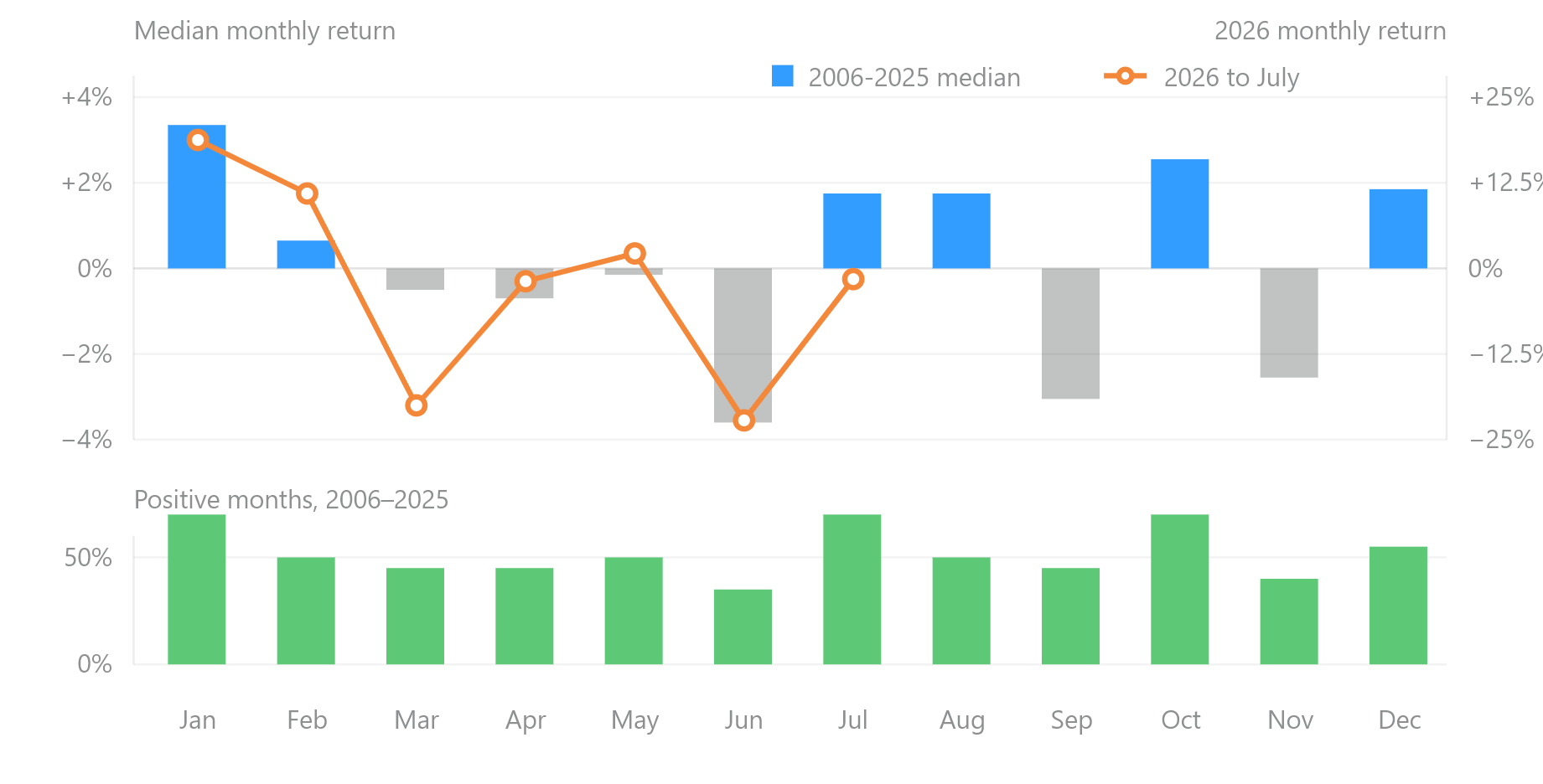
Outside of this, we would note again that we have been watching precious metals of late and highlighting the potential for upside breaks out of recent basing. See ‘Silver lining: a case for a precious metals retracement’ (here). Silver has indeed made some good strides in this regard, even if it couldn’t quite hold its initial burst clear of the 64~ level on Friday, closes above which would be making the move look more convincing.
Beyond the US, Japan releases some insights into the prior meeting, so markets will be looking to see if it echoes the relatively hawkish comments from Ueda regarding the balance of views expressed at the meeting, keeping focus on the timing of the next hike (current odds around 50-50 for Sep). While there is a holiday on Tuesday, which have become associated with intervention risk, it doesn’t make much sense for this to be a live consideration at current levels.
USD/JPY is in 157-158 congestion with break to offer the next near-term move while the overall structure is more negative now outside of current consolidative action.
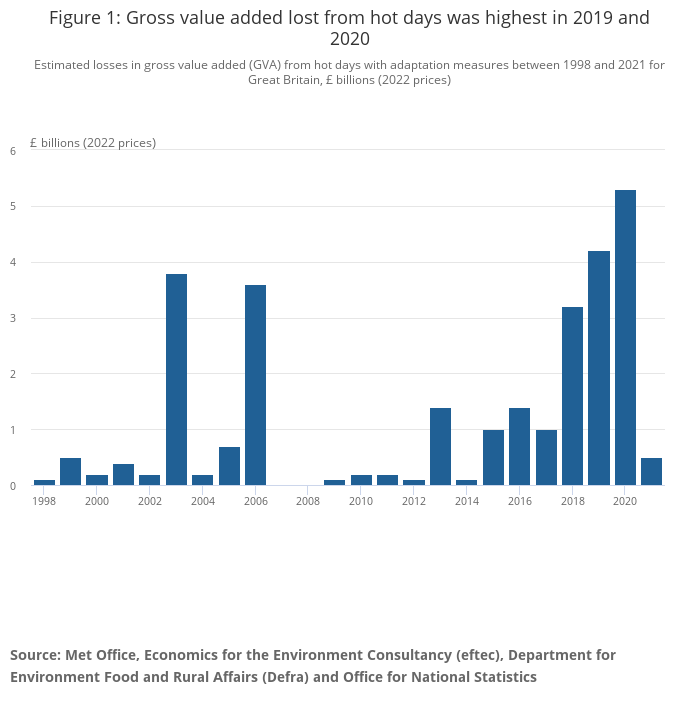
It’s a quiet week in Eurozone, but the UK has June GDP, the consensus is 0.1%. Expectations for some stagnation in growth ahead are still tending to cap expectations for the BoE. EUR/GBP is looking to consolidate in a 0.86-0.8550 band technically, unless this release is a shocker.
Note that heat waves, when extreme, have tended to hit UK GVA quite significantly according to official research and some estimates suggest this year’s unprecedented weather could have knocked off over £1bn. As such, it would not be surprising to see an unexpectedly negative print here given inadequate seasonal adjustments and real one-off impacts, which could see a GBP kneejerk reaction if so.
Data and events for the week ahead
USA
US data focus will be on inflation, with July CPI due on Wednesday and July PPI due on Thursday. We expect subdued data, though less so than seen in June. We expect CPI to rise by 0.1% overall and 0.2% ex food and energy, with PPI also rising by 0.1% but with a 0.3% increase ex food and energy.
Tuesday sees July’s NFIB small business optimism survey, while later we expect a 1.5% fall in July existing home sales to 4.03m. Wednesday also sees July’s budget statement. Weekly initial claims are due on Thursday when Fed hawk Hammack and moderate Barkin will also speak.
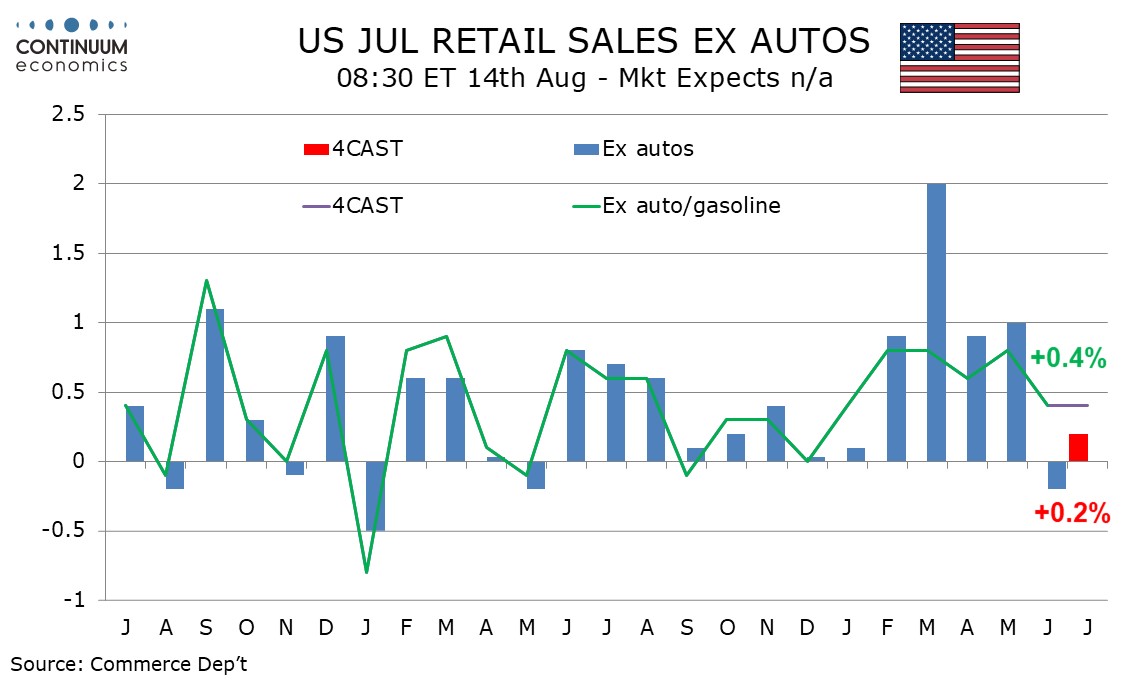
On Friday we expect July retail sales to be unchanged, with 0.2% increase ex autos and a second straight 0.4% increase ex autos and gasoline. June business inventories and the preliminary August Michigan CSI are also due.
CANADA
Canada releases June building permits on Wednesday. Friday sees June manufacturing and wholesale sales, for which preliminary estimates were for a 0.1% decline and a 2.7% increase respectively.
Eurozone
A light schedule in mid-summer. June EZ industrial production on August 13 is expected to see a further small fall, as the impact of high energy prices act as a headwind but should recover somewhat into the autumn with energy prices less elevated than the spring. August 14 sees the 2nd reading of Q2 GDP, but 0.4% is expected once again Qtr/Qtr.
UK
UK data is concentrated on August 13, with the June GDP expected to see a 0.1% monthly rise. Meanwhile, the stream of (small fiscal) policy announcement has slowed in the mid-summer period, but will likely pick up again in early September as PM Burnham looks to extend the poll bounce for Labour. Chancellor Healey continues to make clear that he is committed to the fiscal rules.
JP
Kick starting the week with BoJ summary of opinions, slim chance of cues for future rate hikes but still worth a look. Followed by PPI on Thursday and some tier two data throughout the week.
AU
The RBA rate decision is on Tuesday and we forecast no change to interest rate. The RBA will take more time to assess the second wave energy spike that last much shorter than the first, believing it will have a lesser impact on inflation. Otherwise, we could see a hawkish bids in the Aussie.
NZ
Only RBNZ Inflation expectations on Thursday will be important for NZ next week.