Preview: Due September 30 - U.S. August Personal Income and Spending - PCE prices to match CPI, watch for revisions
We expect August PCE price data to match the July CPI, rising by 0.4% overall and 0.3% ex food and energy. We expect a 0.5% increase in personal income, and a strong 0.9% increase in personal spending. The data should be watched not only for August changes, but also for historical revisions going back to 2021, which will also be seen in GDP revisions due at the same time.
Core CPI increased by 0.29% before rounding, and while core CPI strength was narrowly based PPI details were quite firm and will provide support to core PCE prices. PCE prices are less sensitive to gasoline than CPI but gains in gasoline should be sufficient to lift the overall increase to 0.4%.
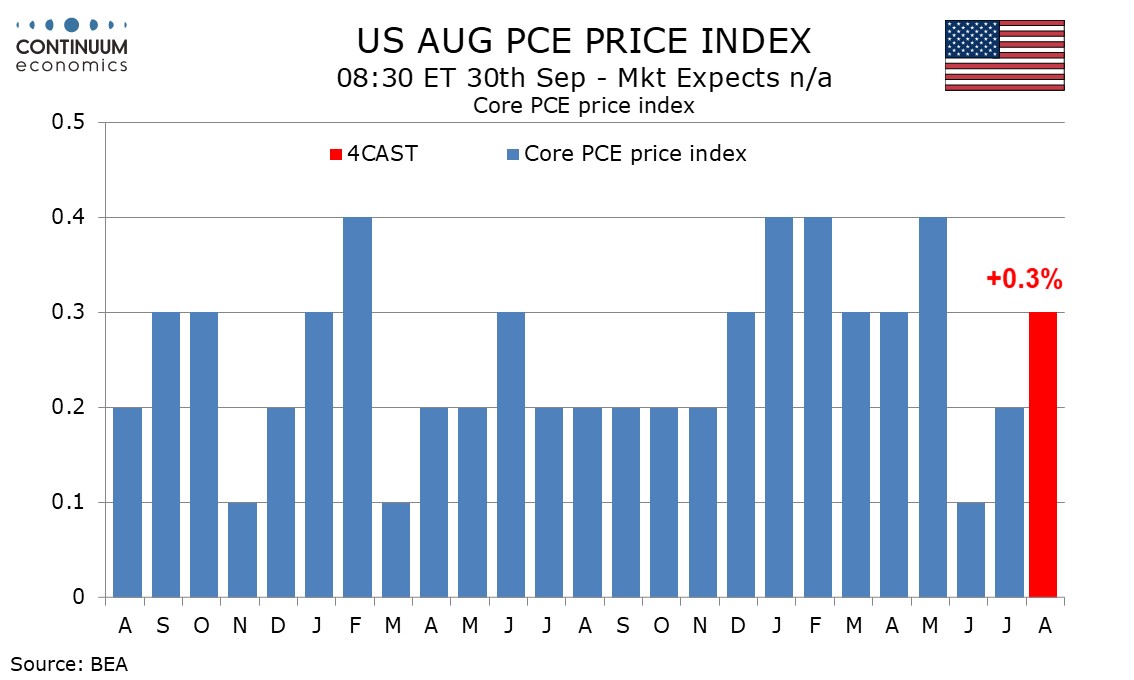
If there are no revisions yr/yr growth would rise to 3.8% from 3.7% overall and to 3.4% from 3.3% for the core rate ex food and energy. However Fed’s Waller has stated that downward revisions to some non-market prices are likely and that could see yr/yr growth trimmed. July data showed a 3.0% yr/yr increase in market based PCE prices ex food and energy.
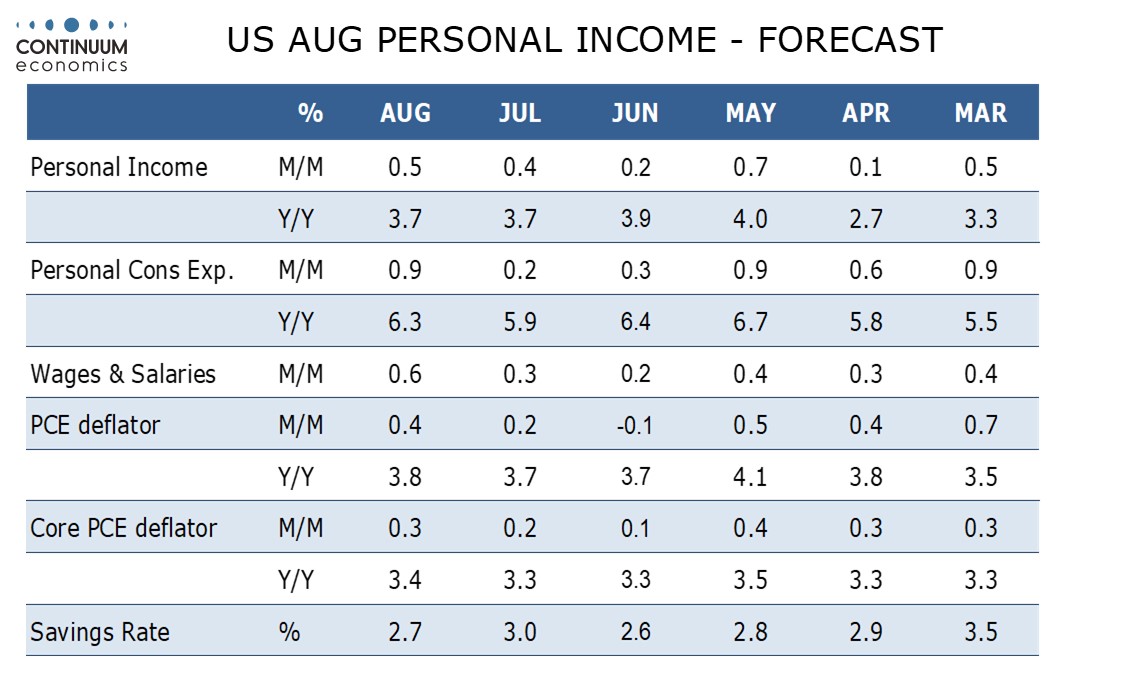
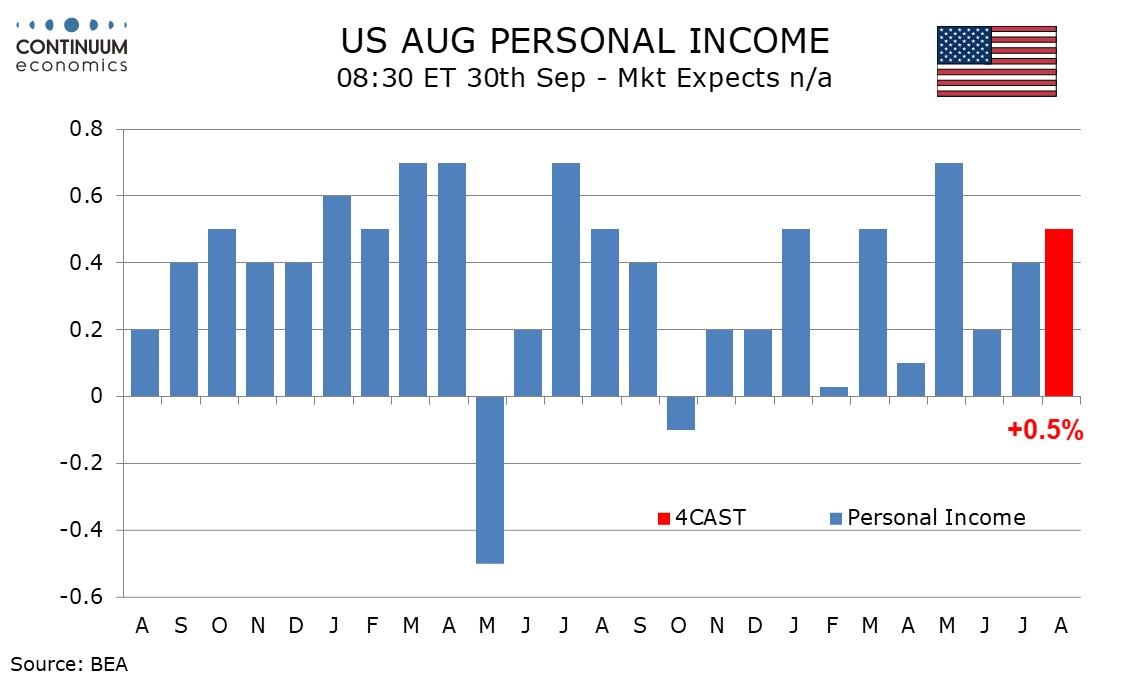
August’s non-farm payroll showed stronger growth in employment and a rise in the workweek, as well as a 0.3% increase in average hourly earnings, implying stronger 0.6% increase in wages and salaries. Other components of personal income are likely to fall short of this, but a strong gain in July was not narrowly based and is unlikely to be reversed. We expect overall personal income to rise by 0.5%.
August retail sales rose by a strong 1.2% rebounding from a weak July with ex auto sales stronger still at 1.4%. Industry data suggests autos may be stronger in the PCE report than in the retail sales data. We expect a 0.7% rise in services, 0.4% in real terms. The real gain in services would be up from 0.3% in July, but would match each month of Q2. This would leave overall spending up by 0.9% in nominal terms.
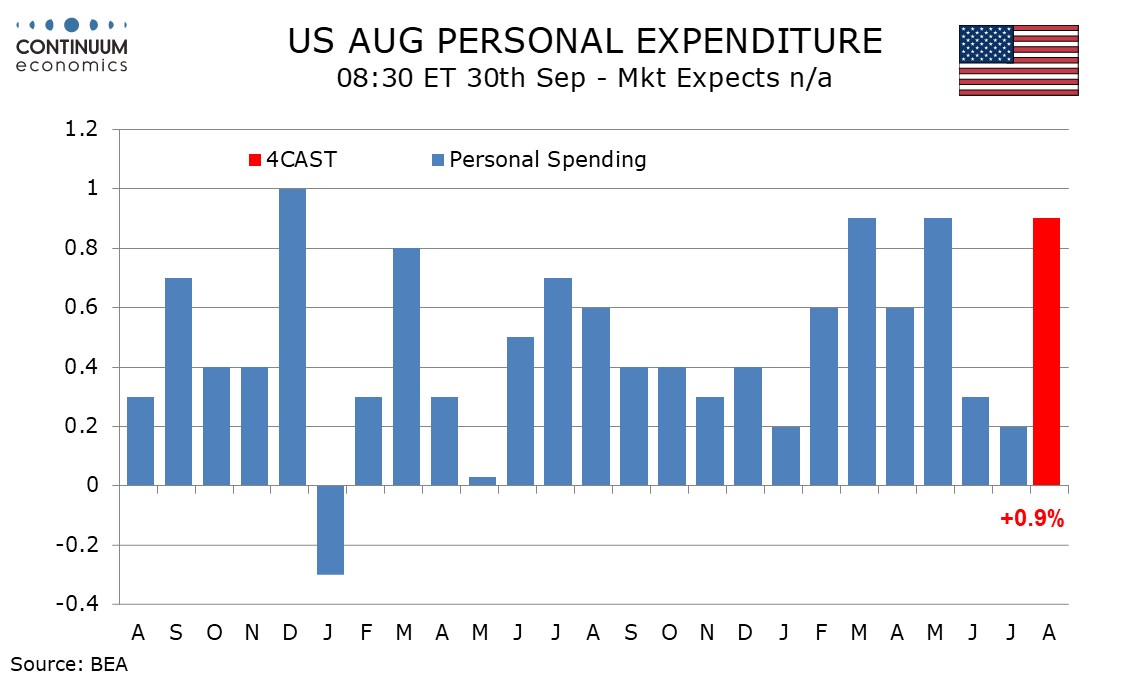
In the historical revisions we will be watching closely to see if recent outperformance of spending compared to income will be sustained. If the gap narrows it is more likely to be from revisions to income than spending. If there are no revisions the savings rate would slip to 2.7% from 3.0%, just above June’s 2.6% which was the weakest since June 2022.