FX Weekly Strategy: Asia, Aug 24-28
Small upward revision for U.S. Q2 GDP
U.S. July PCE prices to match CPI
U.S. Advance Goods Trade Balance Wider in nominal and real terms
Canada Q2 GDP Quarterly rebound seen largely on net exports
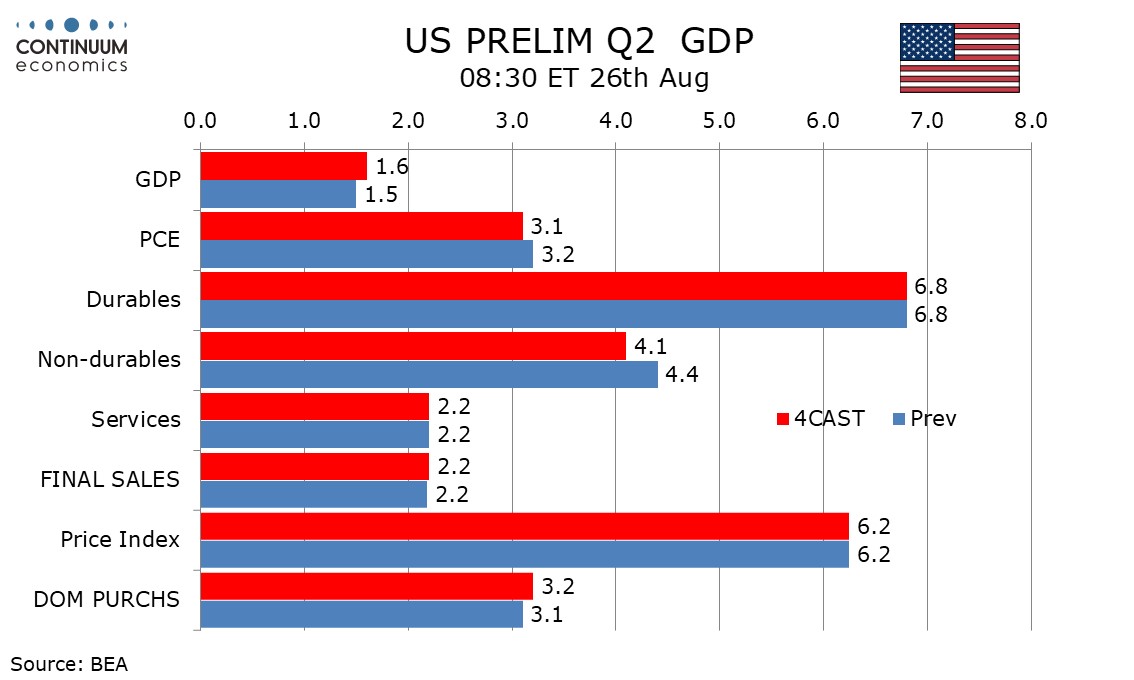
We expect a preliminary Q2 estimate of 1.6%, a marginal upward revision from the advance estimate of 1.5%, with the revision to be led by business investment. We expect the largest revision by component to come from private non-residential structures, though it will remain negative. A small upward revision to equipment is likely to add to the overall upward revision to business investment, making it increasingly positive. Public construction is also likely to see a small upward revision, as are inventories.
Weighing against this are likely modest downward revisions to retail sales and housing investment. Net exports are also likely to see a marginal downward revision due to service exports being revised up by more than service imports. We expect final sales (GDP less inventories) to be unrevised at 2.2% though with a small upward revision in USD terms. We expect final sales to domestic buyers (GDP less inventories and net exports) to be revised up to 3.2% from 3.1%.
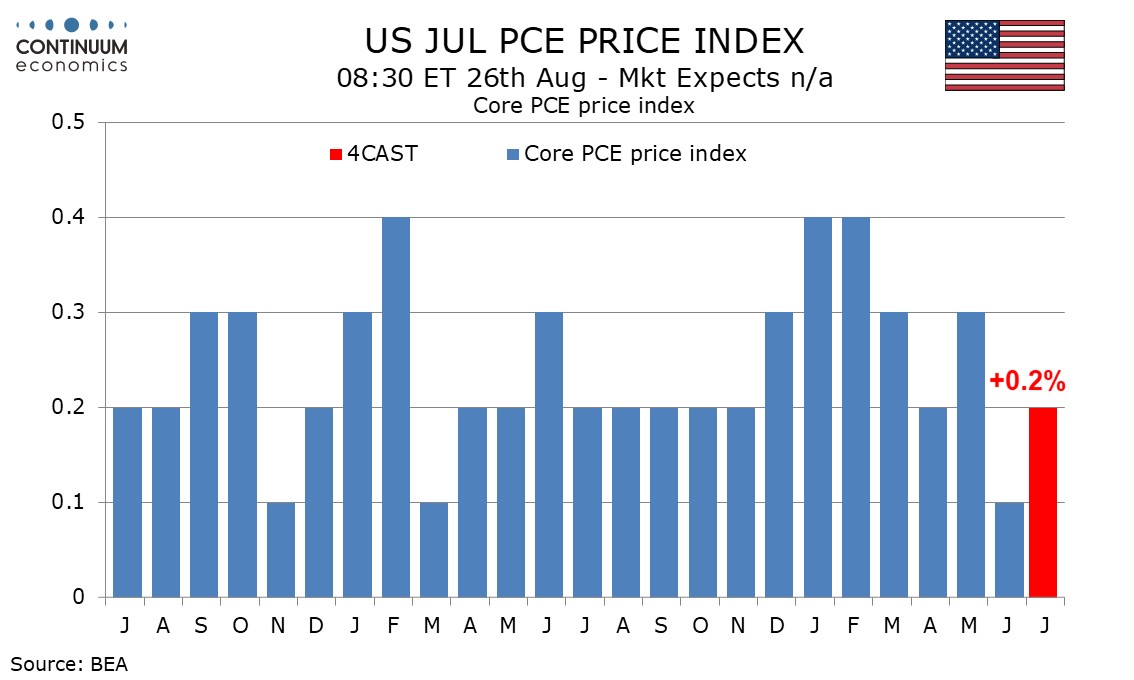
We expect July PCE price data to match the July CPI, rising by 0.1% overall and 0.2% ex food and energy. We expect a modest 0.2% increase in personal income, outperforming an unchanged outcome from personal spending. PCE price data has outperformed CPI in most recent months, a contrast from its usual tendency to underperform. Before rounding CPI rose by 0.074% but PCE prices are less sensitive to gasoline. Core CPI rose by 0.215%. We doubt core PCE prices will be quite strong enough to round up to 0.3%.
Yr/yr core PCE prices would then slip to 3.2% from 3.3% in June and a recent high of 3.4% in May. This is still well above the 2.0% Fed target. Overall PCE prices would slow to 3.6% from 3.7% in June and a recent high of 4.1% in May. The energy surge did appear to have some feed through to the core rate.
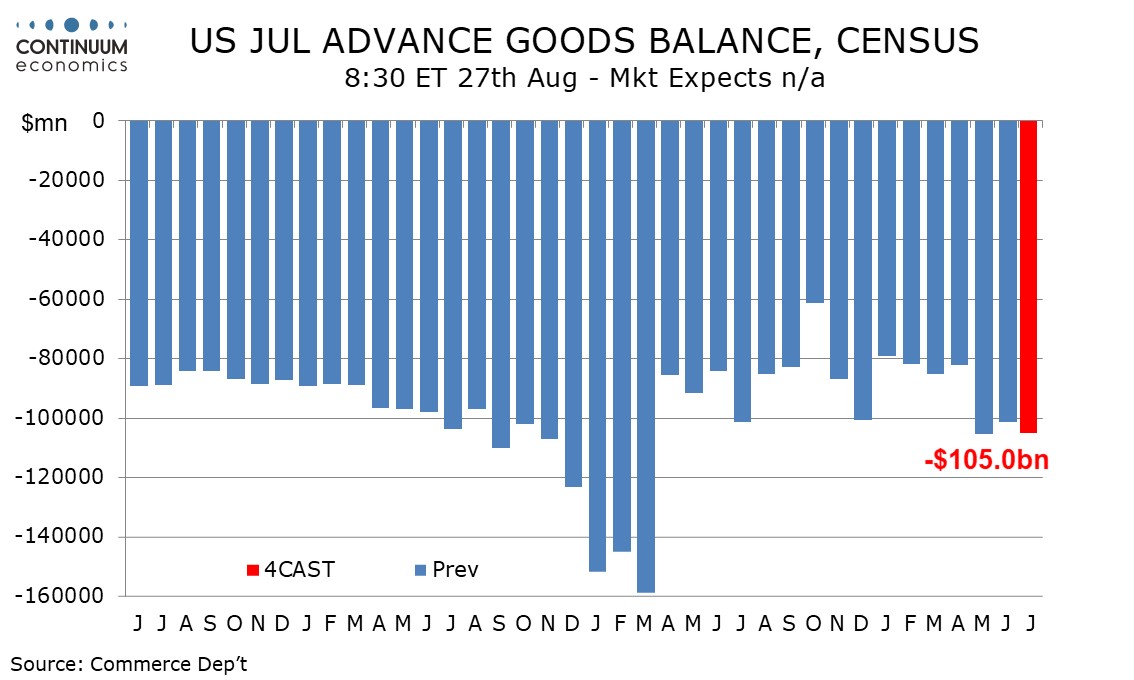
We expect a July advance goods trade deficit of $105.0bn, up from $101.4bn in June but slightly below the $105.3bn seen in May. May saw the widest deficit since the record $158.7bn of March 2025 immediately before the reciprocal tariffs were announced. We expect a 1.0% decline in exports which would be a third straight decline though with export prices having fallen by 1.3% in July this means a marginal increase in real terms. We expect imports to increase by 0.5% after a 2.6% decline in June. With import prices having fallen by 0.4% this means a larger rise from imports in real terms than for exports, causing the deficit to increase in real terms too, though again remaining narrower than seen in May.
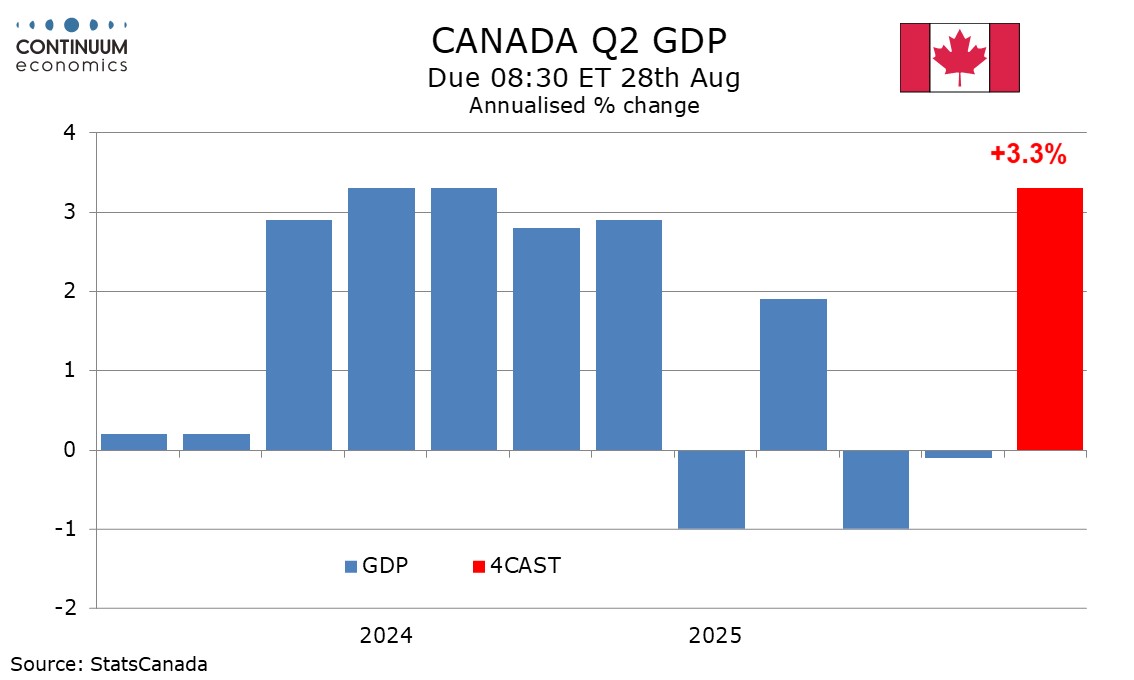
We expect Q3 Canadian GDP to increase by 3.3% annualized, in line with what monthly data is implying, assuming the preliminary estimate for a 0.2% increase in June is accurate and gains of 0.3% in May and 0.6% in April are unrevised. This will mark a return to growth after two straight negative quarters. The GDP gain is however likely to be fully explained by a rebound in net exports after a negative Q1, which would leave doubts over how sustainable the bounce in GDP will be, doubts that were visible in the Bank of Canada minutes from the July 15 meeting.
Monthly trade data shows exports up by 5.4% (not annualized) in real terms in Q2 with imports up by 1.4%. While there will be some offset from a deterioration in the services balance, we still expect exports to rise by 18.3% annualized, outpacing a 6.3% increase in imports and adding 3.3% to GDP. This would not quite fully erase a similar negative in Q1.