FOMC Minutes: Hawkish but no clear signal on October
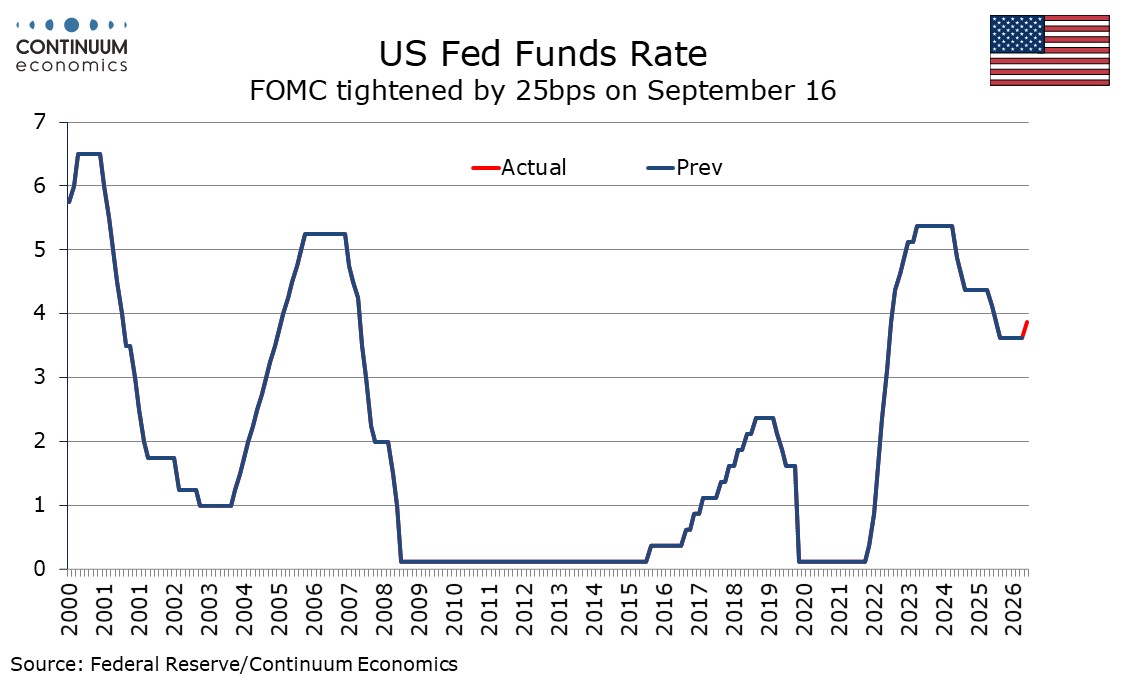
FOMC minutes from the September 15-16 meeting show unanimous support for the 25bps tightening that was delivered with increased upside risks to inflation and balanced risk to employment seen. Most participants stressed that another tightening would be likely be appropriate before year end but they emphasized that each meeting would be approached with an open mind.
The minutes are unlikely to revive expectations of an October move. Our view remains that December is the most likely time for the next move but a significant upside in September’s core CPI could revive risk of an October move. We however expect a moderate 0.2% core CPI rise, but with overall CPI up by 0.6% led by energy.
The minutes have a clearly hawkish tone on inflation with geopolitical developments on energy and surging AI-related investments seen contributing to inflation pressures. The latter is becoming increasingly emphasized. Recent signs of slowing in core PCE prices were downplayed given a tendency for inflation to be stronger in the first half of the year than the second. It is however the case that historical revisions caused August PCE prices to come in softer than expected on a yr/yr basis than the staff forecast made for the meeting, with the overall PCE price increase at 3.4% yr/yr versus 3.6% forecasted and the core at 3.0% rather than 3.2%.
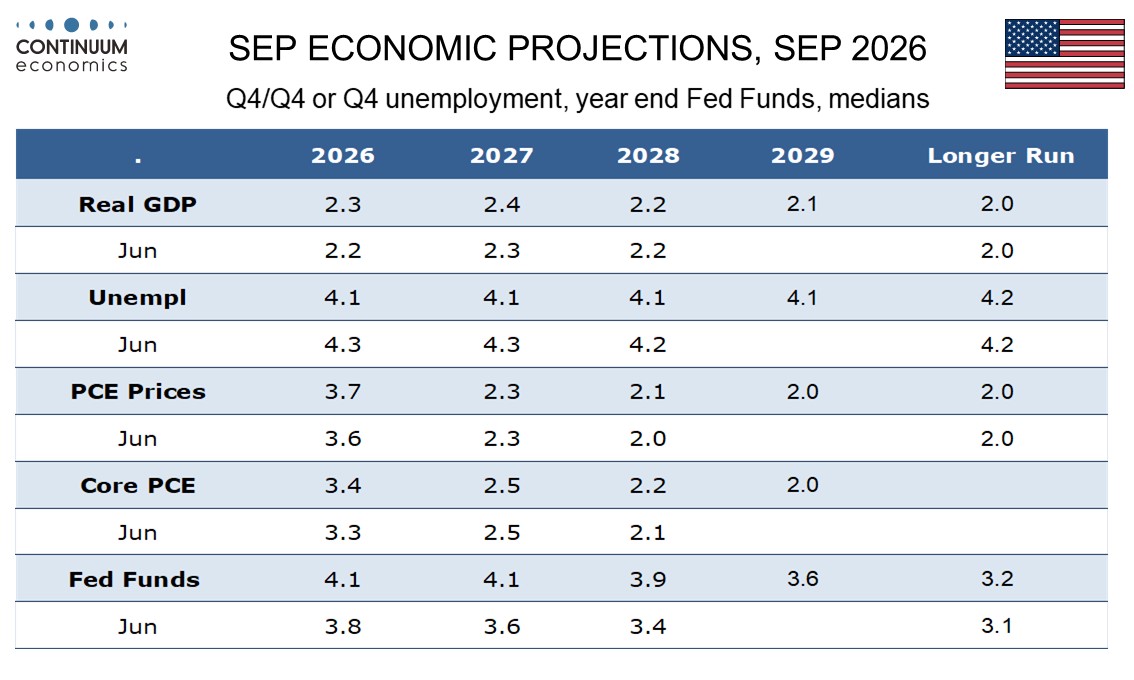
Participants expected inflation to remain elevated in the near term, and decline towards 2.0% in the medium term under appropriate policy. Business contacts were reporting increased cost pressures and increased ability to pass them on. Risks were seen as skewed to the upside with some seeing upside risk as having increased. Labor market conditions were seen as stable and expected to remain so, with risks broadly Economic activity was seen as expanding at a solid pace with several seeing momentum as having increased. Several saw the pace of the AI buildout as continuing to surprise on the upside. balanced. Rising UST yields were discussed but financial conditions were still seen as supportive for economic growth, though not so in the case of housing.