FOMC Minutes and our updated FOMC forecast through 2028
FOMC concerns over inflation are visible in the latest minutes, but not shockingly so with the meeting having taken place before October’s strong employment and inflation reports. We have however seen enough to revise our FOMC forecast. We continue to expect a 25bps tightening in December but now expect two additional 25bps moves in Q1 2027. We expect this will allow the corner to be turned on inflation and expect easing to resume in late 2027, before a gradual move down to near neutral through 2028.
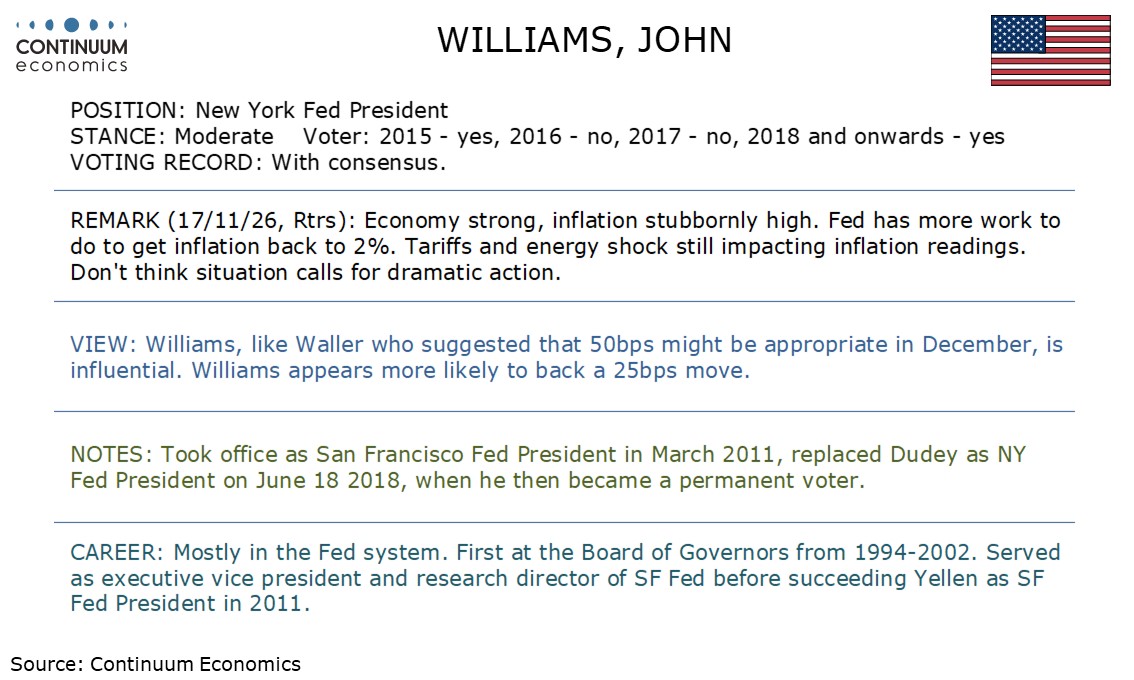
There will clearly be some debate in December between those looking for a 50bps move, likely to be led by Governor Christopher Waller, and those backing a 25bps move. However, Waller’s view appears to be in a minority, with New York Fed’s influential President John Williams sounding more dovish. Fed officials do however appear clear that inflation is a problem and we suspect early 2027 data will show some signs of pass-through of energy into core inflation. We expect a reluctance to move by 50bps will persist as the Fed looks to evaluate the impact of its moves. However we feel that reluctance to move at consecutive meetings will not persist. Chairman Kevin Warsh’s press conferences have been awkward at recent meetings at which rates have been left on hold given his reluctance to give forward guidance. We expect the FOMC to move at both its meetings in Q1 2027, and that would mean moves at three consecutive meetings.
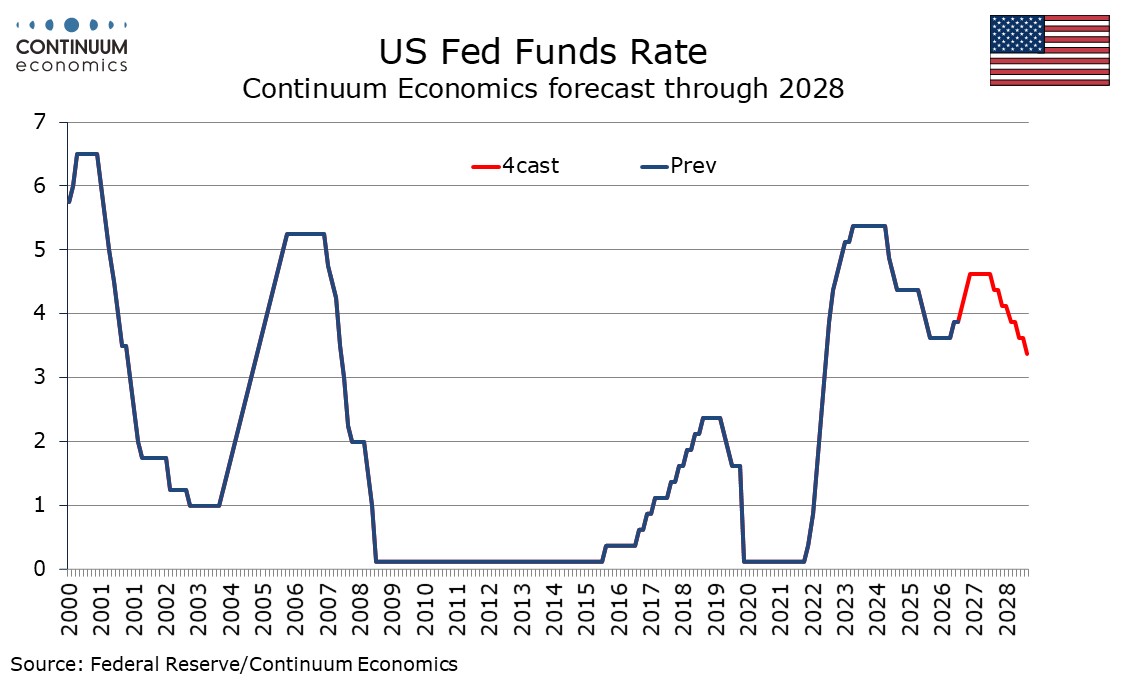
We do believe that tightening of that magnitude, taking the Fed Funds target to 4.5-4.75% by March 2027, will be sufficient to put a significant squeeze on the economy and turn the corner on inflation, and that easing will resume late in that year. We pencil in a 25bps easing in November 2027. We expect easings of 25bps in each quarter of 2028, taking the Fed Funds target to 3.25-3.5%, slightly above the Fed’s current estimate of neutral but in line with where we believe the neutral rate now lies.
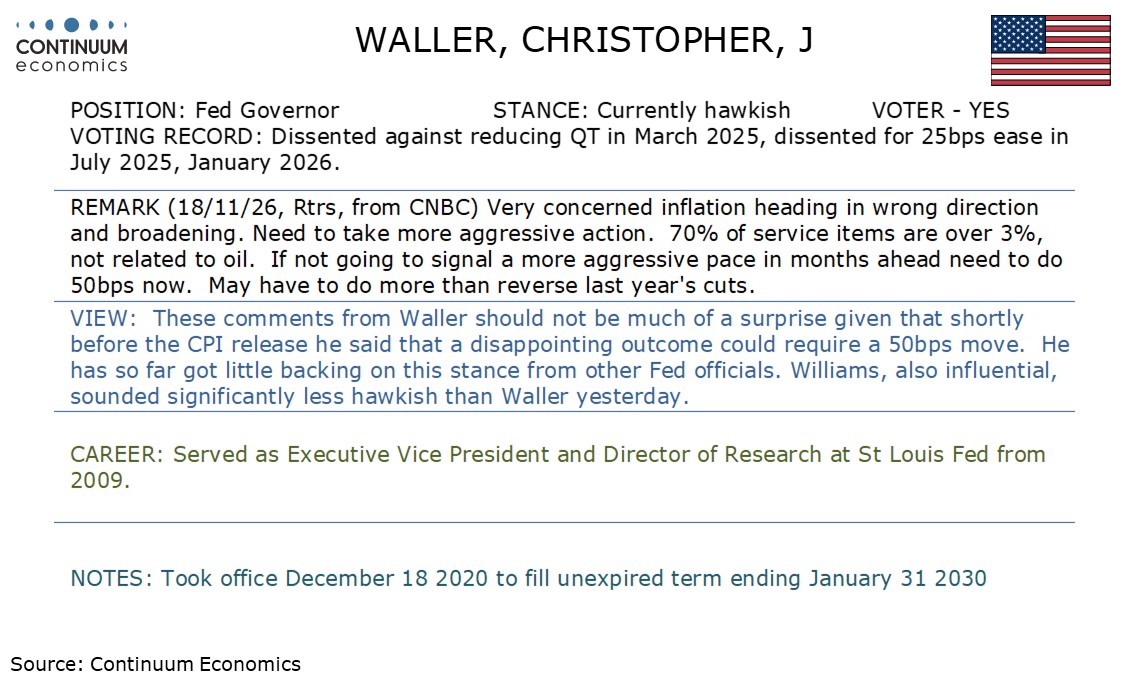
Minutes from the October 28 meeting did not provide any major shocks. Most supported leaving rates unchanged but a few of those saw it as a close call. Some favored a 25bps tightening but a few of those would have accepted a steady policy decision if it was clearly understood by markets that further tightening was likely. This illustrates the problems inherent in Warsh’s reluctance to provide forward guidance. Almost all judged that further tightening would be appropriate, but only a couple suggested that a 50bps move could be appropriate in December in incoming inflation data were unfavorable. That suggests Waller’s view, which he initially expressed shortly before October’s CPI was released, was a minority view at that point. There is little evidence of a significant shift into that camp since the data was released, though the data has clearly caused widespread concern.