FX Daily Strategy: Asia, Sep 10
A 25bps Hike from ECB
U.S. August PPI Shows Inflationary pressure still significant
U.S. August Pending home sales suggest slippage
Figure 1: Headline and Core EZ HICP Yr/Yr (%)
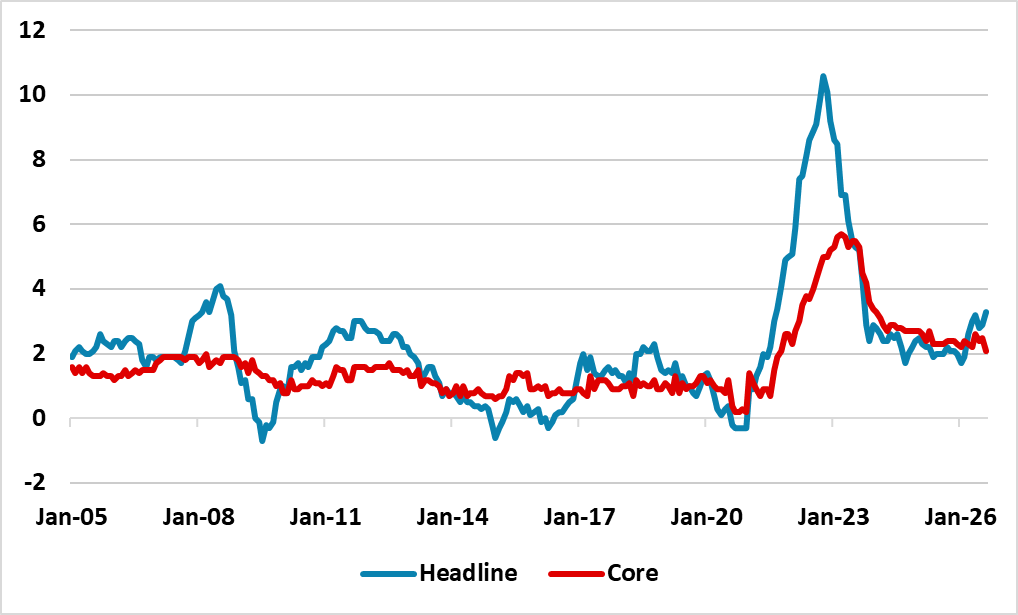
We feel that recent data or the continued hostilities between Iran and the U.S. do not argue for a U turn in the rate hike bias. Thus we now confirm a forecast of a 25bps hike at the September 10 ECB meeting. Nevertheless, we would also expect the ECB to then cool market expectations of further tightening and signal a less hawkish forward guidance – we see no further hike in 2026. However, we see a different story for 2027, with the prospect of easing.
ECB board members will be disappointed that Iran and the U.S. have not been able to reach a new ceasefire, which would produce a path to lower energy prices. Iran hardliners are trying to drive a harder bargain and this is delaying agreement and a new ceasefire – though we still attach a 60% probability to this occurring in H2 2026. ECB staff forecasts are also likely to be adjusted. Oil prices have been in line with the ECB baseline scenario, despite the intermittent hostility between Iran and the U.S. and the decline in inventories.
With ECB Lagarde having indicated that the ECB was open to a September hike, it has to asked whether anything will change the thinking from the July meeting. We feel that recent data or the continued hostilities between Iran and the U.S. do not argue for a U turn in the rate hike bias. Thus we now confirm a forecast of a 25bps hike at the September 10 ECB meeting. Nevertheless, we would also expect the ECB to then cool market expectations of further tightening and signal a less hawkish forward guidance – we see no further hike in 2026. However, we see a different story for 2027.
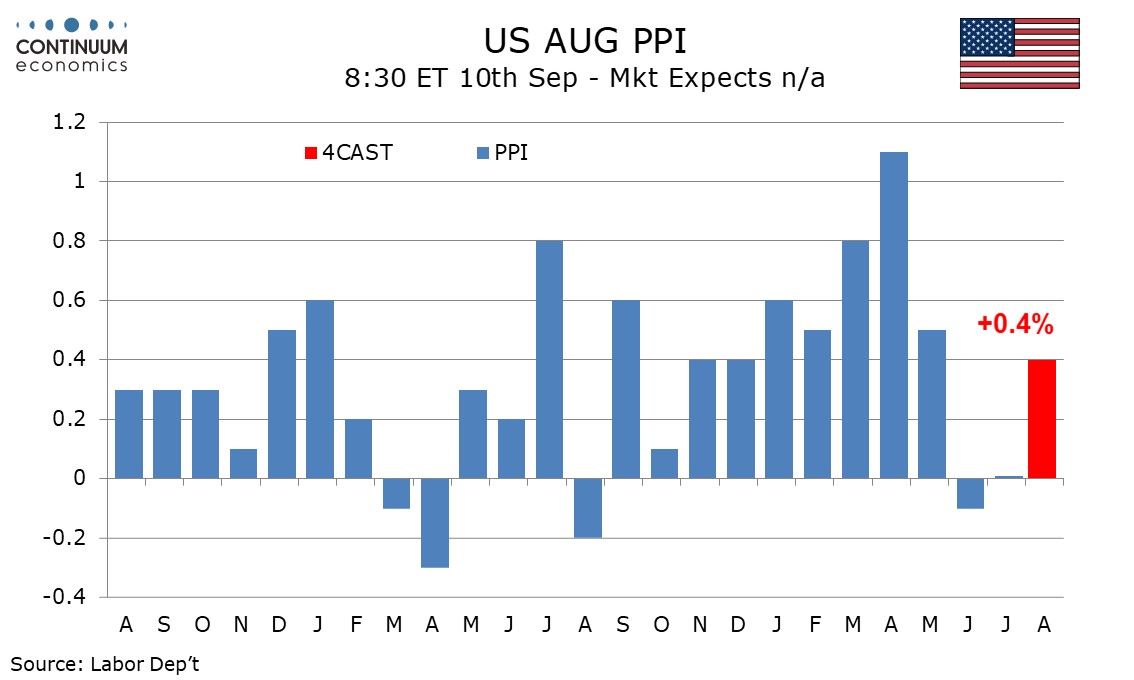
We expect August PPI to increase by 0.4% overall with 0.3% gains in both core rates, ex food and energy and ex food, energy and trade. We expect a 2.2% increase in energy, not fully erasing a 3.5% July decline, and a 0.3% correction higher in food after a sharp 0.9% decline in July. Gasoline prices moved higher in August after slipping in June and July but gains late in the month may be missed by the PPI survey. We expect goods PPI ex food and energy to rise by 0.2%, stronger than July’s 0.1% but still showing the last three months significantly slower than the first five months of 2026. The slowing is likely to reflect a fading impact from tariffs. The recent escalation with Canada came too late to impact August PPI significantly.
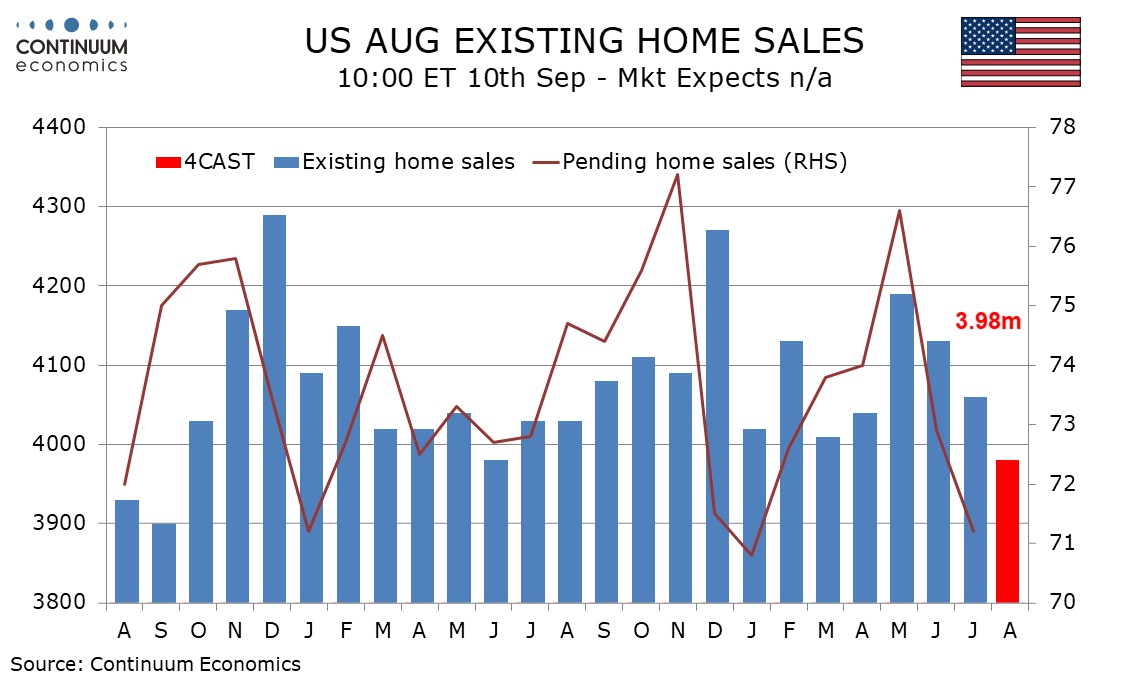
We expect August existing home sales to see a third straight monthly fall, by 2.0% to 3.98m, which would be the lowest level since a matching June 2025. That would see yr/yr growth slip to -1.2% from a positive 0.7%. Evidence from housing sector surveys is on balance negative, with weak pending home sales in July the most significant as that data is designed to predict existing home sales. The MBA house purchase index remained weak in August but August’s NAHB homebuilders’ index showed some improvement. Upward pressure on bond yields is a downside risk.