FOMC Minutes Preview: Hawks, Doves and Data-Dependents
FOMC minutes from July 29 are due on August 19 and will get extra attention with Chairman Warsh not having given a clear explanation of the decision to leave rates unchanged, after a meeting which saw three dissenting votes for tightening. The minutes may suggest that several in the majority could back a tightening soon if inflation disappoints. It is unclear if there will be a significant clearly dovish camp, feeling that the longer-term inflation outlook provides a solid argument against tightening.
The hawkish dissenters, Minneapolis Fed’s Kashkari, Cleveland Fed’s Hammack, and Dallas Fed’s Logan all put out statements explaining their dissents, all expressing concern that inflation is not on track to return to the 2% target (Logan suggesting it was trending towards the mid-twos). Their arguments have been supported by two non-voting district presidents, St Louis Fed’s Musalem and Kansas City Fed’s Schmid, both of whom delivered hawkish dissents as voters in 2025. Richmond Fed’s Barkin has stated he was unsure of how he would have voted. Two other non-voting district presidents, Boston Fed’s Collins and Chicago Fed’s Goolsbee are probably also hawkish-leaning.
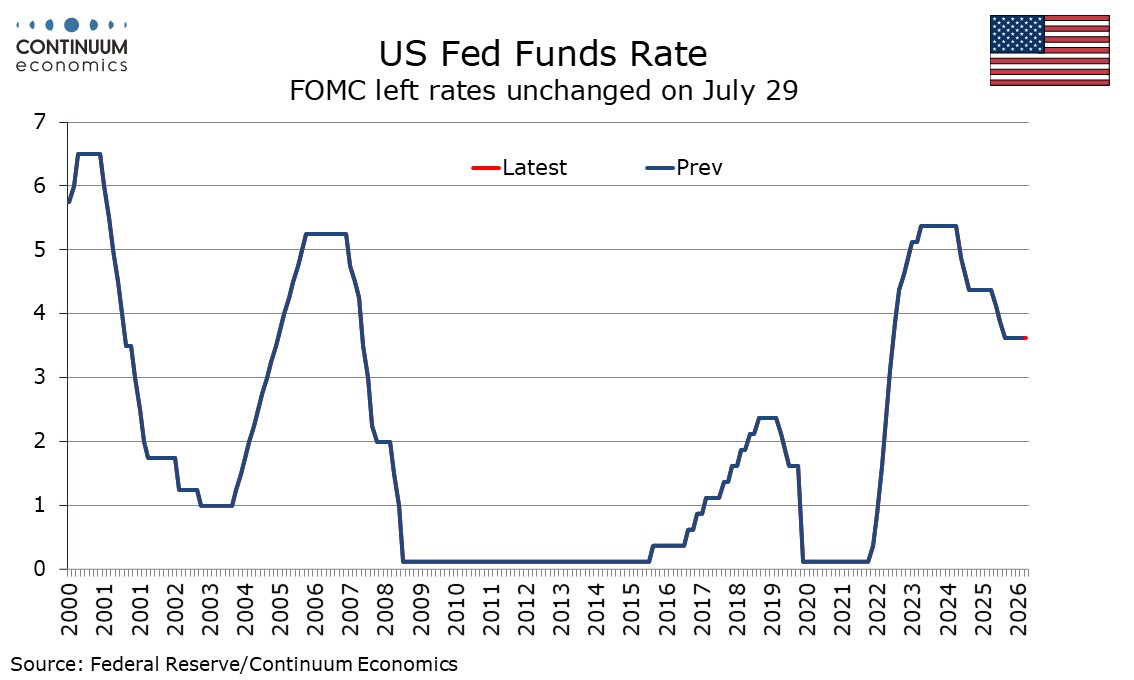
Philadelphia Fed’s Paulson was the only one of four rotating voters to vote for steady policy though has stated that inflation will ease if policy is in the right place, implying that tightening will be needed if it does not. San Francisco Fed’s Daly also backed the decision to hold rates, but added that they were running out of room to wait for disinflation to return. The Atlanta Fed is still waiting for a permanent appointment to replace the retired Bostic, while New York Fed President Williams is a permanent voter.
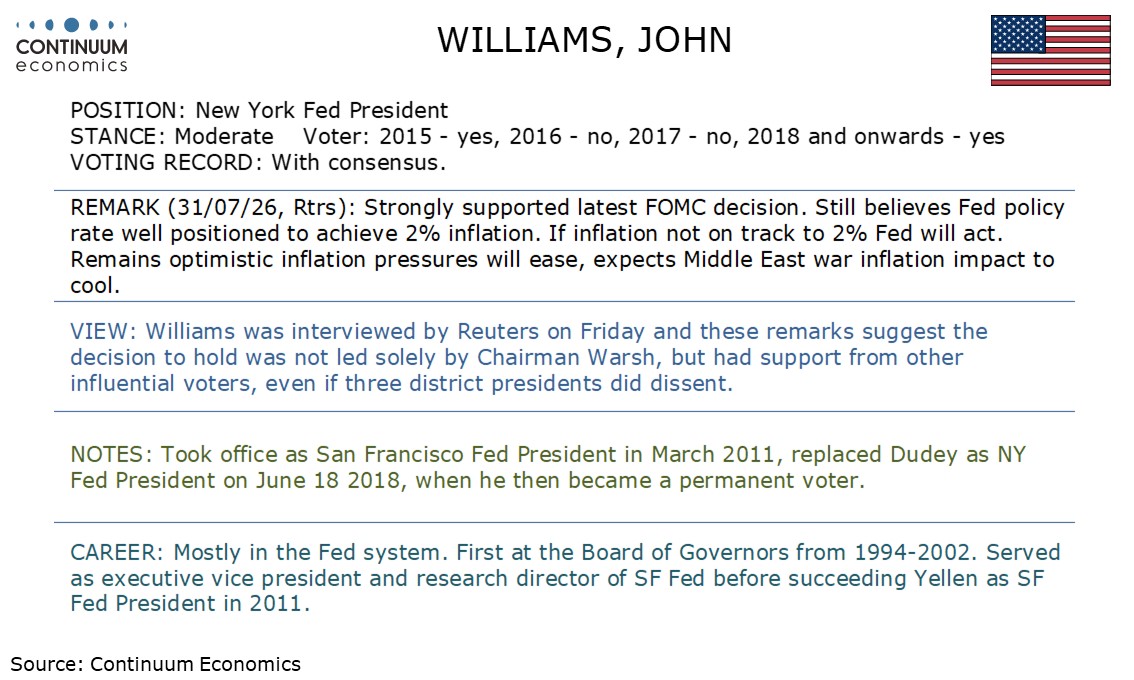
Williams quickly stated that he strongly supported the unchanged policy decision in remarks that may have been intended to take some of the pressure off Warsh, still believing that policy is well positioned to achieve 2% inflation. Governor Cook also expressed support for the decision, but is ready to raise rates if inflation does not return, and appeared less dovish than Williams. Governor Waller had stated before the soft June CPI that a strong number could have prompted a tightening, and is probably still willing to back tightening if upcoming data disappoints. Governor Jefferson has also stated policy could be reconsidered if inflation does not cool soon. Of the remaining governors Bowman remains dovish, seeing policy as well positioned to return inflation to the 2% target, but there is little in Barr’s history to suggest that he will be. Former Chairman Powell is unlikely to lead any push for tightening if Warsh is reluctant, but would probably go along with any majority.
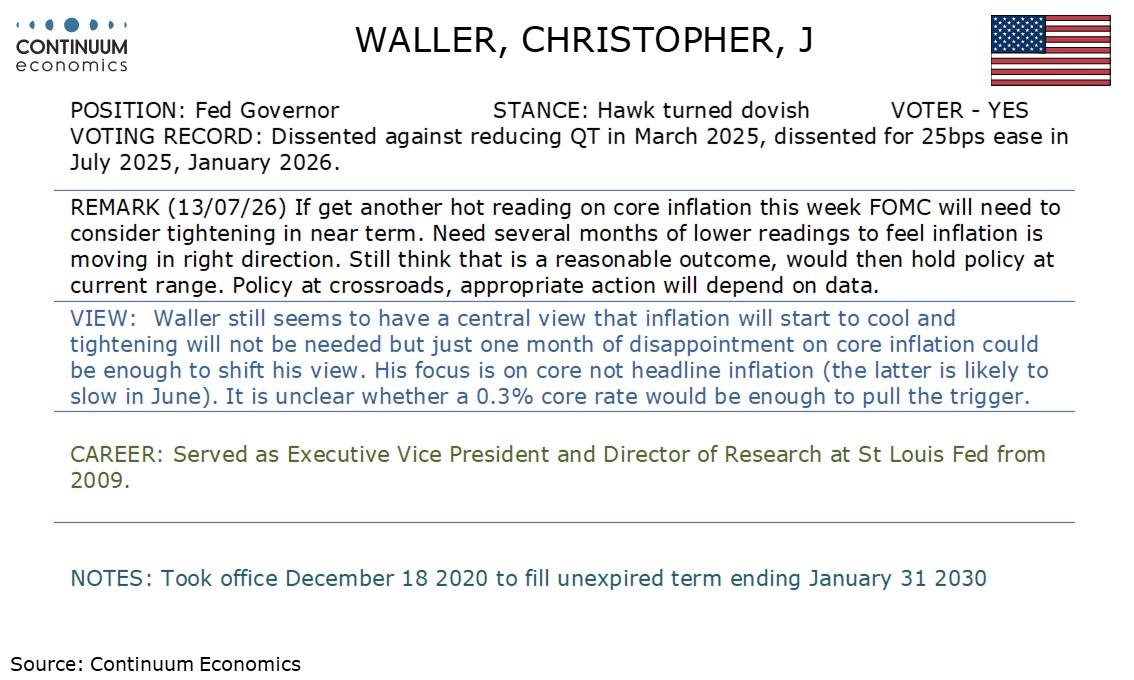
The minutes thus look likely to show that several of those that backed a policy hold on July 29 could move towards tightening unless June’s subdued CPI is followed by more such releases. We doubt the weaker than expected July non-farm payroll have changed many minds given the fall in unemployment, though a slowing trend in average hourly earnings suggests inflationary risks are coming from elsewhere.
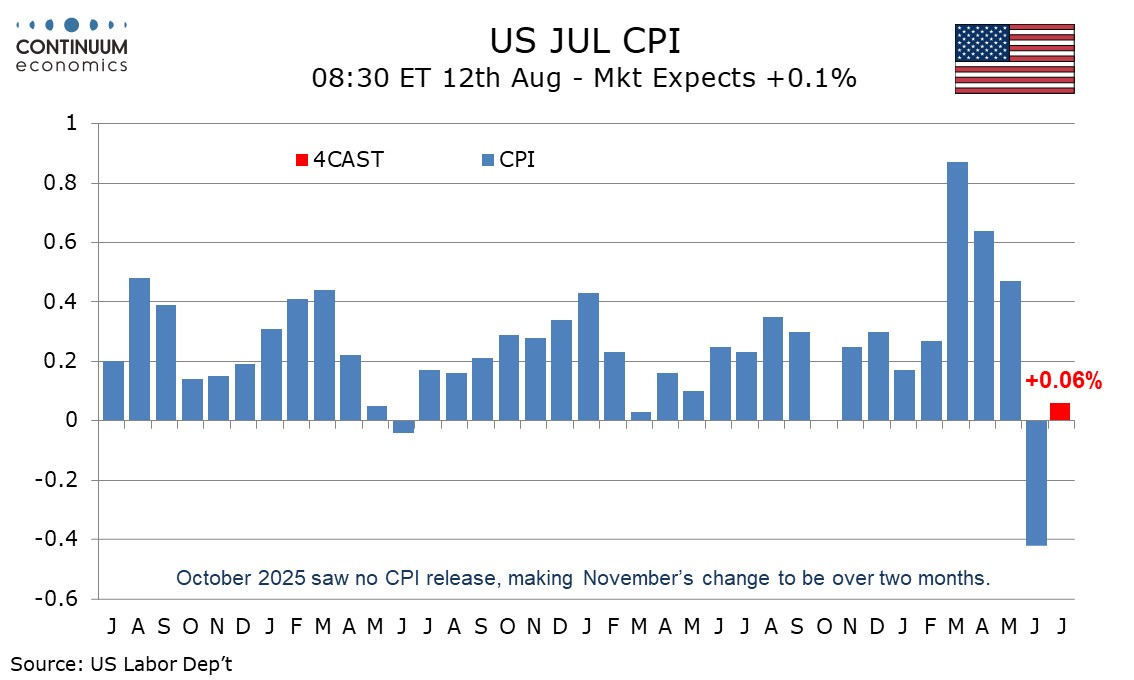
There is a credible case for continuing to keep policy on hold. Inflation appeared to be heading towards the 2% target before getting a lift from tariffs, the impact of which is now fading, while the recent energy shock could well prove to be temporary too. We remain hopeful that core inflation data will come in subdued enough to allow a tightening this year to be avoided. The case for strong AI-fueled productivity growth casing a sustained fall in inflationary pressure is however less convincing. We doubt the minutes will show that view having more than minority support, even if Warsh, who has given little away in public, pushed it at the meeting. If Warsh is trying to push a clearly dovish case he may have little support beyond Bowman and Williams, and even they may be only cautiously in any such camp. While Warsh has tried to downplay the importance of incoming data, the minutes may suggest upcoming inflation releases will be key to the next FOMC decision on September 16. It should be noted that as well as July’s CPI release, August CPI, due on September 11, will also be known before that meeting.