FX Weekly Strategy: Asia, Oct 5-8
US yields put in a potential n/t weekly top as data plays to Fed lack of urgency
Euro still weighed on crosses until/unless politicians manage a convincing response; mkt tends to escalate into a forced crisis reaction
Fiscal saints may come back onto the agenda, so long as US bonds and risk steady at least
Light calendars leave focus on euro spread developments and choppy oil action resolution
Last week’s overheated action on bonds may have put a near-term yield high in, as Fed officials have started to dial back the hawkish rhetoric and as data has tended to play to the lack of urgency expressed by the likes of Williams and Jefferson. Oct rate hike odds have dialled down to 15-20%, with Dec hike around 75%.
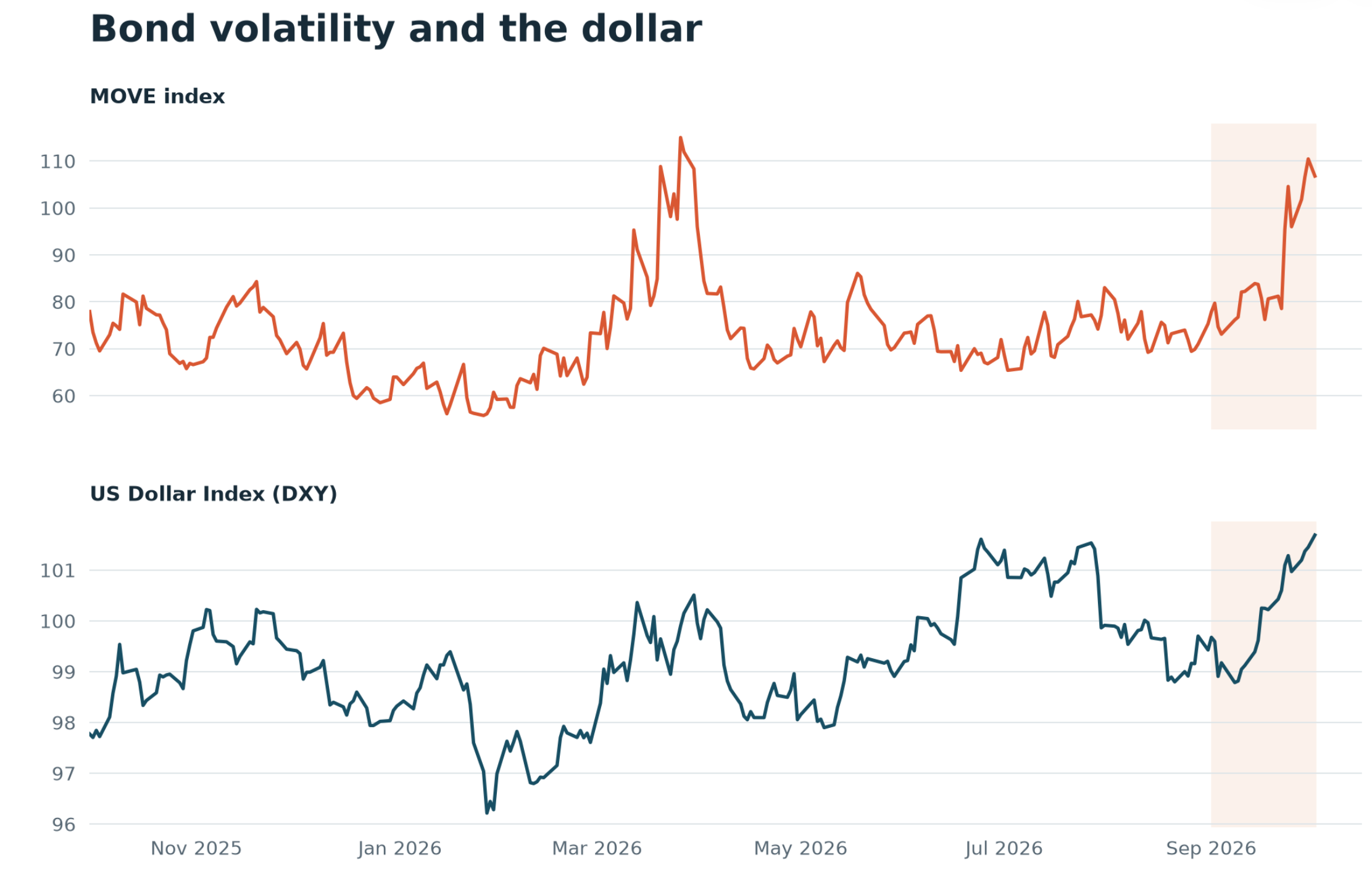
A lukewarm payrolls, a correction up in the unemployment rate and an innocuous 0.1% earnings print might buy some time. That still leaves the next CPI print as potentially influential (especially given upside risks seen in Sep). But for now the cooling back in growth data has seen yields put in a possible weekly gravestone doji, for those of a chart disposition. That could see US10s follow back through for a retest of the 5%~ breakout again, global geopolitical backdrop (energy especially) allowing.
On the latter front, recent high Strait leakage levels and the mooted reserve release for crude and diesel have been helping, even with background disquiet regarding Trump threats to move more military assets into the region to re-escalate post midterms.
While the above ingredients have allowed another Houdini escape for risk, S&P500 only a few points off the highs, and with it some bounce seen in the recently heavily offloaded carries such as MXN, the wider question is whether the euro will be able to join the corrective party while French-led pressures remain in place.
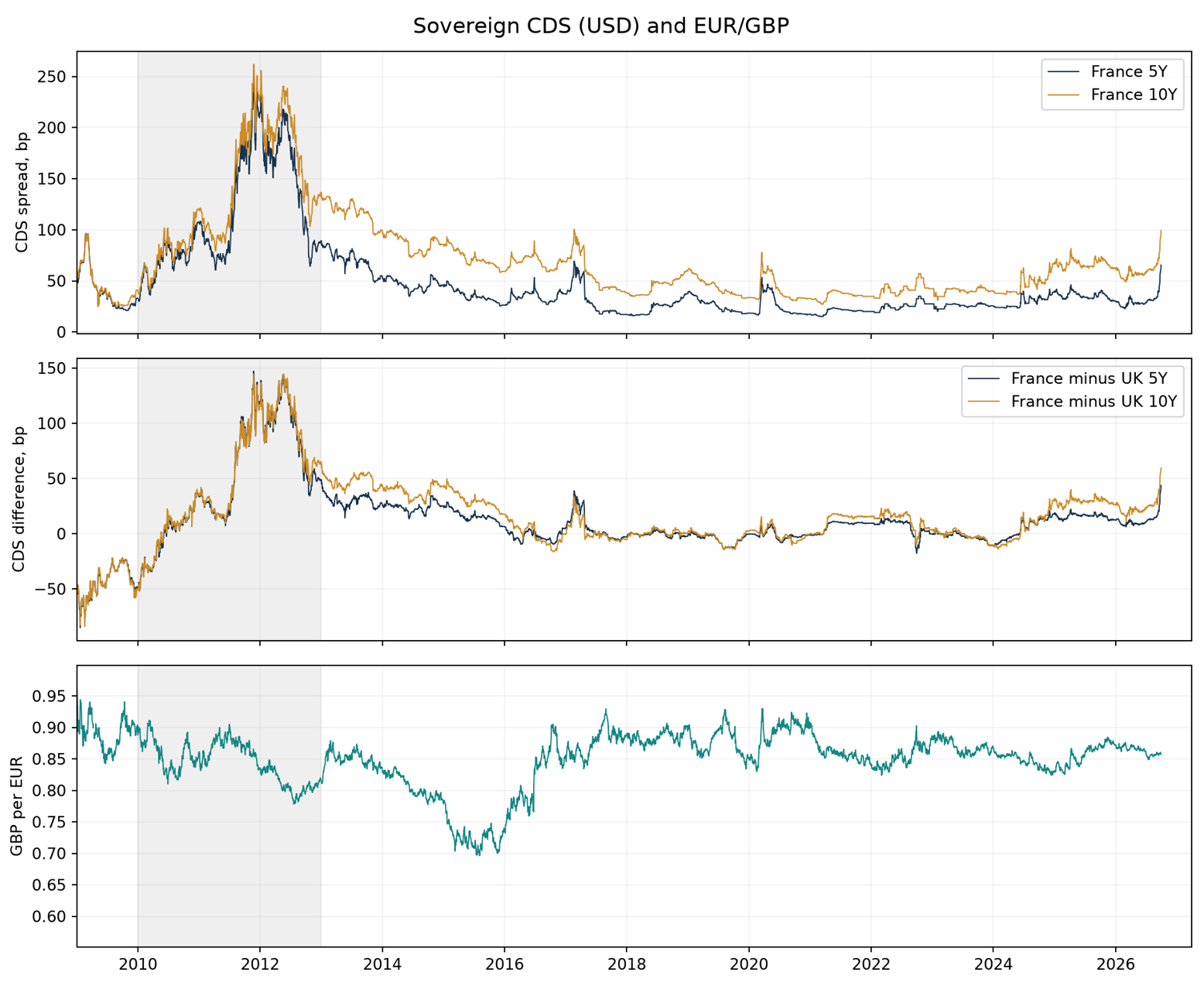
At 150bp+ OAT-bund, notable pressure even at the short end, and spillover starting to spill out more widely to periphery, action has reached the point where politicians need to act quickly, even as soon as this weekend, to arrest the momentum. Multiples episodes over the last decade and a half should have underscored that fact.
The FX market might be a little better hedged after a heavy burst or euro downside protection buying last week, but it will likely take a statement of broad political support for a French Budget that goes significantly further than the recent modest proposed trim to be putting a floor in.
Slowing the pace of ECB passive QT is a future option if price action is seen as starting to impact on the function of monetary policy. Traditionally however, the ECB has been reluctant to step in pre-emptively to short-circuit market led pressure for required fiscal corrective action.
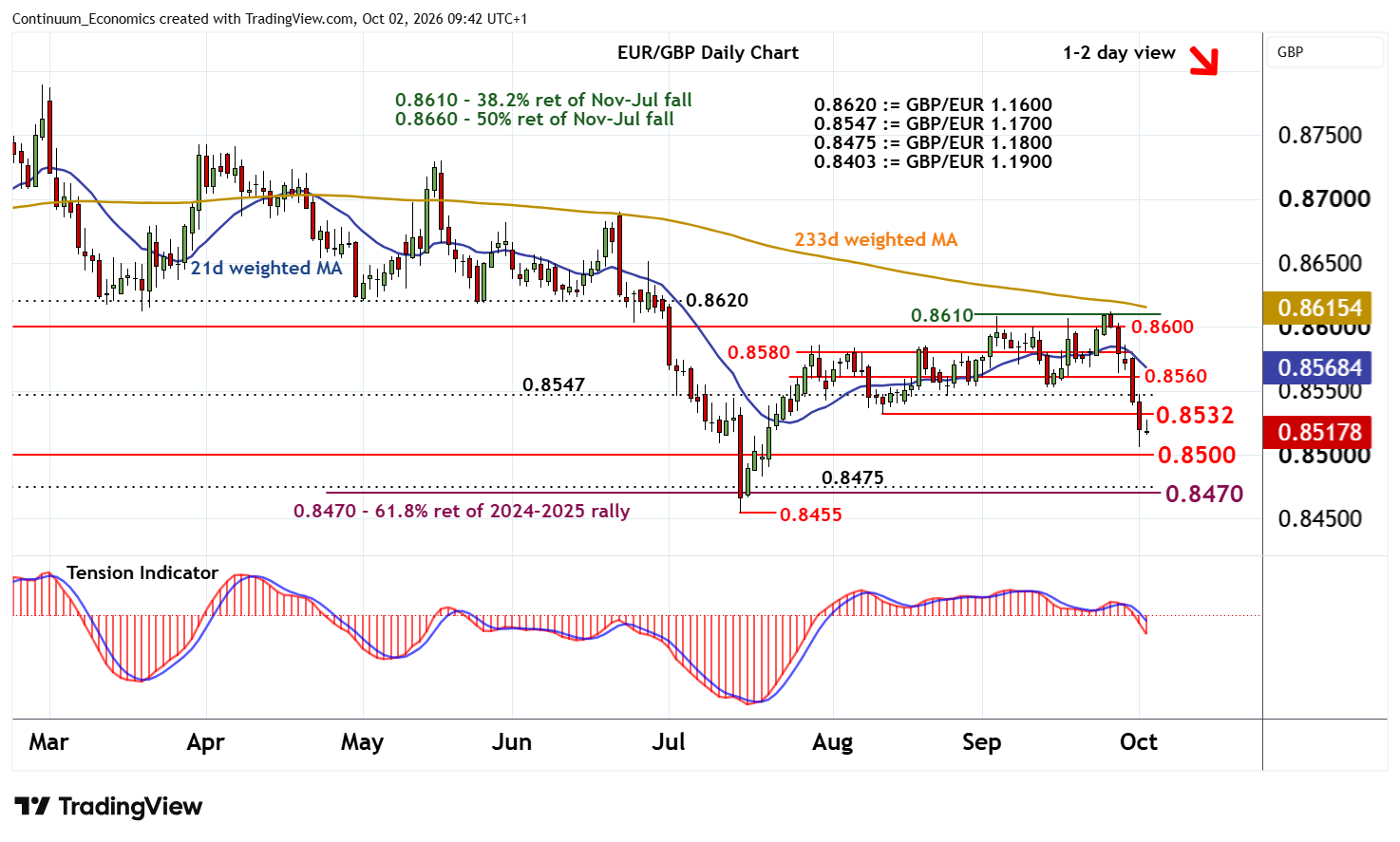
Generally, we still like the idea of EUR/GBP easing back lower with cable more responsive to any dollar correction, the cross still weak on the charts after the failed upside break attempt, and the market moving back from a position of being overly short sterling and over-positioned for relative UK risk. 0.8470/50 remains the objective at least as the low side of the wider range.
If we are in a window where wider risk has some let up from the US yield charge, but we are still nonetheless more focused again on the fiscal saints, then as well as some of the obvious names, AUD might have some bounce potential after the recent hefty selloff. In straight AUD/USD terms, a near-term oversold bounce from 0.69 has 0.7 to 0.71 as resistance. EUR/AUD has been finding the 1.61 and just below as an important level for some time back to mid 2023, so it remains an important medium-term reference.
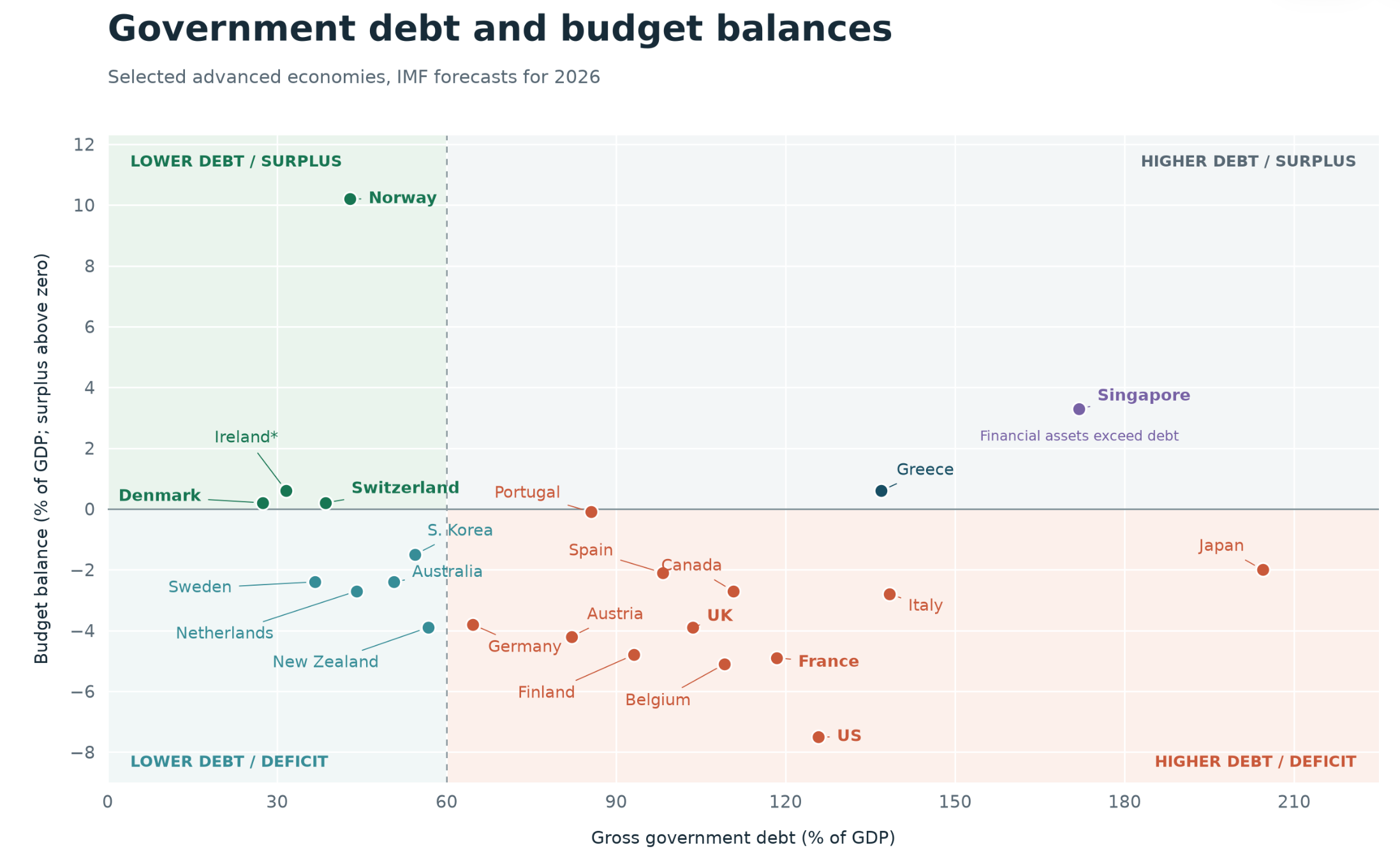
SEK is often underrated on this criteria and in theory ought to have some potential to recover having been beaten up of late and run to resistance on various basis. EUR/SEK has pullback support at 11.20, though it can tend to see as much euro contagion as it does diversification - fairly or not - which doesn't make this counter straightforward.
Data and events for the week ahead
USA
In a quiet week for US data the highlight may be FOMC minutes from the September 16 meeting which are due on Wednesday. Given the unanimous vote to tighten the minutes are likely to look hawkish expressing clear concern over inflation, but are unlikely to suggest any decision has been made for forthcoming meetings, which will be data-dependent. Fed speakers scheduled include Williams and Logan on Tuesday, Musalem on Thursday and Collins on Friday.
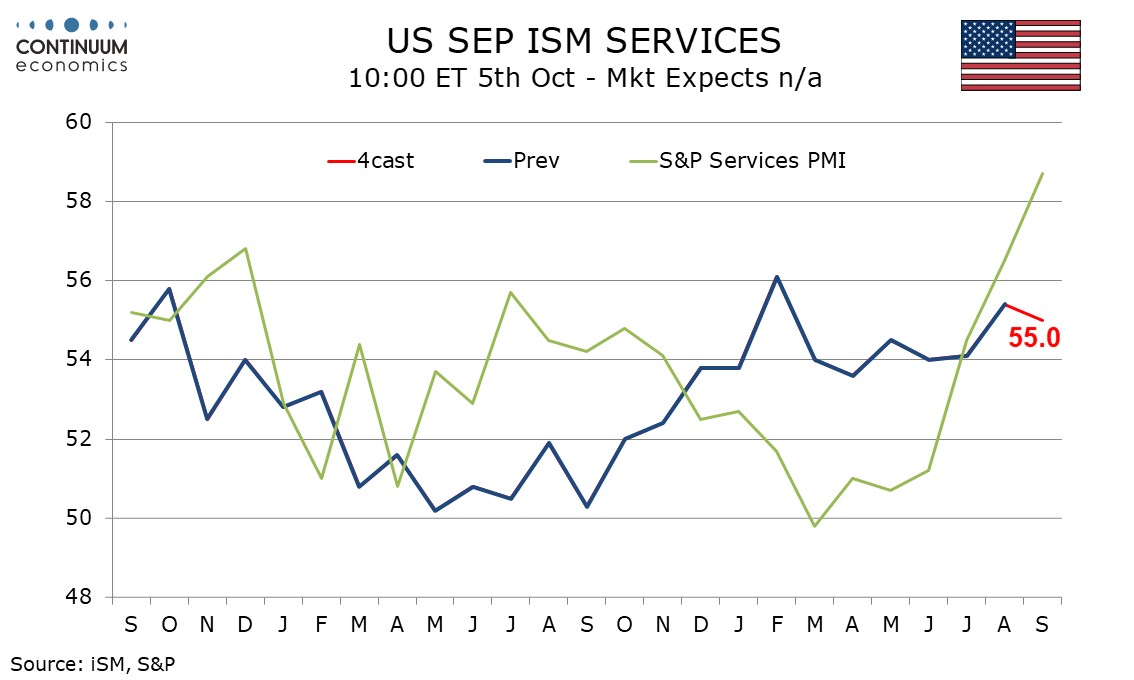
On Monday we expect little change in September’s ISM services index, at 55.0 versus 55.4 in August. On Tuesday we expect September’s trade deficit to increase to $102.3bn from $85.6bn reflecting deterioration in advance goods data already released. Weekly initial claims are due on Thursday, followed by August wholesale trade. Friday sees the preliminary October Michigan CSI, which could take a hit on rising inflation concerns.
CANADA
Canada’s most significant release is September employment on Friday. We expect a modest rise of 5k with unemployment increasing to 6.5% from 6.4%. Monday sees September’s S and P services PMI, Tuesday August’s trade balance and Wednesday September’s Ivey manufacturing PMI.
Eurozone
Thursday sees the release of the ECB’s monetary policy accounts (minutes) from its September meeting at which the Bank raised its deposit rate by 25bps. EZ Producer price inflation covering August is out on Monday that should provide further clues to pipeline inflationary pressures building up in the manufacturing sector. Industrial production for Italy and France for August should see a modest rebound while Eurozone retail sales are out on Tuesday (covering August)
UK
A quiet data calendar next week with mostly second tier releases. Monday sees the final prints for PMI surveys (Sep) while the RICS housing survey (Sep) is out on Tuesday.
JP
Fairly light week, with pay and household spending the main interest. Pay trends remain one of the BoJ focal points though it is more interested in seeing the spring wage round than current prints.
AU and NZ
A thin week ahead. RBNZ has central bank speakers (Breman and Silk), with just NZIER Confidence data due. Australia has final PMI and consumer sentiment data