Preview: Due November 30 - Canada Q3/September GDP - Slower but with still healthy domestic demand
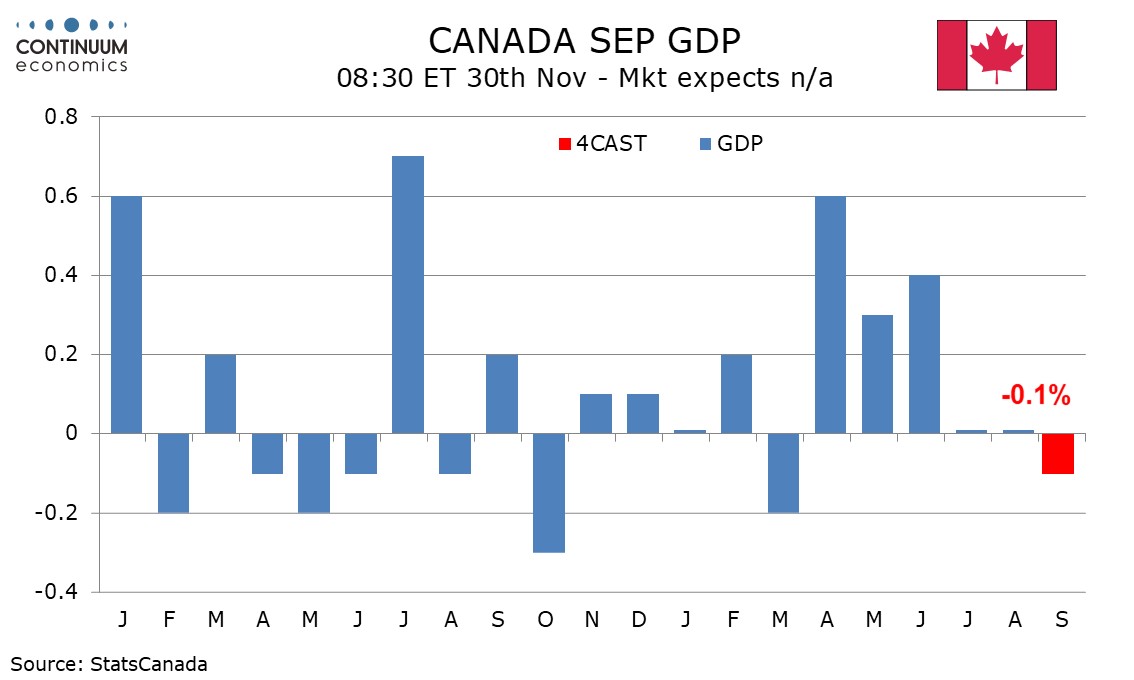
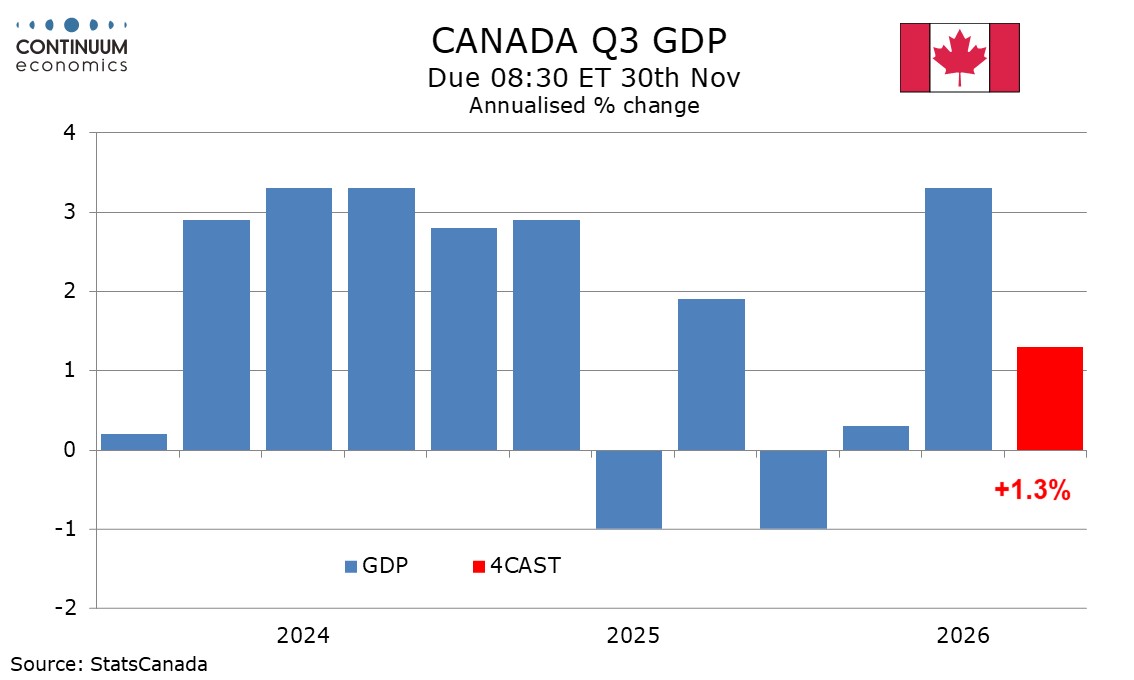
We expect Q3 Canadian GDP to increase by 1.3% annualized, consistent with the signals from monthly data assuming a 0.1% decline in September as suggested with August’s report. However, quarterly detail is likely to show a healthy picture outside a steeper inventory depletion.
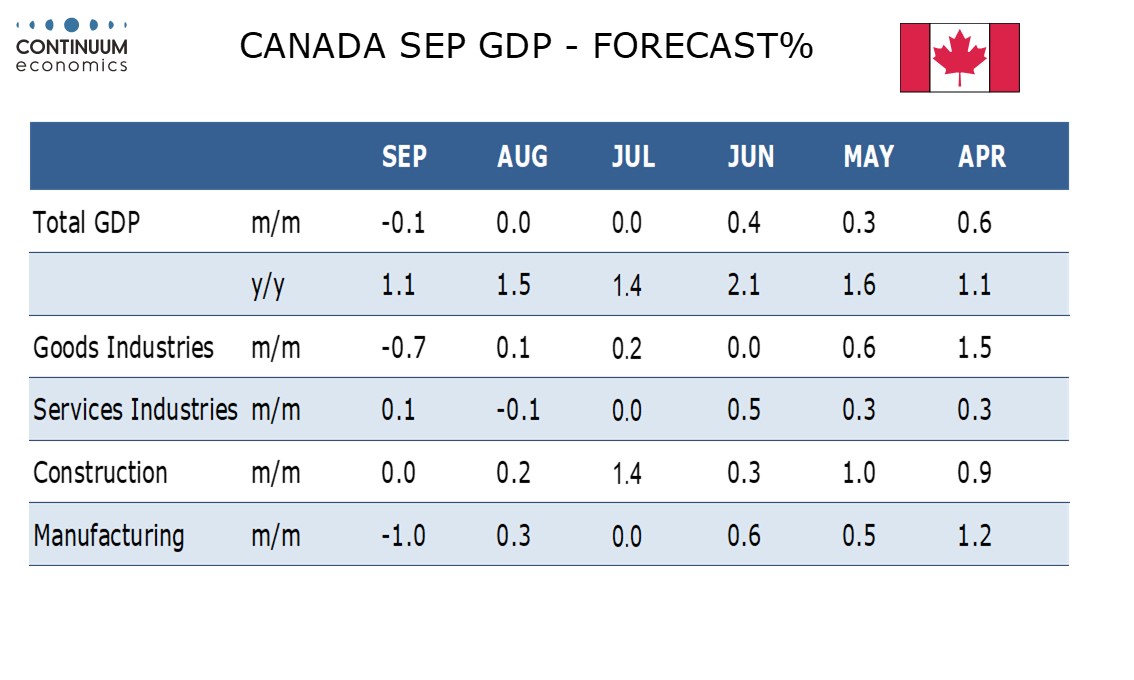
GDP was unchanged in July and August and August’s report gave a preliminary estimate for a 0.1% decline in September. Q3 GDP will still be up from Q2’s average with Q2 having finished strongly with an increase of 0.4% in June. September was expected to see weakness in manufacturing and mining, but gains in wholesale and utilities. We expect goods to slip by 0.7% while services edge up by 0.1%.
We expect consumer spending to maintain a healthy pace with an annualized increase of 2.8%, similar to the preceding three quarters though overall consumption is likely to be a little slower than this with government likely to see only marginal growth. We expect a 2.3% increase in investment, down from 5.3% in Q2, with the private sector still strong if less so than in Q2, but government investment seeing a third straight decline. This would deliver a 2.3% increase in domestic demand, slower than Q2’s 3.9%, but in line with a yr/yr pace of 2.2%. GDP in contrast would be up only 1.0% yr/yr.
Net exports are likely to see a second straight positive quarter, though while Q2 was driven by rising exports, Q3 will be led by a 5.1% decline in imports, steeper than a likely 1.6% decline in exports. The positive from net exports is however likely to be outweighed by second straight significant negative from inventory depletion, taking 2.4% off Q3 GDP. While a negative September implies weakening momentum into Q4, which the Bank of Canada expects to be restrained by fresh US tariffs, Q3 inventory depletion would be a positive signal for Q4. The preliminary estimate for October will be interesting given these mixed signals, though we expect it will be fairly close to unchanged.
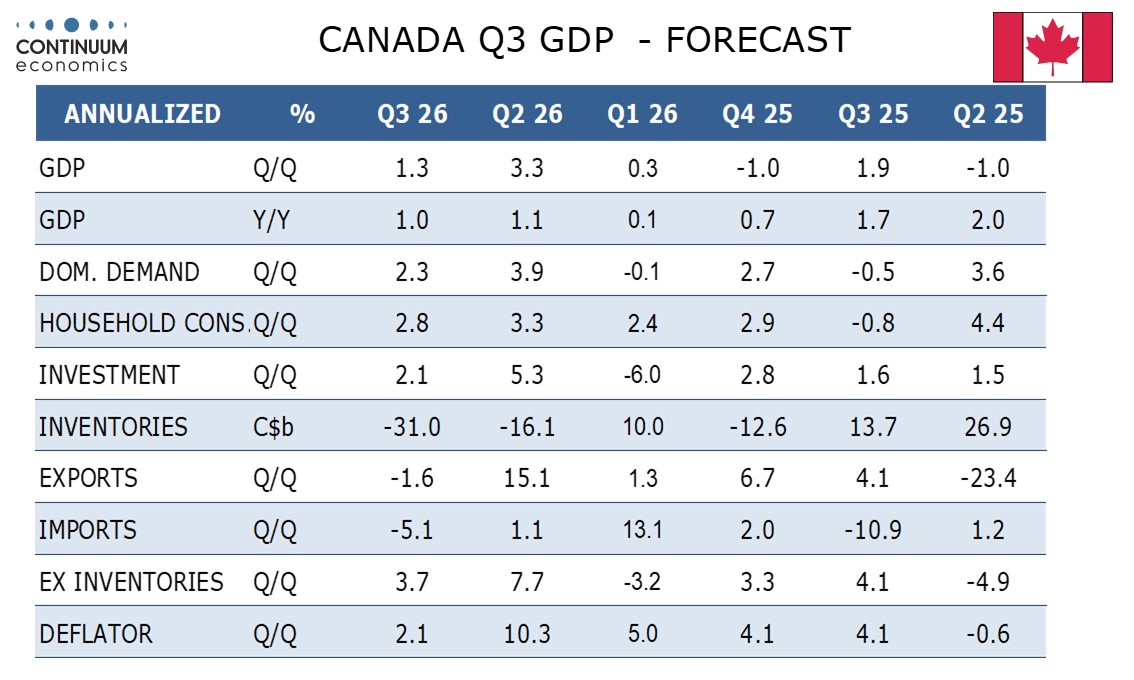
We expect a 0.5% rise in the GDP deflator (2.1% annualized), slower than in the preceding four quarters. CPI rose by 0.8% in Q3 but import prices rose by more than export prices, and that will be negative for the Q3 deflator.