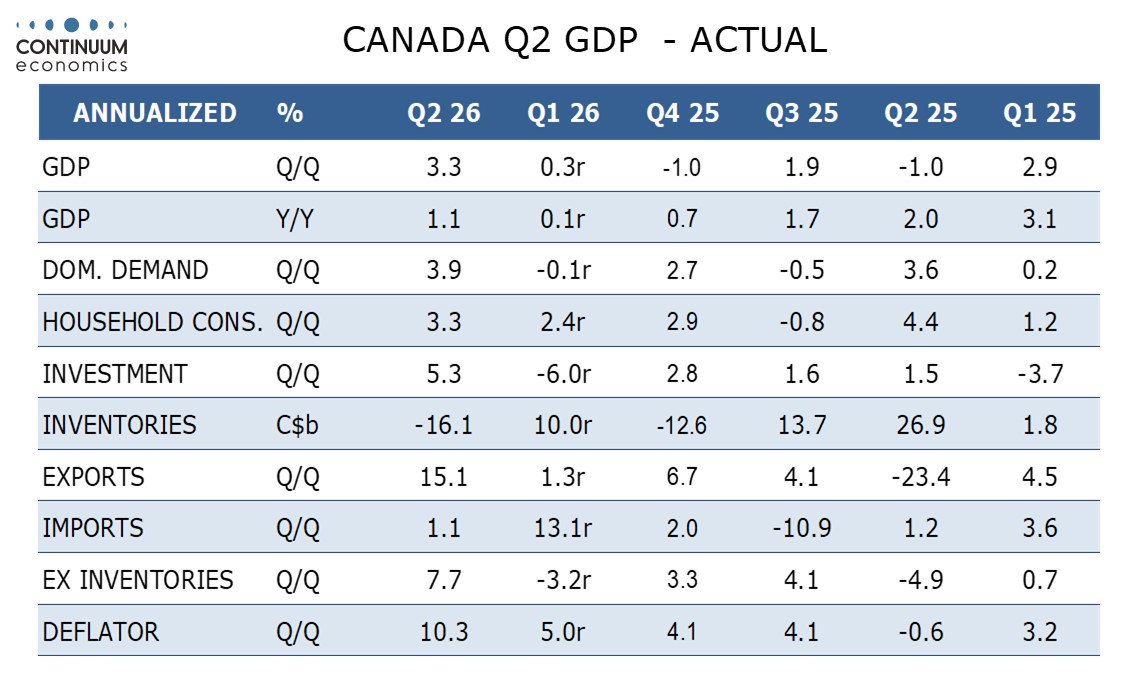
Canada Q2 GDP shows strength in exports and domestic demand
Canada’s Q1 GDP increase of 3.3% annualized is in line with expectations but the breakdown is more positive than we expected with a 3.9% increase in domestic demand. A positive contribution from net exports added 4.4% to GDP but this was more than fully offset by a sharp negative 0f 4.9% from inventories, and the decline in inventories leaves scope for rebuilding in Q3.
While the Q2 gain was in line with market expectations it exceeds a 2.5% projection made by the Bank of Canada in July’s Monetary Policy Report. June’s 0.3% GDP increase was slightly stronger than a 0.2% estimate made with May’s report. However the preliminary estimate for July is unchanged, hinting at some loss of momentum in Q3. The latest tariff escalation poses further downside risks, though Canada’s economy now seems to have enough momentum to prevent the fresh tariffs pushing the economy into recession.
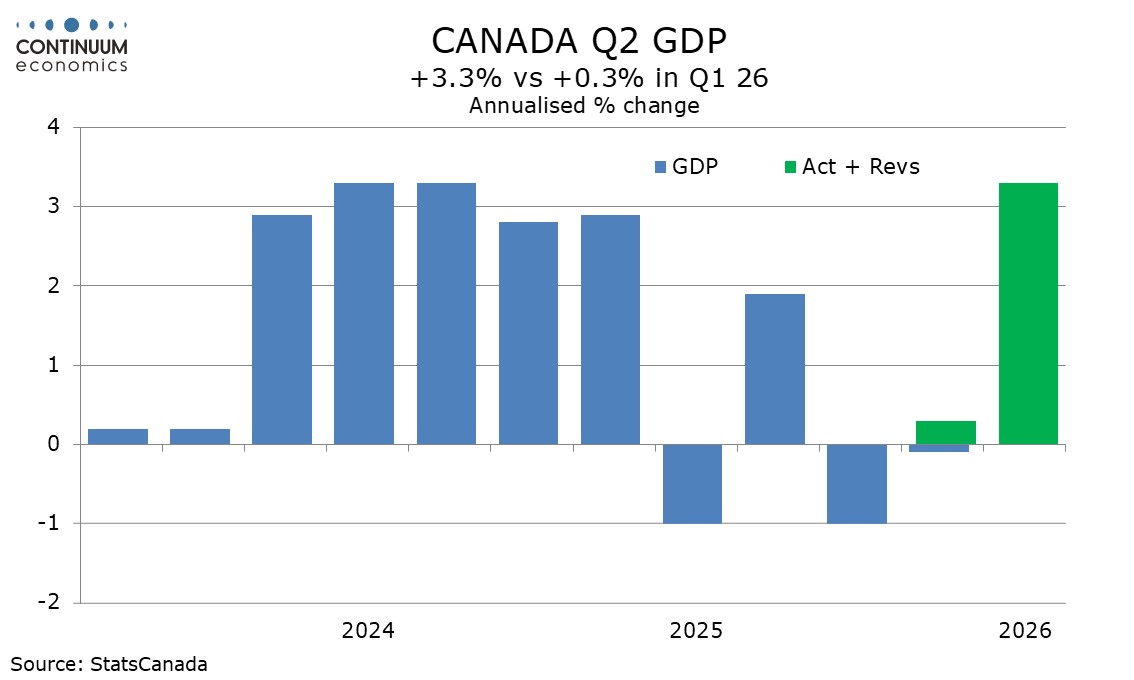
June’s GDP gain was led by a 0.4% rise in services, with wholesale at 1.7% and retail at 1.4% particularly strong. A 1.1% rise in arts, entertainment and recreation was assisted by the World Cup. Goods fell by 0.1% with gains in manufacturing and construction marginally outweighed by losses in oil and gas extraction, utilities and agriculture. July’s data is expected to be restrained by slippage in retail and manufacturing.
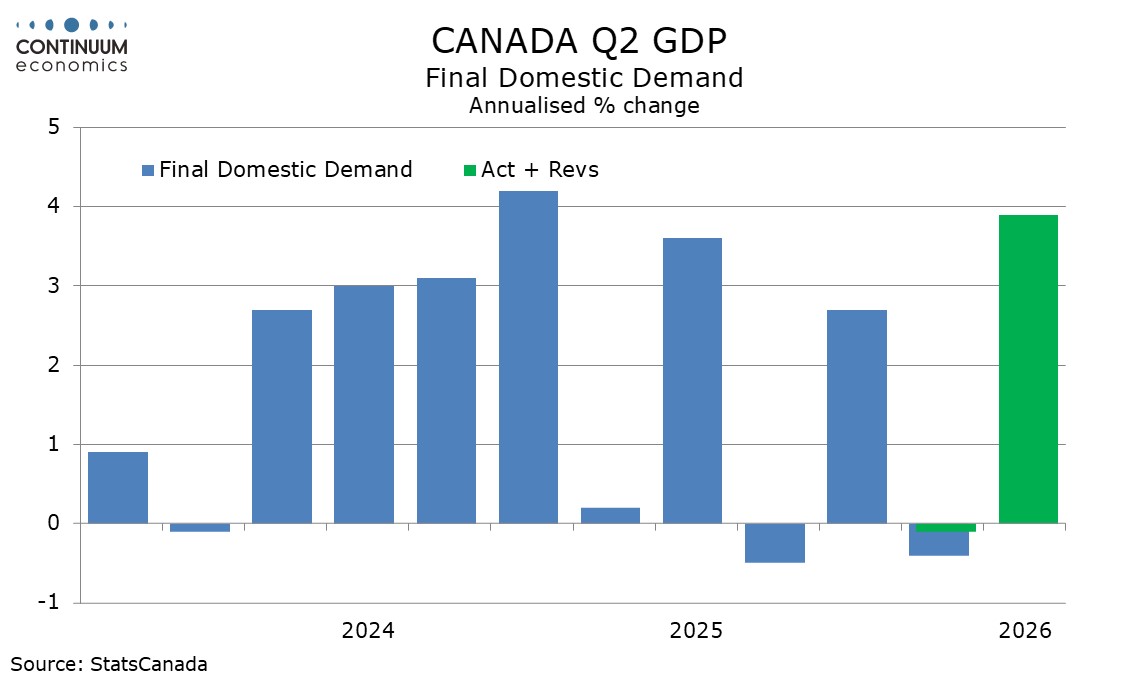
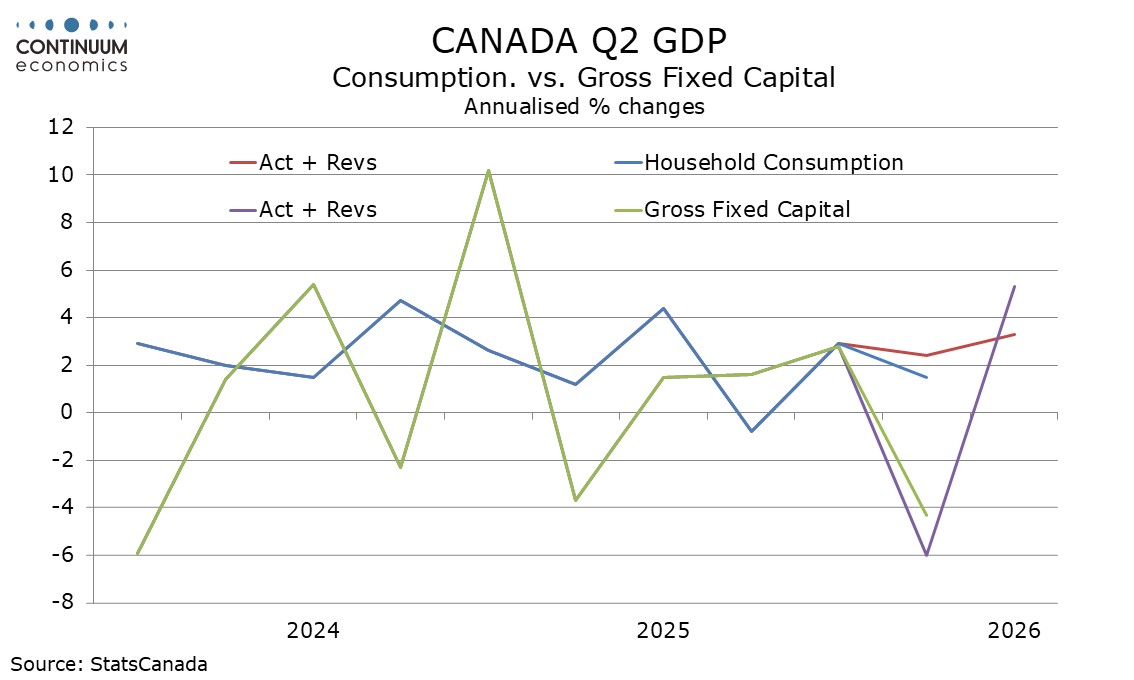
Consumption rose by 3.5% with consumer spending healthy at 3.3%, and government consumption stronger at 3.9%. Gross fixed capital rose by 5.3% after a 6.0% Q1 decline, with business seeing a strong 9.5% increase after five straight declines, of which Q1’s 5.0% drop was the steepest. Government fixed capital fell by 11.0%, a second straight sharp fall to correct three straight strong gains, meaning fiscal stimulus is fading as private demand starts to pick up.
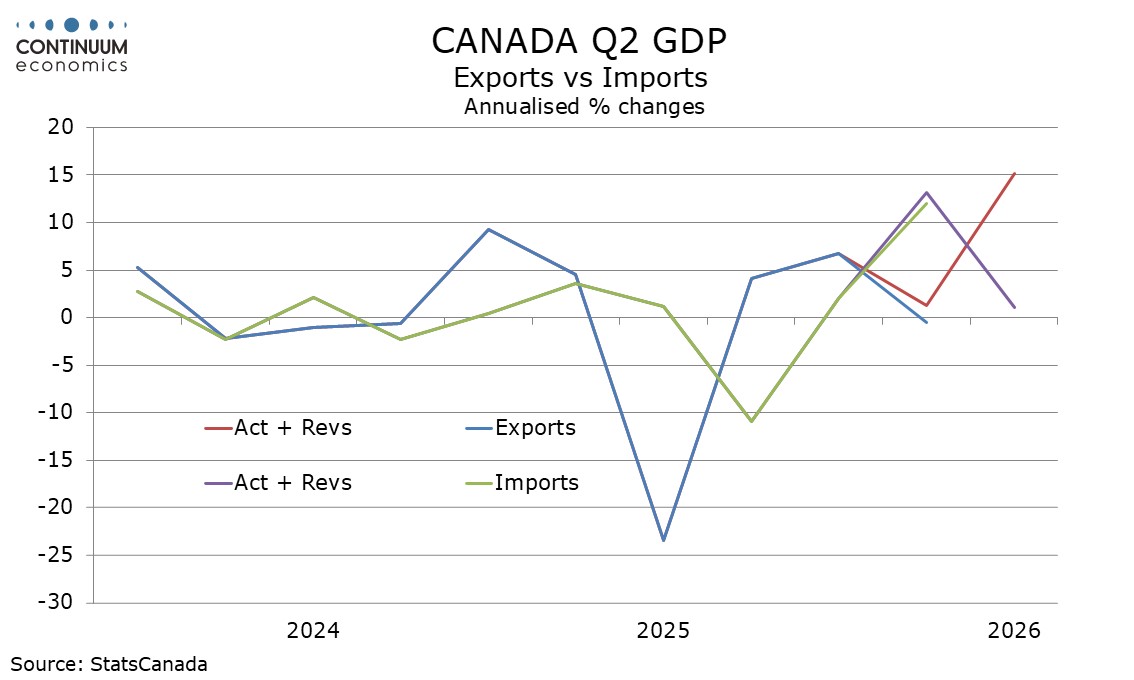
Exports surged by 15.1%, the strongest since Q1 2023. While demand for Canadian energy helped, the gain was led by autos as output recovered from two negative quarters. The strong pace of Q2 is unlikely to be sustainable even without the added burden of tariffs. Imports rose by a modest 1.1%.
The GDP deflator was very strong, up by 2.5% on the quarter (10.3% annualized), its strongest since Q2 2022, led by a 6.5% energy-led rise in export prices outweighing a 3.3% rise in import prices. The deflator is probably not going to alarm the BoC too much with core CPI near target but the details of the GDP breakdown should increase BoC confidence that the economic recovery can survive the tariff hit, leaving BoC easing in response to the tariffs as unlikely. The next move looks increasingly likely to be a tightening, but a move as soon as next week’s meeting remains unlikely.