Bank of Canada Minutes from June 10 - Balanced tone, and energy risks have fallen since the meeting
Minutes from the Bank of Canada meeting from June 10 do not provide many surprises, but confirm a fairly balanced tone that was evident after the meeting. The balanced tone does not however mean that policy will remain on hold, with high uncertainty meaning that risks could shift and the BoC agreeing it was important to reiterate the different possible paths for policy.
The BoC continued to note the risk of easing should the US impose new trade restrictions as the review of the Canada-US-Mexico trade agreement approaches, while also noting the possibility of tightening if the Middle East conflict continued and leads to ongoing generalized inflation. The risk of the latter has reduced, though not disappeared, since the meeting, suggesting markets should start turning their attention to the trade risks.
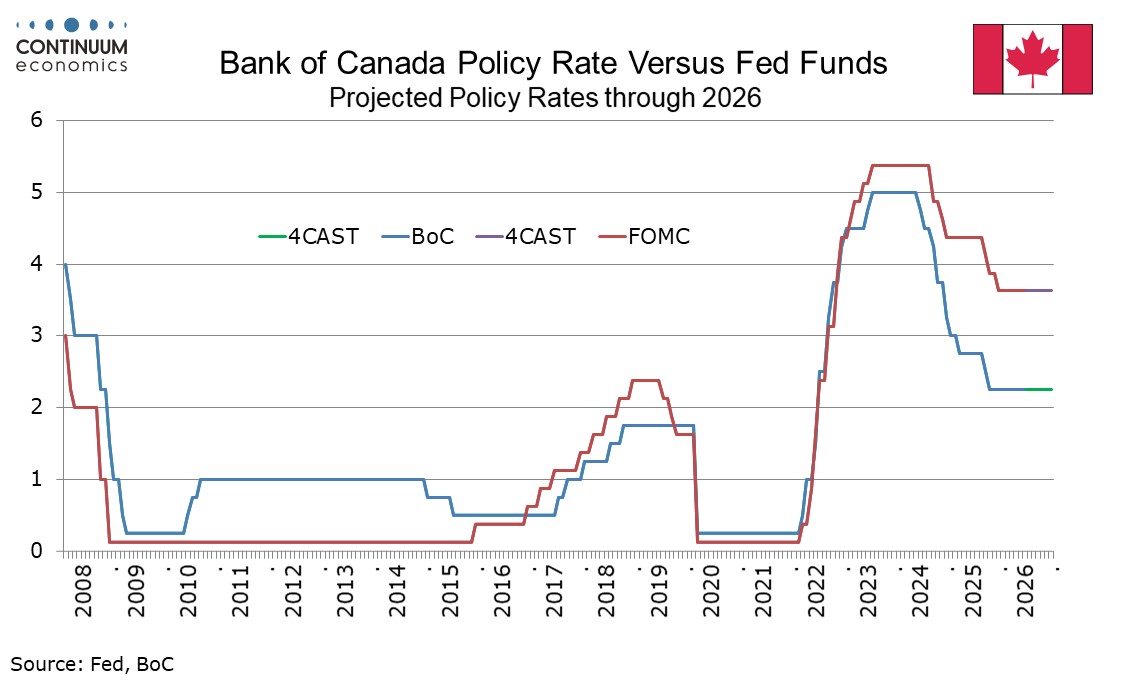
Weaker than expected Q1 GDP and stronger than expected May employment data were discussed, but taken together the BoC agreed that not a great deal had changed since the previous meeting in April. Members did agree that the economy appeared to be returning to growth but was still weak with excess supply though not clearly in recession. A softer than expected May CPI was also discussed with inflationary pressures seen as contained outside energy.
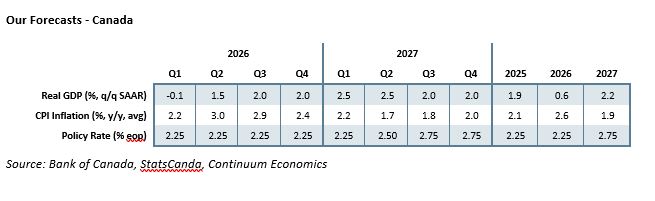
Members did not want to overact to the rise in inflation or to be too slow to respond. For the time being they were prepared to look through the rise in headline inflation but if data began to show that inflation pressures were spreading or coming more persistent it could be a signal that tightening as needed. We continue to look for the BoC to leave rates on hold through 2026. With few reasons to tighten outside the energy shock the risk of a near term rate hike now looks quite low. We do not expect the US to impose significant enough fresh tariffs to enforce an ease, but US threats of such actions in the negotiating process are quite likely, and that could see markets seeing a more balanced risk profile than currently.