DM Data Weekly Sep 1-4
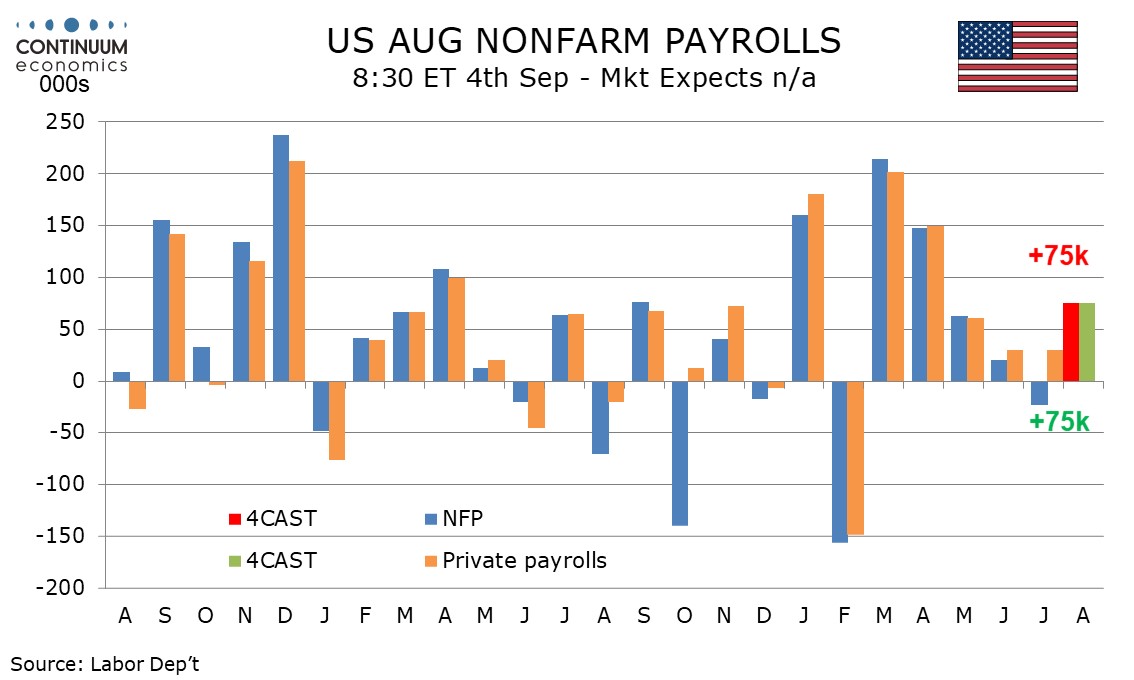
US Payrolls data arrives at a time when the Fed seems to need reasons not to tighten rather than to tighten
EZ HICP also comes as the ECB is doubling down on Sep, and a hawkish minority is looking for more restriction, faster
BoE Bailey speech watched to see if the BoE remains a dovish outlier
G20 also in focus, including whether Bessent and Ueda meet
BoC comes at a difficult time to assess
The week ahead see focus turn to US payrolls and Eurozone HICP data as some of the last ingredients into the next key policy meetings. Broader focus is also on G20 early week in North Carolina, both for general remakrs from Bessent et al, but also for any remarks on the BoJ. Bessent previously flagged that he might have the chance to catch up with BoJ governor Ueda at the meeting. The BoC meet against a backdrop of recent growth recovery
USA
US data focus will be on Friday’s non-farm payroll for August. We expect a slightly stronger 75k increase, both overall and in the private sector, though we expect unemployment to correct higher to 4.2% from 4.1% and a subdued 0.2% increase in average hourly earnings. We expect private payrolls to outperform a 50k increase in Wednesday’s ADP report on private sector employment. Further labor market signals will come from Tuesday’s JOLTS report on job openings, and on Thursday weekly initial claims and Q2’s productivity and costs report.
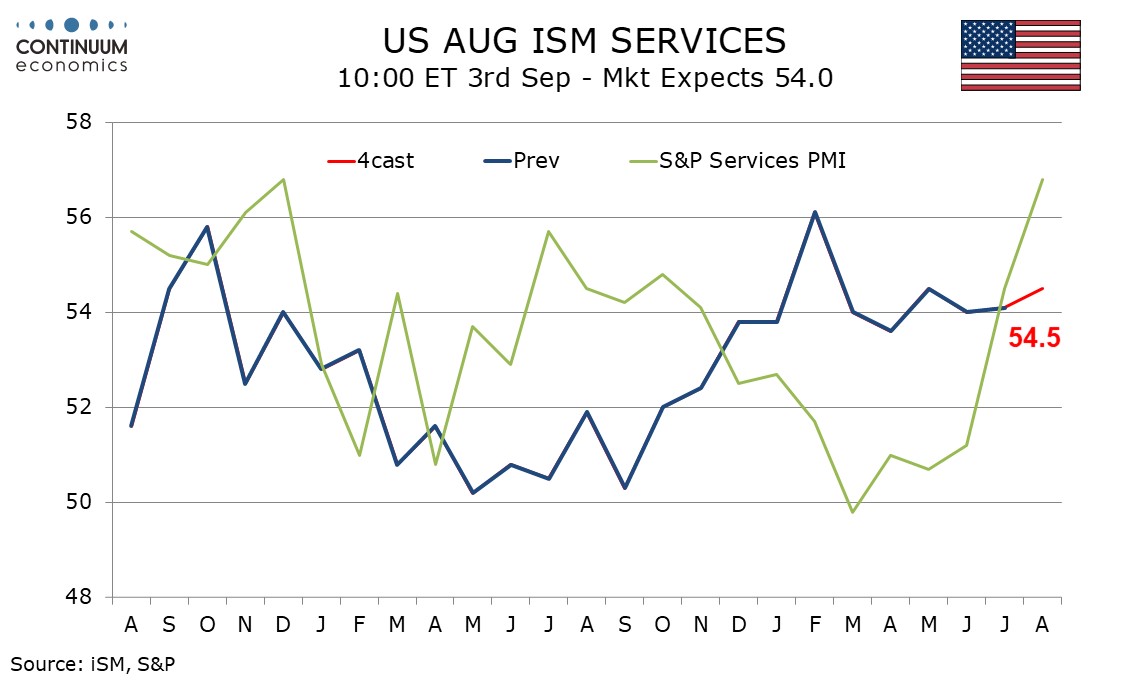
August ISM surveys are due. We expect Tuesday’s manufacturing index to slip to 55.0 from 55.6 but Thursday’s services index to rise to 54.5 from 54.1. July data comes from factory orders on Wednesday, while on Thursday we expect the trade deficit to rise to $90.5bn from $73.3bn in June. Thursday will also see Fed’s Waller and Hammack speaking.
CANADA
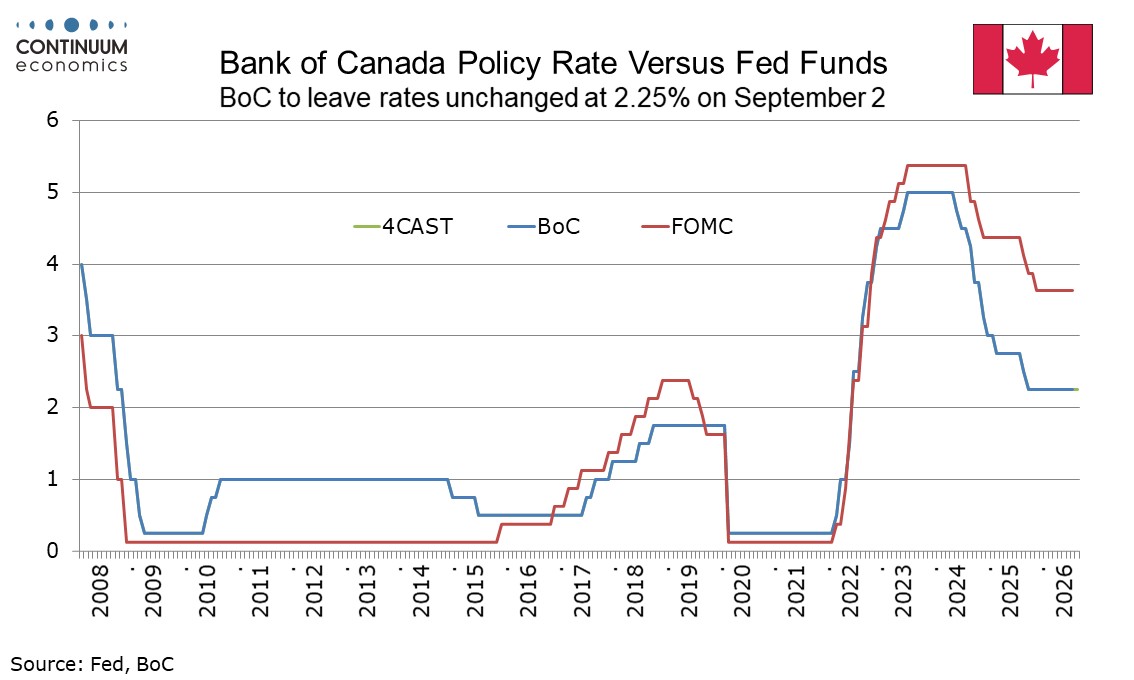
Canadian focus will be on Wednesday’s Bank of Canada meeting. Rates look set to remain at 2.25% and we do not expect the BoC to suggest that a near term move is being seriously considered. Fresh US tariffs will increase downside risks to growth but Canadian retaliation will increase upside risks to inflation, while in neither case do the near-term risks yet look dramatic. This meeting will not see a Monetary Policy Report, so the BoC’s economic forecasts are not due for an update.
August PMI data are due, from the S and P on manufacturing on Tuesday and services on Thursday, while on Friday the Ivey manufacturing PMI is due. Thursday sees Q2 productivity and July’s trade balance. On Friday we expect a 20k rise in August employment to follow a strong July, with unemployment unchanged at 6.4%.
JP
Starting with retail sales on early Monday, there are a slate of tier two data throughout the week. Neither will be market moving.
AU
We have private inflation survey on Monday, so as ANZ job ads. The more important GDP will be released on Wednesday. It is widely expected to be arriving in expansion while being dragged by private consumption. There are also trade balance on Thursday.
NZ
All-important RBNZ rate decision is on Wednesday. The RBNZ is expected to hike by 25bps after tilting their forward guidance to be more hawkish in the past meeting. Would be a surprise if they hike 50bps instead, but odds are slim.
EZ
Eurozone focus will remain on the flash HICP prints, that were already showing a bounce back in France and Spain last week.
After Germany’s state and national data on Monday, the Eurozone flash estimate on Tuesday is expected to bounce to 3.3-3.2% from 2.9%. Data is expected to keep the ECB on track for its largely-signalled Sep hike, while the hawkish minority on the board still seem inclined for faster and more tightening to restrictive levels, judging by the recent meeting minutes.
Eurozone also see unemployment alongside and PPI on Thursday, while national and Eurozone final PMI prints are also out this week.
UK
The UK also minor data only with the final PMI prints and the July money and credit figures. BoE’s Bailey does delivers a speech on Friday at the LSE TRIUM Anniversary Conference and that could touch on some interesting topics.