FX Daily Strategy: N America, Sep 24
Dollar breaks higher as Fed talk hawkish, PMIs surge north, trumping Eurozone gains
Prospects of 'brave' pre-mid-term back-to-back hikes still critical for dollar's jump ahead
Norges hikes and sees likely steady ahead; SNB a hawkish hold, brings next hike forward; SNB remains dovish, keeps rates an extreme outlier low, CHF pressured
Dollar post-FOMC follow through remains the big story, as rate spreads exert themselves on the re-pricing and Fed speakers seem liberated to voice blunter messages on inflation being off track and policy recalibration being needed. EUR/USD has picked up some speed after taking out 1.1450, and then the 1.420~ level. Downward momentum looks next to the critical support at the 1.1325 current year low of 24 June and the 1.1355 Fibonacci retracement
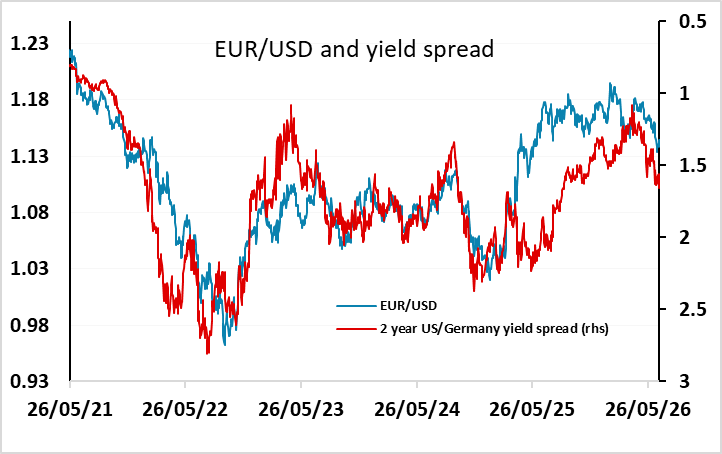
This adjustment comes, slightly ironically, just as the Eurozone does post some good news with the unexpected strength of the Sep composite PMI suggesting further growth resilience to the energy hit and tightening to date. That continues to tell a story of relative resilience and supports the notion that policy is not currently acting as very restrictive, thanks to other tailwinds.
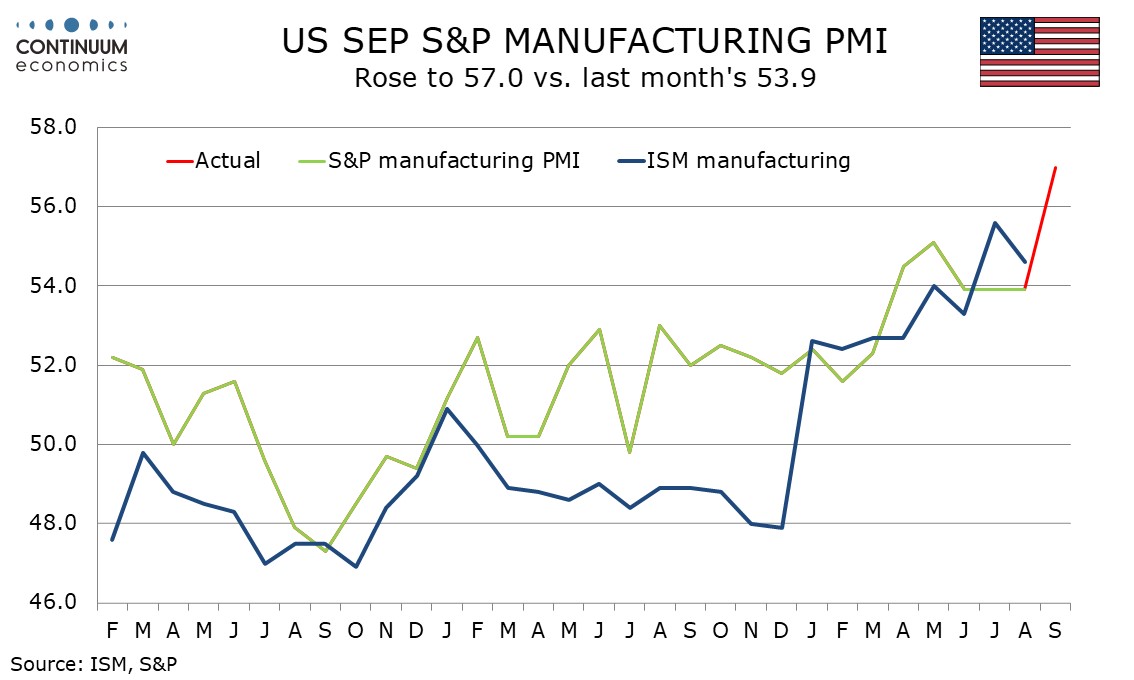
Be that as it may, the US equivalent has trumped it with even more impressive re-accelerations skywards, highest since Feb 2021, with AI as a key driver for both services as well as investment driven manufacturing, and still more intensively so on this side of the pond.
Fed speakers have continued to strike a relatively hawkish note in the last few days highlighting the growth pick up and the broadness of inflation. Fed’s Barr added to that narrative saying risks to meeting inflation target have increased and more rate hikes likely needed to return inflation to target.
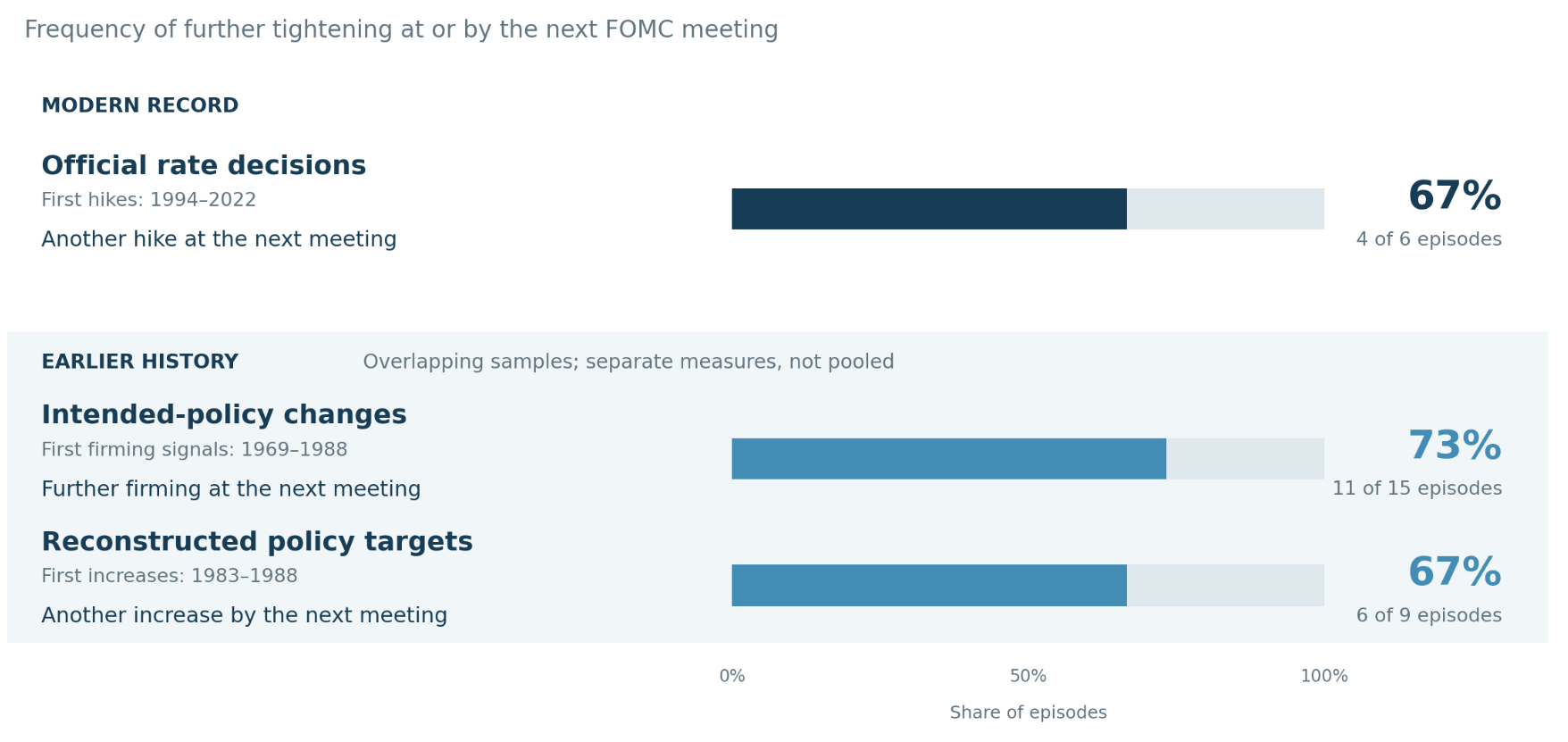
As noted in the Weekly, timing of action matter given the recent 'tightening contest', and the market Fed bets now have a back-to-back move in October accelerating to 70%. That matter materially for a shift in the scales compared to the Fed waiting until December for a matched move with the ECB. If data continues to come in hot to reflect the PMI, and the market puts its full weight behind a politically brave pre-midterm follow up, that would keep the dollar in the ascendancy (and not do the Fed credibility any harm with it).
Cable of course also remains vulnerable with the BoE’s far more reserved stance on additional tightening (even if it is persuaded and peer-pressured to make some concession to a precautionary move in November). It is oversold but break of the 1.3270 lows open up the next 1.32-1.1340 major base. Lombardelli who voted to keep rates at 3.75% speaks today.
On the calendar, the US sees weekly initial claims. We also expect an increase in Q2’s current account deficit to $255bn from $226.8bn in Q1, and a 4.6% increase in August new home sales to 635k. Canada has July retail sales, where the preliminary estimate was for a 0.8% decline.
While the dollar action along with any noises coming out of US-Iran talks remain the key drivers, Thursday also saw some notable European central bank meetings. Norges exercised its 'hike at an upcoming meeting' guidance from the summer, hiking by 25bp. It now has a central view of steady before slight easing later, although will react to external inflation impulses. NOK got a lift but the net impact of the meeting is within overall short-end pricing so shouldn't be a large driver. More critical near-term is whether US-Iran talks progress or hit a dead end, and where Brent goes from its current $100 pivot point
Riksbank was on hold as expected but a hawkish hold. We now forecast a 25bps hike at the December meeting and a further 25bps hike at the March meeting to 2.25% after the more urgent guidance, with steady policy to follow.
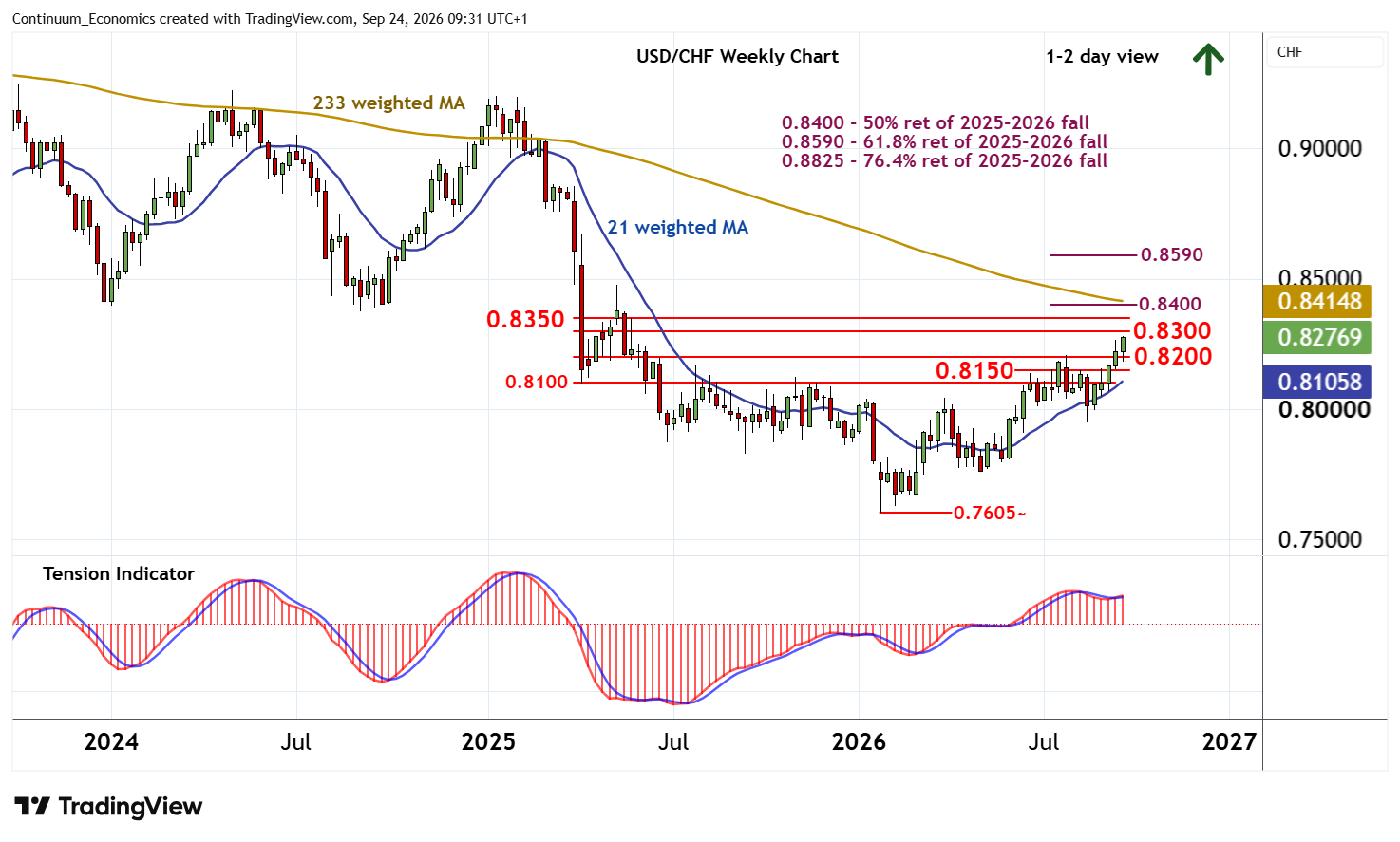
SNB remain the dovish standout. its benign inflation forecast (0.7-0.8% over full horizon to 2028) is “based on the assumption that the SNB policy rate is 0% over the entire forecast horizon.” CHF looks set to remain, by an ever-increasing margin, the extreme low yielder among the majors, eclipsing the JPY.