Bank of Canada Minutes from October 28 - Proceeding carefully
Minutes from the Bank of Canada meeting on October 28, which saw policy tightened by 25bps to 2.50%, do not provide many surprises. The BoC saw the outlook for inflation as much stronger than in its previous Monetary Policy Report produced in July, while the growth outlook had improved modestly. Still, the BoC agreed they would need to proceed carefully, taking decisions one meeting at a time.
The BoC noted that the benchmark price of oil was approximately $35 per barrel stronger than projected in July’s report. Pass-through to consumer prices had so far been limited but members agreed that continued cost pressures would eventually pass through, with the extent dependent on the persistence of the energy shock. Inflation forecasts were raised substantially. It was noted that even without pass-through the energy shock would keep inflation at around 3% for more than a year.
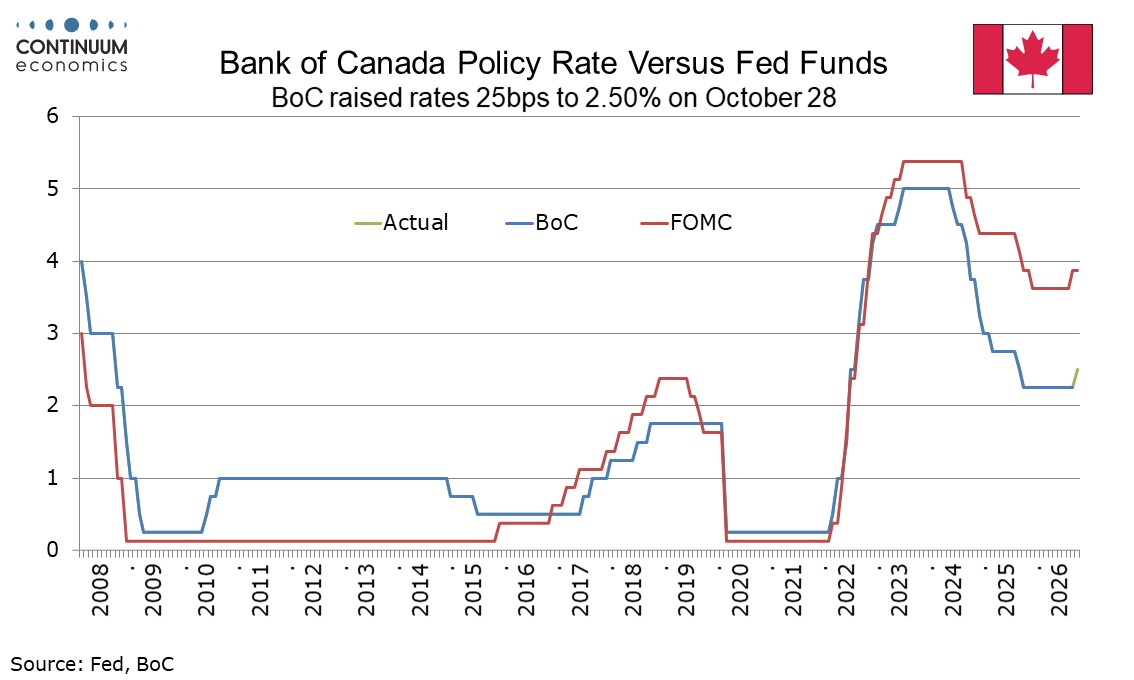
Downside risks to inflation were also seen as having diminished since July, with economic activity holding up relatively well in the face of trade uncertainty. Members agreed that the improved outlook for growth would mean that slack would be absorbed, even with fresh US tariffs expected to have a dampening effect on growth in Q4. There is some risk that the BoC was a little too positive on the economic picture at the meeting, given that shortly after the meeting a weak employment report for October was released, seeing unemployment rise to a 6-month high of 6.7% from 6.5%.
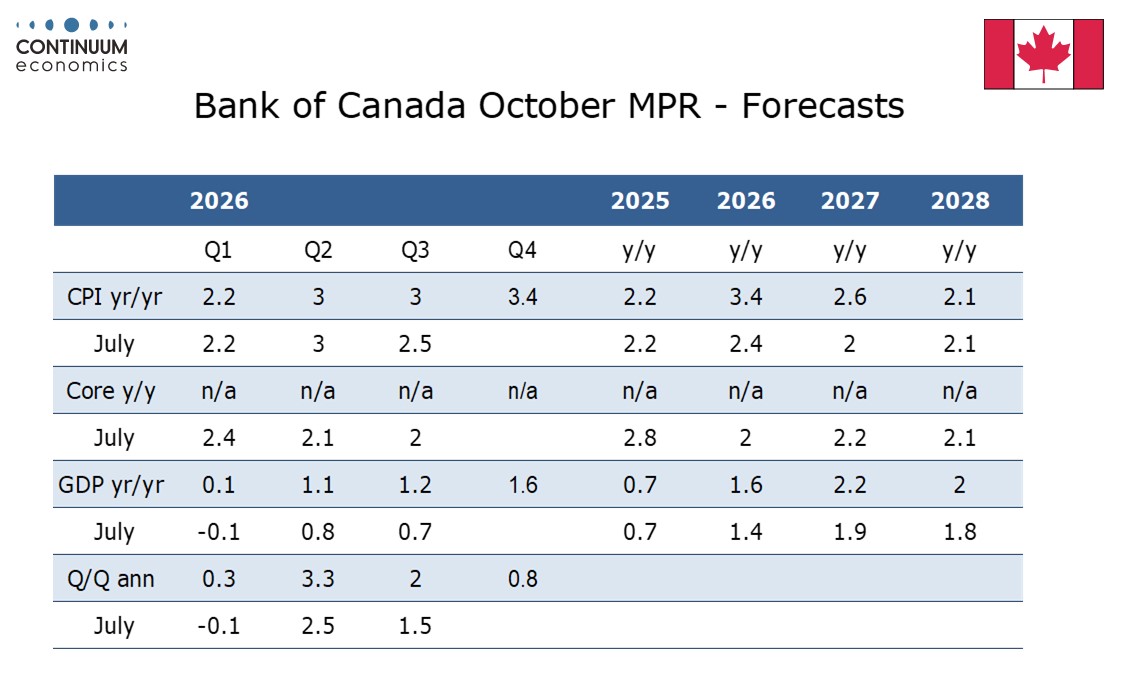
There was agreement that the policy rate may need to be raised further, and it appears highly likely that it will be. However uncertainty was noted, and while uncertainty did not mean inaction, they agreed they would need to proceed carefully. Whether they move as soon as December, or pause in December before tightening in early 2027, will depend on incoming economic data, and developments in energy prices. Recent developments suggest a pause in December may be the correct course, though further tightening would then be likely in January, when the next Monetary Policy report is due.