FX Weekly Strategy: Asia, Aug 17-21
Canada trade deadline a wildcard, but skew has been favouring a short CAD squeeze
FOMC Minutes may give more insight to Fed debate
US yield retreat chips at $ longs, although also supports summer low vol risk (for now...)
Various/CHF still trend up...
In additional to the usual Iran-watching, dual focus for the week ahead come from FOMC Minutes and the Aug 19 deadline for US-Canada trade talks. While the latter remains a wildcard and to an extent unpredictable given any end negotiations will have to pass through Trump, the mood music has been more positive with intensive discussions over the course of the last couple of weeks seen as making progress.
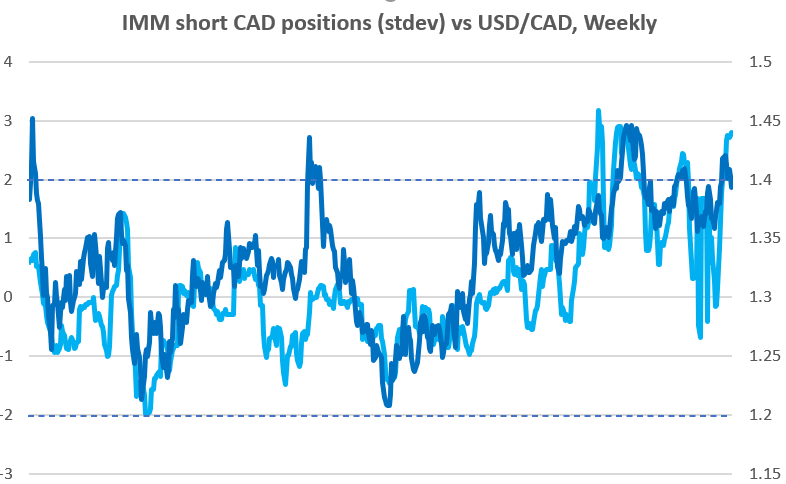
We discussed a few weeks ago (here), how that although the event has this binary quality, the risk reward had been shifting towards a short CAD squeeze. The rationale for that was 1. Extreme short CAD spec positioning, that in the prior week was also out of line with the broader dollar direction 2. That the market already had pessimistic hedging to an extent priced in, although this has somewhat pared now as USD/CAD has eased off the highs and 3. Notwithstanding the clear importance of this outcome for the near-term growth outlook and risks, the recent trend has actually been an under-acknowledged shift back towards Canada upside momentum after a weak patch. That was evident in both recent labor market data and in lead indicator trends.
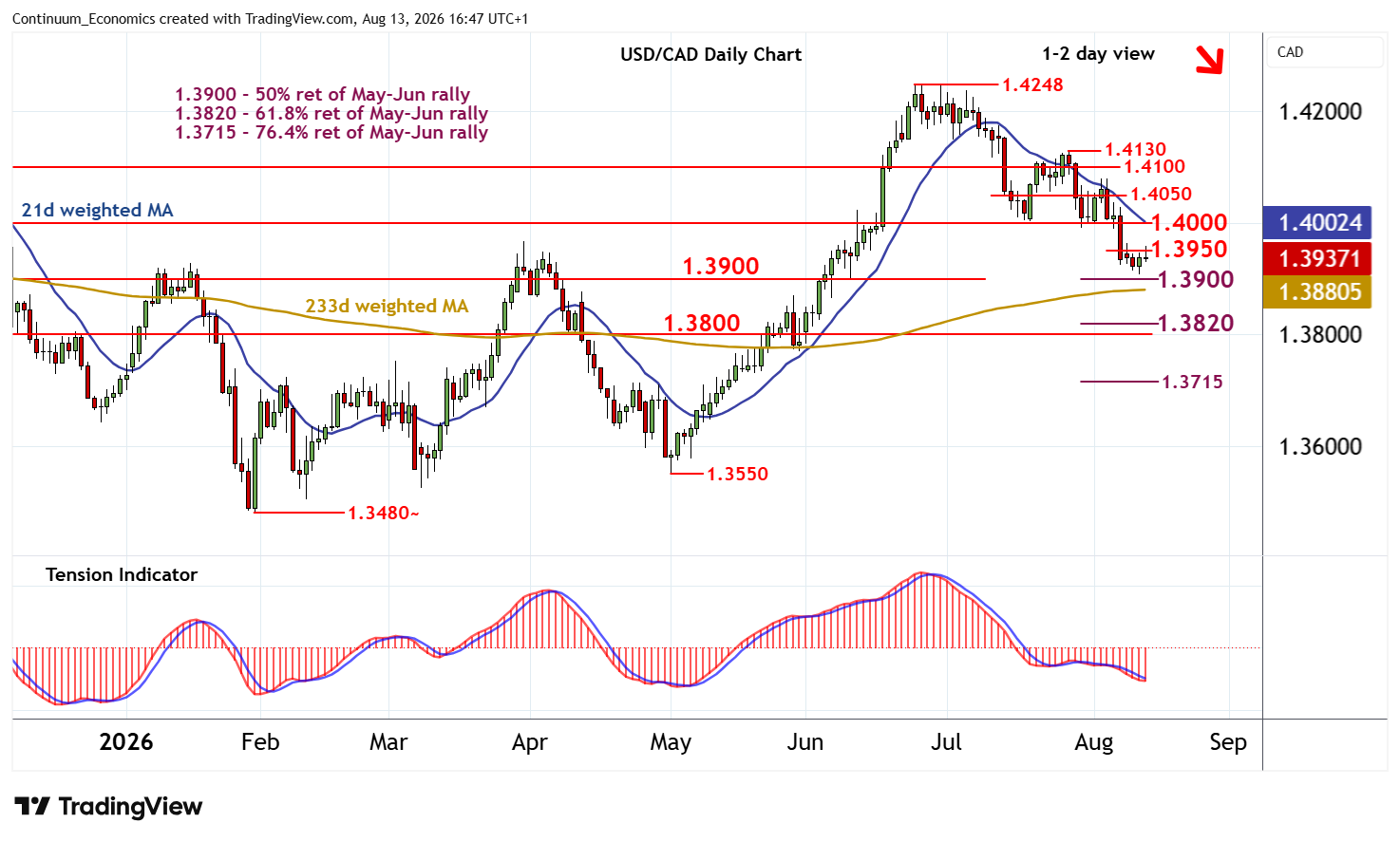
With the dollar generally leaking with US short end yields too, that still favours further potential CAD bounce and even a possible sharper squeeze ahead. On USD/CAD, the latest mini support break of 1.59 offers extension down to the next level of 1.3800/20. More generally, if we do see positive resolution, or at least a can kick of some kind, then CAD may also be primed to make back some underperformance on other crosses too.
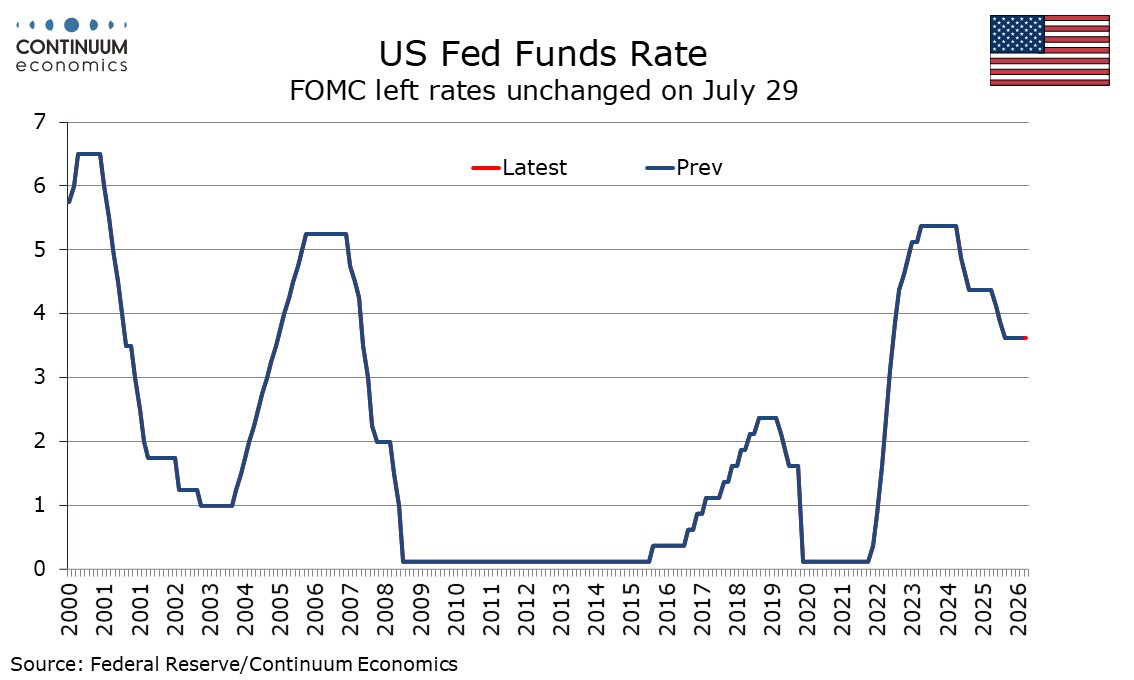
FOMC Minutes will also be watched closely, especially given how close Warsh played his cards to his chest at the presser – the Minutes may now be one of the main sources of insight into discussions and rationales, in addition to individual Fed speaker comments. We expect three camps to emerge (hawks, doves and data-dependents), and with discussions on different interpretations of the degree of inflation and the appropriate response to it.
Recent data (payrolls, CPI, retail sales) is only one month of information and should not be overplayed - indeed, payrolls had likely seasonal issues around education and retail sales probably around Prime sales day timing for instance. Still, data has taken away some urgency for now, and may have tended to reinforce any fence sitting on show at the last meeting.
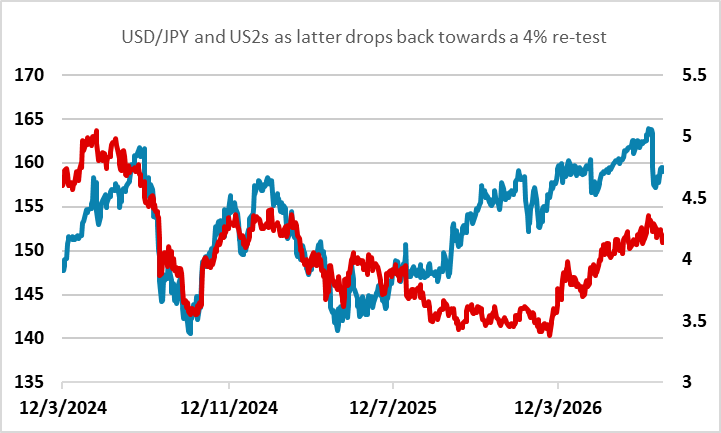
If US short end yields continue to recede from their highs, drawing back towards a resistance-turned-support re-test of the big 4% threshold, that may tend to keep USD/JPY capped. On that pair, 159.50-160 remains supply, weighing onto support at 158.50, which would need to give way to open up the 156.60 - 157.00 range. On the face of it, the US 2s outright and spread setback ‘ought’ to be adding more pressure, although there remains offset coming from the accompanying low volatility and risk supportive spillover.
Volatility does remain extremely compressed across the board, from equities to currencies, and for the time being that is keeping the market in its relatively favourable risk-carry mood. The degree of compression ought to be a warning sign, suggesting that risks are growing for compression to give way to a breakout move and more volatility ahead out into late summer and autumn. But for now, the trend is the trend.
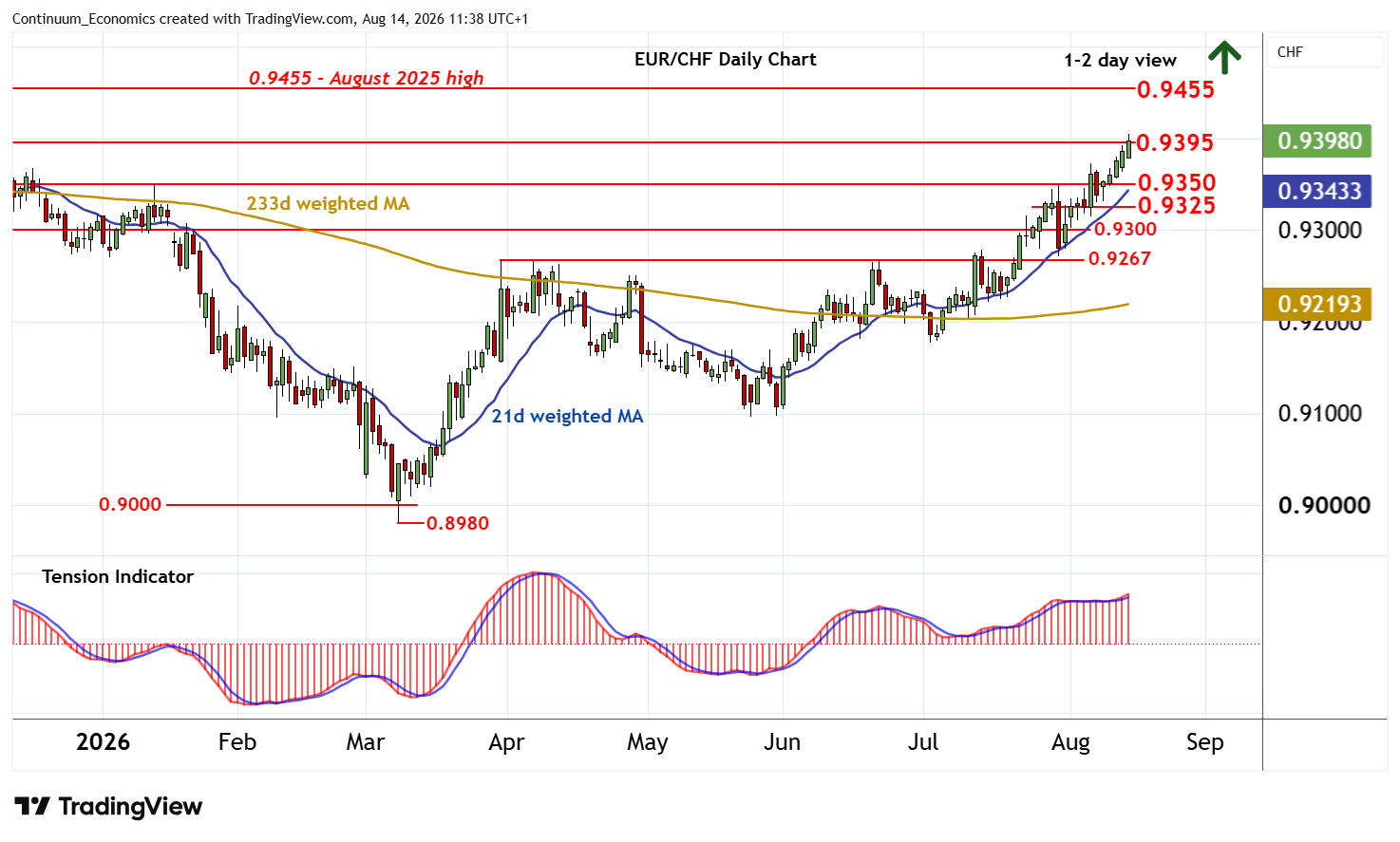
In terms of carry, it is worth noting again that EUR/CHF remains very ‘trend-up’ in extremely orderly fashion and this again attests to idea of increasing diversification into CHF (the last of the ZIRPs) as an increasingly favoured carry funder.
AUD/CHF is also trending and running into next notable resistance around 0.59~ ahead of the bigger 0.65~ highs.
Data and events for the week ahead
USA
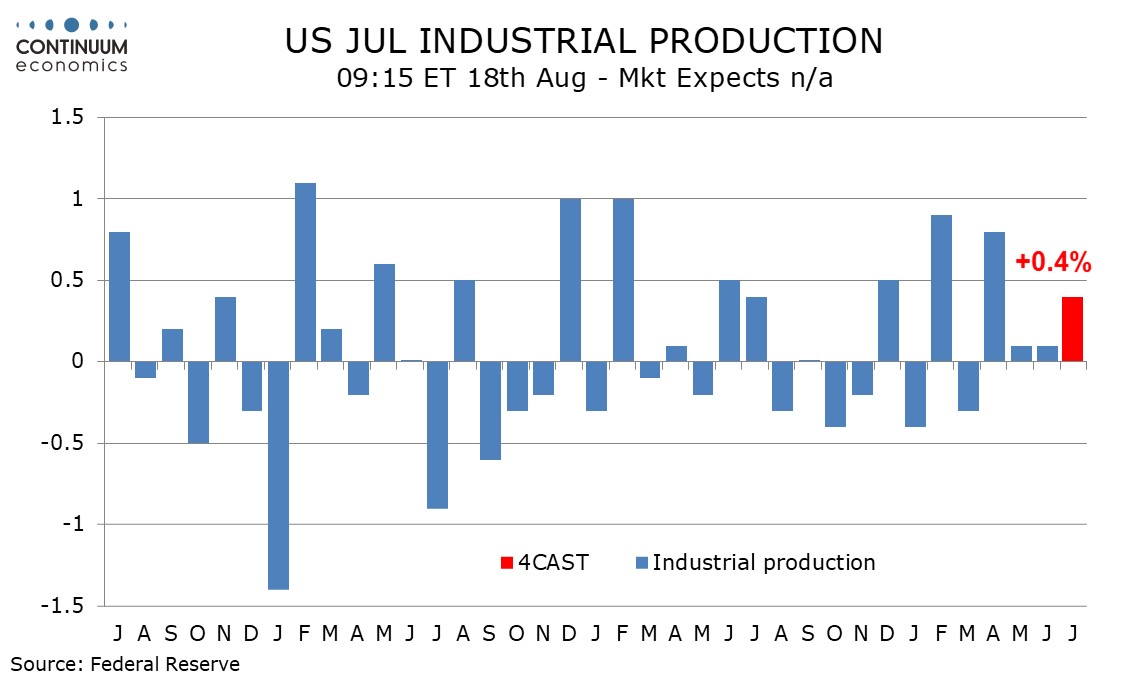
Monday sees August’s Empire State manufacturing survey, and August’s NAHB homebuilders survey. More signals on the housing sector will come on Tuesday. We expect July housing starts to fall by 4.7% to 1360k while permits fall by 0.3% to 1370k. July pending home sales are also due. Tuesday also sees July industrial production, where we expect a 0.4% increase overall with manufacturing rising by 0.2%, and July import and export prices.
FOMC minutes from July 29 will be closely watched with Chairman Warsh having not given a clear explanation of the decision to leave rates unchanged. We expect the minutes will show a significant minority in favor of tightening due to inflation risk, and several more seeing the possibility of tightening if upcoming inflation data disappoints. Only a minority will be sufficiently confident that inflation is headed for target to be confident of sustaining steady policy for some time.
Thursday’s initial claims data will cover the survey week for August’s non-farm payroll. July’s Philly Fed manufacturing survey is also due.
Friday sees August manufacturing and service PMIs.
CANADA
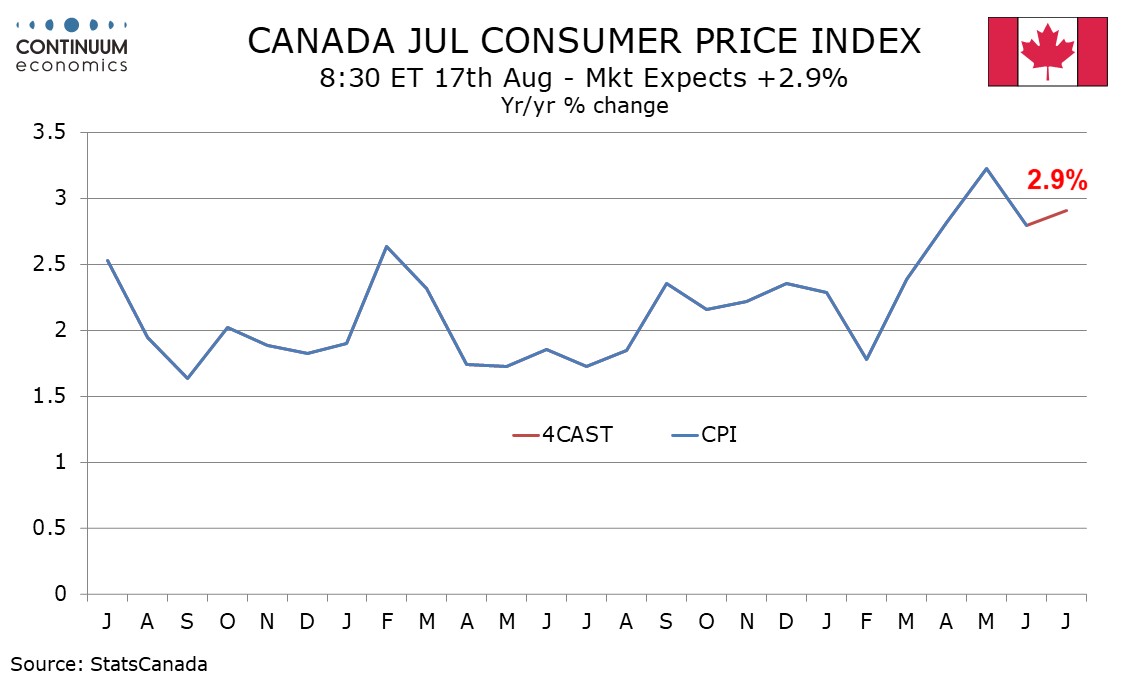
Canada’s data highlight will be July CPI on Monday. We expect a modest rise in yr/yr growth to 2.9% from 2.8% on energy but the Bank of Canada’s core rates to remain stable. Tuesday sees July housing starts and Thursday July’s IPPI and RMPI. June retail sales are due on Friday. A preliminary estimate for a 0.4% increase was given with May’s report. Trade talks are the key focal point.
Eurozone
The August 21 preliminary estimate for the August S&P PMI will be the highlight of the week, with a marginal increase expected versus July. August 20 sees the flash estimate of the Q2 Labor cost growth where a 3.0% Yr/Yr figure is expected and the ECB watches this figure for an input into PPI and CPI price setting behaviour. Final July CPI is released on August 19.
UK
August 19 sees the July CPI inflation figure, with a pick-up in the Yr/Yr to 3.0% expected. Higher oil prices with renewed Iran/U.S. hostilities is the cause, though energy prices have drifted off the July highs. August 18 sees the labor market update, with the highlight being the Jun average earnings excluding bonuses that should show a small decline from the 3.4% in May. July HMRC payroll change will also be of interest.
JP
Kick starting the week with Q2 GDP, widely expected to be another quarter of growth, may surprise to the low side given soft domestic demand. Private consumption may miss estimates and potentially drive growth lower. Government spending will counter that lag partially. We also have trade balance on Thursday and National CPI on Friday. With stimulus going on till September, the July number will likely be below 2%.
AU
Wage price index for Q2 will be more important than other labor data on Thursday and PMIs on Friday. The RBA has kept rates unchanged in the past meeting, citing accumulative effect of tightening. If the wage growth turned higher, albeit unlikely, could see market anticipation of rate hike changing.
NZ
Business PSI on Monday, PPI on Wednesday. The more important trade balance will be released on Friday.