FX Weekly Strategy: Asia, Sep 28 - Oct 2
High profile US data, but would need something big to impact now after recent steep mkt adjustment
Dollar retains bullish posture overall, but a overstretched and consolidating/correcting steep run to levels on most pairs
Japan rolls out the verbals; BoE comments hint at dab in November
Round of CB meetings leaves CHF even-more the low rates standout
After a torrid couple of weeks, it starts to beg the question: ‘are we there yet’? Or at least due a consolidation, to take stock.
The market now has almost 100bp of further Fed hikes in the price (at least in terms of expectations plus policy premium) and almost 70% chance of the next hike in Oct, even with the midterms looming. In that sense, it has done a lot of heavy adjustment towards an adverse central scenario that has a fairly solid tightening cycle baked in. Long end yields have also all but hit some big levels too, such as the 5.25-5.3%~ prior big tops on US10s and 5.5% on 30s.
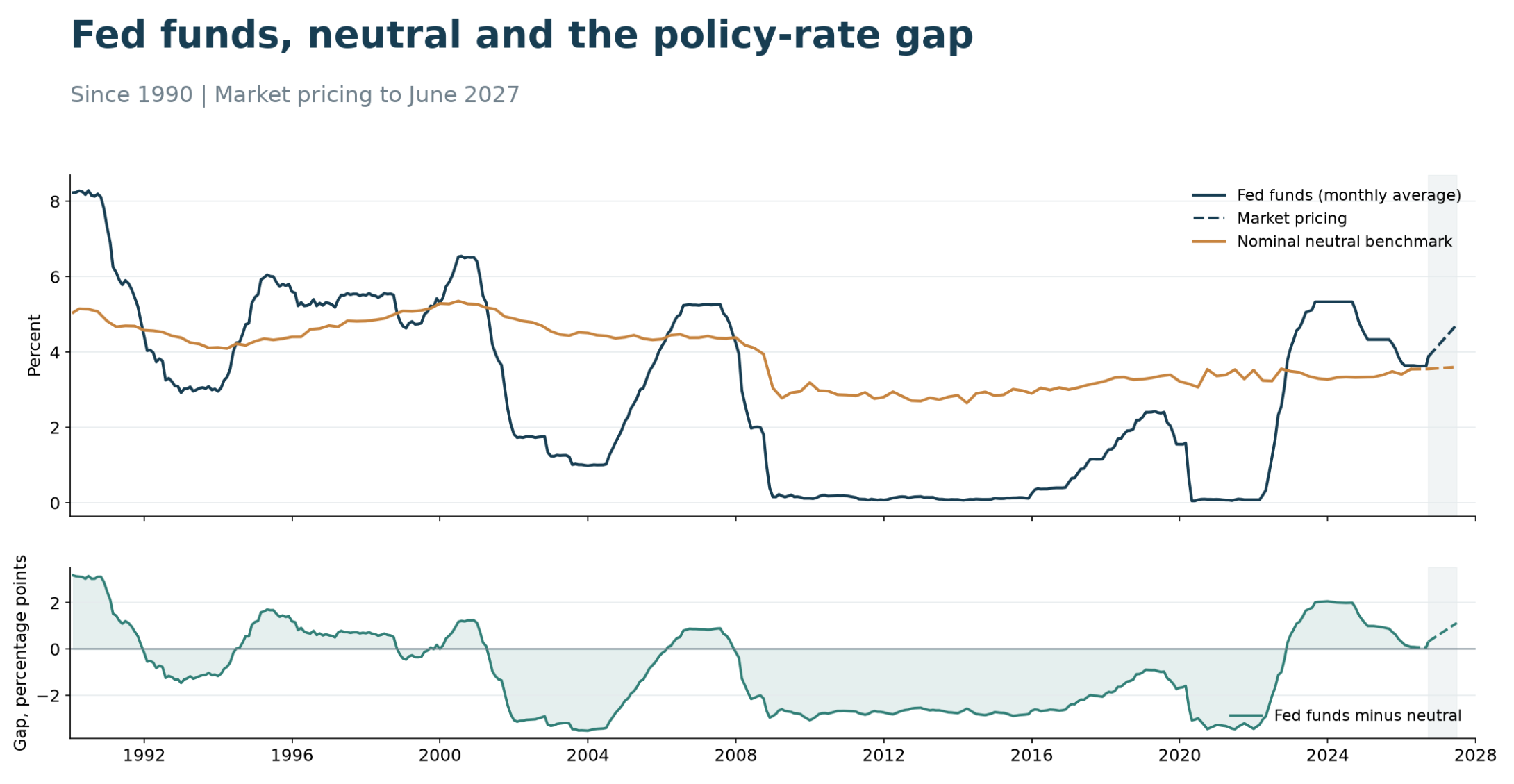
The week ahead has some notable numbers out however and between them they could determine whether action has run out of immediate steam. Payrolls and PCE prices are the obvious headliners, though our 100k and CPI-matching 0.3% calls are not out of line or particularly disruptive. Indeed, details such as the revisions might matter more. For instance, it is suspected that PCE prices could be annual revised lower, perhaps by 0.25pp, on technical adjustments (software, portfolio management services, legal services). If so, that might offer some net relief. On the flip side, income and spending data revisions will also be watched to see if the low savings-rate estimate remains intact (this is currently one of the main negatives for the outlook). The market has enough near-term news in the price to be relatively resilient to this week’s calendar, unless there really is a big acceleration on show. ISM data is relevant here though it needs more than one month’s data to be reading too much into the survey.
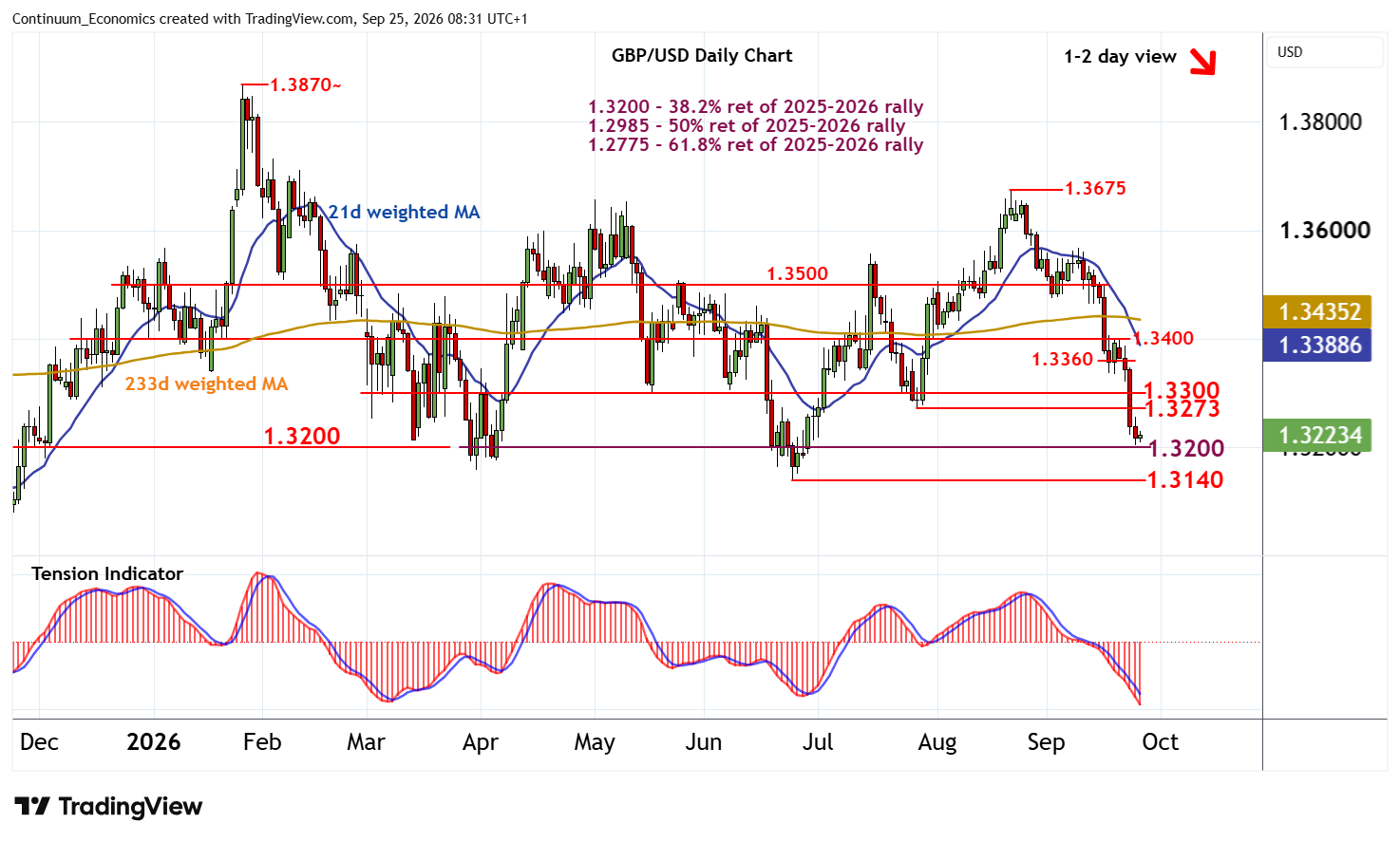
On the FX side, while the dollar retains its overall bullish posture, recent runs did get stretched and reach some stronger levels on most pairs. Cable for instance, the ‘most obvious’ short of recent weeks, did run to the 1.32~ level, flagging ahead of the bigger 1.13140 low. Recent BoE comments (Bailey, Breeden, Lombardelli) hinting that the Bank will reluctantly concede to a 25bp hike in November as the energy shock drags has offered some cushion too. This is framed as more of a one-off (and then judge from there) but the market has further tightening priced in regardless and that is containing the policy divergence at present.
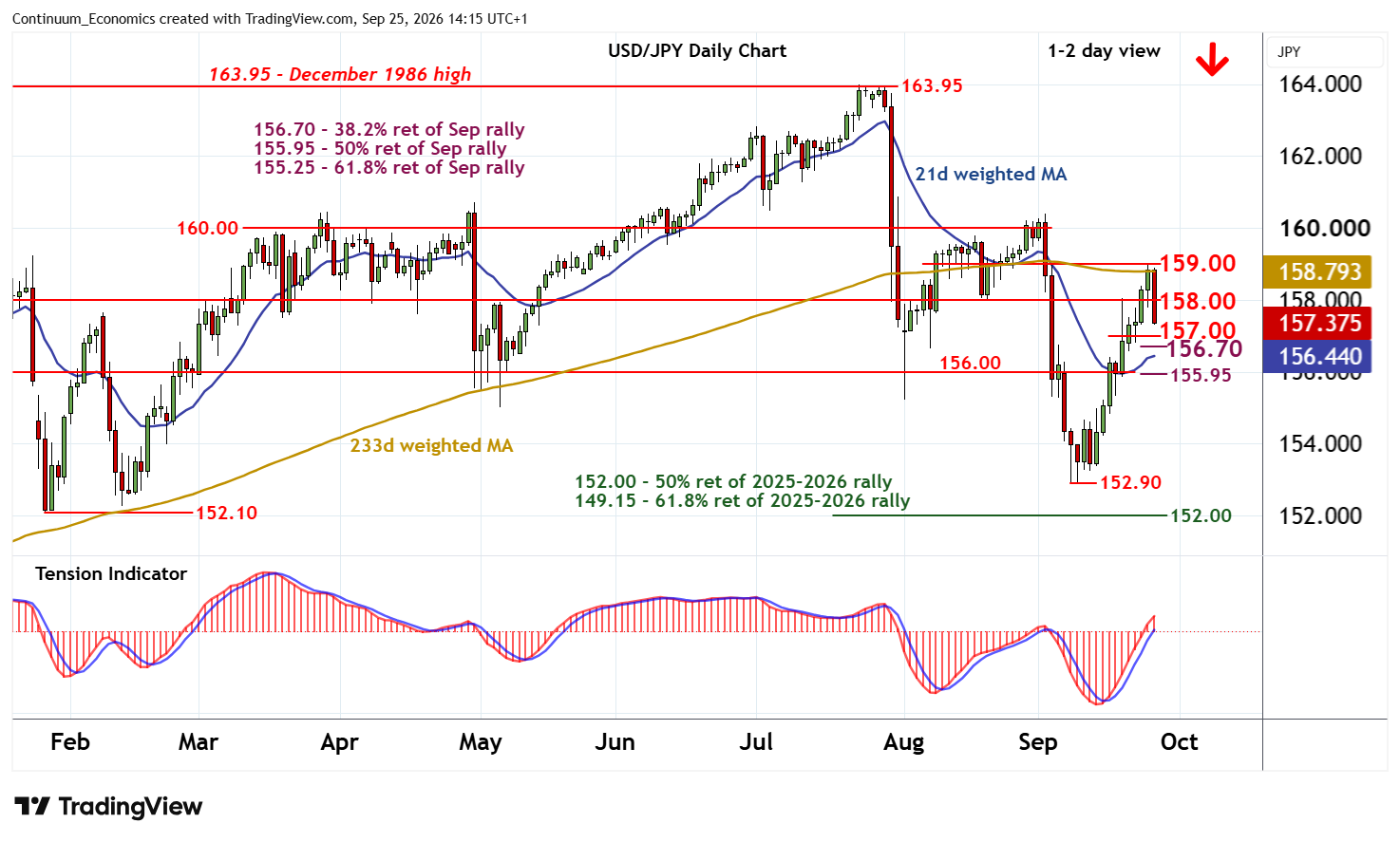
Verbals and Trump name-dropping have also been enough to prompt a burst of squaring on USD/JPY longs too, with the pullback back below 158 stopping the rot, back to 157.00 congestion and the 156.50/156.00 area. Sentiment on the yen has been shifting big picture, with a lot more bullish medium-term views being heard, but recent rate spreads have been challenging for yen bulls. This week’s data needs at a minimum to reignite expectations for follow through from the BoJ this year to offer support. Upside on the CPI data would help yen dip buyer’s cause.
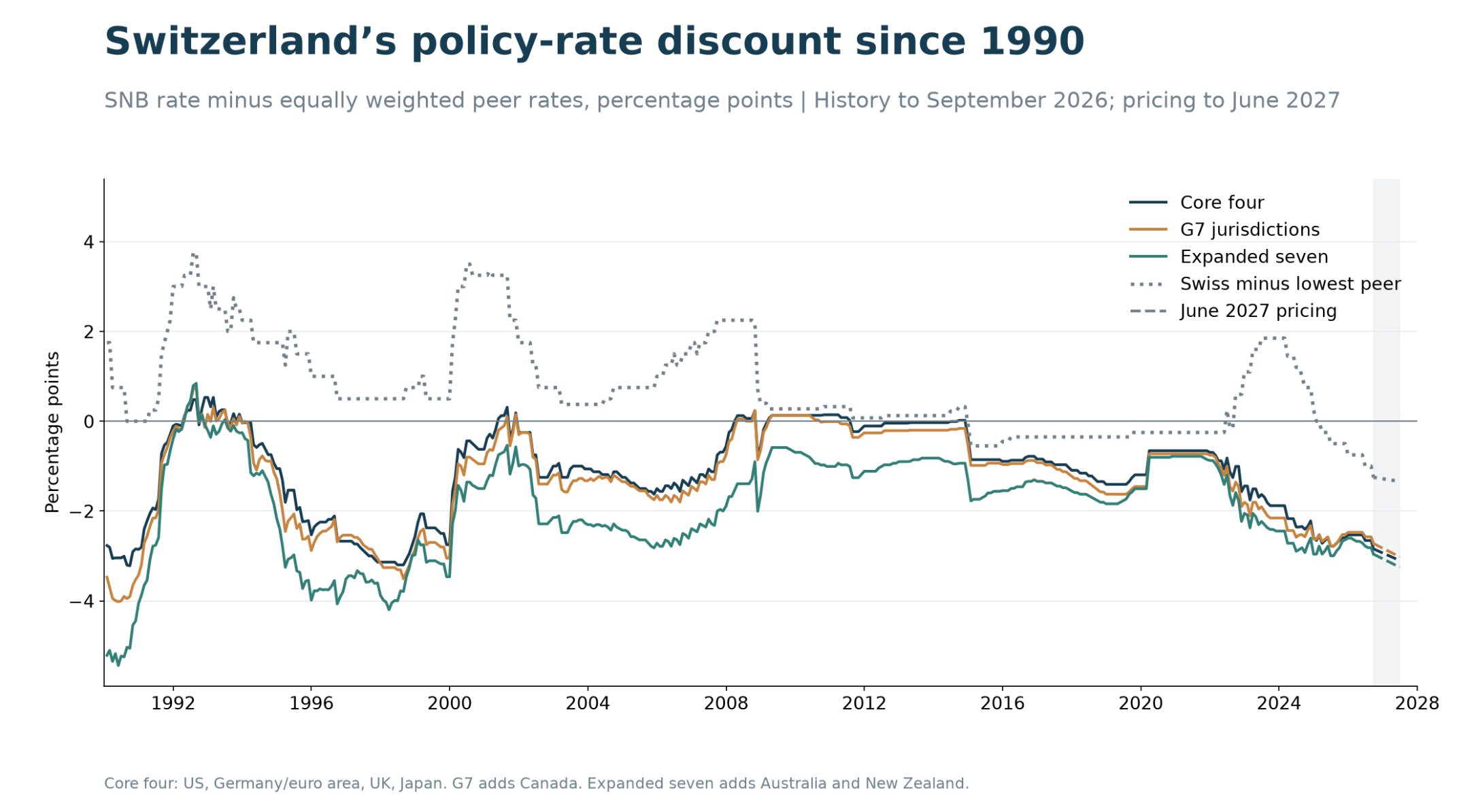
While also at the mercy of the wider dollar trend, recent developments have left the SNB even more conspicuously as the odd one out. SNB last week was pretty explicit in pointing to a subdued CPI forecast through the horizon to 2028 on the assumption of unchanged rates. ZIRP here is increasingly out on a limb and leaves CHF structurally pressured, and prone to JPY-rotation incentives. It would take a risk spike and volatility jump to interrupt the general trend towards CHF weakening. Nearby, EUR/CHF resistance is quite close with 0.9475/80 current year highs to 0.95 in frame.
For AUD, the RBA hike is fully factored in so any reaction will key off the guidance. While focusing on current inflation, there is also some background debate bubbling up regarding whether rates are reaching the uncle point for a challenging housing market. Good offset/redraw balances have remained a cushioning factor in the housing market in the face of this, but prices have started to turn down, sales volumes are down double digit on the year, sales inventories up 25% on the year, and there is some attention on whether this will have a slowing impact on discretionary spending. AUD/USD has tried to level at around 0.70, but has better support at 0.6950-00.
Data and events for the week ahead
USA
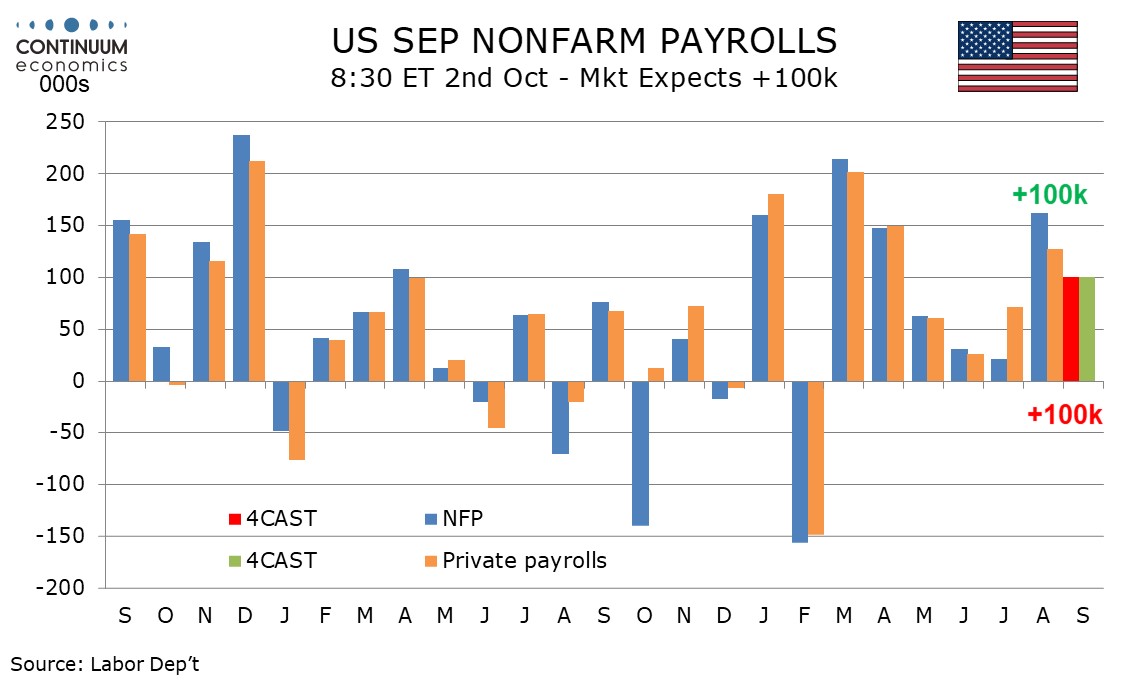
The US has a busy data calendar, with Friday’s employment report probably the highlight. We expect gains of 100k in September non-farm payrolls, both overall and private, with an unchanged 4.1% unemployment rate. While we expect a subdued 0.2% increase in average hourly earnings, such a report would sustain a picture of a healthy labor market. Other labor market signals will come on Tuesday, when September consumer confidence and August’s JOLTS report on job openings are due. Wednesday’s sees September’s ADP report on private sector employment, where we expect a rise of 85k. Weekly initial claims are due on Thursday.
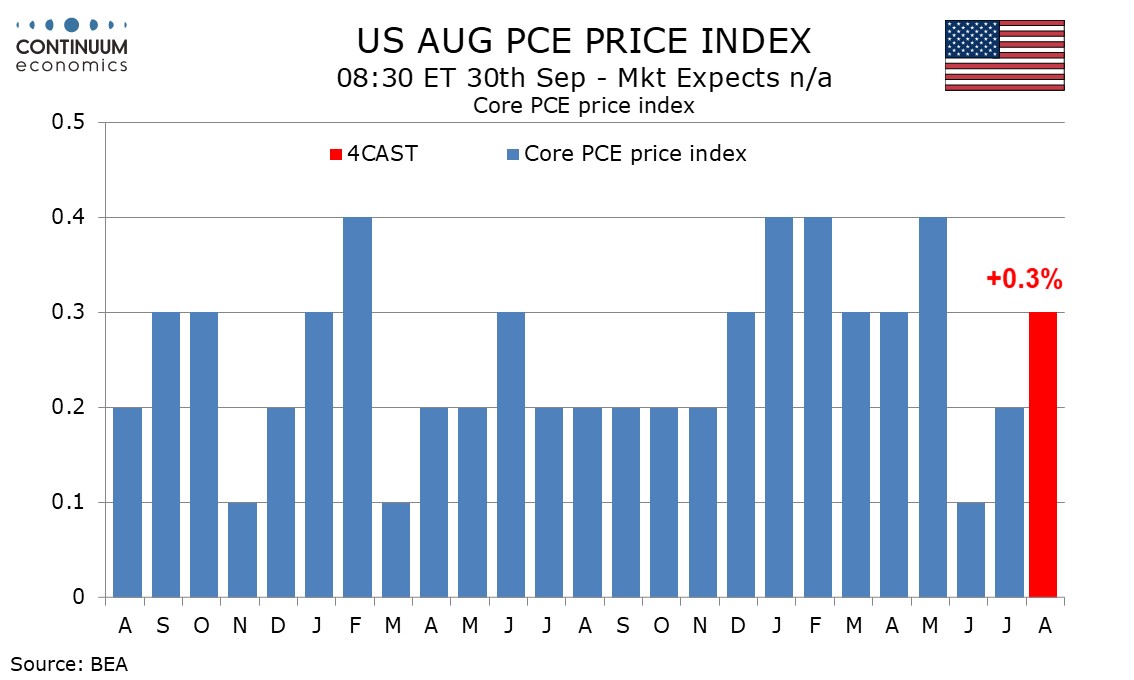
Wednesday will also see August’s personal income and spending report. We expect a rise of 0.5% in personal income, underperforming a strong 0.9% increase in spending. We expect a 0.3% increase in the core PCE price index, matching the core CPI. The data should also be watched for historical revisions going back to 2021. Fed’s Waller has suggested that revisions to non-market prices could bring downward revisions to core PCE prices, which have recent been unusually outperforming the CPI. We will also be watching for any revisions to personal income and spending, with the latter having been significantly outperforming the former in recent data. Historical revisions will also be seen for GDP data when final Q2 GDP data is released at the same time. We expect Q2 to remain at 1.5% annualized but the revisions may prove more interesting. Wednesday also sees the advance August goods trade balance, which we expect to widen to $122.7bn from $118.9bn.
Minor data releases due include July house price induces from the FHFA and S and P Case-Shiller on Tuesday, and August factory orders on Friday. Fed speakers include Goolsbee, Musalem and Williams on Tuesday. Barkin and Goolsbee speak on Wednesday, On Thursday Barkin and Williams speak again, as well as Logan. Logan speaks again on Friday.
CANADA
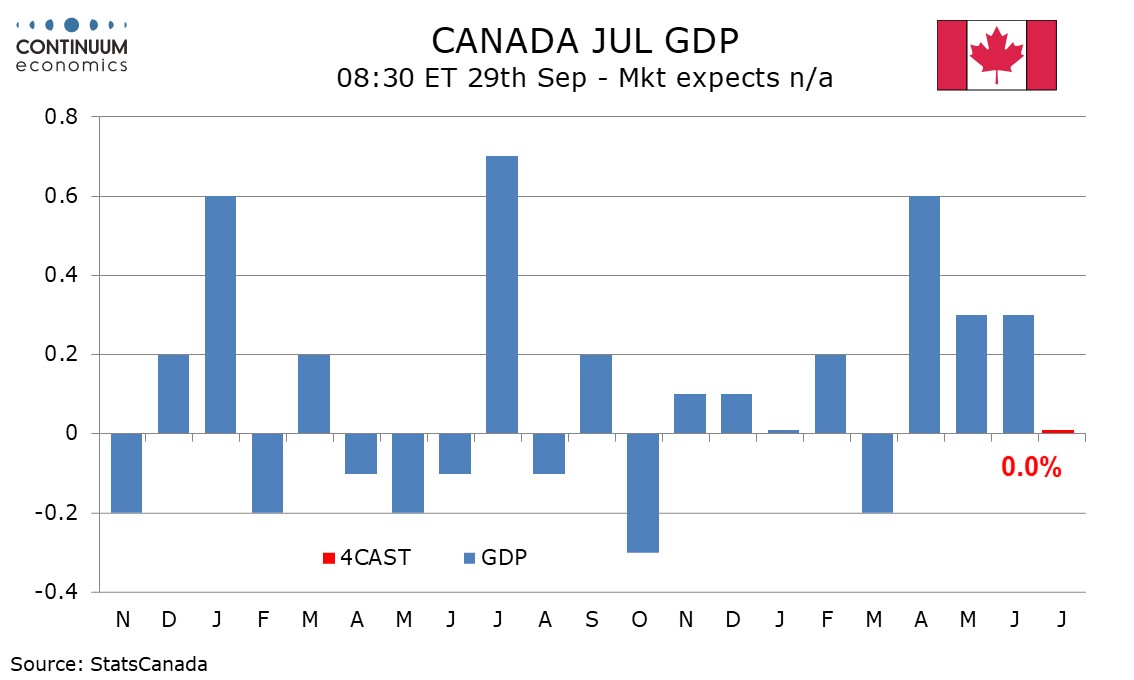
Canada’s most significant release is July GDP on Tuesday. We expect an unchanged outcome, in line with preliminary signals given with June data. We expect preliminary indications for August to show a modest rise. September’s S and P manufacturing PMI is due on Thursday.
EZ
A relatively quiet week is expected with the flash estimate of HICP released on Friday. August saw an increase in the annual headline rate to 3.2% and a further increase is likely in September given the increase in energy prices. Energy is likely to keep inflation above 3% for the remainder of the year and going into 2027, especially as the replenishment of gas inventories in Europe has kept natural gas prices elevated over the past month. Core inflation has remained relatively stable at 2.4% and selling-price expectations have not risen significantly in recent months. Spain and France also release inflation numbers for September ahead of EZ HICP on Tuesday and Wednesday, respectively. Industrial and consumer sentiment indices for September are also released on Tuesday. ECB’s Lagarde is due to speak on Thursday.
UK
Aside from a final read of Q2 GDP the data calendar looks pretty bare. Mortgage approvals for August (released on Tuesday) might be of interest given the recent increase in mortgage borrowing costs. David Ramsden from the BoE is scheduled to deliver a speech on Quantitative Tightening (QT) on September 28. Taylor, Mann and Bailey are also due to speak.
AU
RBA meeting provides the main focal point on Tuesday, ahead of the Aug CPI data the next day. The RBA has a hike fully priced in on the back of recent developments so the attention will be more on the statement and following presser for forward guidance
JP
Japan’s week includes August industrial production, the Q3 Tankan, which will give an interesting snapshot of the mixed impact coming from AI, energy, yen and policy (DIs are seen rising with strong capex projections). Tokyo CPI is also very relevant and the market is looking for ex food to push clear of 2% to 2.4%, keeping the pressure on the BoJ. The Summary of Opinions from the Sep BoJ meeting will be scrutinised for clues on openness across the board for follow up tightening.
NZ
Only minor data with the ANZ Business Outlook and building consents data.