FX Daily Strategy: Asia, Aug 4
US admin may be more fickle, but joint intervention has tended to work...
Waiting for payrolls. Is CHF now the most responsive to US data?
Oil and NOK continue to be marked to US gyrations on Iran
Massive selling through the end of last week - probably to the tune of $100bn across USD and EUR, mostly from Japan along with Bessent’s reminder-to-self $5-10bn - has left USD/JPY unsurprisingly rather oversold on the intraday charts and so taking a bit of a breather with some backfilling. 158 is the relevant higher bounce resistance level nearby that needs to hold to keep the overall skew staying negative nearby.
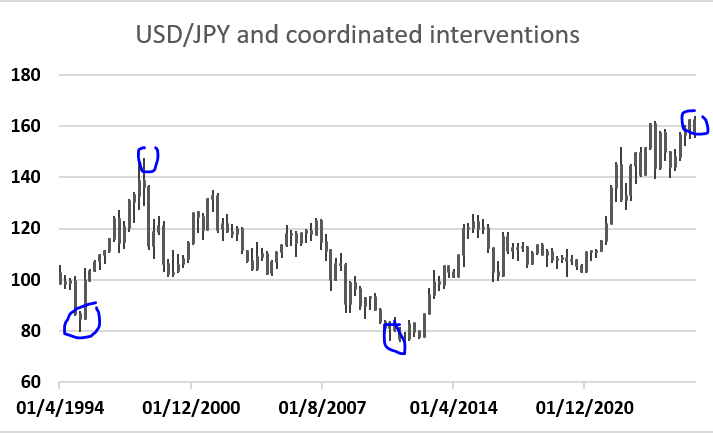
There’s a good argument however that it has done a fair amount of damage both on the charts and psychologically. While the current administration is perhaps less resolute and strategic than past vintages, which could weaken the signal, joint intervention has historically tended to be far more successful in marking significant medium-term turning points in the market and having the ability to turn around excessive momentum driven overshoots.
As such, stale longs are likely better sellers into bounces now to close out, and eventual downside tests could then be extended. Significant near-term support is 38% retracement from Mar25 at 155~ with the 50% retracement and prior lows all in the 152~ area which makes for a good eventual target.
It was notable that the US’s cross selling (along reputedly with some of Japan’s) was in euros, which could be seen as an effort to underscore that this was very much JPY buying and not USD selling. That makes sense when you consider that US action looks partly motivated by nervousness over recent US Treasury action, and concerns over any further large-scale Japan unwinding or other more dramatic unilateral action impacting asset allocation and more disorderly hits to the carry impacting US markets. (That motivation was also evident in Bessent supporting the idea of a big increase in FIMA Repo Facility, to avoid the need for quick forced UST sales for dollar selling liquidity).
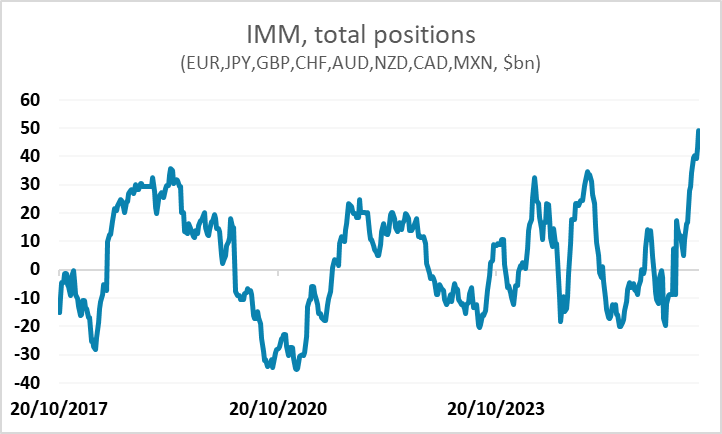
This aspect has served to slightly temper the initial EUR/USD spill over, via the EUR/JPY weight, but that still has to be seen against the backdrop of what was already a Europe/USD correction coming out of the Fed disappointment, aggravated by the positional overhang. IMM data underscored that the market had reached new extremes for overall long dollar positioning, including added to euro shorts in recent days and that hangover is still proving a factor.
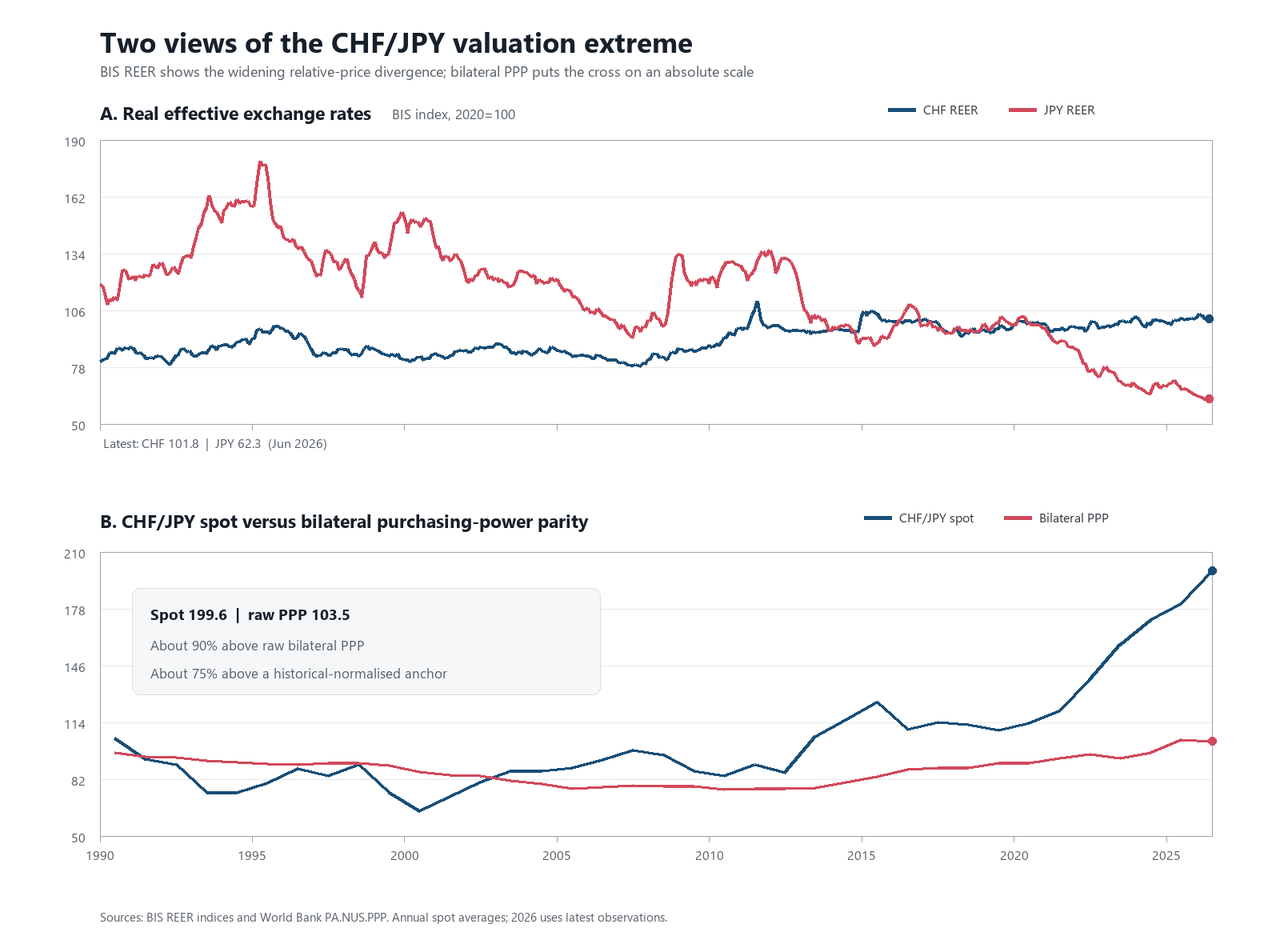
As an aside, CHF/JPY highlighted in recent outlooks has broken down from over 200 to a 192.50 low so far and this remains an interesting one to continue watching going forward, both for outright unwind on the yen leg and for possible diversification effects across funding candidates to those still running risk. 190-185 would be on tap if the move gains traction and extends.
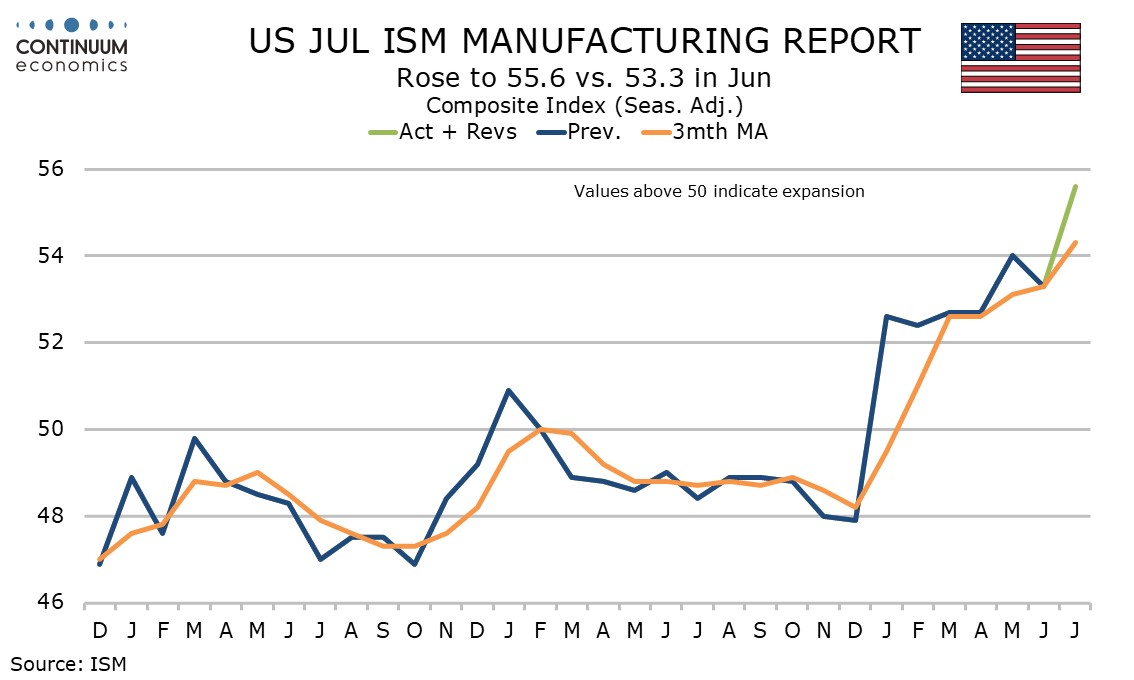
This could remain a running consideration. Monday’s ISM data was strong again, including a positive on employment, along with ongoing supply issues. On the day, it played better to USD/CHF than it did to EUR/USD downside and this preferred expression may be something to watch for in terms of becoming more engrained.
Intervention aside, the never-ending focus is still on Iran and the latest pivot to diplomacy from strikes. It remains anyone’s guess where, if anywhere, regional talks and US-Iran talks if they happen (Iran denies) will lead next. Iran definitely feels like it has gained the upper hand as the US fails to make headway. Oil remains forced to make back and forth to adjust for the probability of tail moves, and with it the NOK, that remains the most prominent major FX proxy.
Turning to Tuesday, it’s a relatively slow day, still waiting on the US payrolls release at the close of the week and ADP prior on Wednesday. June’s US JOLTS report on job openings is due in the meantime.