FX Daily Strategy: APAC, May 19th
Some better Iran headlines help mkt work off o/s moves, but not getting carried away
Bar clear positive news, stretched positioning still dominates providing capping
Oil still sets the tone, but along with other areas of risk build up
UK has labour market data, Canada CPI, neither seen implying pressure to hike
A little respite on Monday, as the market worked off some oversold moves at the end of last week. A touch of comfort also being taken from the suggestions that the US had accepted the temporary waiving of Iran oil sanctions before a final agreement, while Iran was tweaking its position to consider a phased re-opening and transfer of enriched uranium to Russia. If so, that is at least the first concessions in a while. It maybe could be also seen as some US relent in the face of renewed energy pressures, though that might be a stretch given every indication that Trump has given up caring about popularity into the mid-terms, looking to redirect energies into compromising and contesting those (a risk theme, incidentally, we see emerging as a more prominent one as we come out of the summer and start to look to November).
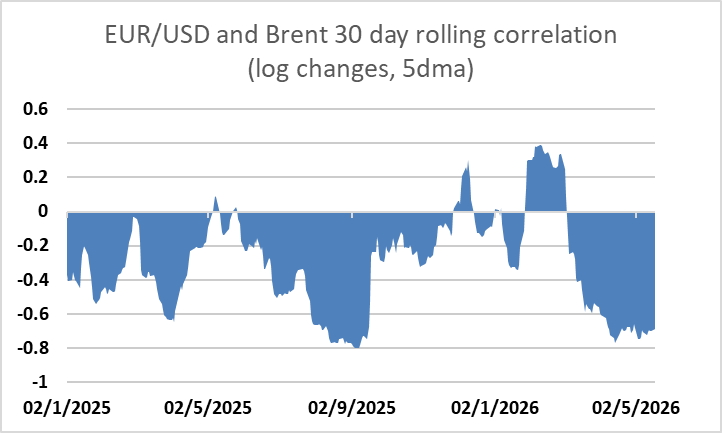
That’s just one day’s headlines in an Iran story that is still otherwise erratic with the “clock ticking”, not only as far as an impatient Trump is concerned but also in terms of the probability of lasting footprint on the macro and market outlook for this year. It is hard to look past that Iran story nearby for direction, as evident for example in the rolling EUR/USD oil correlations and similar metrics.
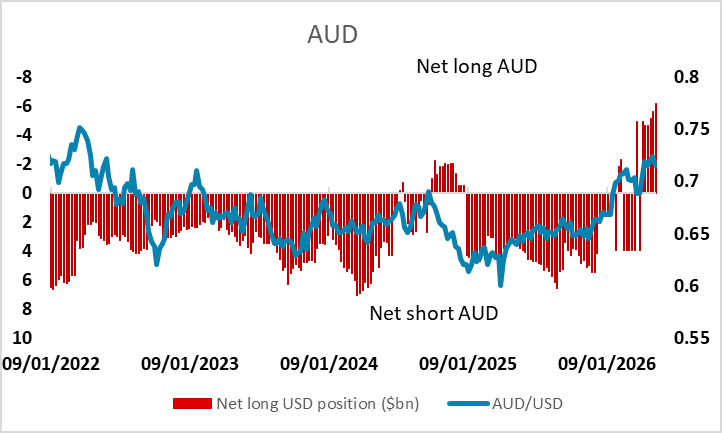
That story still sits within one of broader risk positioning however with different strands to it. The most speculatively leverage trades (clustering around AI build up), the most heavily populated thematic trades (for example recently AUD, and terms of trade gainers such as BRL) and the wider dollar backdrop (the recent extent, for example, of USD/Asia regionals pressure) are all part of that broader mix that could yet ignite.
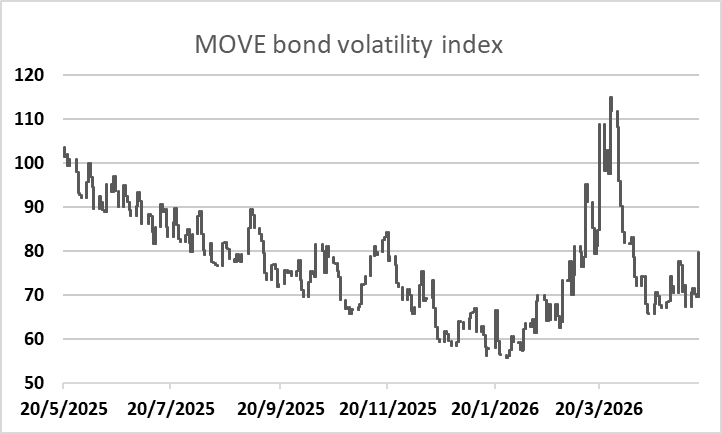
Bond market trade also remains a backdrop issue as major bonds all sit around some critical upside levels and we would continue to monitor any outbreak of volatility for any spillover to the broader market risk and volatility tone. Oil remains a pivotal driver here too of course, as it works through inflation, growth and fiscal channels.
With positioning as it is, any corrective gains in risk currencies against the dollar as seen Monday are quite likely to attract profit-taking, tending to keep price action heavy for now, barring a more significant lasting shift in news flow.
AUD/USD has 0.72- as bounce resistance and prone to re-test 0.71 support unless a deal is struck.
EUR/USD is likewise consolidating the speedy move back to 1.16, but prone in due course to extend to 1.550 unless the backdrop shifts more significantly.
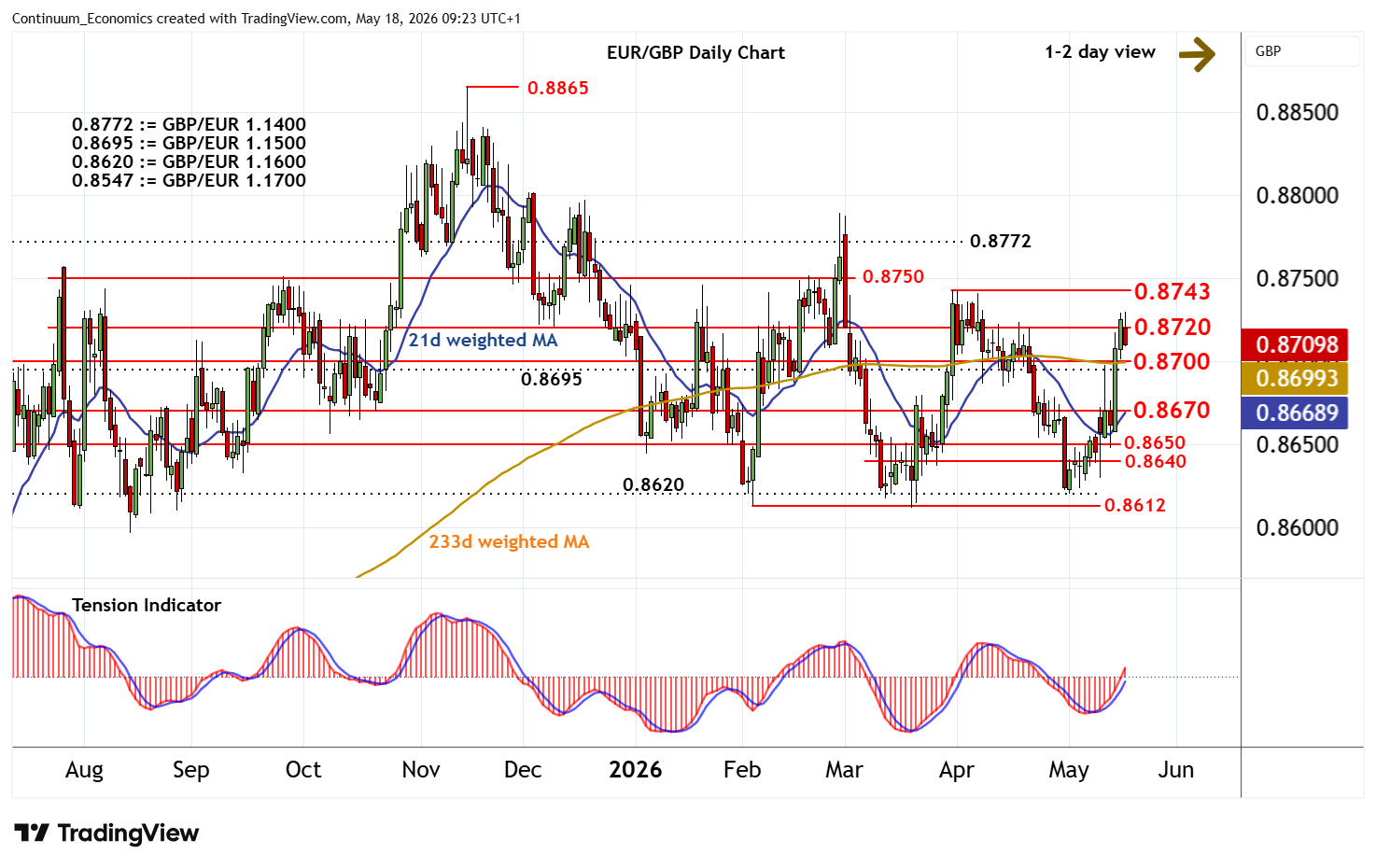
In the UK, it remains the case that most of the cards have been played now, and so there is little for the market to latch onto in terms of speculative and political news driven action, at least until the by-election gets under way. EUR/GBP has essentially been 0.86ish to 0.8750ish all year (minor stretch to 0.88 in March) and continues to respect that for now, with longs taken at the base into the event risk taking profit back from the band highs.
Some notable data in the UK kicks off with labour market figures today. The soft employment trend and slowing in earnings to growth rates consistent with the CPI target do make the case for contained second round effects and the BoE to adopt a cautious approach to policy reactiveness. BoE’s Breeden is also due to speak Tuesday.
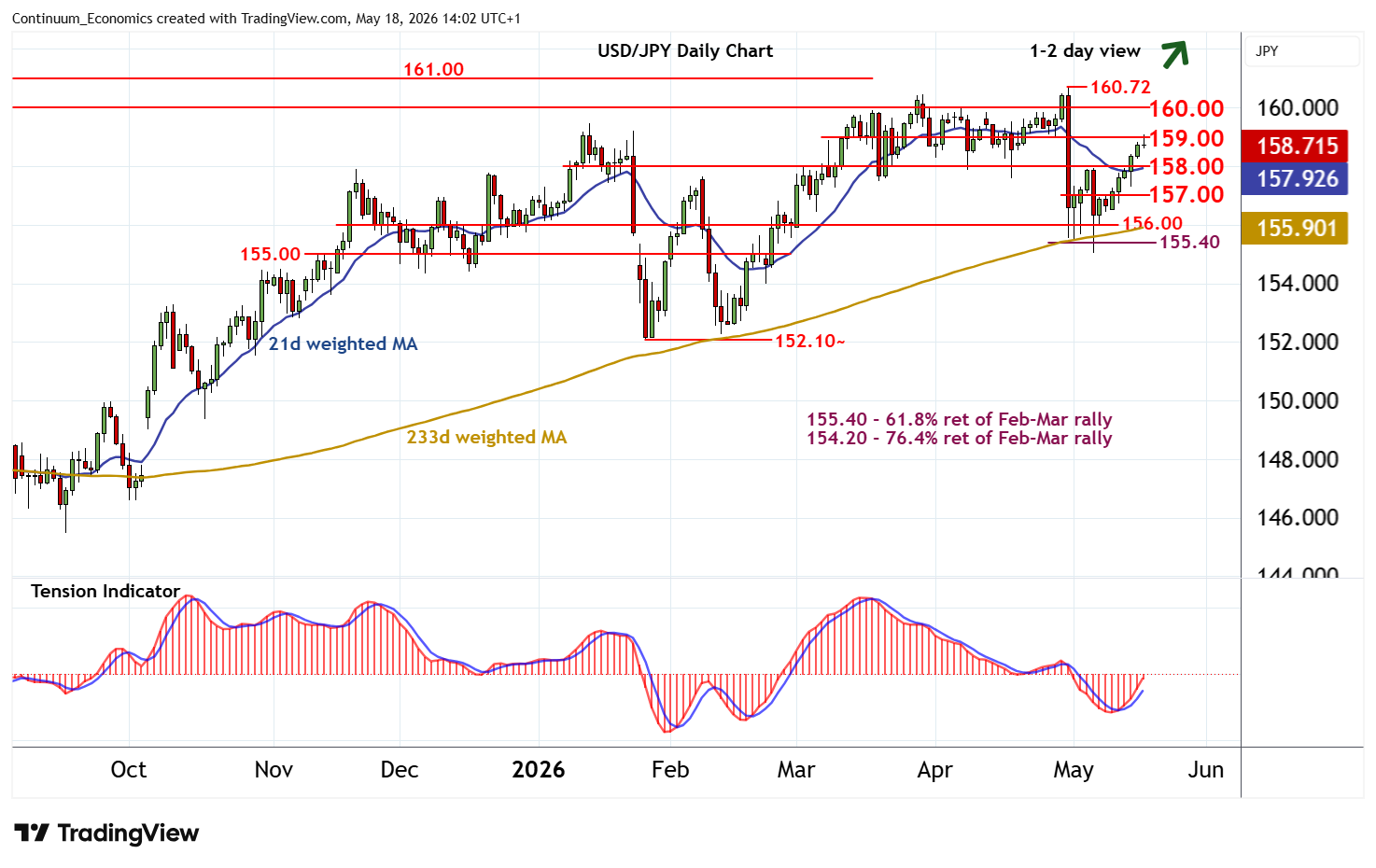
USD/JPY remains a stubbornly challenging market to short at present, given its tendency of late to either be dominated by the rising dollar trend in risk-off days, or lifted by carry on risk-on periods. Until Japan bonds stabilise (in theory Japan yields are not that unattractive hedged these days, were it not for the market continuing to sell off), it’s still struggling to regain its previous risk-off leadership status. For all that, the yen is clearly trading at a current discount and the MoF is still there as a force ready to show itself with market checking, guerrilla intervention and heavier intervention as it sees fit into 160. Japan sees Q1 GDP data, expected to show softness, though the impact of oil is yet to be felt. The data is likely less important to the BoJ’s next rate decision than market price action (oil, yen, JGBs). JGBs might be more sensitive to weak data (playing to fiscal easing concerns) than upside surprises.
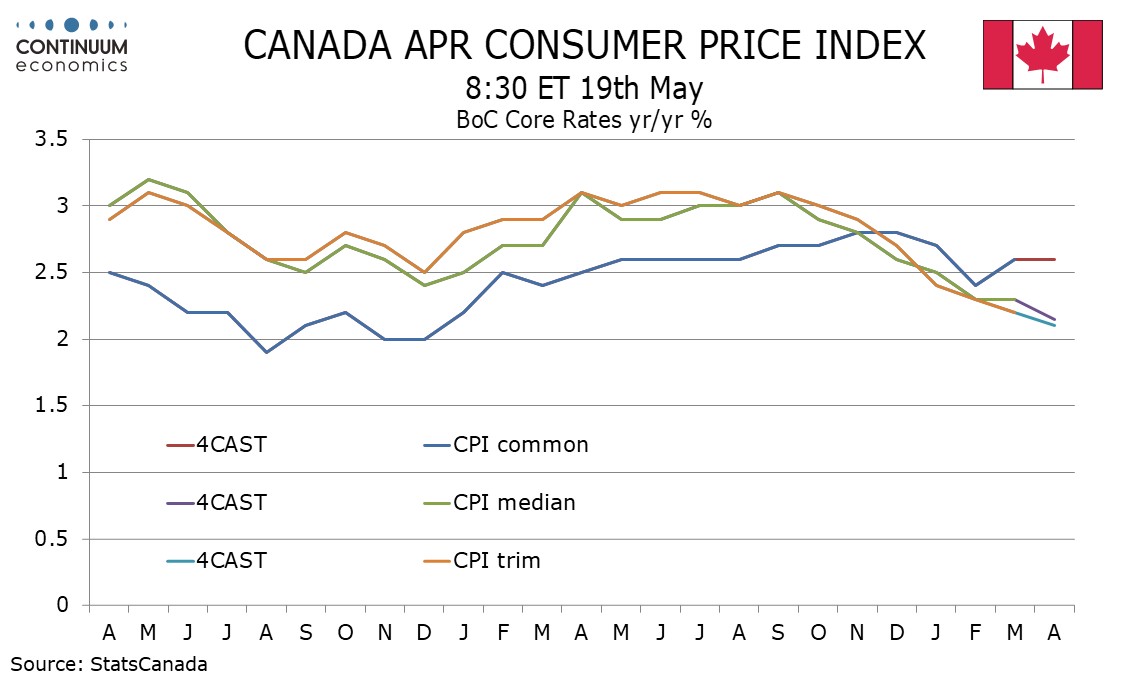
Elsewhere, Canada sees its key release of the week with April CPI. We expect acceleration to 2.9% yr/yr from 2.4% in March, the bounce in part due to the April 2025 abolition of the carbon tax. But we also expect the BoC’s core rates on balance to continue declining. As such, data shouldn’t detract from the view the BoC remains patient, while waiting to see if oil remains higher than its central scenario for oil to drop back in coming quarters.