EUR/USD, DXY flows: Dollar on the MOVE; shifting EUR/CHF mood
Surge in MOVE has been upping the volatility backdrop and helping drive the dollar firmer in the current over-extended action
Yield jump and higher vol tending to squeeze some popular carries recent days, USD/MXN especially
EUR/CHF runs out of gas against this backdrop, potentially correcting
Bond action is heated, so upcoming US data and impact on Fed view becomes unusually impactful
Over-rapid MOVE shifts, especially if resulting in mkt spillover, can also often see a policy/guidance response
Alongside the global rapid bond moves - from the US-led acceleration in yields through to the French pressure - volatility has been on the move. The yield shift together with the volatility is having some marked spillover to the dollar on the current stretch, despite an overbought run and some attempt from recent Fed speakers (and data) to temper.
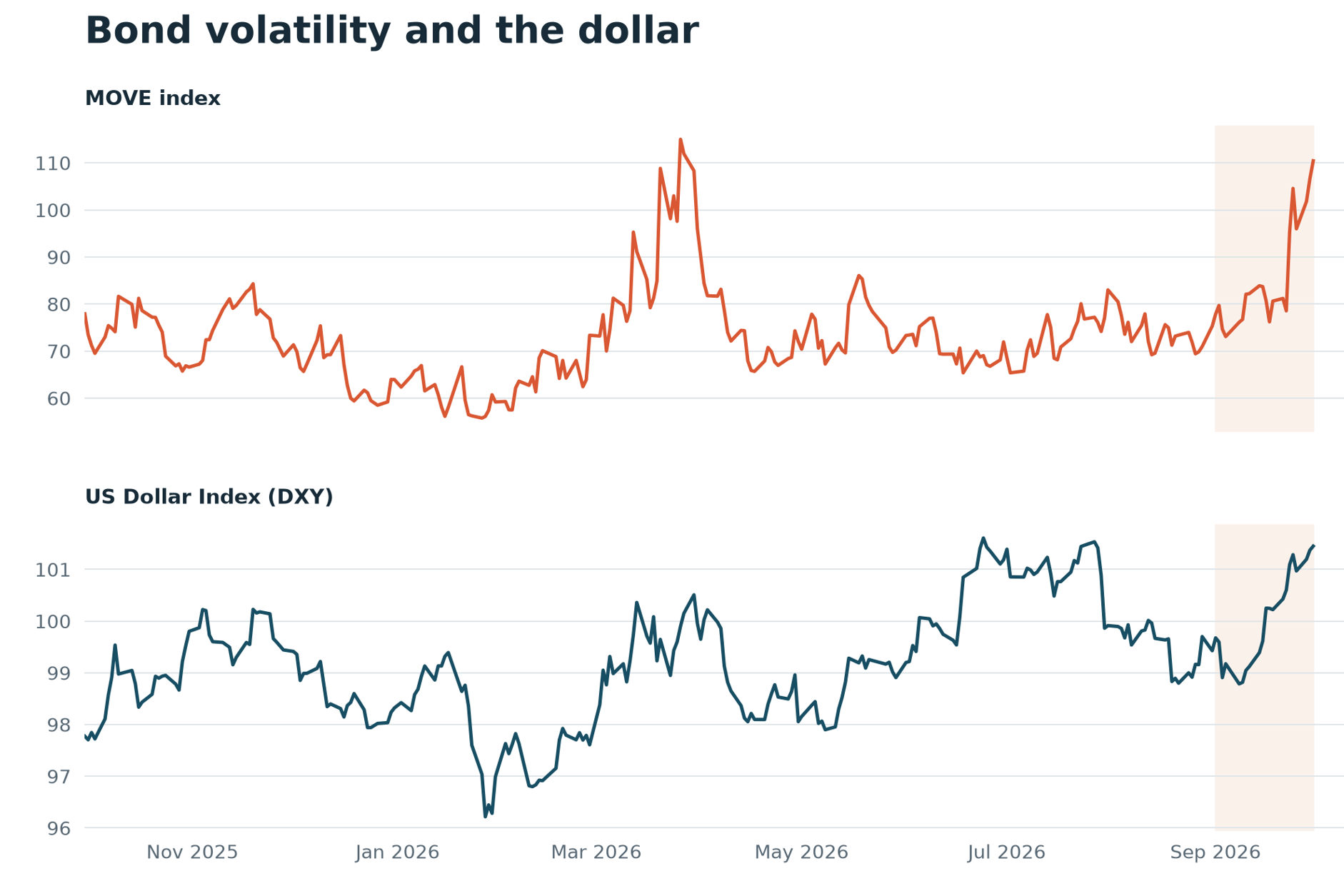
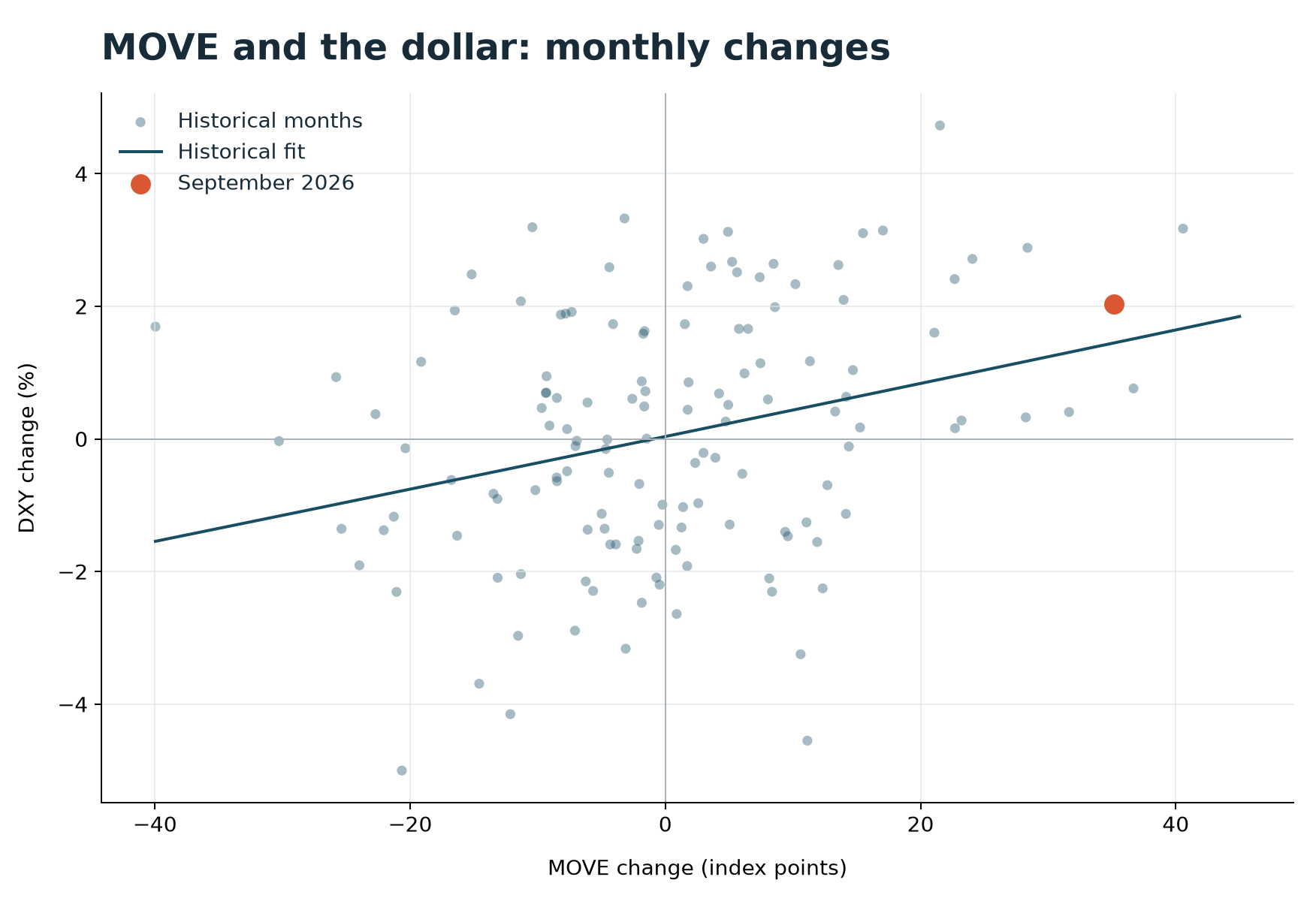
The MOVE index, which can tend to often precede wider FX and equity volatility spikes, has risen steeply, out from the 60s toward the March peaks at 110+ in a month. Spillover to the DXY can be around 0.6% per 10 point move on average in recent years (if varying over time), when occuring in a rising yield environment.
Carry pressure has been evident on a number of popular pairs, with USD/MXN for instance breaking above the 18~ highs from March, up from the recent 16~ lows - 18.5~ is around 38% back from the larger swing down, with just above 19 as 50% if the move becomes an aggressive shakeout.
Interesting too to note that there may be a bit of a mood shift, or at least near-term momentum loss, evident on the overstretched EUR/CHF move. The USD-carry and risk aversion shift is one aspect, the euro French-driven concerns (here) is another. The cross has been sent back from resistance at 0.95, and could see a further profit-taking pullback if the French bond moves and wider risk shakeout extends.
Over the next few days, key then will be whether the recent relatively disorderly bond action proves to be over-extended and exhaustive or the market dislocation continues. The next run of US data could therefore be unusually influential.
When MOVE shifts threaten to get out of control (not quite the case in level terms at present, though more so in terms of speed of rise) that can often prompt a US policy or verbal reaction too, especially if it starts to ripple out to other market function problems, such as through the basis trade.