U.S. Initial Claims remain low, Q2 Productivity and Unit Labor Costs healthy but Non-Labor Costs surge
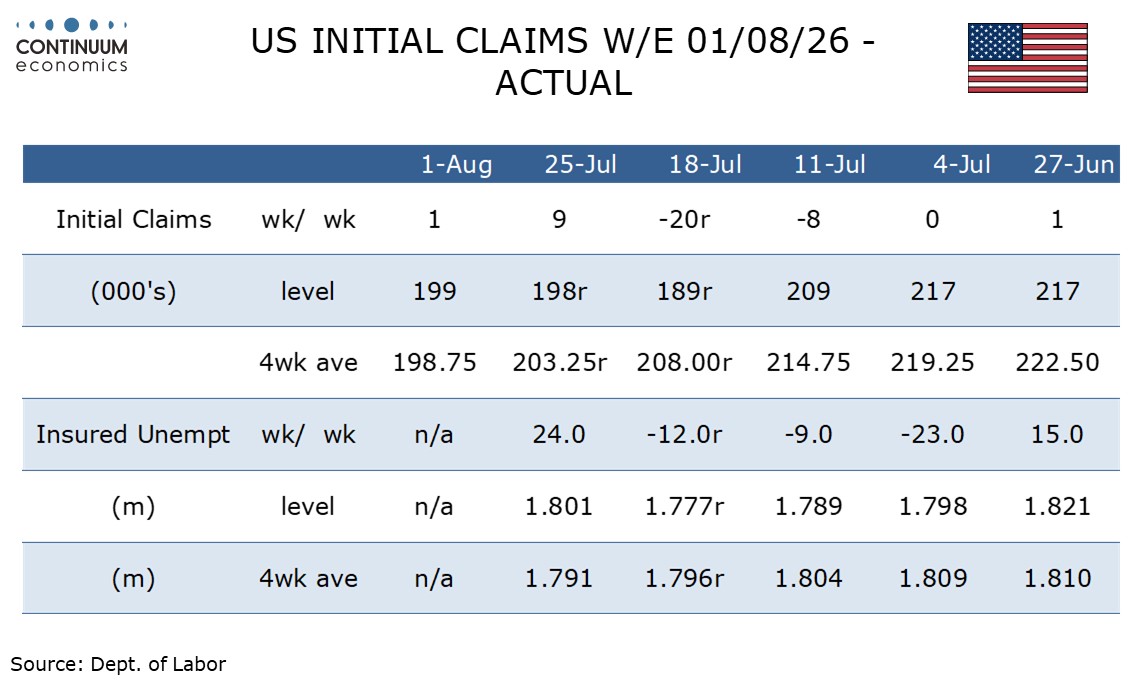
Initial claims at 199k from 198k remain very low though continued claims at 1,801m from 1.777m hit a 4-week high. Claims data on balance are giving positive signals for July’s non-farm payroll. Q2 non-farm productivity at 1.4% is stronger than expected and Q2 unit labor costs at 1.3% softer than expected though strength in non-labor costs is providing inflationary pressure.
The latest initial claims data comes two weeks after the survey week for the payroll, with continued claims covering the week after that of the payroll survey. It was in the payroll survey week than both series hit their recent lows, 189k for initial claims and 1.777m for continued claims.
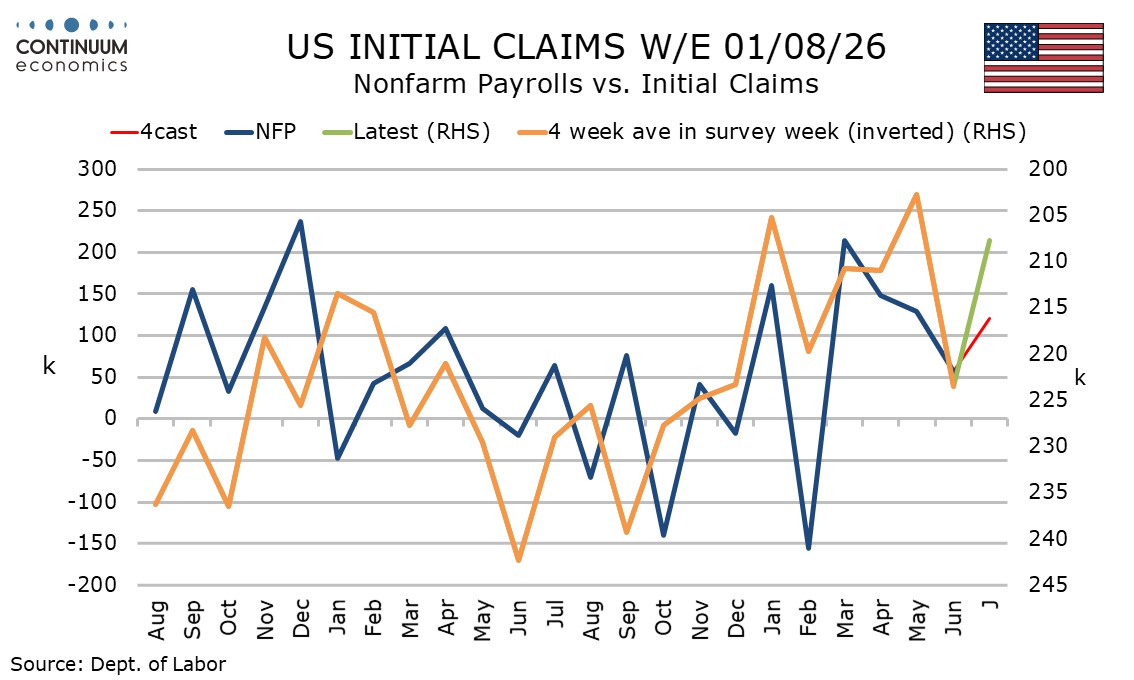
The 4-week average of initial claims has fallen below 200k for the first time since October 2022. In the payroll survey week the 4-week average was 208k, well below the 223.5k seen in the June survey week, so contrasting ADP data initial claims are giving a positive signal for payrolls.
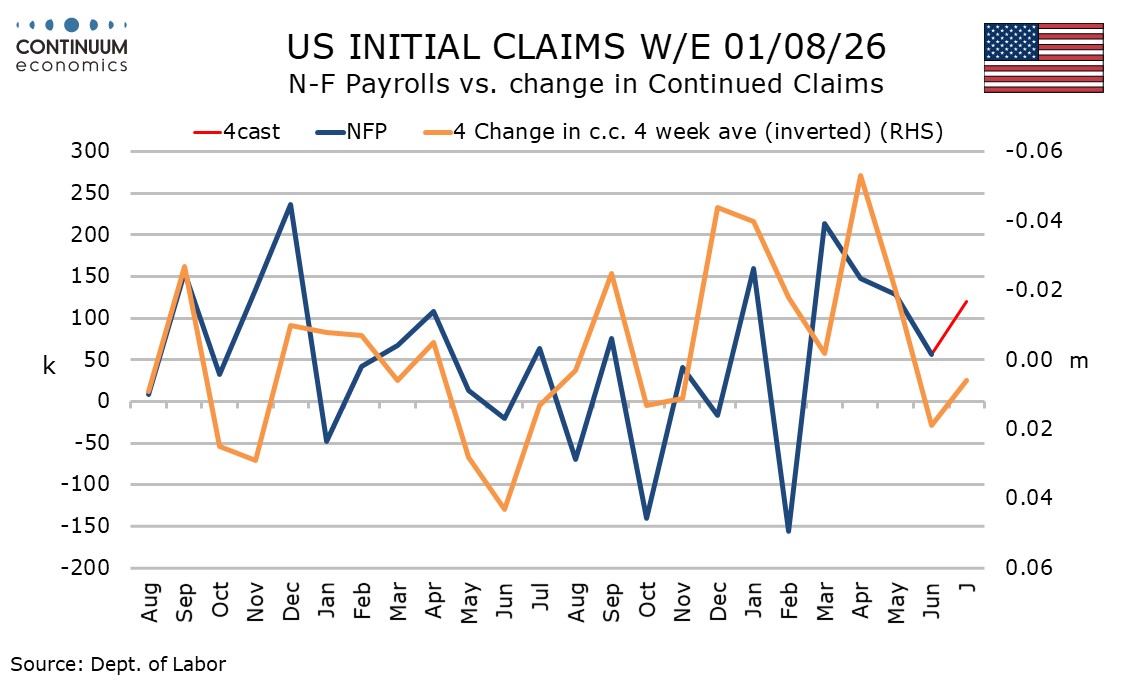
The continued claims series is giving a less positive signal for payrolls, though the 4-week average has slipped in recent weeks. We expect a 120k increase in July’s non-farm payroll, 110k in the private sector, well above ADP’s 44k.
Q2 non-farm productivity rose by 1.3%, with non-farm business output up by 1.7% as seen in the GDP release, but aggregate hours rising by only 0.3%, well below the 1.3% implied by the non-farm payroll. The payroll and productivity aggregate hours data are not always consistent but this does hint at negative back revisions to payrolls, a risk we also saw from the June JOLTS report.
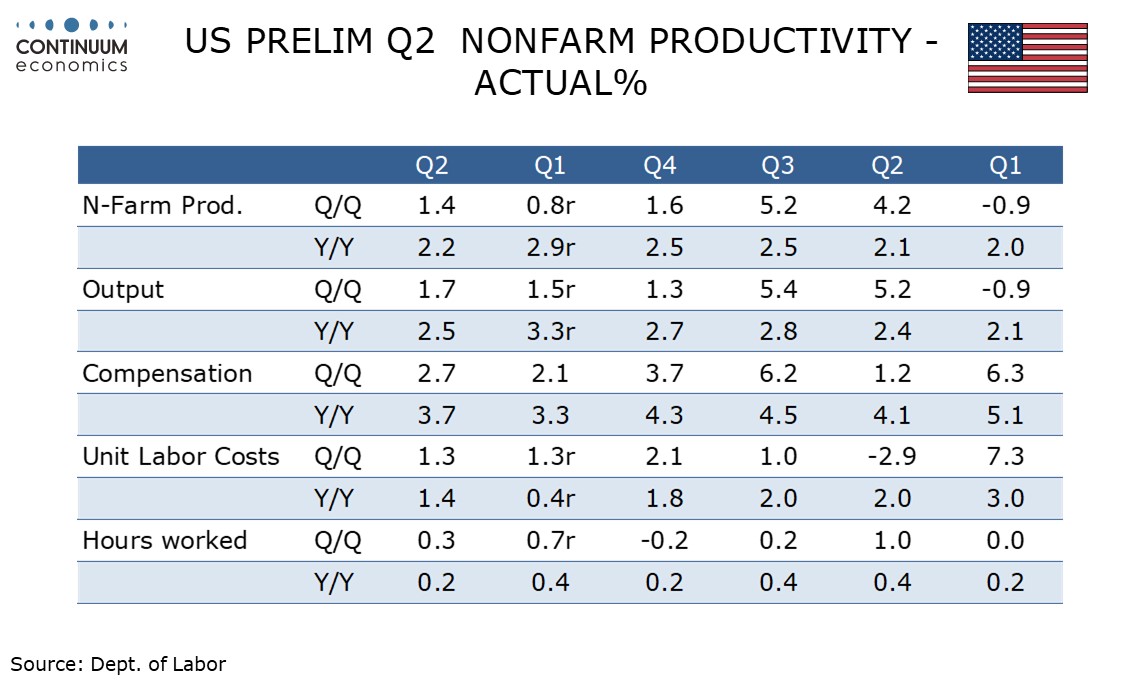
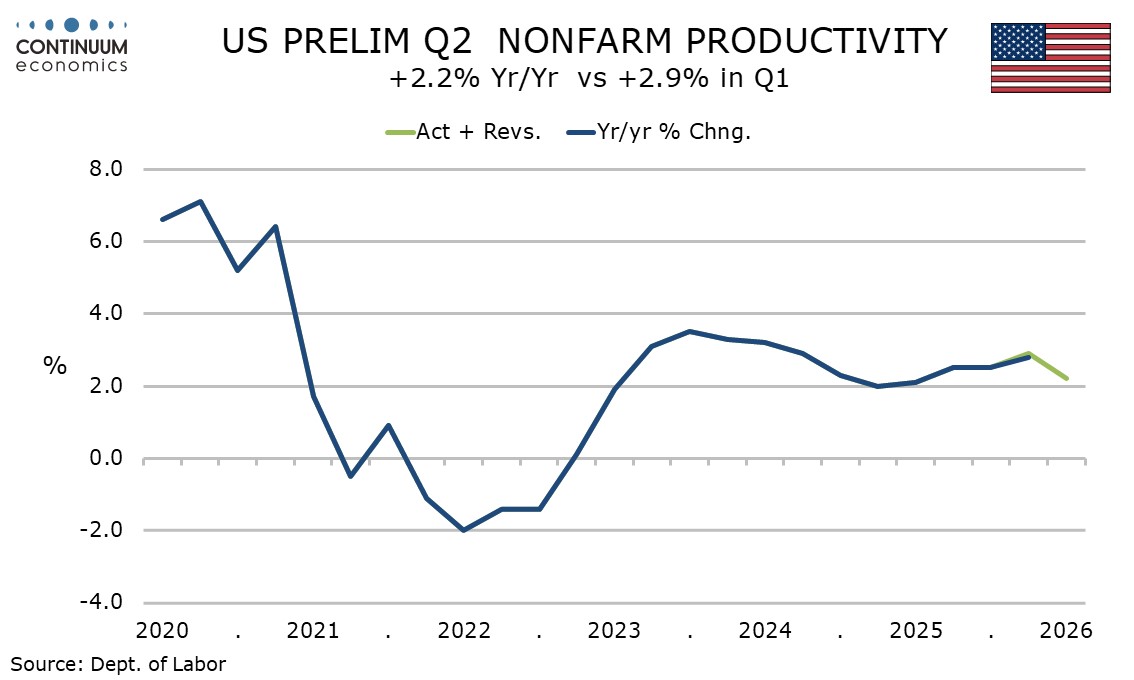
While the Q2 productivity data is stronger than expected and yr/yr growth of 2.2% is respectable. It is not strong enough to imply a productivity boom so strong that it dramatically reduces inflationary risks.
Unit labor costs rose by a moderate 1.3% for a second straight quarter, restrained by the stronger than expected productivity gain and a second straight below trend increase in compensation (Q2 rose by 2.7% after a 2.1% increase in Q1 but yr/yr compensation stands at 3.7%). Real compensation fell by 3.1% annualized and is down 0.1% yr/yr.
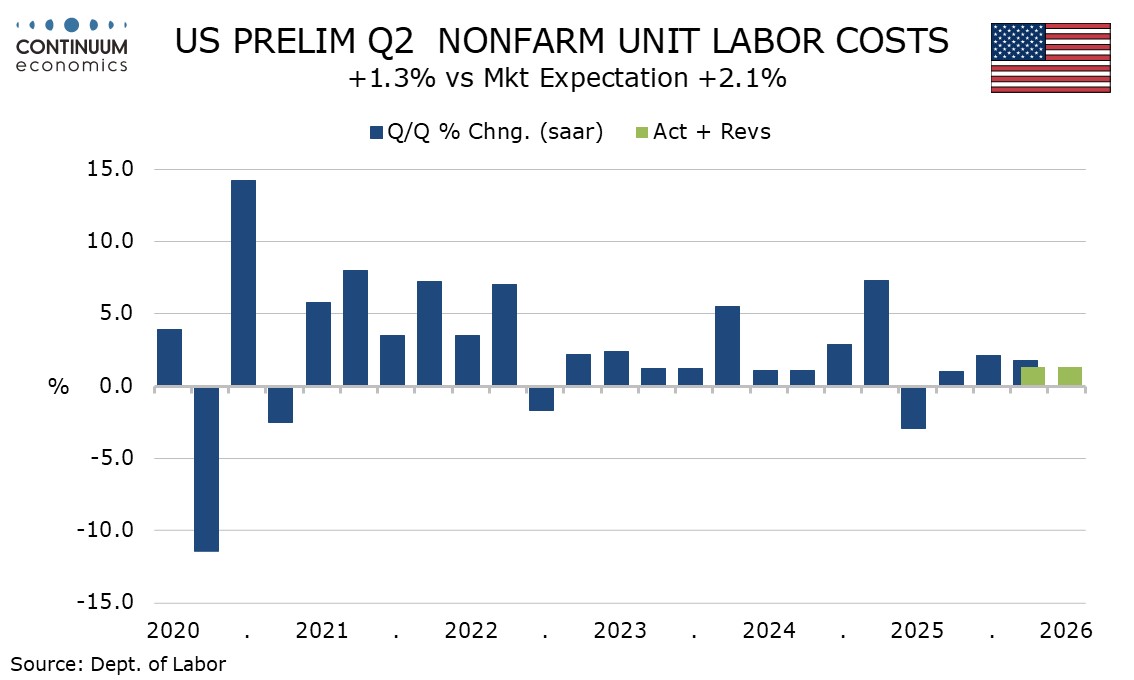
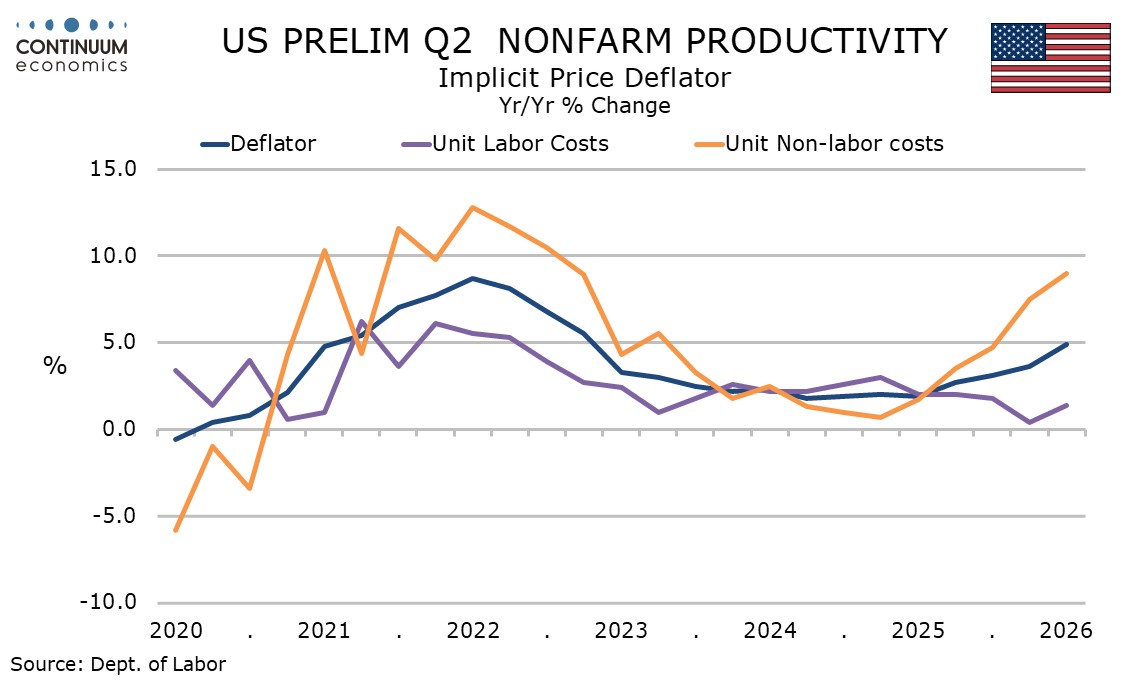
While unit labor costs are subdued at 1.4% yr/yr non-labor costs surged by 14.0% in Q2 lifting yr/yr growth to 9.0%, meaning that the overall deflator rose by 7.0% in Q2 and 4.9% yr/yr. The latter series, which peaked at 8.7% yr/yr in Q2 2022, had returned to around 2.0% in the four quarters to Q2 2025, but has now picked up again. This implies above target inflation but Fed doves may feel that the unit labor cost pace is more illustrative of the longer term inflationary outlook.