U.S. July Trade Deficit surge restrained by Service revisions
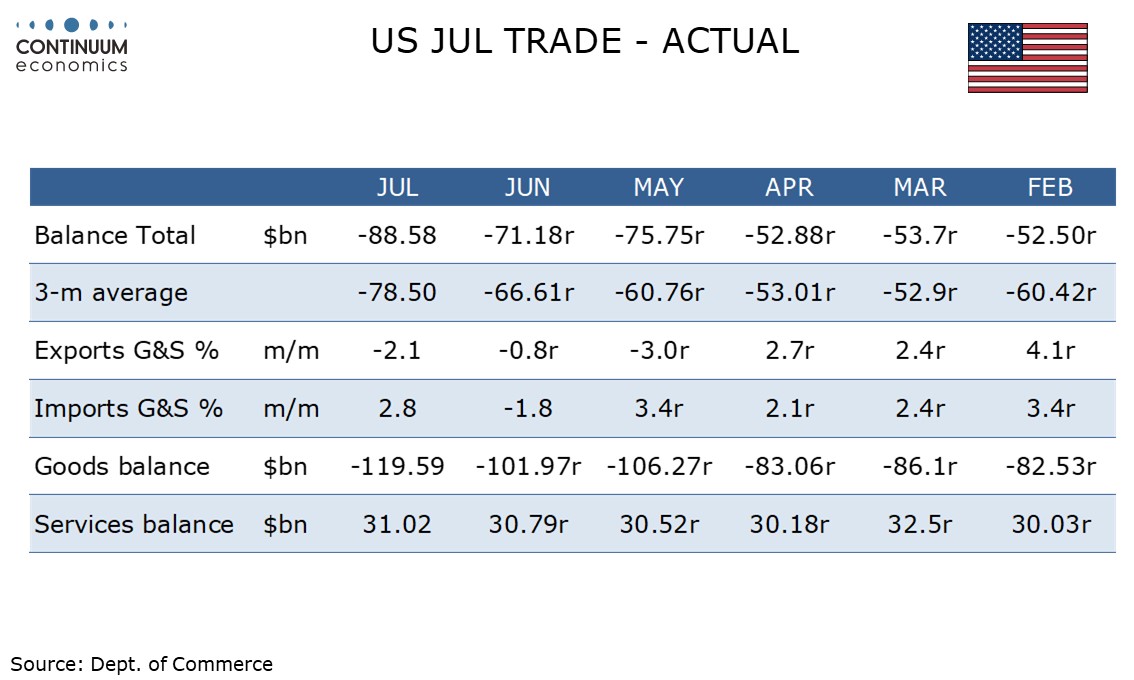
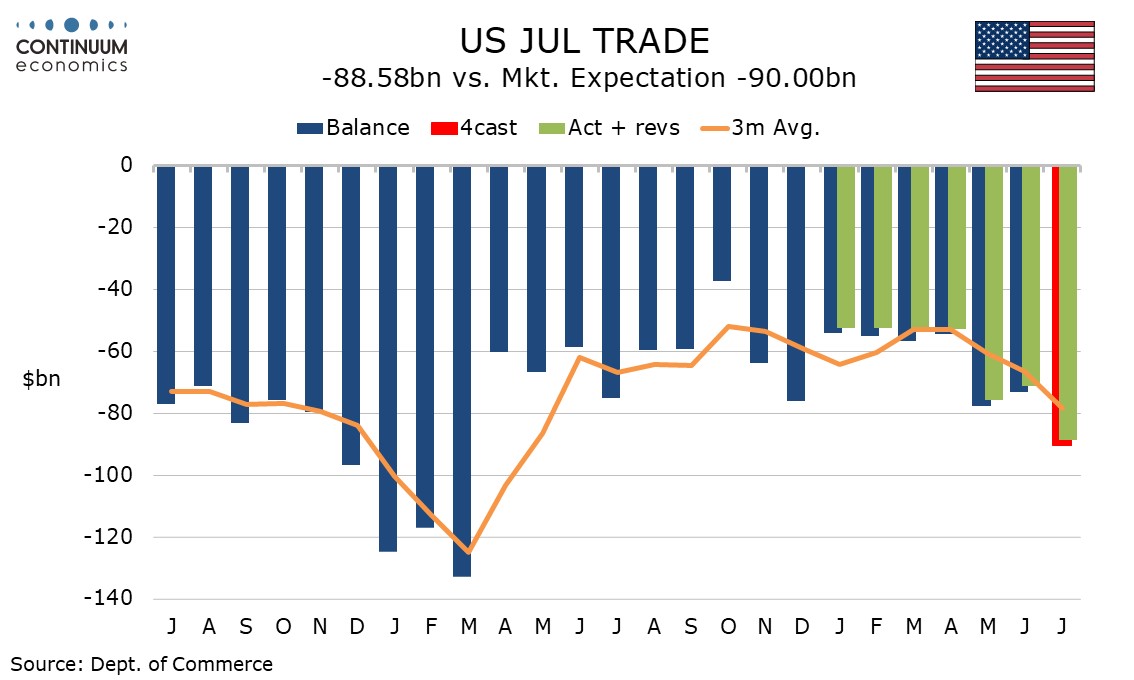
July’s trade deficit of $88.6bn is up from $71.2bn in June and the widest since a record pre-tariff deficit if $133.0bn in March 2025, though not quite as wide as expectations generated by advance goods data. Initial claims at 206k from 204k and continued claims at 1.779m from 1.771m are both marginally higher but still low and suggest the labor market is not changing much.
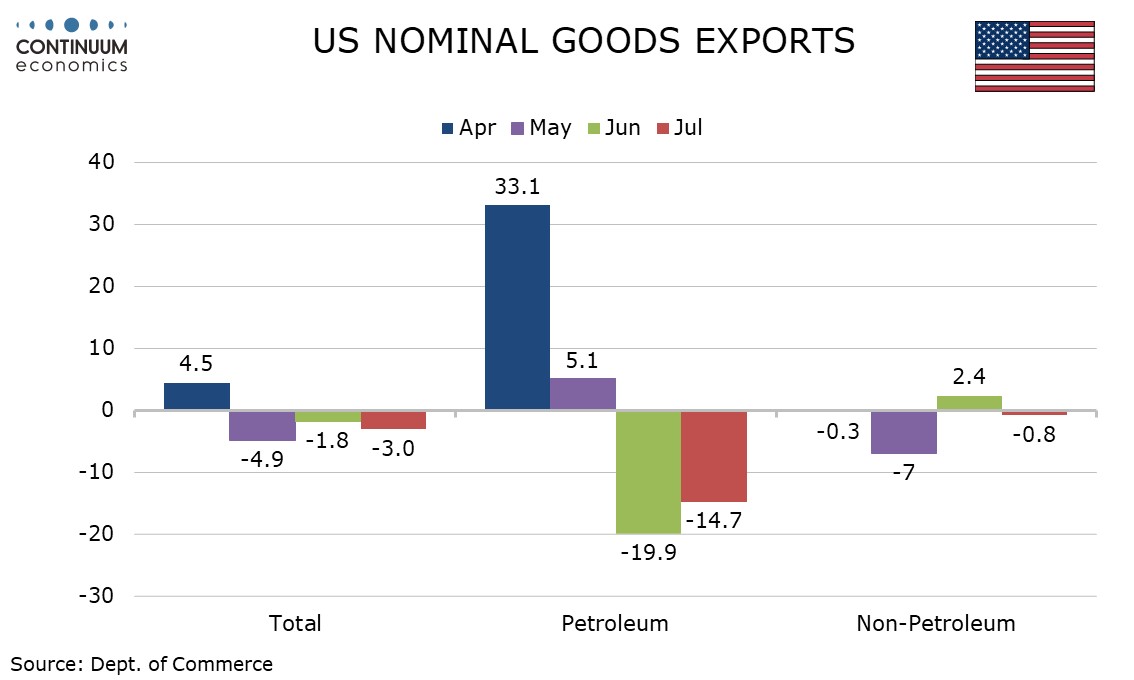
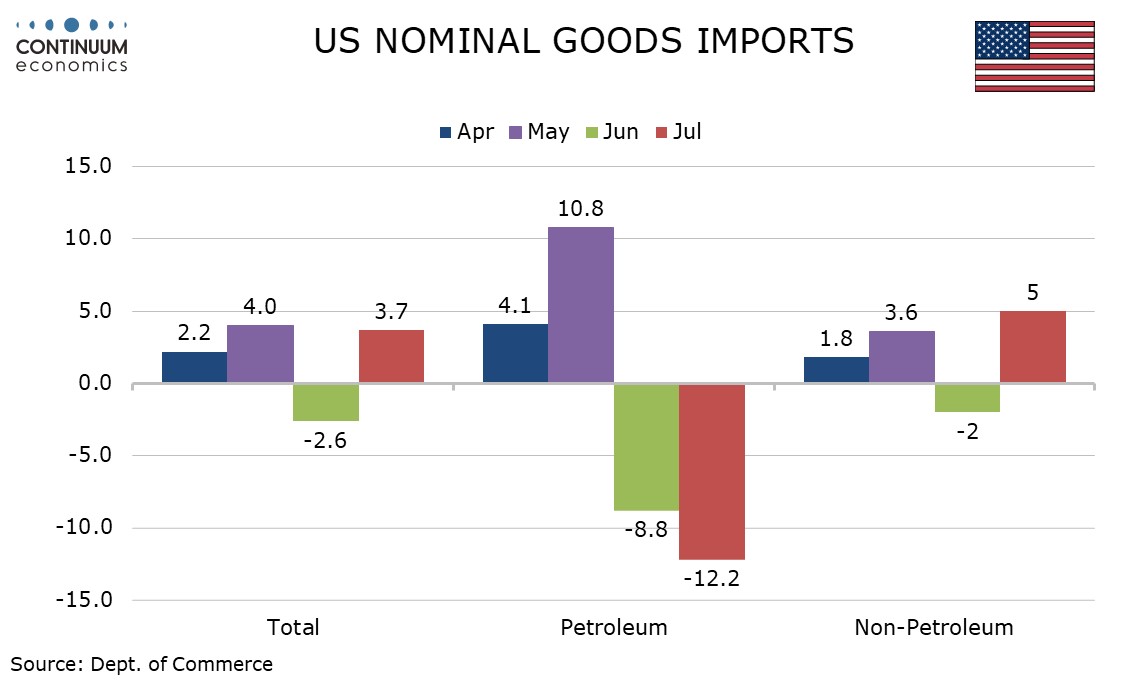
In the trade breakdown goods data is consistent with advance data with goods down by 3.0% versus a 2.9% fall in the advance report and imports up by 3.7% as was the case in advance data.
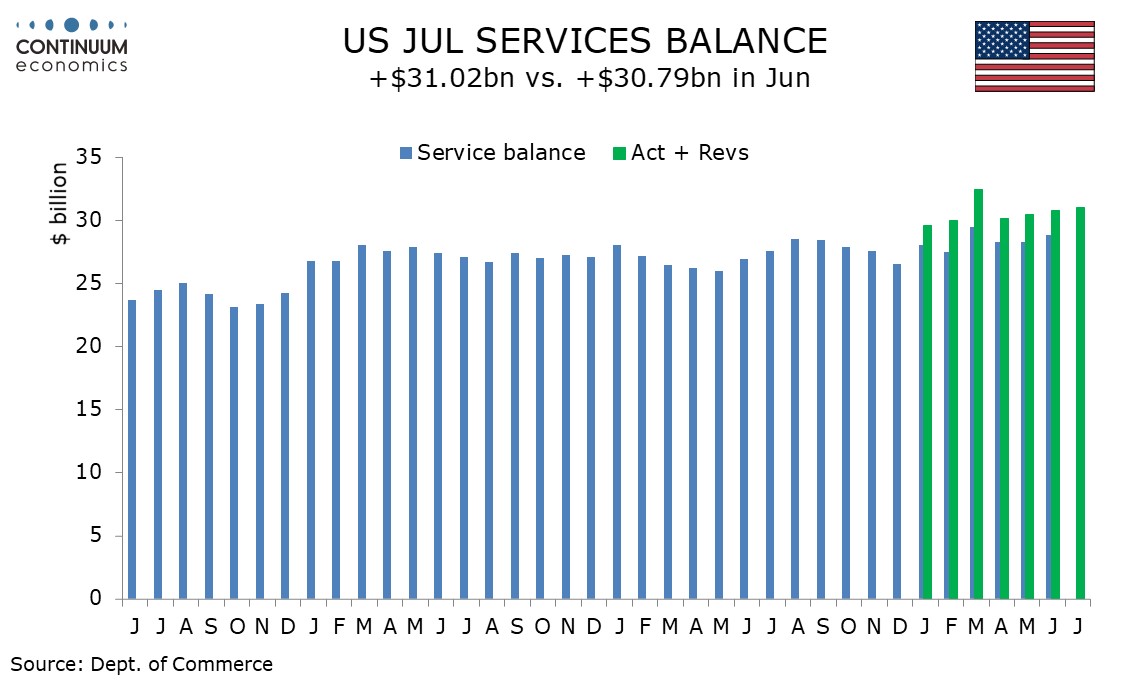
The services balance, for which no advance data is released, saw the surplus increase to $31.0bn from $30.8bn, with June revised up to $30.8bn from $28.8bn. The services surpluses were revised up from January through June. For July services exports fell by 0.4% and service imports fell by 0.8%, leaving overall exports down by 2.1% and overall imports up by 2.8%.
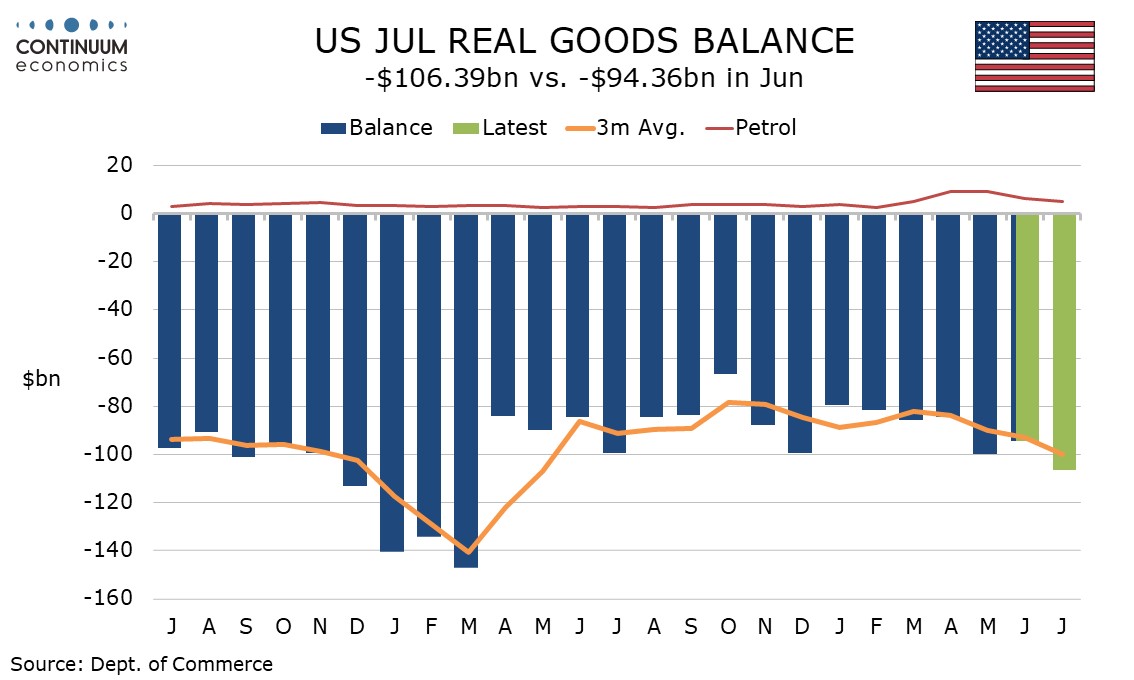
In real terms goods exports fell by 1.8%, a third straight decline, while real goods imports increased by 3.8% after a 2.7% June decline.
The exports decline however was not broad based. Nominal exports fell by $6.2bn on the month, with crude oil down by $4.5bn (it is needed at home) and non-monetary gold (recently volatile) down by $3.9bn, together more than fully explaining the decline. The largest positive in the goods exports detail was pharmaceutical preparations (also volatile recently), up by $1.0bn.
Goods imports rose by $11.4bn on the month. Here the rise was also narrowly based, with computers, up by $6.9bn, and computer accessories and parts up by $6.6bn more than explaining the rise. While probably in part erratic this strength is supported by surging business investment and trend is likely to remain firm. Copper, pharmaceutical preparations and semiconductors all saw gains of a little more than $1.0bn. The only negative to exceed that amount was a $1.8bn decline in imports of crude oil.
Q2 productivity and cost revisions were minor, productivity unrevised at 1.4% and unit labor costs revised down marginally to 1.2% from 1.3%. The overall deflator however was revised up to 7.4% from 7.0% on an upward revision to surging non-labor costs.