This week's five highlights
U.S. July CPI On consensus
Softer U.S. July payroll and falling unemployment hint at labor shortages
No Fireworks from RBA
DXY Edging higher
USD/JPY Consolidating with room higher
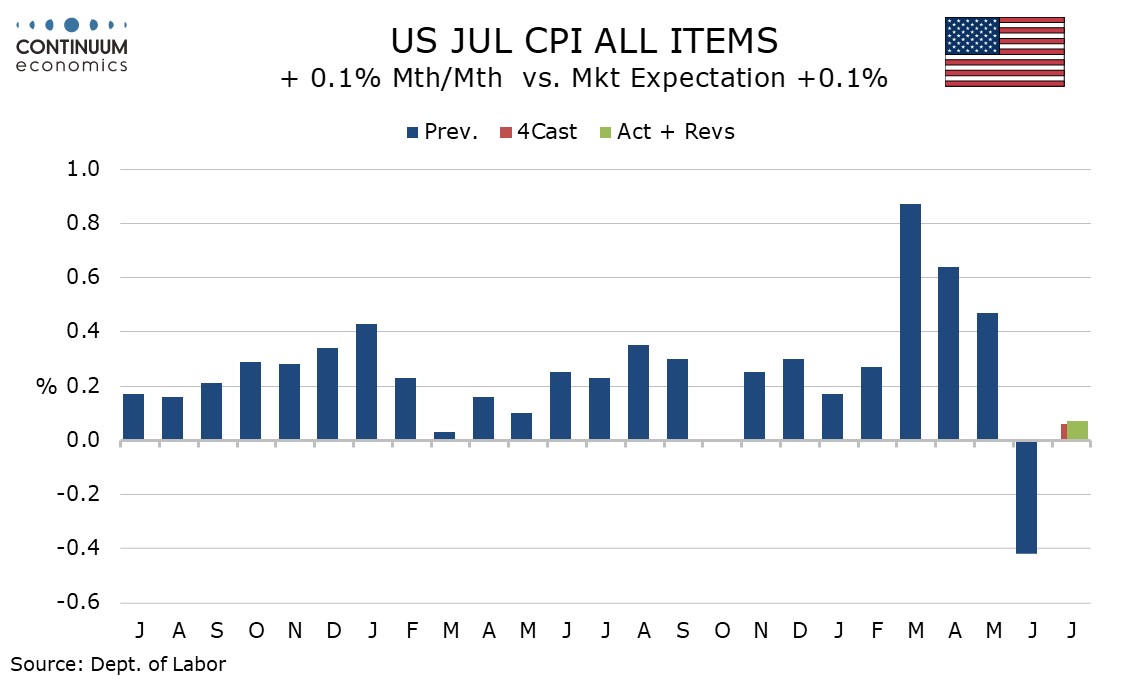
July’s CPI is largely as expected, up 0.1% overall and 0.2% ex food and energy, with the latter at 0.215% before rounding only a marginal disappointment, though possibly a little more so in the detail. This does not provide a compelling case for Fed tightening in September, though by that meeting they will have also seen August data, while developments in oil prices will also be important. FOMC minutes due on August 19 will give important insight into how close the Fed is to tightening.
Overall CPI rose by 0.074% before rounding with food up by only 0.1% and energy down by 1.5%, led by a 2.9% decline in gasoline, a second straight fall that marks only a partial correction from three straight strong gains. Gasoline prices ended July stronger than they had started but there is not yet any sign of a strong acceleration in August in weekly data.
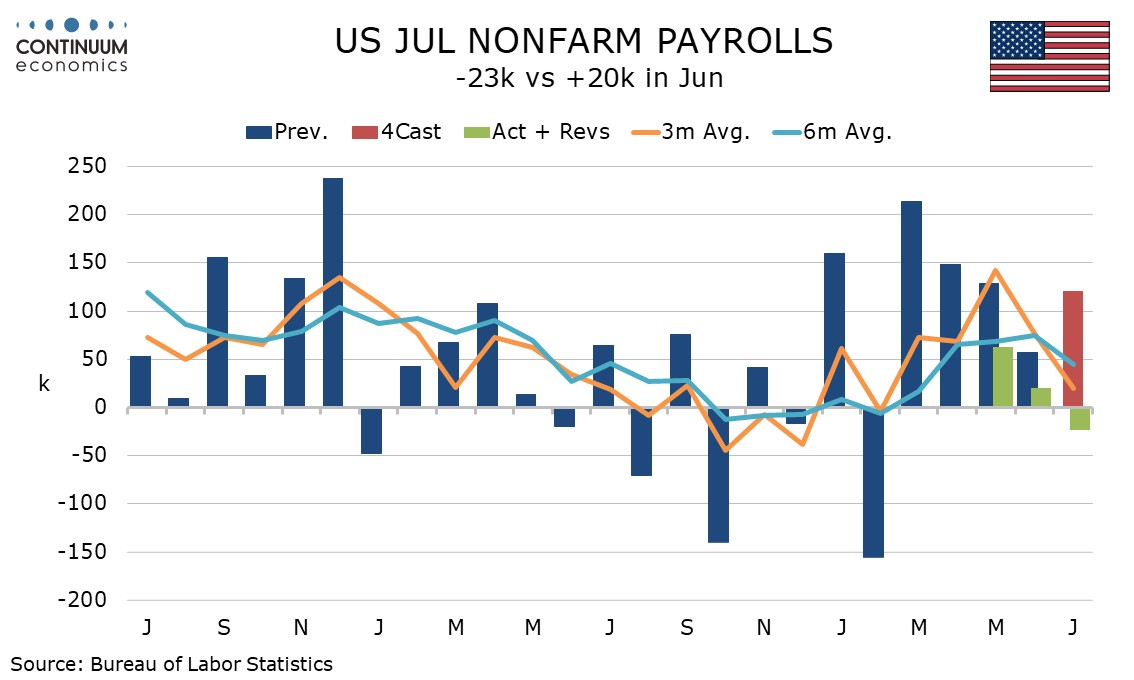
July’s non-farm payroll at -23k with negative back month revisions is weaker than expected but largely because of negatives in government led by local government education and leisure and hospitality, which may reflect labor shortages. A declining labor force saw the unemployment rate fall, to 4.1% from 4.2%. Despite signs of a tight labor market, average hourly earnings surprised on the downside, rising by only 0.1%. The data only slightly damages the case for Fed tightening, with CPI data next week likely to be more significant.
July’s payroll fell by 23k, with June revised down to 20k from 57k and May revised down to 63k from 129k, a net downward revision of 103k. Private payrolls increased by 30k, matching a downwardly revised June (from 49k) while May was revised to 61k from 97k, a net downward revision in the private sector of 55k.
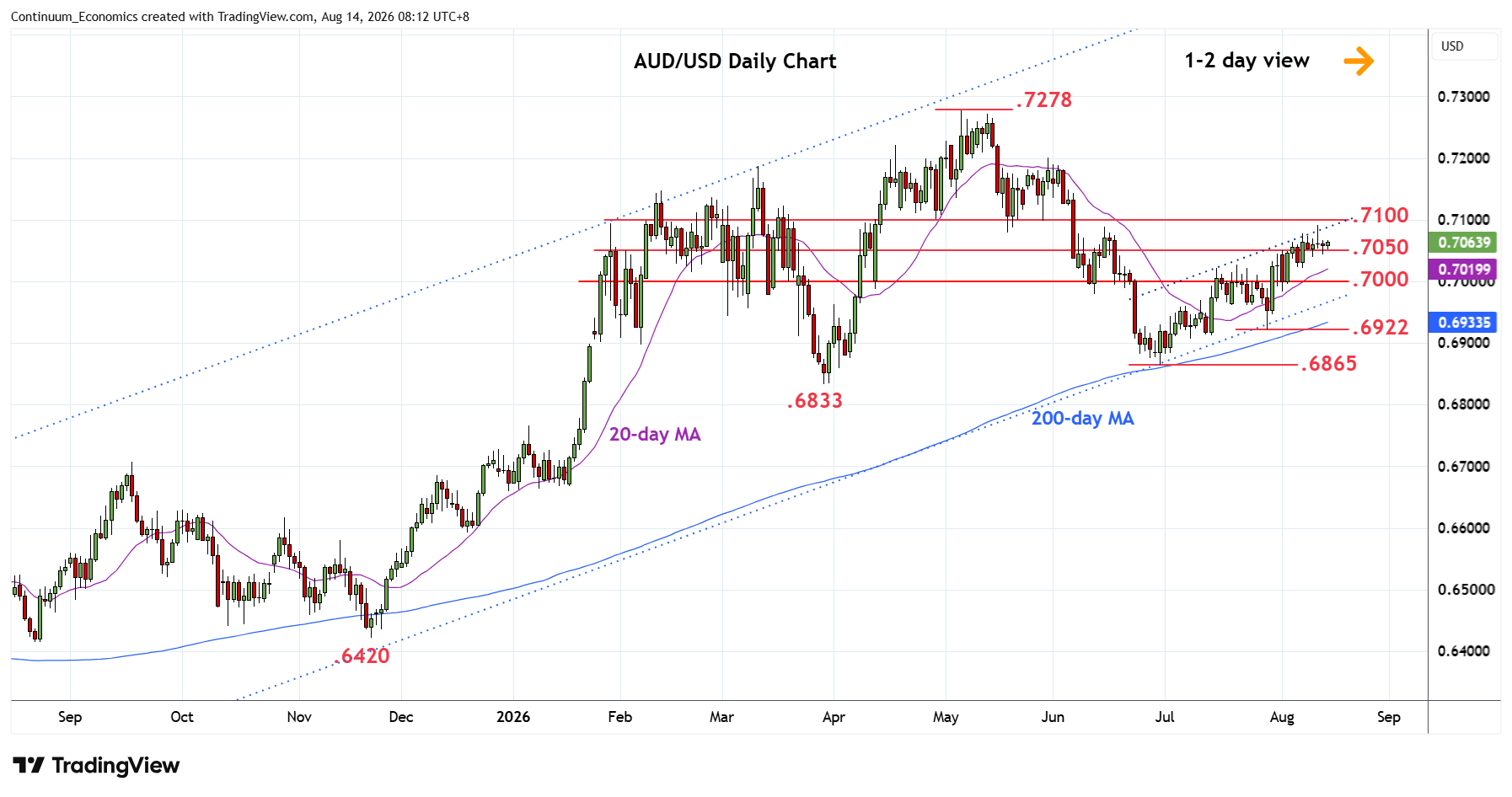
The RBA kept rates unchanged at the August meeting. It is widely expected, given RBA's stance in assessing the lagged effect from previous consecutive hikes. They believe the inflationary impact from Middle East is less than their forecast. With headline and trimmed mean inflation above target range, the RBA says they are willing to hike to keep inflation in check. But in reality, unless there is an upside surprise, they will not be hiking.
The key change to forecast seems to be the RBA now expecting inflation to go back below target range by late 2027, instead of mid 2027. Else, it is a relatively short statement without major changes to our rate and inflation forecast.
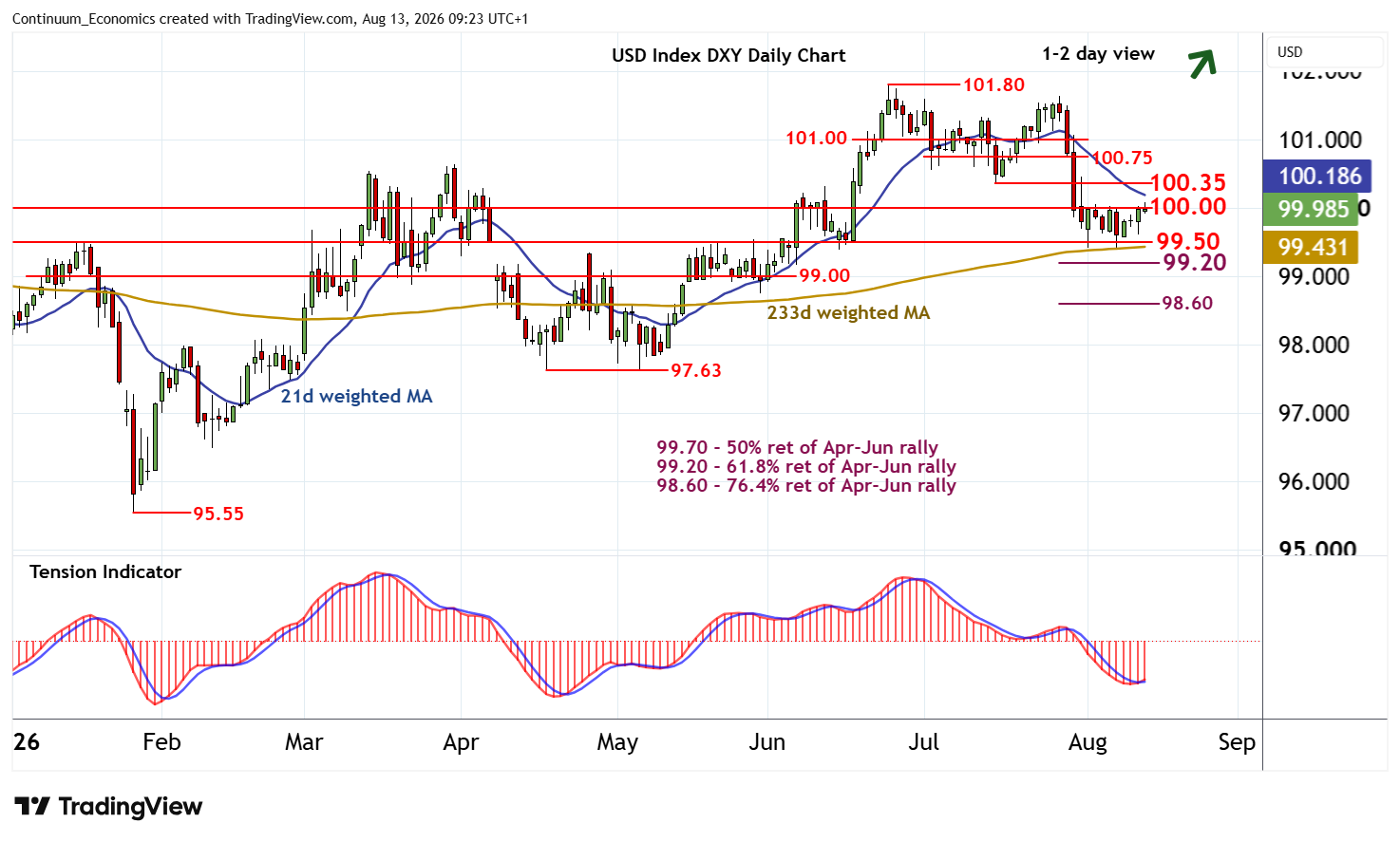
Cautious trade has given way to a push higher to congestion resistance at 100.00, where flat overbought intraday studies are prompting fresh consolidation. Daily stochastics and the daily Tension Indicator continue to rise, highlighting room for a test above here. But negative weekly charts should limit scope in renewed selling interest/consolidation beneath the 100.35 weekly low of 15 July.
Following cautious/corrective trade, fresh losses are looked for. Support remains at congestion around 99.50. A later break will add weight to sentiment and extend late-June losses towards the 99.20 Fibonacci retracement. A further close beneath here will open up the 98.60 retracement.
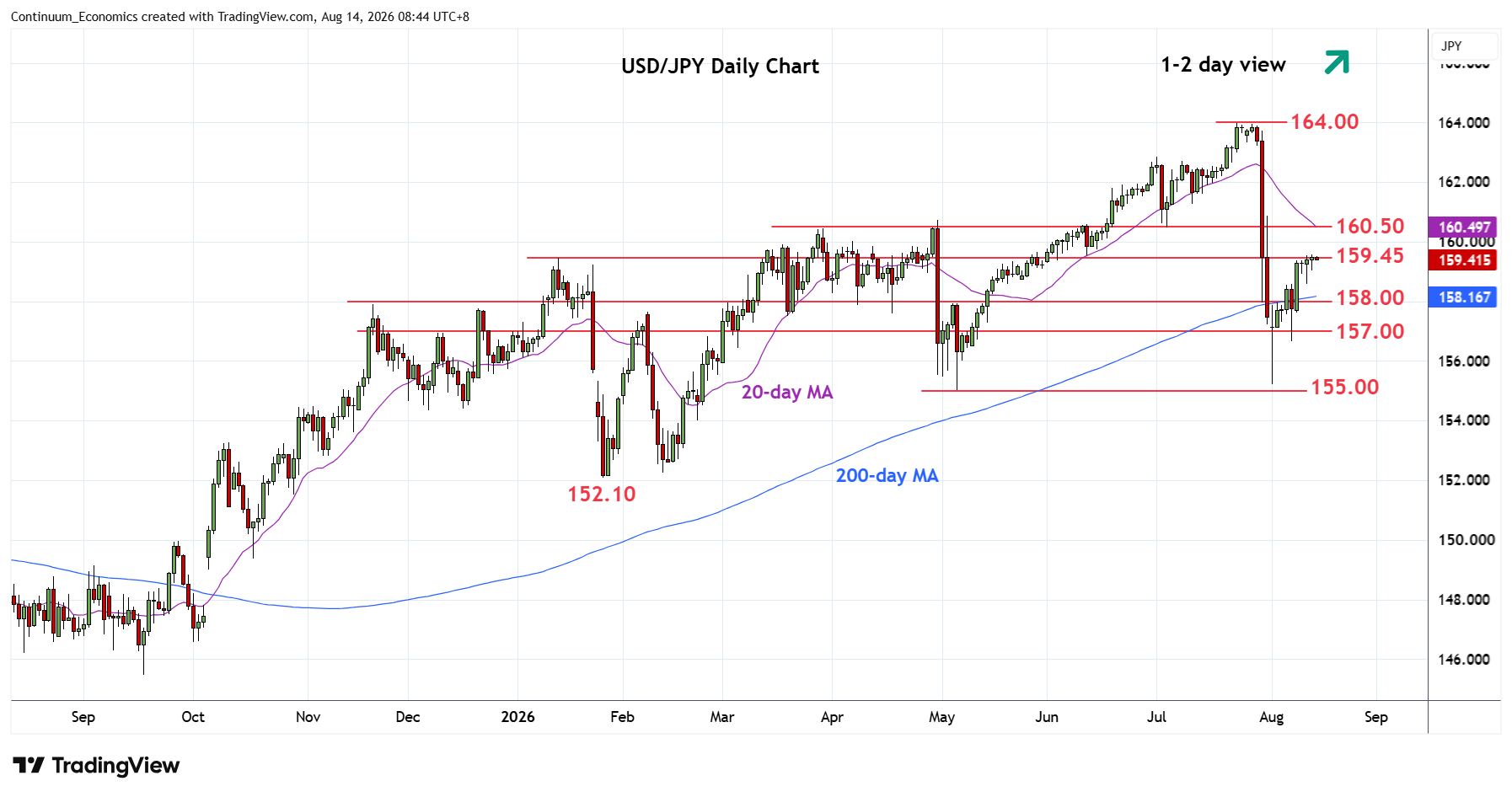
Consolidating test of resistance at the 159.45/50 congestion area but pressure remains on the upside and see scope to extend bullish prices action from the 155.22 low of last week. Higher will see room for extension to the 160.00 figure then 160.50 congestion and March high. Gains are seen corrective of sharp losses from the 164.00 high and expected to give way to fresh selling pressure later. Would take break of support at the 158.50/158.00 area to return focus to the downside for retest of support at 157.00/156.65 area and lower.