This week's five highlights
UK Energy Prices and Weak Labour Market
Fresh U.S. Tariff Risks to Canada's Economy are Moderate
FOMC Minutes Show Inter-meeting data seen as important
U.S. July Industrial Production Healthy excluding a dip in autos
U.S. July Housing Starts and Permits Mixed
Figure: CPI projections from BOE (%)
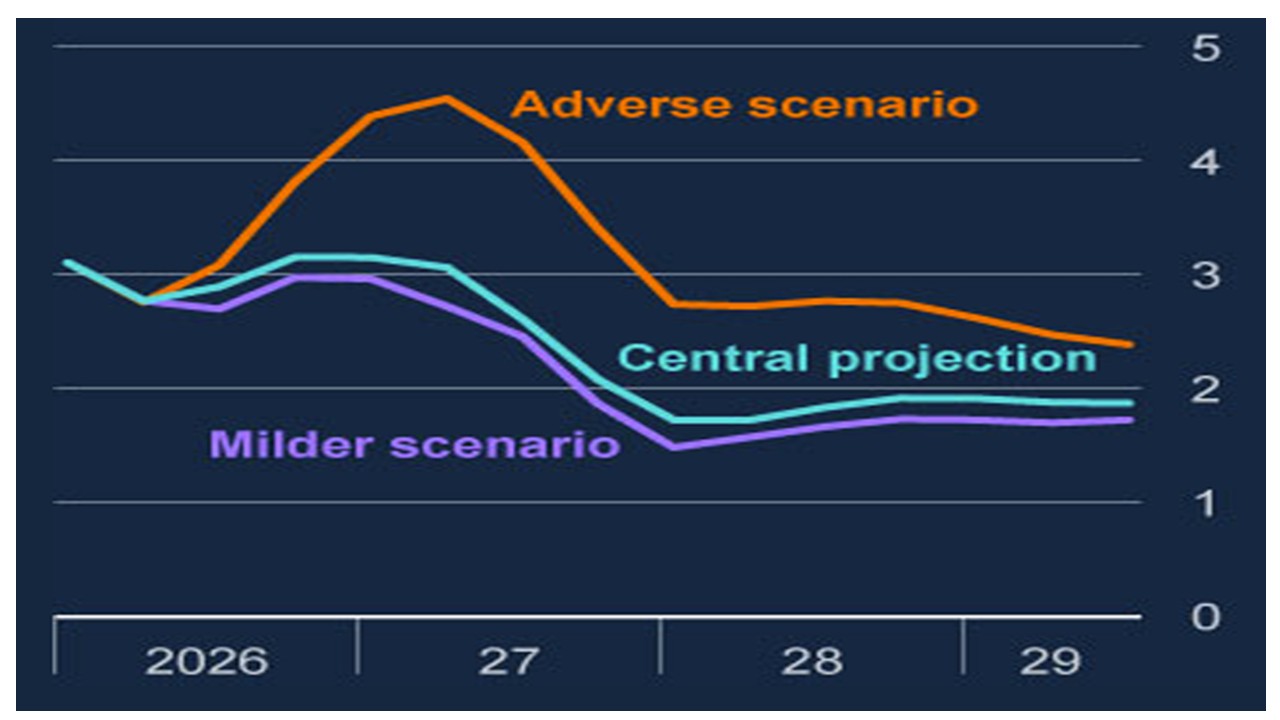
July UK CPI was broadly as expected and the new few months will be volatile and dependent on whether more shipping can go through the Straits of Hormuz and reduce energy prices (our baseline with a 60% probability). Underlying inflation trends in the UK are lower, as labour market data is soft and the private sector is reducing wage growth. We still see this reducing inflation back to 2.0% by H2 2027. Indeed, the weak labour market data this week should be enough to keep the MPC on hold for the remainder of 2026 and we see no BOE hike.
Headline CPI at 2.9% Yr/Yr came in line with expectations, with the core marginally above consensus at 2.6%. Housing and household services saw a 0.9% rise on the month; transport 0.2% (as energy prices rotated back higher), while clothing and footwear fell 0.9%. The near-term inflation trajectory is very dependent on energy prices and in turn whether the Straits of Hormuz sees a pick-up in shipping. We feel that the Trump administration wants this to get gasoline prices down, but Iran is split between hardliners and pragmatists (with the latter keen to get oil revenue flowing again). On balance, we still attach a 60% probability to another ceasefire and Straits of Hormuz deal, which should bring energy prices down in Q4. Underlying inflation into 2027 should also be helped by the weak UK labour market conditions.
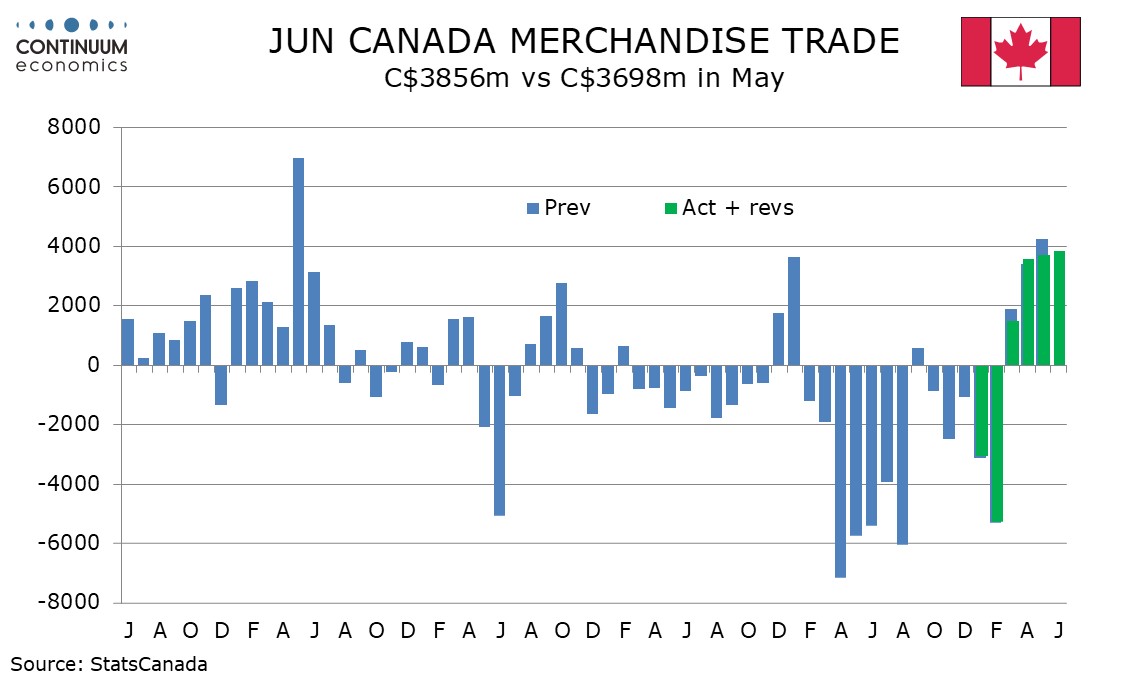
The US and Canada are approaching an August 19 deadline for the US to impose 50% tariffs on some Canadian exports. Tense negotiations are to be expected as the deadline approaches but a deal is far from certain. Many in the market may be expecting Trump to back down a few days after announcing the treats will be carried out. Should the threatened tariffs be persistent, the tariffs are unlikely to push Canada into recession or prompt a Bank of Canada easing, but they could delay tightening.
The tariffs are expected to cover only 5% of Canada’s exports to the US, but those exports would be hit significantly by a 50% tariff. Exports make up around 30% of Canadian GDP and those to the US make up around 70% of them, meaning that the impacted exports would make up marginally above 1.0% of Canadian GDP. The hit to GDP would be likely to be only a few percentage points, but would be noticeable on an annualized basis in the second half of this year.
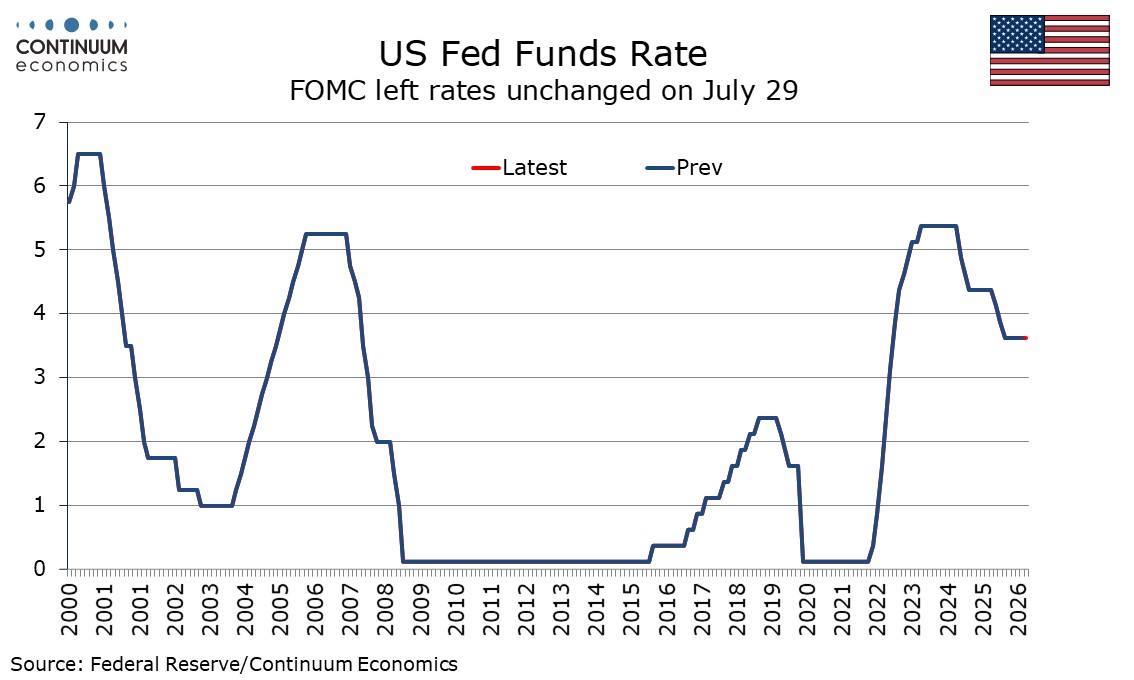
FOMC minutes from July 29 confirm that most participants supported leaving rates steady but several favored a 25bps tightening, implying more than the three hawkish dissenters, presumably non-voting district presidents. Many assessed that tightening would be necessary if inflation did not decline, which probably reflects the views of the swing voters. Data released since July 29, notably the June and July CPIs, is likely to mean that hopes inflation will fall have not been undermined.
While the minutes do not suggest that a September tightening is likely, they are quite hawkish on inflation. Several noted that price increases over the past year were broad based, while some saw prices as elevated even excluding those most directly impacted by tariffs and energy. More optimistically, the pass through of tariffs was now seen as largely complete. Most anticipated that inflation would step down over the rest of the year but many noted the possibility it might be more persistently elevated. This fits with a view that inflation needs to fall to prevent tightening. Inflation risks were skewed to the upside. Most did not seem to be placing too much hope on productivity gains controlling inflation. Some saw this eventually increasing aggregate supply, but there were a range of views on how long this might take to materialize. Of more immediate concern was the prospect of a protracted Middle East conflict prolonging supply challenges, and the risk that continued elevated inflation could impact expectations and wages.
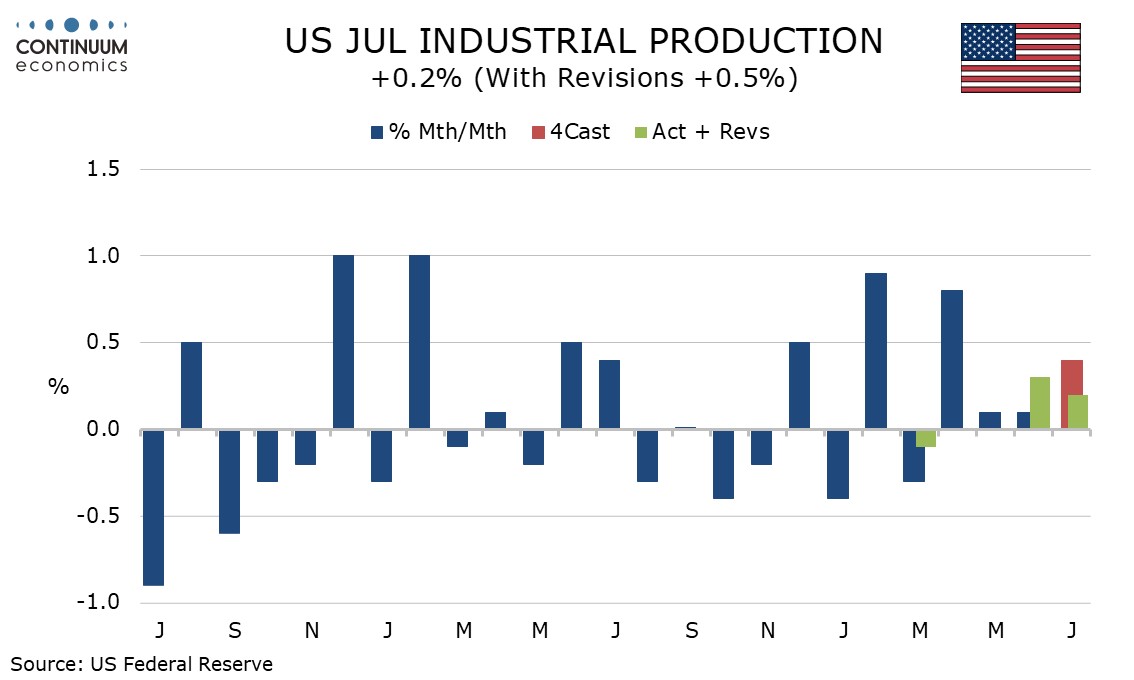
July industrial production with a 0.2% increase was slightly weaker than expected but manufacturing with a 0.2% increase was in line. A 0.4% increase in manufacturing ex autos however hints at some underlying strength. Autos see annual retooling shutdowns in early July and the 2.1% decline in July auto output may be temporary, though it does follow three straight gains which may have moved ahead of auto sales.
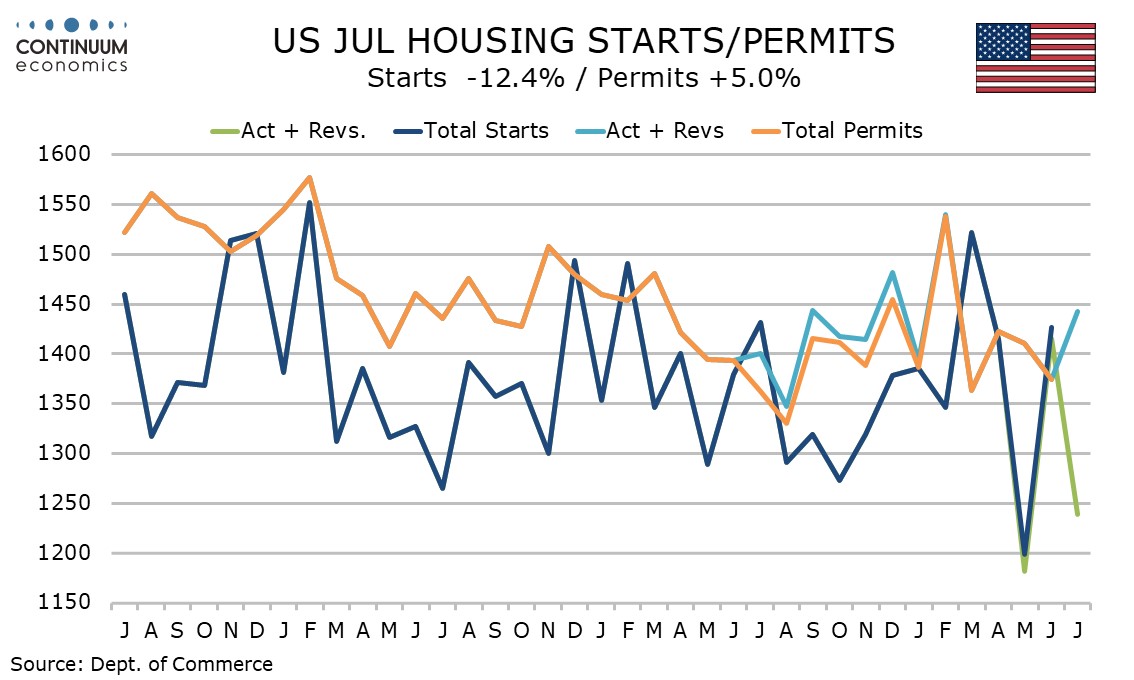
July housing starts with a 12.4% decline to 1.239m contrast a rise in permits of 5.0% to 1.443m, though the plunge in starts follows a 19.7% rise in June while the rise in permits follows a 2.6% decline in June. Starts remain above May’s level while permits are the strongest since February. Starts saw multiples decline by 16.8% and singles fall by 9.9%, but the singles move is more unusual with the multiples move modest compared with the swings seen in May and June.