This week's five highlights
U.S. July Non-Farm Payrolls to be Stronger than June
U.S. Trade Deficit corrects lower in June
The Fed's Balance Sheet
A.I. and Equities
USD/JPY Remain Capped
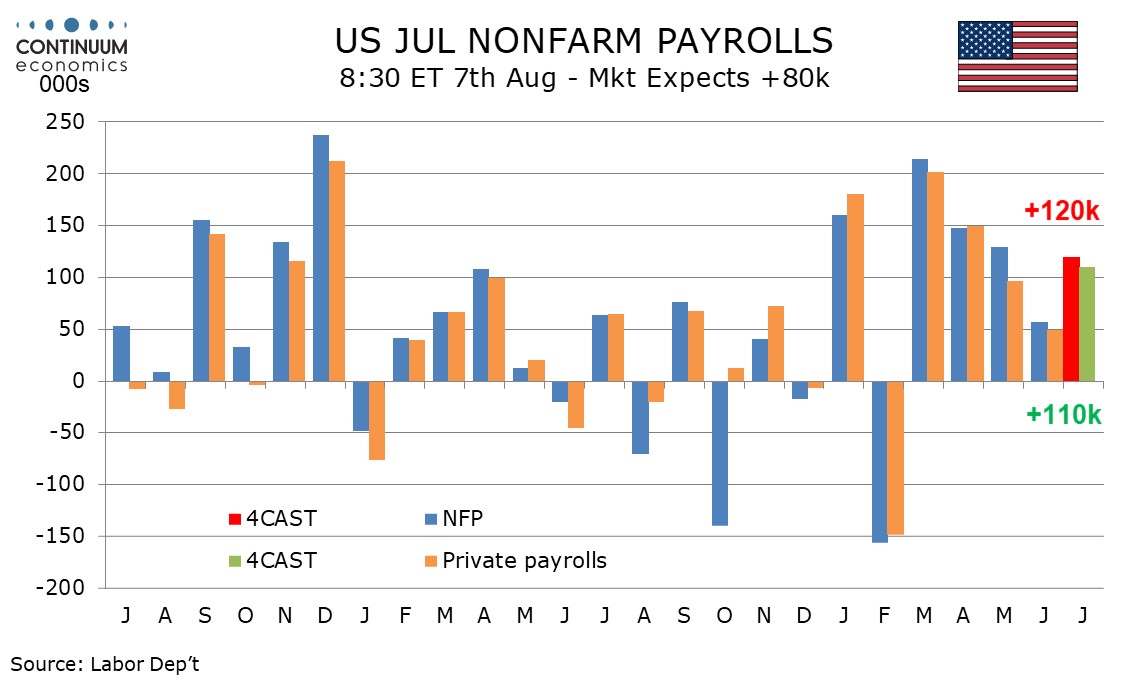
June’s outcome was a significant slowing from the three preceding months but this was explained largely by a 61k decline in leisure and hospitality, particularly surprising to those who had expected the World Cup to lift the sector. Tough seasonal adjustments may provide some explanation. We expect a modest rebound in July, by 25k. We expect private payrolls excluding leisure and hospitality to rise by 85k, down from 110k in June.
Initial claims saw a particularly low outcome in the survey week for July’s non-farm payroll and the 4-week average suggests significant upside risk to payrolls. However continued claims, while seeing some improvement from June, are not giving such a positive signal. Contrasting the signals from initial claims, ADP data shows only a 44k rise in private payrolls while July’s consumer confidence report showed a dip in labor market perceptions. Risk on back month revisions is negative, with the JOLTS report’s hires and separations data suggesting payrolls saw little change in May and June.
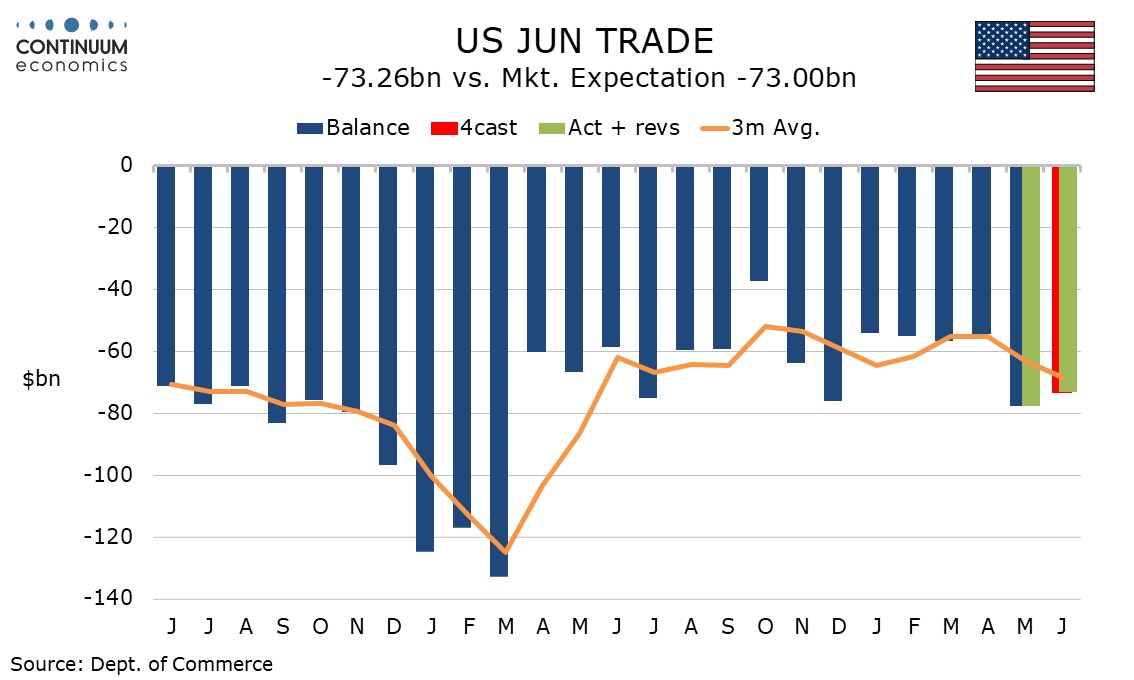
June’s trade deficit of $73.3bn is in line with expectations and down from $77.6bn in May though still well above deficits of near $55bn in each month from January through April. This confirms a significant negative from net exports in Q2 GDP. Exports fell by 0.9% after a 3.2% May decline while imports fell by 1.8% after a 3.3% May increase. Goods saw exports down by 1,9% and imports down by 2.5%, compared with declines of 1.8% and 2.6% respectively in the advance release.\
The services surplus of $28.8bn was up from two straight months at $28.3bn with exports up by 1.0% and imports up by 0.7%. The exports gain was however partly offset by a downward revision to May, now up by 0.4% rather than 0.7%.
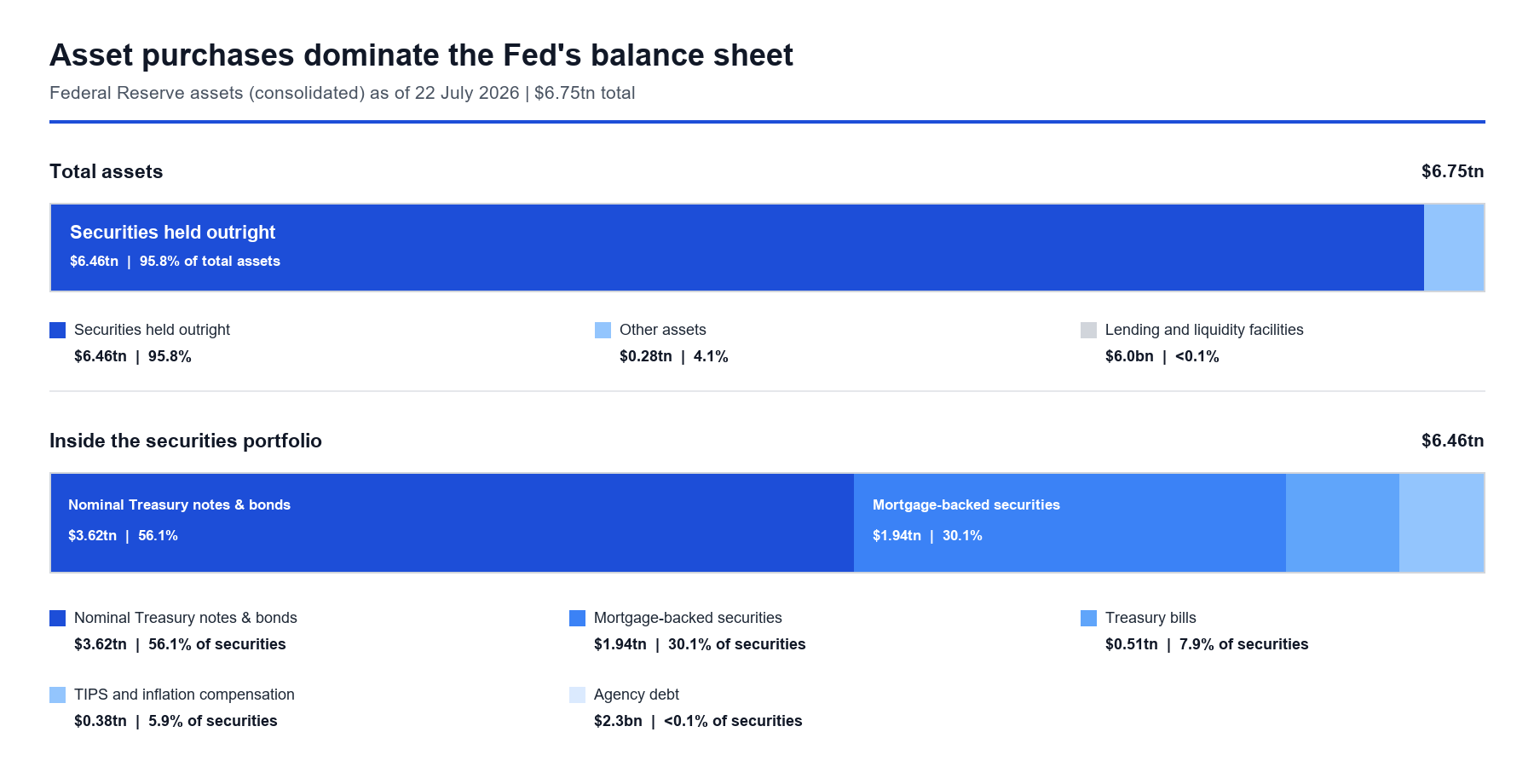
Fed’s Warsh has spent over a decade arguing the balance sheet should be smaller. He has said much less about the operating framework that would allow that without destabilising money markets. The task force he launched in June is intended to answer that.
The task force will examine the costs and benefits of the current ample-reserves regime, the composition of the Fed's assets, and alternative frameworks for conducting monetary policy. At his first semi-annual monetary-policy hearing, Warsh clarified that he did not think the Fed could simply return to 2006, but believed there were "several other sustainable equilibria" available. Any change would be gradual, publicly debated and communicated well in advance.
That leaves a preferred direction but no settled destination. Warsh wants interest rates restored as the primary normal-time policy instrument, a smaller Fed footprint and less allocation through mortgage-backed securities. Yet he remains prepared to use the balance sheet aggressively when markets stop clearing. What he has not specified is the resulting system, a choice that will shape money-market operations and financial institutions' management of liquidity and risk.
Figure: S&P 500 Earnings Per Share (USD)
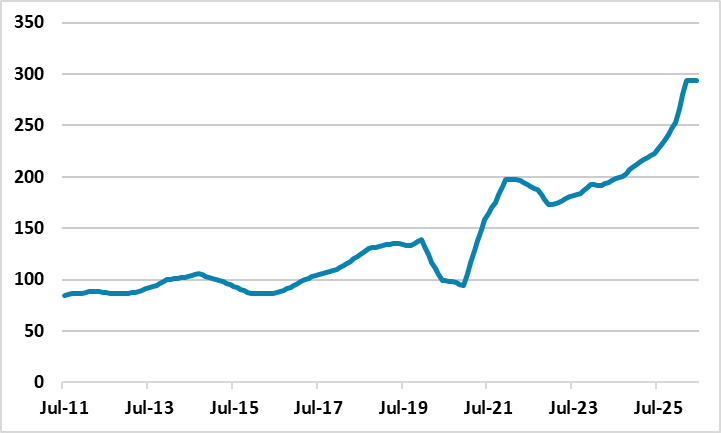
Overall, we feel that recent movements have been a correction/consolidation in the AI equity story. AI specific revenue growth still remains healthy and will support multi-year plans over cloud computing growth and in turn semiconductor demand. Even so, slowing free cash flows and overstretched parts of the AI complex can cause further intermittent corrections, which will spill over to impact the S&P500. We maintain the 7500 forecast for the S&P500 for end 2026, as we feel that the non AI U.S. equity market is too optimistic on corporate earnings momentum amid signs that low to middle income households are struggling (here) and the elevated level of nominal and real U.S. Treasury yields.
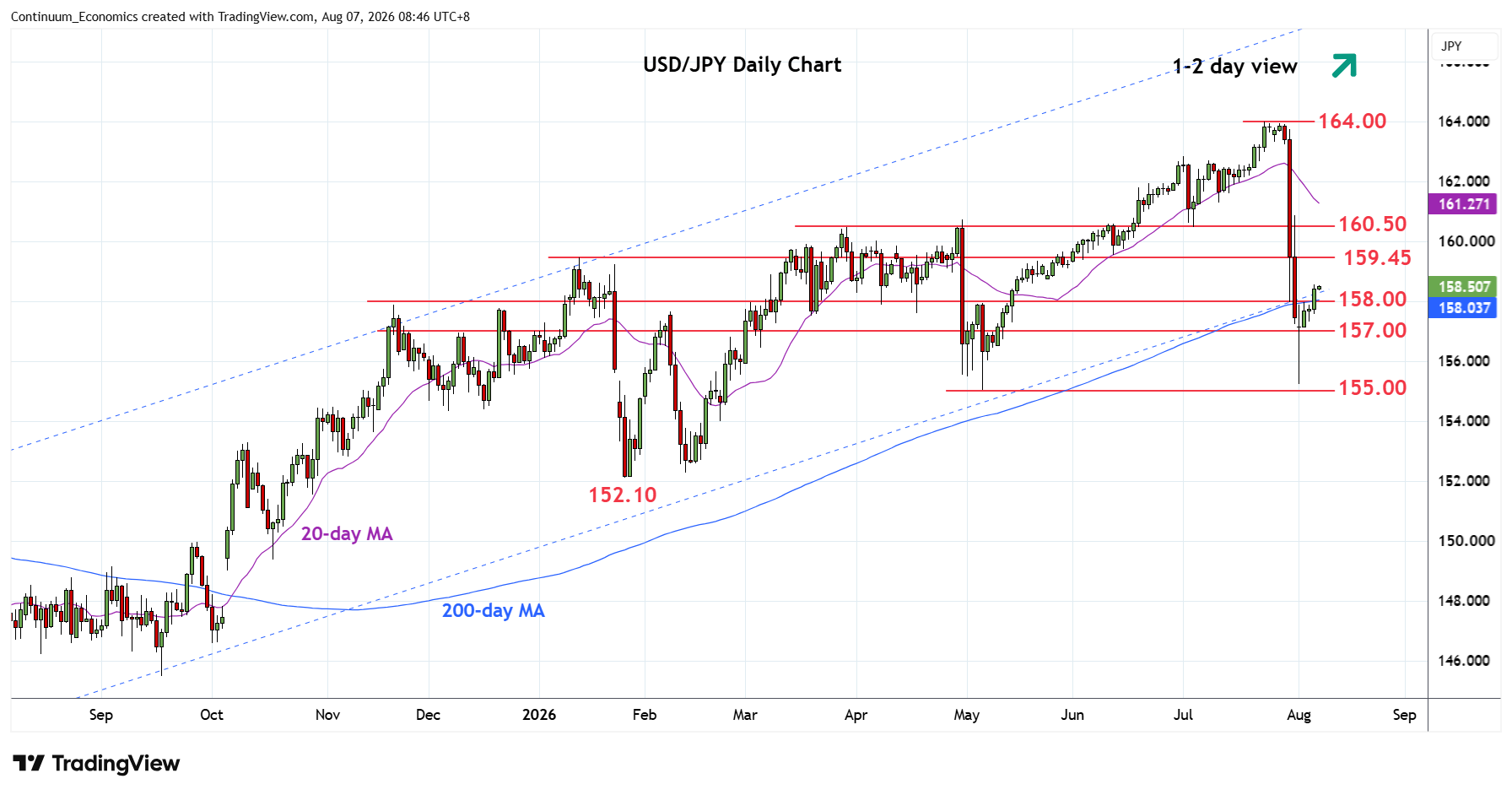
USD/JPY remain capped by joint intervention threat. There is little direction or impetus for USD/JPY to move either way, until we have more clarity from the BoJ. The underlying momentum still favor some buyers but they will be very uncomfortable as correction is swift. We suspect the real correction in USD/JPY won't begin until we see strong risk aversion event.
On the chart, consolidation below 158.00 has given way to break to extend bounce from the 155.22 low to retrace sharp losses from the 164.00 high. Break opens up room for stronger bounce to resistance at the 159.00 congestion then the 159.45 January high. Intraday and daily studies are unwinding oversold readings but corrective bounce is expected to give way to renewed selling pressure later. Meanwhile, support is raised to the 158.00/157.00 congestion area. Break here will return focus to the downside for retest of the 156.00 level then the 155.22/155.00 lows.