2026 Q2 Shadow Credit Ratings to Download in Excel
The Country Insights Model is a comprehensive quantitative tool for assessing country and sovereign risk by measuring a country’s risk of external and domestic financial shocks and its ability to grow. We produce Shadow Credit Ratings for 162 countries, comparable to those from credit rating agencies.
The ratings are based on our Country Strength Index (CSI), which is our most comprehensive assessment across our full range of Country Insights data. The ratings are consistent with our 2026 Q2 Country Insights update.
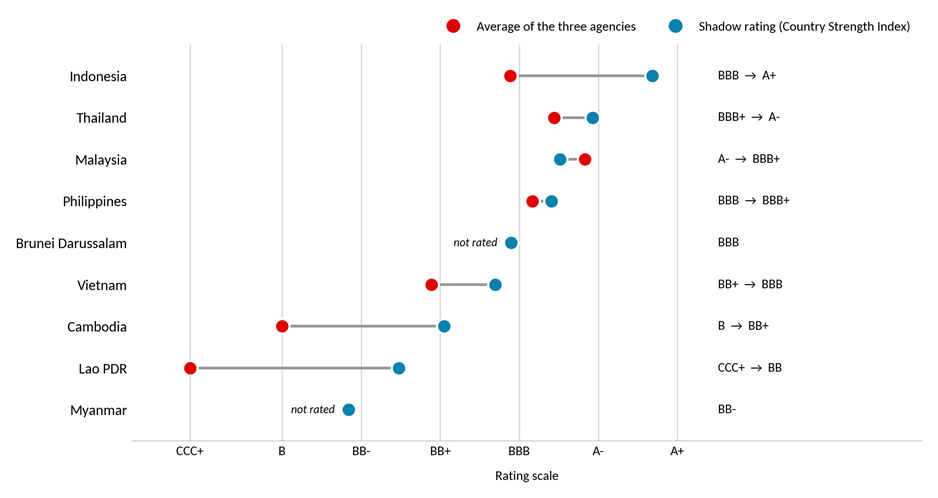
Figure 1. Shadow Ratings and Agency Ratings, Southeast Asia
Source: Continuum Economics
Our ratings sit above the agency average for six of the seven rated sovereigns, and the difference widens steadily further down the scale. At the lower end the gaps are large. Laos moves from CCC+ to BB, Cambodia from B to BB+, and Vietnam from BB+ to BBB. Nearer the top the two measures converge, with the Philippines at BBB against BBB+ and Thailand at BBB+ against A-. Malaysia is the only sovereign in the region we rate below the agencies, at BBB+ against A-, and the difference is under a notch. Indonesia is the clear exception to the pattern, moving from BBB to A+, by some way the largest gap among the region's investment grade sovereigns. Brunei and Myanmar carry no agency rating at all, so for those two the Shadow Rating is the only comparable measure available, and Brunei enters at BBB on the strength of the second highest Country Strength Index in the region.
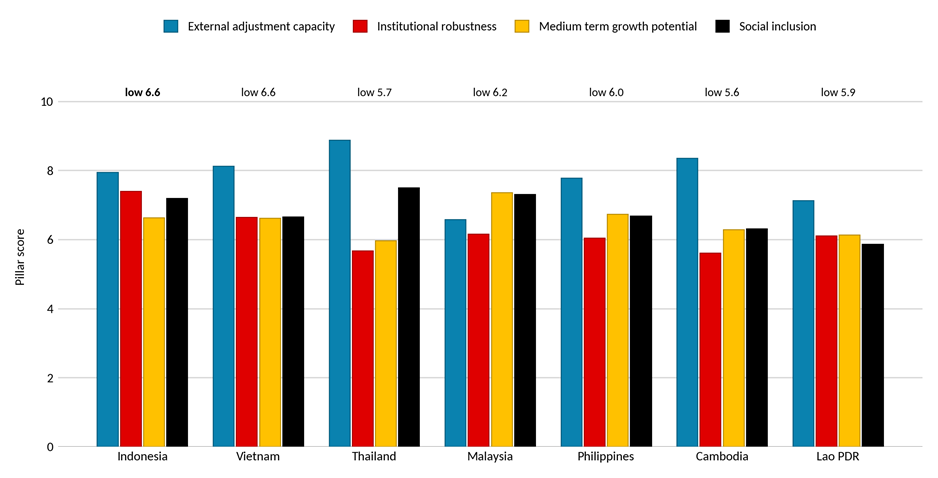
Figure 2. Country Strength Index Pillars, Southeast Asia
Source: Continuum Economics
The pillar decomposition explains why Indonesia separates from the pack (Figure 2). Its strength is balance rather than any single outstanding reading. Indonesia and Vietnam are the only two economies in the region with no pillar below 6.6, while the other five each carry at least one at or under 6.2. What then distinguishes Indonesia from Vietnam is institutional robustness, where its score of 7.39 is the only reading above 7 in the region and sits three quarters of a point clear of the next best. The contrast with its neighbors is informative, as Thailand records the strongest external adjustment capacity anywhere in the region at 8.87 but pairs it with institutional robustness of 5.67 and the weakest medium term growth potential at 5.96. Cambodia combines an external score of 8.35 with the lowest institutional reading in the region at 5.61. Malaysia, which the agencies rank first, has the strongest growth potential at 7.35 alongside the weakest external buffer at 6.58, the only one below 7, which is consistent with it being the one sovereign we rate more cautiously than the agencies do. Across the region as a whole, external adjustment capacity averages 7.82 against institutional robustness of 6.23, so Southeast Asia is externally well cushioned and institutionally thin. The distinction matters because a composite resting on one strong pillar propping up weaker ones behaves differently under stress from one that is even across all four.
The Country Strength Index is a medium-term structural measure while an agency rating is a near term judgement on whether a sovereign pays on time. In Laos, where debt service pressure is acute and reserves are thin, the agencies are pricing something the index is not designed to capture, and both readings can be correct. The gap is therefore best read as an indication of how far a sovereign's structural position runs ahead of, or behind, its published rating, and where that distance is widest is where the scope for re-rating is greatest should financing conditions ease.
See Article Resources (below) to access the full range of scores.